CONFIDENTIAL TREATMENT REQUESTED PURSUANT TO 17 C.F.R. §200.83
As submitted confidentially with the Securities and Exchange Commission on November 4, 2021
This draft registration statement has not been publicly filed with the Securities and Exchange Commission and all information herein remains strictly confidential.
Registration No. 333-
UNITED STATES
SECURITIES AND EXCHANGE COMMISSION
Washington, D.C. 20549
FORM F-1
REGISTRATION STATEMENT
UNDER
THE SECURITIES ACT OF 1933
ARRIVAL
(Exact Name of Registrant as Specified in Its Charter)
| Grand Duchy of Luxembourg | 3711 | 98-1569771 | ||
| (Jurisdiction of Incorporation or Organization) | (Primary Standard Industrial Classification Code Number) | (I.R.S. Employer Identification Number) |
1, rue Peternelchen
L-2370 Howald,
Grand Duchy of Luxembourg
+352 621 266 815
(Address, including zip code, and telephone number, including area code, of Registrants principal executive offices)
Daniel Chin
General Counsel
1, rue Peternelchen
L-2370 Howald
Grand Duchy of Luxembourg
Tel: +352 621 266 815
(Name, address, including zip code, and telephone number, including area code, of agent for service)
Copies to:
| Frank R. Adams, Esq. Faiza Rahman, Esq. Weil, Gotshal & Manges LLP 767 Fifth Avenue New York, New York 10153 Tel: (212) 310-8000 Fax: (212) 310-8007 |
Byron B. Rooney, Esq. Davis Polk & Wardwell LLP 450 Lexington Avenue New York, New York 10017 Tel: (212) 450-4000 |
Approximate date of commencement of proposed sale to the public: As soon as practicable after this registration statement becomes effective.
If any of the securities being registered on this Form are to be offered on a delayed or continuous basis pursuant to Rule 415 under the Securities Act of 1933 (as amended, the Securities Act), check the following box. ☐
If this Form is filed to register additional securities for an offering pursuant to Rule 462(b) under the Securities Act, check the following box and list the Securities Act registration statement number of the earlier effective registration statement for the same offering. ☐
If this Form is a post-effective amendment filed pursuant to Rule 462(c) under the Securities Act, check the following box and list the Securities Act registration statement number of the earlier effective registration statement for the same offering. ☐
If this Form is a post-effective amendment filed pursuant to Rule 462(d) under the Securities Act, check the following box and list the Securities Act registration number of the earlier effective registration statement for the same offering. ☐
Indicate by check mark whether the registrant is a large accelerated filer, an accelerated filer, a non-accelerated filer, smaller reporting company, or an emerging growth company. See the definitions of large accelerated filer, accelerated filer, smaller reporting company and emerging growth company in Rule 12b-2 of the Exchange Act.
| Large accelerated filer | ☐ | Accelerated filer | ☐ | |||
| Non-accelerated filer | ☒ | Smaller reporting company | ☐ | |||
| Emerging growth company | ☒ | |||||
If an emerging growth company, indicate by check mark if the registrant has elected not to use the extended transition period for complying with any new or revised financial accounting standards provided pursuant to Section 7(a)(2)(B) of the Securities Act. ☐
CALCULATION OF REGISTRATION FEE
|
|
||||||||||||||||
| Title of each class of securities to be registered |
Amount to be registered |
Proposed maximum offering price per share |
Proposed maximum aggregate offering price |
Amount of registration fee |
||||||||||||
| Primary Offering Ordinary Shares, with a nominal value of 0.10 per share |
(1) | $ | (2) | $ | $ | |||||||||||
| Secondary Offering Ordinary Shares, with a nominal value of 0.10 per share |
(3) | $ | (4) | $ | $ | |||||||||||
|
|
||||||||||||||||
| (1) | Consists of (i) Ordinary Shares, with a nominal value of 0.10 per share (Ordinary Shares) of Arrival, a joint stock company (société anonyme) governed by the laws of the Grand Duchy of Luxembourg (the Company). Includes Ordinary Shares subject to the underwriters option to purchase additional shares. |
| (2) | Estimated solely for the purpose of computing the amount of the registration fee pursuant to Rule 457(c) under the Securities Act of 1933, as amended. Includes the offering price of additional Ordinary Shares that the underwriters have the option to purchase. See Underwriting. |
| (3) | Consists of shares of Class A common stock registered for sale by the selling securityholders named in this registration statement. Includes Ordinary Shares subject to the underwriters option to purchase additional shares. |
| (4) | Estimated solely to calculate the registration fee in accordance with Rule 457(c) of the Securities Act on the basis of the average of the high ($ ) and low ($ ) sales prices of the Ordinary Shares as reported on the Nasdaq Stock Market LLC on , 2021. |
The registrant hereby amends this registration statement on such date or dates as may be necessary to delay its effective date until the registrant shall file a further amendment which specifically states that this registration statement shall thereafter become effective in accordance with Section 8(a) of the Securities Act, or until the registration statement shall become effective on such date as the Securities and Exchange Commission (the SEC), acting pursuant to said Section 8(a), may determine.
The information in this preliminary prospectus is not complete and may be changed. Neither we nor the selling securityholders may sell these securities until the registration statement filed with the Securities and Exchange Commission is effective. This preliminary prospectus is not an offer to sell these securities and we are not soliciting an offer to buy these securities in any jurisdiction where the offer or sale is not permitted.
Subject to Completion, dated , 2021
PRELIMINARY PROSPECTUS

ORDINARY SHARES and
ORDINARY SHARES
Offered by Selling Securityholders
We are offering a total of common shares with a nominal value of 0.10 (the Ordinary Shares). The selling securityholders identified in this prospectus (the Selling Securityholders) are offering a total of Ordinary Shares. We will not receive any proceeds from the sale of Ordinary Shares by the Selling Securityholders pursuant to this prospectus. On , 2021, the last reported sale price of our Ordinary Shares on The Nasdaq Stock Market LLC was . The final public offering price will be determined through negotiation between us and the lead underwriters in the offering and the recent market price used throughout the prospectus may not be indicative of the final offering price. Our Ordinary Shares are listed on The Nasdaq Global Select Market under the symbol ARVL.
Kinetik S.à r.l., our majority shareholder, owns 74.67% of the Ordinary Shares and has the right to propose for appointment a majority of our board of directors until it owns less than 30% of the Ordinary Shares. Accordingly, we are a controlled company under Nasdaq corporate governance rules and are eligible for certain exemptions from these rules.
We are a foreign private issuer under applicable Securities and Exchange Commission rules and an emerging growth company as that term is defined in the Jumpstart Our Business Startups Act of 2012, as amended (the JOBS Act) and are eligible for reduced public company disclosure requirements.
You should read this prospectus and any prospectus supplement or amendment carefully before you invest in our securities. Investing in the Companys securities involves risks. See Risk Factors beginning on page 13 of this prospectus.
Neither the SEC nor any state securities commission has approved or disapproved of these securities or passed upon the adequacy or accuracy of this prospectus. Any representation to the contrary is a criminal offense.
| Per Share |
Total | |||||||
| Public offering price |
$ | $ | ||||||
| Underwriting discount(1) |
$ | $ | ||||||
| Proceeds, before expenses, to us |
$ | $ | ||||||
| Proceeds, before expenses, to the Selling Securityholders |
$ | $ | ||||||
| (1) | We refer you to Underwriting, beginning on page 126 of this prospectus, for additional information regarding total underwriter compensation. |
We and the Selling Securityholders identified in this prospectus have granted the underwriters the right for 30 days from the date of this prospectus to purchase up to an additional Ordinary Shares, at the public offering price, less underwriting discounts and commissions.
The underwriters expect to deliver the shares against payment in New York, New York on , 2021.
| Goldman Sachs International | Barclays | Cowen |
PROSPECTUS DATED , 2021
| Page | ||||
| i | ||||
| ii | ||||
| IMPORTANT INFORMATION ABOUT IFRS AND NON-IFRS FINANCIAL MEASURES |
ii | |||
| iii | ||||
| iv | ||||
| v | ||||
| v | ||||
| 1 | ||||
| 10 | ||||
| 12 | ||||
| 13 | ||||
| 58 | ||||
| 59 | ||||
| 60 | ||||
| 62 | ||||
| 63 | ||||
| MANAGEMENTS DISCUSSION AND ANALYSIS OF FINANCIAL CONDITION AND RESULTS OF OPERATIONS |
82 | |||
| 99 | ||||
| 107 | ||||
| 111 | ||||
| 112 | ||||
| 114 | ||||
| 115 | ||||
| 118 | ||||
| 120 | ||||
| 126 | ||||
| 133 | ||||
| SERVICE OF PROCESS AND ENFORCEMENT OF CIVIL LIABILITIES UNDER U.S. SECURITIES LAWS |
133 | |||
| 133 | ||||
| 133 | ||||
| 134 | ||||
| F-1 | ||||
| II-1 | ||||
CONFIDENTIAL TREATMENT REQUESTED PURSUANT TO 17 C.F.R. §200.83
You should rely only on the information contained in this prospectus, any amendment or supplement to this prospectus or any free writing prospectus prepared by or on our behalf. Any amendment or supplement may also add, update or change information included in this prospectus. Any statement contained in this prospectus will be deemed to be modified or superseded for purposes of this prospectus to the extent that a statement contained in such amendment or supplement modifies or supersedes such statement. Any statement so modified will be deemed to constitute a part of this prospectus only as so modified, and any statement so superseded will be deemed not to constitute a part of this prospectus. See Where You Can Find More Information.
None of us, the Selling Securityholders or the underwriters have authorized any other person to provide you with different or additional information. None of us, the Selling Securityholders or the underwriters take responsibility for, nor can we or they provide assurance as to the reliability of, any other information that others may provide. The information contained in this prospectus is accurate only as of the date of this prospectus or such other date stated in this prospectus, and our business, financial condition, results of operations and/or prospects may have changed since those dates. This prospectus contains summaries of certain provisions contained in some of the documents described in this prospectus, but reference is made to the actual documents for complete information. All of the summaries are qualified in their entirety by the actual documents. Copies of some of the documents referred to in this prospectus have been filed, will be filed or will be incorporated by reference as exhibits to the registration statement of which this prospectus is a part, and you may obtain copies of those documents as described under Where You Can Find More Information.
None of us, the Selling Securityholders or the underwriters are making an offer to sell these securities in any jurisdiction where the offer or sale is not permitted. Except as otherwise set forth in this prospectus, none of us, the Selling Securityholders or the underwriters have taken any action to permit a public offering of these securities outside the United States or to permit the possession or distribution of this prospectus outside the United States. Persons outside the United States who come into possession of this prospectus must inform themselves about and observe any restrictions relating to the offering of these securities and the distribution of this prospectus outside the United States.
This prospectus contains references to our trademarks and to trademarks belonging to other entities. Solely for convenience, trademarks and trade names referred to in this prospectus, including logos, artwork and other visual displays may appear without the ® or TM symbols, but such references are not intended to indicate, in any way, that their respective owners will not assert, to the fullest extent under applicable law, their rights thereto. We do not intend our use or display of other companies trade name or trademarks to imply a relationship with, or endorsement or sponsorship of us by, any other companies.
Certain amounts that appear in this prospectus may not sum due to rounding.
CONCURRENT CONVERTIBLE NOTES OFFERING
Concurrent Convertible Notes Offering
Concurrently with this offering, we are offering $ aggregate principal amount of convertible senior notes due (the Convertible Notes) to persons reasonably believed to be qualified institutional buyers pursuant to Rule 144A of the Securities Act (the Concurrent Convertible Notes Offering). In addition, we intend to grant the initial purchasers an option to purchase, for settlement within a period of 30 days, up to an additional $ aggregate principal amount of Convertible Notes. The Convertible Notes will be issued pursuant to an indenture, among the Company and , as trustee. The Convertible Notes will bear cash interest at an annual rate of % payable on and of each year, beginning on , and will mature on unless earlier converted, redeemed or repurchased. The conversion rate for the Convertible
| i |
CONFIDENTIAL TREATMENT REQUESTED PURSUANT TO 17 C.F.R. §200.83
Notes will initially be Ordinary Shares per $1,000 principal amount of Convertible Notes (equivalent to an initial conversion price of approximately $ per Ordinary Share), subject to adjustment if certain events occur. Before the close of business on the business day immediately preceding , holders will have the right to convert their Convertible Notes only upon the occurrence of certain events. On or after , holders may convert their Convertible Notes at any time at their election until the close of business on the second scheduled trading day immediately preceding the maturity date. Upon conversion of the Convertible Notes, we will pay or deliver, as the case may be, cash, Ordinary Shares or a combination of cash and Ordinary Shares, at our election. The Convertible Notes will be redeemable, in whole or in part, for cash at our option at any time, and from time to time, on or after and on or before the 41st scheduled trading day immediately preceding the maturity date, but only if the last reported sale price per Ordinary Share has been at least 130% of the conversion price then in effect for a specified period of time. The redemption price will be equal to the principal amount of the Convertible Notes to be redeemed, plus accrued and unpaid interest, if any, to, but excluding, the redemption date. Upon the occurrence of a fundamental change, which term includes certain change of control transactions, holders may require us to repurchase their Convertible Notes at a price equal to 100% of the principal amount of Convertible Notes to be repurchased, plus accrued and unpaid interest to, but not including, the date of repurchase.
In connection with the pricing of the Convertible Notes, we may enter into privately negotiated capped call transactions with one or more of the initial purchasers and/or their respective affiliates, pursuant to certain capped call confirmations (the Capped Call Transactions). The Capped Call Transactions cover, subject to anti-dilution adjustments substantially similar to those applicable to the Convertible Notes, the number of ordinary shares of common stock initially underlying the Convertible Notes. The Capped Call Transactions are expected generally to reduce the potential dilutive effect on our Ordinary Shares and/or to offset any cash payments in excess of the principal amount of the Convertible Notes due, in each case, upon conversion of the Convertible Notes.
The Capped Call Transactions are separate transactions entered into by us, are not part of the terms of the Convertible Notes and will not change the holders rights under the Convertible Notes. Holders of the Convertible Notes will not have any rights with respect to the Capped Call Transactions.
This prospectus does not constitute an offer to sell or a solicitation of an offer to buy any securities being offered in the Concurrent Convertible Notes Offering. We cannot assure you that the Concurrent Convertible Notes Offering will be completed or, if completed, on what terms it will be completed. The completion of the offering described in this prospectus is not contingent on the completion of the Concurrent Convertible Notes Offering (nor is the completion of the Concurrent Convertible Notes Offering contingent on the completion of this offering).
Certain amounts described in this prospectus have been expressed in U.S. dollar for convenience and, when expressed in U.S. dollar in the future, such amounts may be different from those set forth in this prospectus due to intervening exchange rate fluctuations.
IMPORTANT INFORMATION ABOUT IFRS AND NON-IFRS FINANCIAL MEASURES
The historical financial statements of Arrival have been prepared in accordance with the International Financial Reporting Standards (IFRS), as issued by the International Accounting Standards Board. However, the historical financial statements also include Adjusted EBITDA, which Arrival utilizes to assess the financial performance of its business and is not a measure recognized under IFRS. This non-IFRS measure should not be considered as an alternative to performance measures as determined in accordance with IFRS and may not be comparable to similar measures presented by other issuers.
| ii |
CONFIDENTIAL TREATMENT REQUESTED PURSUANT TO 17 C.F.R. §200.83
In this prospectus, we present industry data, information and statistics regarding the markets in which Arrival competes as well as Arrivals analysis of statistics, data and other information provided by third parties relating to markets, market sizes, market shares, market positions and other industry data pertaining to Arrivals business and markets (collectively, Industry Analysis). Such information is supplemented where necessary with Arrivals own internal estimates and information obtained from discussions with its customers, taking into account publicly available information about other industry participants and Arrivals managements judgment where information is not publicly available. This information appears in Prospectus Summary, Managements Discussion and Analysis of Financial Condition and Results of Operations, Business and other sections of this prospectus.
Industry publications, research, studies and forecasts generally state that the information they contain has been obtained from sources believed to be reliable, but that the accuracy and completeness of such information is not guaranteed. Forecasts and other forward-looking information obtained from these sources are subject to the same qualifications and uncertainties as the other forward-looking statements in this prospectus. These forecasts and forward-looking information are subject to uncertainty and risk due to a variety of factors, including those described under Risk Factors. These and other factors could cause results to differ materially from those expressed in any forecasts or estimates.
| iii |
CONFIDENTIAL TREATMENT REQUESTED PURSUANT TO 17 C.F.R. §200.83
Unless otherwise stated or unless the context otherwise requires, references to the Company are to the joint stock company (société anonyme) Arrival (formerly Arrival Group), whereas references to Arrival are to Arrival Luxembourg SARL prior to the closing of the Business Combination (as defined herein) and to the Company and its subsidiaries following the closing of the Business Combination (as defined herein).
In this prospectus:
Adjusted EBITDA represents earnings before interest, tax, depreciation and amortization, adjusted for impairment of intangible assets and financial assets, share option expenses, listing expense, fair value adjustments on Warrants, reversal of difference between fair value and nominal value of loans that got repaid, foreign exchange gains/losses and transaction bonuses. Adjusted EBITDA is a non-IFRS measure and a reconciliation to profit for the year, its most directly comparable IFRS measure, is included in Prospectus Summary together with an explanation of why we consider Adjusted EBITDA useful.
Arrival means (a) Arrival Luxembourg SARL with respect to the periods prior the Closing and (b) to the Company and its subsidiaries following the Closing.
Arrival Luxembourg SARL means Arrival Luxembourg SARL (formerly Arrival S.à r.l.), a limited liability company (société à responsabilité limitée) governed by the laws of the Grand Duchy of Luxembourg having its registered office at 1, rue Peternelchen, L-2370 Howald, Grand Duchy of Luxembourg, registered with the Luxembourg register of commerce and companies (Registre de Commerce et des Sociétés de Luxembourg) under number B 200789.
Arrival Ordinary Shares means ordinary shares of Arrival, with a nominal value of EUR 0.25 per share.
Board of Directors means the board of directors of the Company.
Business Combination means the transactions contemplated by the Business Combination Agreement.
Business Combination Agreement means the Business Combination Agreement, dated as of November 18, 2020, as may be amended, by and among CIIG, Arrival, the Company, and Merger Sub.
CIIG refers to Arrival Vault US, Inc. (formerly CIIG Merger Corp.), a Delaware corporation.
CIIG Class A Common Stock means CIIGs Class A common stock, par value $0.0001 per share.
CIIG Class B Common Stock means CIIGs Class B common stock, par value $0.0001 per share.
CIIG Common Stock means the CIIG Class A Common Stock and the CIIG Class B Common Stock, collectively.
Closing means the consummation of the Business Combination.
Code means the Internal Revenue Code of 1986, as amended.
Company means Arrival (formerly Arrival Group), a joint stock company (société anonyme) governed by the laws of the Grand Duchy of Luxembourg having its registered office at 1, rue Peternelchen L-2370 Howald, Grand Duchy of Luxembourg, registered with the Luxembourg register of commerce and companies (Registre de Commerce et des Sociétés de Luxembourg) under number B 248209.
EVs means electric vehicles.
Exchange Act means the Securities Exchange Act of 1934, as amended.
GAAP means United States generally accepted accounting principles.
| iv |
CONFIDENTIAL TREATMENT REQUESTED PURSUANT TO 17 C.F.R. §200.83
ICE means internal combustion engine.
IPO means CIIGs initial public offering of units, consummated on December 17, 2019.
ISO means the International Standards Organization.
Merger means the merging of ARSNL Merger Sub Inc. with and into CIIG, with CIIG surviving the Merger as a wholly owned subsidiary of the Company. In connection therewith, CIIGs corporate name changed to Arrival Vault US, Inc.
Merger Effective Time means the time at which the merger certificate was filed on March 24, 2021.
Merger Sub means ARSNL Merger Sub Inc., a Delaware corporation.
Nasdaq means The Nasdaq Stock Market LLC.
OEMs means original equipment manufacturers.
Public Warrants means the warrants included in the units sold in the IPO, each of which is exercisable for one share of CIIG Class A Common Stock, in accordance with its terms.
Registration Rights and Lock-Up Agreement means that certain agreement entered into on March 24, 2021 by the Company and certain stockholders of CIIG and certain shareholders of Arrival.
SEC means the U.S. Securities and Exchange Commission.
Warrant Agreement means the warrant agreement, dated December 12, 2019, by and between CIIG and Continental Stock Transfer & Trust Company, as warrant agent, governing CIIGs warrants.
Warrants mean the former CIIG warrants converted at the Merger Effective Time into a right to acquire one Ordinary Share on substantially the same terms as were in effect immediately prior to the Merger Effective Time under the terms of the Warrant Agreement, which was assigned to and assumed by the Company pursuant to that certain Assignment, Assumption and Amendment Agreement dated as of March 24, 2021.
CONVENTIONS WHICH APPLY TO THIS PROSPECTUS
In this prospectus, unless otherwise specified or the context otherwise requires:
$, USD and U.S. dollar each refers to the United States dollar; and
, EUR and euro each refers to the lawful currency of certain participating member states of the European Union.
CAUTIONARY NOTE REGARDING FORWARD-LOOKING STATEMENTS
Some of the statements in this prospectus constitute forward-looking statements that do not directly or exclusively relate to historical facts. You should not place undue reliance on such statements because they are subject to numerous uncertainties and factors relating to our operations and business environment, all of which are difficult to predict and many of which are beyond our control. The U.S. Private Securities Litigation Reform Act of 1995 provides a safe harbor for forward-looking information to encourage companies to provide prospective information about themselves. We rely on this safe harbor in making these forward-looking statements. Forward-looking statements include information concerning our possible or assumed future results of operations, including descriptions of our business strategy. These statements are often, but not always, made through the use of words or phrases such as believe, anticipate, could, may, would, should, intend, plan, potential, predict, will, expect, estimate, project, positioned, strategy,
| v |
CONFIDENTIAL TREATMENT REQUESTED PURSUANT TO 17 C.F.R. §200.83
outlook and similar expressions and include, among other statements, statements regarding our expected timelines for developing and producing vehicles, expectations as to capital investment requirements, our ability to effectively scale our operations globally, expectations as to total cost of ownership and cost savings to customers and our market opportunity. All such forward-looking statements involve estimates and assumptions that are subject to risks, uncertainties and other factors that could cause actual results to differ materially from the results expressed in the statements. Among the key factors that could cause actual results to differ materially from those projected in the forward-looking statements are the following:
| | the ability to maintain the listing of the Ordinary Shares on Nasdaq; |
| | changes in applicable laws or regulations; |
| | the effects of the COVID-19 pandemic, including the potential impact of the emergence of variants of COVID-19, on Arrivals business; |
| | the ability to implement business plans, forecasts, and other expectations, and identify and realize additional opportunities; |
| | the ability to raise additional capital necessary to execute its business plan, which may not be available on acceptable terms or at all; |
| | the ability to control expenses and capital expenditures in order to execute on our business plan on time; |
| | the risk of downturns and the possibility of rapid change in the highly competitive industry in which Arrival operates; |
| | the risk that Arrival and its current and future collaborators are unable to successfully develop and commercialize Arrivals products or services, or experience significant delays in doing so; |
| | the risk that we may never achieve or sustain profitability; |
| | the risk that we experience difficulties in managing our growth and expanding operations; |
| | the risk that third-party suppliers and manufacturers are not able to fully and timely meet their obligations; |
| | the risk that the utilization of microfactories will not provide the expected benefits due to, among other things, the inability to locate appropriate buildings to use as microfactories, microfactories needing a larger than anticipated factory footprint, and the inability of Arrival to deploy microfactories in the anticipated time frame; |
| | that Arrival has identified material weaknesses in its internal control over financial reporting which, if not corrected, could affect the reliability of Arrivals financial statements; |
| | the risk that Arrival is unable to secure or protect its intellectual property; and |
| | the possibility that Arrival may be adversely affected by other economic, business, and/or competitive factors. |
These and other factors are more fully discussed under Risk Factors and elsewhere in this prospectus. These risks could cause actual results to differ materially from those implied by forward-looking statements in this prospectus.
You are cautioned not to place undue reliance on these forward-looking statements that speak only as of the date hereof. New risks and uncertainties come up from time to time, and it is impossible for us to predict these events or how they may affect us. We do not undertake any obligation to update or revise any forward-looking statements after the date of this prospectus, whether as a result of new information, future events or otherwise, except as required by law. In light of these risks and uncertainties, you should keep in mind that any event described in a forward-looking statement made in this prospectus or elsewhere might not occur.
| vi |
CONFIDENTIAL TREATMENT REQUESTED PURSUANT TO 17 C.F.R. §200.83
This summary highlights selected information contained elsewhere in this prospectus. This summary does not contain all of the information you should consider before investing in the Companys securities. Before making an investment decision, you should read this entire prospectus carefully, especially Risk Factors, Managements Discussion and Analysis of Financial Condition and Results of Operations and the financial statements and related notes thereto, and the other documents to which this prospectus refers. Some of the statements in this prospectus constitute forward-looking statements that involve risks and uncertainties. See Cautionary Note Regarding Forward-Looking Statements for more information.
Overview
Arrival was founded with a mission to transform the design, assembly and distribution of commercial electric vehicles (EVs) and accelerate the mass adoption of EVs globally. The initial focus for Arrival is the production of commercial EV vans, buses and cars. Arrival believes this segment of the automotive market is currently underserved by other EV manufacturers and is a global market with significant scale opportunities. Arrival also believes the commercial vehicle segment will move quickly to EVs, and that this migration will be supported worldwide by local, state, and national government policies that either encourage EV usage via subsidies or enact usage taxes on fleet operators who continue to operate internal combustion engine (ICE) vehicles. Arrival also believes that commercial fleet operators will find Arrivals vehicles particularly appealing, because of their attractive total cost of ownership (TCO), which includes both the ongoing operating costs and the initial acquisition cost of a vehicle. Commercial fleet operators have well understood range requirements, and the vehicles typically return to a central depot every evening where the vehicles can be charged overnight. For all these reasons, Arrival expects the commercial vehicle fleets to migrate to EVs even more quickly than automotive retail segments.
Arrival has focused over 2,150 of its employees, as of the date hereof, on the research and development of an owned and controlled ecosystem, with each functional area integrated and working together to best position Arrival to deliver lower cost EVs with user benefits. To date, Arrival has developed an extensive portfolio of intellectual property that currently comprises more than 240 patent assets that span across EV designs, battery-related innovations, composite material configurations, microfactory production procedures, modular hardware and software applications, and robotic assembly protocols.
Arrival finalized a 100 million investment and signed a collaboration agreement with Hyundai Motor Company (Hyundai) and Kia Corporation (Kia, and together with Hyundai, HKMC), one of the largest global OEMs, in the fourth quarter of 2019. In 2020, Arrival finalized an investment and signed a vehicle sales agreement with UPS, which included an initial order of 10,000 electric vans with an option to purchase an additional 10,000 electric vans, subject to modification or cancellation at any time. Arrival has a longstanding relationship with UPS and has been working with them since 2016. In October 2020, Arrival secured 150.5 million in additional funding from private investors led by funds and accounts managed by BlackRock. In July 2021, Arrival and LeasePlan Global Procurement (LeasePlan), one of the worlds leading car-as-a-service companies, entered into an agreement pursuant to which LeasePlan will be the preferred operational leasing partner for Arrival Vans. Additionally, Arrival and LeasePlan entered into a vehicle sales agreement in September 2021, pursuant to which Arrival agreed to provide LeasePlan with priority to purchase an initial amount of 3,000 vans and LeasePlan agreed on a best efforts basis to purchase such vans. In July 2021, Arrival partnered with the Anaheim Transportation Network (ATN) to produce Arrival Buses in connection with a $2.0 million grant ATN received from the Federal Transit Administration (FTA). The Company announced in May 2021 that it is partnering with Uber pursuant to a non-binding memorandum of understanding to develop the Arrival Car, an affordable, purpose-built EV for ride-hailing
| 1 |
CONFIDENTIAL TREATMENT REQUESTED PURSUANT TO 17 C.F.R. §200.83
drivers. The Arrival Car will join Arrivals previously announced commercial products, the Arrival Bus and Arrival Van, to provide cities with a multi-modal zero-emission transportation ecosystem that they require in order to meet their sustainability goals over the coming years.
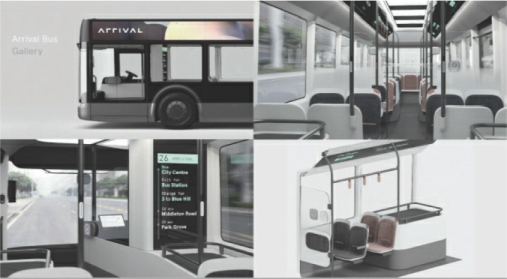
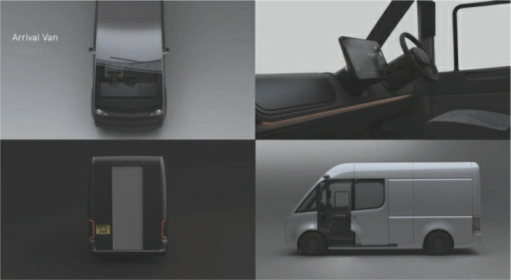
Arrival has four vehicle platforms currently under development: Arrival Bus, Arrival Van, large van and Arrival Car. The estimated start of production for the Arrival Bus is in the second quarter of 2022 and that for the Arrival Van is in the third quarter of 2022.
Arrivals Competitive Positioning
Arrival has developed core technologies that enable the production of EVs through its proprietary microfactories. Arrival believes these technologies will enable it to produce EVs at a competitive cost and to more rapidly adapt its vehicles to the needs of local markets.
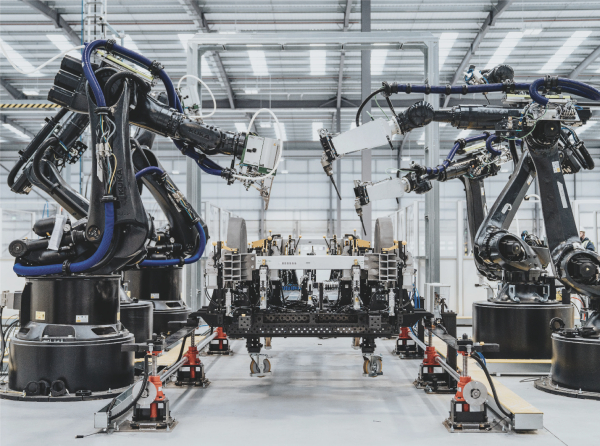
The foundational principle behind microfactories is the use of technology cells, each of which is a dedicated part of a microfactory that can robotically complete a specific part of the vehicle production process. These technology cells have allowed Arrival to rethink the traditional OEM production line and use a more flexible assembly method where each technology cell is optimized to perform specific production processes. Key contributors to Arrivals microfactory design and assembly process include the utilization of its in-house plug-and-play components, its modular skateboard design and its proprietary composite material technology. Each one of these key contributors has been integrated into Arrivals in-house developed software architecture that ultimately drives the production process within the microfactories. Arrivals in-house developed software system spans from the initial design stages through the production and operation of the EVs. Arrival believes its new method of design and assembly is new not only among its peers in the EV industry but also among those in the traditional OEM industry.
Lower capital investment and greater profitability
Numerous factors contribute to Arrivals expectation that it will achieve lower capital investment requirements across its owned and controlled ecosystem while also positioning Arrival to achieve greater profitability relative to other OEMs. At comparable annual production volumes, the capital investment for Arrivals microfactories is estimated to be less than a traditional OEM production facility over the long-term once its facilities are fully optimized. A primary driver of these cost savings is the use of Arrivals proprietary composite materials that do not require capital intensive metal stamping plants, welding facilities or paint shops. Arrivals expectation is that its lower operating expenditures associated with its microfactories, lower procurement costs associated with its in-house plug-and-play components, its grid-based architecture and proprietary composite materials as well as the utilization of its in-house developed software architecture will allow it to achieve double-digit margins on a per vehicle basis when it is fully at scale.
Scalability
A key attribute to the implementation of microfactories is Arrivals ability to scale globally. Arrival estimates its microfactories can be fully operational within six months of a warehouse being ready for equipment installation. Arrivals microfactories are designed to fit into an estimated footprint of 30,000 square meters (or approximately 320,000 square feet) or less, which is significantly smaller than a traditional automotive assembly plant. Arrival believes there is an abundance of warehouse space globally suitable for microfactories. The availability of warehouses and low levels of expected capital expenditure per microfactory also allows Arrival to deploy microfactories in numerous metropolitan communities. Arrival believes the deployment of its microfactories into local communities will be well-accepted by governments and municipalities based on its ability to offer local
| 2 |
CONFIDENTIAL TREATMENT REQUESTED PURSUANT TO 17 C.F.R. §200.83
jobs and to pay local taxes. Arrival believes that every city with over one million inhabitants could benefit from at least one microfactory. Globally, Arrival estimates there are more than 500 cities with a population of more than one million. Arrival currently has three microfactories in active development, one in Rock Hill, South Carolina, USA, one in Bicester, UK and one in Charlotte, North Carolina, USA, for start of production in the second quarter of 2022, the third quarter of 2022 and the fourth quarter of 2022, respectively. The flexibility of the microfactory approach allows Arrival to determine future roll out plans at a later date.
Compelling Total Cost of Ownership
Arrival believes its vans and buses have a compelling TCO driven by the low acquisition and operating costs of its vehicles.
Arrivals low costs for both its vans and buses come as a result of the significant benefits it can achieve from its design using its microfactories, in-house plug-and-play components, proprietary composite materials, and its in-house software applications.
Arrivals lower operating costs reflect its vehicles battery infrastructure and energy efficiency, as well as the lower maintenance costs associated with EVs. Arrivals battery cell configuration is scalable and provides for multiple power configurations. Arrivals vehicles can be purpose built to include flexible battery pack configurations. Lower ongoing operating costs can be achieved using its modular plug-and-play components that have been designed for easy replacement and upgrades. Arrivals proprietary composite materials allow for quick, simple, and cost-effective panel replacement or service.
Owned and Controlled Ecosystem
Arrival believes the sophistication and depth of its owned and controlled ecosystem and its technical capabilities can help to position it as a leading EV company. Arrivals ability to collect proprietary data across its design, parts, manufacturing, vehicle performance, and vehicle usage ecosystem affords it the ability to apply state-of-the-art data analytics. Arrival believes this in-house data collection and analysis process using its in-house developed software architecture will allow Arrival to identify new solutions, tools, and user benefits for the benefit of Arrivals customers. Arrival is already utilizing such data within its research and development teams as it evolves its designs for future versions of EVs. Arrivals owned and controlled ecosystem positions Arrival to further advance into the next generation of EV design and manufacturing.
Market Opportunity
Arrival believes the commercial vehicle segment is an attractive market for its business strategy. Arrival is initially targeting two primary categories within this segment: commercial vans and commercial buses. As the industry shifts towards zero emission vehicles, Arrival believes its advanced stage EV development, cost effective production, improved user experience, and global presence strategically position it to capture a more than sufficient market share to achieve its business plan assumptions.
Arrival defines its total addressable market based on its ability to compete on price and quality within the geographic regions where it plans to compete. Based on the attributes of Arrivals electric vans and buses, it not only considers the addressable electric commercial vehicle market, but also the existing ICE commercial vehicle market. Based on industry sources, Arrival believes the initial addressable market for electric commercial vans is approximately $70 billion. When including the addressable market for ICE commercial vans, Arrival believes its total addressable market increases to approximately $280 billion. Arrival estimates the initial addressable market for electric commercial buses to be approximately $40 billion. When including the addressable market for ICE
| 3 |
CONFIDENTIAL TREATMENT REQUESTED PURSUANT TO 17 C.F.R. §200.83
commercial buses, Arrival believes its total addressable market increases to approximately $154 billion. In total, Arrival believes its total addressable market for commercial vans and buses is approximately $430 billion. Arrival aims to rapidly develop new variants from existing products and further capture the market opportunity.
Arrivals initial geographic target markets include North America, the United Kingdom and Europe. Arrival believes its existing employee and microfactory presence in these markets will best position it to accelerate its market penetration rates.
Arrival believes there are several drivers to the ongoing and underlying growth of its total addressable market. One such driver is the continued growth in e-commerce. According to a Statista Digital Market Outlook 2020 report, the e-commerce market is estimated to grow by approximately 37% from 2020 through 2024. Arrival believes this growth will increase the demand for EVs from its target customers.
The Business Combination and Other Recent Developments
Business Combination
On March 24, 2021, the Business Combination was consummated. As part of the Business Combination:
| | the existing ordinary and preferred shareholders of Arrival Luxembourg SARL contributed their respective equity interests in Arrival Luxembourg SARL to the Company in exchange for Ordinary Shares (the Exchanges); |
| | following the Exchanges, CIIG merged with and into Merger Sub and all shares of CIIG Common Stock were exchanged for Ordinary Shares, and, in connection therewith, CIIGs corporate name changed to Arrival Vault US, Inc. (the Merger); |
| | each outstanding warrant to purchase shares of CIIGs Common Stock was converted into a Warrant to purchase Ordinary Shares; |
| | each Arrival Luxembourg SARL option, whether vested or unvested, was assumed by the Company and now represents an option award exercisable for Ordinary Shares; |
| | the Arrival Luxembourg SARL restricted shares were exchanged for restricted Ordinary Shares; and |
| | Arrival Luxembourg SARL and CIIG became direct, wholly-owned subsidiaries of the Company. |
Immediately prior to the Closing, the Private Placement Investors purchased an aggregate of 40,000,000 shares of CIIG Class A Common Stock, for a purchase price of $10.00 per share and an aggregate purchase price of $400,000,000, which shares of CIIG Class A Common Stock were automatically exchanged with the Company for Ordinary Shares in the Merger.
On the closing date of the Business Combination, the Company, certain persons and entities holding CIIGs Class B common stock and all shareholders of Arrival Luxembourg SARL other than the Arrival Luxembourg SARL employees holding ordinary shares granted under the Arrival Restricted Share Plan 2020 entered into a Registration Rights and Lock-Up Agreement which provides customary demand and piggyback registration rights and which restricts the transfer of the Ordinary Shares during the applicable lock-up periods, which (i) in the case of New Holders (as defined in the Registration Rights and Lock-Up Agreement), expired on September 20, 2021; (ii) in the case of Kinetik S.à r.l, is expected to expire on December 31, 2022; and (iii) in the case of CIIG Management LLC and the persons and entities holding CIIGs Class B common stock, is expected to expire on March 24, 2022. See Shares Eligible for Future Sale for further information.
| 4 |
CONFIDENTIAL TREATMENT REQUESTED PURSUANT TO 17 C.F.R. §200.83
Warrant Redemption
On July 21, 2021, Arrival completed the redemption of all its remaining outstanding 711,536 Public Warrants that had not been exercised as of that date, for $0.01 per warrant. Prior to the redemption, the Company had also received approximately $140.6 million of cash proceeds resulting from the exercise of 12,225,957 outstanding Public Warrants, each exercisable for one of the Companys ordinary shares at an exercise price of $11.50 per share. In addition, since June 18, 2021, 4,783,334 private warrants were exercised on a cashless basis resulting in the issuance of 2,048,117 ordinary shares of the Company. The number of shares of our common stock to be outstanding after this offering is based on 614,166,568 Ordinary Shares outstanding as of June 30, 2021 on a pro forma basis giving effect to the completion on July 21, 2021 of the redemption of all of our outstanding public warrants, and excludes:
| | 6,264,773 Ordinary Shares issuable upon exercise of Warrants that remaining outstanding as of June 30, 2021 after the giving effect to the redemption described above at an exercise price of $11.50 per share; |
| | 7,487,670 Ordinary Shares issuable on a time basis and 7,090,465 Ordinary Shares issuable on a milestone basis upon exercise of stock options outstanding as of June 30, 2021 with a weighted-average exercise price of $ 7.1955 per share; |
| | 14,750,826 Ordinary Shares reserved for future issuance under the Arrival Share Option Plan 2020; |
| | Ordinary Shares that will be reserved for issuance under Convertible Notes that are expected to be issued concurrently with this Offering. |
Concurrent Convertible Notes Offering
Concurrently with this offering, we are offering $ aggregate principal amount of the Convertible Notes pursuant to Rule 144A of the Securities Act. In addition, we intend to grant the initial purchasers an option to purchase, for settlement within a period of 30 days, up to an additional $ aggregate principal amount of Convertible Notes. The Convertible Notes will be issued pursuant to an indenture, among the Company and , as trustee. The Convertible Notes will bear cash interest at an annual rate of % payable on and of each year, beginning on , and will mature on unless earlier converted, redeemed or repurchased. The conversion rate for the Convertible Notes will initially be Ordinary Shares per $1,000 principal amount of Convertible Notes (equivalent to an initial conversion price of approximately $ per Ordinary Share), subject to adjustment if certain events occur. Before the close of business on the business day immediately preceding , holders will have the right to convert their Convertible Notes only upon the occurrence of certain events. On or after , holders may convert their Convertible Notes at any time at their election until the close of business on the second scheduled trading day immediately preceding the maturity date. Upon conversion of the Convertible Notes, we will pay or deliver, as the case may be, cash, Ordinary Shares or a combination of cash and Ordinary Shares, at our election. The Convertible Notes will be redeemable, in whole or in part, for cash at our option at any time, and from time to time, on or after and on or before the 41st scheduled trading day immediately preceding the maturity date, but only if the last reported sale price per Ordinary Share has been at least 130% of the conversion price then in effect for a specified period of time. The redemption price will be equal to the principal amount of the Convertible Notes to be redeemed, plus accrued and unpaid interest, if any, to, but excluding, the redemption date. Upon the occurrence of a fundamental change, which term includes certain change of control transactions, holders may require us to repurchase their Convertible Notes at a price equal to 100% of the principal amount of Convertible Notes to be repurchased, plus accrued and unpaid interest to, but not including, the date of repurchase.
| 5 |
CONFIDENTIAL TREATMENT REQUESTED PURSUANT TO 17 C.F.R. §200.83
In connection with the pricing of the Convertible Notes, we may enter into privately negotiated capped call transactions with one or more of the initial purchasers and/or their respective affiliates, pursuant to the Capped Call Transactions. The Capped Call Transactions cover, subject to anti-dilution adjustments substantially similar to those applicable to the Convertible Notes, the number of ordinary shares of common stock initially underlying the Convertible Notes. The Capped Call Transactions are expected generally to reduce the potential dilutive effect on our Ordinary Shares and/or to offset any cash payments in excess of the principal amount of the Convertible Notes due, in each case, upon conversion of the Convertible Notes.
The Capped Call Transactions are separate transactions entered into by us, are not part of the terms of the Convertible Notes and will not change the holders rights under the Convertible Notes. Holders of the Convertible Notes will not have any rights with respect to the Capped Call Transactions.
This prospectus does not constitute an offer to sell or a solicitation of an offer to buy any securities being offered in the Concurrent Convertible Notes Offering. We cannot assure you that the Concurrent Convertible Notes Offering will be completed or, if completed, on what terms it will be completed. The completion of the offering described in this prospectus is not contingent on the completion of the Concurrent Convertible Notes Offering (nor is the completion of the Concurrent Convertible Notes Offering contingent on the completion of this offering).
Implications of Being an Emerging Growth Company, a Foreign Private Issuer and a Controlled Company
The Company qualifies as an emerging growth company as defined in the Jumpstart Our Business Startups Act of 2012 (the JOBS Act). As an emerging growth company, the Company may take advantage of certain exemptions from specified disclosure and other requirements that are otherwise generally applicable to public companies. These exemptions include:
| | not being required to comply with the auditor attestation requirements for the assessment of our internal control over financial reporting provided by Section 404 of the Sarbanes-Oxley Act of 2002 (the Sarbanes-Oxley Act); |
| | reduced disclosure obligations regarding executive compensation; and |
| | not being required to hold a nonbinding advisory vote on executive compensation or seek shareholder approval of any golden parachute payments not previously approved. |
The Company may take advantage of these reporting exemptions until it is no longer an emerging growth company. The Company will remain an emerging growth company until the earlier of: (1) the last day of the fiscal year (a) following the fifth anniversary of the completion of the Business Combination, (b) in which the Company has total annual gross revenue of at least $1.07 billion, or (c) in which the Company is deemed to be a large accelerated filer, which means the market value of our common stock that is held by nonaffiliates exceeds $700 million as of the end of the prior fiscal years second fiscal quarter; and (2) the date on which the Company has issued more than $1.00 billion in non-convertible debt during the prior three-year period. The Company expects to remain an emerging growth company until at least December 31, 2021.
The Company is also considered a foreign private issuer and will report under the Exchange Act as a non-U.S. company with foreign private issuer status. This means that, even after the Company no longer qualifies as an emerging growth company, as long as it qualifies as a foreign private issuer under the Exchange Act, it will be exempt from certain provisions of the Exchange Act that are applicable to U.S. public companies, including:
| | the sections of the Exchange Act regulating the solicitation of proxies, consents or authorizations in respect of a security registered under the Exchange Act; |
| 6 |
CONFIDENTIAL TREATMENT REQUESTED PURSUANT TO 17 C.F.R. §200.83
| | the sections of the Exchange Act requiring insiders to file public reports of their stock ownership and trading activities and liability for insiders who profit from trades made in a short period of time; and |
| | the rules under the Exchange Act requiring the filing with the Securities and Exchange Commission (the SEC) of quarterly reports on Form 10-Q containing unaudited financial and other specified information, or current reports on Form 8-K, upon the occurrence of specified significant events. |
The Company may take advantage of these reporting exemptions until such time as it is no longer a foreign private issuer. The Company could lose its status as a foreign private issuer under current SEC rules and regulations if more than 50% of the Companys outstanding voting securities become directly or indirectly held of record by U.S. holders and any one of the following is true: (i) the majority of the Companys directors or executive officers are U.S. citizens or residents; (ii) more than 50% of the Companys assets are located in the United States; or (iii) the Companys business is administered principally in the United States.
The Company may choose to take advantage of some but not all of these reduced burdens. The Company has taken advantage of reduced reporting requirements in this prospectus. Accordingly, the information contained in this prospectus may be different from the information you receive from the Companys competitors that are public companies, or other public companies in which you have made an investment.
As a foreign private issuer, the Company is permitted to follow certain Luxembourg corporate governance practices in lieu of certain listing rules of Nasdaq (the Nasdaq Listing Rules). The Company plans to follow the corporate governance requirements of the Nasdaq Listing Rules, except that it intends to follow Luxembourg practice with respect to quorum requirements for shareholder meetings in lieu of the requirement under Nasdaq Listing Rules that the quorum be not less than 33 1/3% of the outstanding voting shares. Under the Companys articles of association, at an ordinary general meeting, there is no quorum requirement and resolutions are adopted by a simple majority of validly cast votes. In addition, under the Companys articles of association, for any resolutions to be considered at an extraordinary general meeting of shareholders, the quorum shall be at least one half of our issued share capital unless otherwise mandatorily required by law.
For purposes of the Nasdaq Listing Rules, the Company will be a controlled company. Under Nasdaq Listing Rules, controlled companies are companies of which more than 50% of the voting power for the election of directors is held by an individual, a group, or another company. Kinetik S.à r.l. owns 74.67% of the outstanding Ordinary Shares. Accordingly, although the Company will be eligible to take advantage of certain exemptions from certain Nasdaq corporate governance standards, it currently does not intend to do so except for the quorum requirement discussed above.
Summary Risk Factors
Investing in the Companys securities entails a high degree of risk as more fully described under Risk Factors. You should carefully consider such risks before deciding to invest in the Companys securities. These risks include, among others:
| | Arrival is an early stage company with a history of losses, and expects to incur significant expenses and continuing losses for the foreseeable future. |
| | Arrival has a limited operating history and has not yet manufactured or sold any production vehicles to customers and may never develop or manufacture any vehicles. |
| | While Arrival has received orders for vehicles, the period of time from the receipt of orders to implementation and delivery is long, potentially spanning over several months, and the orders are subject to the risks of cancellation or postponement of the orders. |
| 7 |
CONFIDENTIAL TREATMENT REQUESTED PURSUANT TO 17 C.F.R. §200.83
| | Arrivals growth is dependent upon the willingness of operators of commercial vehicle fleets and small to medium sized businesses to adopt EVs and on Arrivals ability to produce, sell and service vehicles that meet their needs. If the market for commercial EVs does not develop as Arrival expects or develops slower than Arrival expects, Arrivals business, prospects, financial condition and operating results will be adversely affected. |
| | The orders from UPS, LeasePlan and Anaheim Transportation Network constitute all of the current orders for Arrival vehicles. If these orders are cancelled, modified or delayed, Arrivals prospects, results of operations, liquidity and cash flow will be materially adversely affected. |
| | Certain of Arrivals strategic, development and deployment arrangements could be terminated or may not materialize into long-term contract partnership arrangements and may restrict or limit Arrival from developing EVs with other strategic partners. |
| | Arrivals ability to execute its microfactory production model on a large scale is unproven, still evolving and dependent on Arrivals ability to raise sufficient capital to support production. This production model may lead to increased costs and/or reduced production of its vehicles and adversely affect Arrivals ability to operate its business. |
| | Arrival may encounter obstacles outside of its control that slow market adoption of EVs, such as regulatory requirements or infrastructure limitations. |
| | As Arrival expands into new territories, many of which will be international territories, it may encounter stronger market resistance than it currently expects, including from incumbent competitors in those territories. |
| | Arrival is dependent on its suppliers, some of which are single or limited source suppliers, and the inability of these suppliers to deliver the raw materials and components of Arrivals vehicles in a timely manner and at prices and volumes acceptable to it could have a material adverse effect on its business, prospects and operating results. |
| | There are complex software and technology systems that need to be developed in coordination with vendors and suppliers in order to reach production for Arrivals EVs, and there can be no assurance such systems will be successfully developed. |
| | Arrival may incur significant costs and expenses in connection with obtaining, maintaining, protecting, defending and enforcing its intellectual property rights (covering patents, trademarks, trade names, and trade secrets), including through litigation. If such intellectual property is not adequately protected, Arrival may not be able to build name recognition in its markets of interest, and its business and competitive position may be harmed. Additionally, even if Arrival is able to take measures to protect its intellectual property, third-parties may independently develop technologies that are the same or similar to Arrival, and Arrival may not be able to obtain and protect its intellectual property rights throughout the world. |
| | Patent applications which have been submitted to the authorities may not result in granted patents or may require the applications to be modified in order for patent coverage to be obtained. |
| | The discovery of defects in Arrival vehicles may result in delays in new model launches, recall campaigns or increased warranty costs. Additionally, discovery of such defects may result in a decrease in the residual value of its vehicles, which may materially harm its business. |
| | Arrival may become subject to product liability claims, which could harm its financial condition and liquidity if it is not able to successfully defend or insure against such claims. |
| 8 |
CONFIDENTIAL TREATMENT REQUESTED PURSUANT TO 17 C.F.R. §200.83
| | Arrival will rely on complex robotic assembly and component manufacturing for its production, which involves a significant degree of risk and uncertainty in terms of operational performance and costs. |
| | If Arrival fails to comply with its obligations under license or technology agreements with third parties, it may be required to pay damages, and Arrival could lose license rights that are critical to its business. |
| | Some of Arrivals products contain open source software, which may pose particular risks to its proprietary software, products and services in a manner that could harm its business. |
| | Arrival is subject to stringent and changing laws, rules, regulations and standards, information security policies and contractual obligations related to data privacy and security. Arrivals actual or perceived failure to comply with such obligations could result in proceedings, actions or penalties and harm its business. |
| | Arrival is subject to cybersecurity risks to its various systems and software and any material failure, weakness, interruption, cyber event, incident, undetected defects, errors or bugs, or breach of security could prevent Arrival from effectively operating its business. |
| | Arrival is likely to face competition from a number of sources, which may impair its revenues, increase its costs to acquire new customers, and hinder its ability to acquire new customers. |
| | Arrival is highly dependent on the services of its senior management team (including Denis Sverdlov, its Founder and Chief Executive Officer), and if Arrival is unable to retain some or all of this team, its ability to compete could be harmed. |
| | A market for the Arrivals securities may not continue, which would adversely affect the liquidity and price of its securities. |
| | We do not anticipate paying any cash dividends in the foreseeable future. |
| | New investors in our Ordinary Shares will experience immediate and substantial book value dilution after this offering. |
| | The Concurrent Convertible Notes Offering could cause the market price for our Ordinary Shares to decline. |
Corporate Information
The Company was incorporated under the laws of the Grand Duchy of Luxembourg on October 27, 2020 as a joint stock company (société anonyme) having its registered office at 1, rue Peternelchen L-2370 Howald, Grand Duchy of Luxembourg, registered with the Luxembourg register of commerce and companies (Registre de Commerce et des Sociétés de Luxembourg) under number B 248209. The Companys principal website address is www.arrival.com. We do not incorporate the information contained on, or accessible through, the Companys websites into this prospectus, and you should not consider it a part of this prospectus.
| 9 |
CONFIDENTIAL TREATMENT REQUESTED PURSUANT TO 17 C.F.R. §200.83
| Ordinary Shares to be issued and offered by us |
||
| Ordinary Shares offered by the Selling Securityholders |
||
| Underwriters option to purchase additional Ordinary Shares |
We and the Selling Securityholders identified in this prospectus have granted the underwriters the right for 30 days from the date of this prospectus to purchase up to an additional Ordinary Shares from us and the Selling Securityholders, at the public offering price, less underwriting discounts and commissions. | |
| Use of Proceeds |
We will receive all of the net proceeds from the offering of shares by us, which we estimate will be approximately $ , after deducting estimated underwriting discounts and commissions and estimated offering expenses payable by us, assuming an offering price of $ per share. We expect to use the net proceeds from the offering for general corporate purposes. | |
| The Selling Securityholders will receive all net proceeds from the sale of the Ordinary Shares to be sold by them in this offering, and we will not receive any of the proceeds from the sale of their shares. | ||
| Dividend policy |
Other than as disclosed elsewhere in this prospectus, we currently expect to retain all future earnings for use in the operation and expansion of our business and do not plan to pay any dividends on our ordinary shares in the near future. The declaration and payment of any dividends in the future will be determined by the Board of Directors in its discretion, and will depend on a number of factors, including our earnings, capital requirements, overall financial condition, applicable law and contractual restrictions. See Dividend Policy. | |
| Registration Rights and Lock-Up Agreement |
Our directors, officers and certain of our shareholders are subject to certain restrictions on transfer until the termination of applicable lock-up periods and have rights to require that we register the resale of their shares. See Shares Eligible for Future Sale for further information. | |
| Market for our securities |
Our Ordinary Shares are listed on The Nasdaq Global Select Market under the symbol ARVL. | |
| Risk factors |
Investing in our securities involves substantial risks. See Risk Factors for a description of certain of the risks you should consider before investing in the Company. | |
| 10 |
CONFIDENTIAL TREATMENT REQUESTED PURSUANT TO 17 C.F.R. §200.83
The number of shares of our common stock to be outstanding after this offering is based on 614,166,568 Ordinary Shares outstanding as of June 30, 2021 on a pro forma basis giving effect to the completion on July 21, 2021 of the redemption of all of our outstanding public warrants, and excludes:
| | 6,264,773 Ordinary Shares issuable upon exercise of Warrants that remain outstanding as of June 30, 2021 after the giving effect to the redemption described above at an exercise price of $11.50 per share; |
| | 7,487,670 Ordinary Shares issuable on a time basis and 7,090,465 Ordinary Shares issuable on a milestone basis upon exercise of stock options outstanding as of June 30, 2021 with a weighted-average exercise price of $ 7.1955 per share; |
| | 14,750,826 Ordinary Shares reserved for future issuance under the Arrival Share Option Plan 2020; |
| | Ordinary Shares that will be reserved for issuance under Convertible Notes that are expected to be issued concurrently with this Offering. |
Unless otherwise indicated, all information contained in this prospectus, including the number of Ordinary Shares of common stock that will be outstanding after this offering, assumes:
| | no exercise by the underwriters of their option to purchase additional Ordinary Shares; and |
| | no exercise of the outstanding warrants or options described above. |
| 11 |
CONFIDENTIAL TREATMENT REQUESTED PURSUANT TO 17 C.F.R. §200.83
SELECTED SUMMARY HISTORICAL FINANCIAL DATA OF ARRIVAL
The information presented below is derived from Arrivals audited consolidated financial statements as of and for the fiscal years ended December 31, 2020 and 2019 and from its unaudited consolidated financial statements as of and for the six months ended June 30, 2021 and 2020 included elsewhere in this prospectus. These interim condensed consolidated financial statements are unaudited and, in the opinion of management, reflect all normal recurring adjustments necessary to fairly present the financial position, results of operations and cash flows for the periods presented. The information presented below should be read alongside Arrivals consolidated financial statements and accompanying footnotes included elsewhere in this prospectus and with Risks Related to Arrival, and Managements Discussion and Analysis of Financial Condition and Results of Operations. Arrivals historical results are not necessarily indicative of results that may be expected in any future period, and results for any interim period are not necessarily indicative of results that may be expected for any future period.
The following table highlights key measures of Arrivals financial condition and results of operations:
Unaudited consolidated statement of profit or loss and other comprehensive (loss)/income
| Six months ended | Year Ended | |||||||||||||||
| June 30, 2021 | June 30, 2020* | December 31, 2020 |
December 31, 2019 |
|||||||||||||
| (In thousands of euro, except per share amounts) | ||||||||||||||||
| Administrative expenses |
(73,801 | ) | (23,405 | ) | (75,133 | ) | (31,392 | ) | ||||||||
| Research and development expenses |
(13,146 | ) | (6,909 | ) | (17,947 | ) | (11,149 | ) | ||||||||
| Impairment expense |
(1,918 | ) | (650 | ) | (391 | ) | (4,972 | ) | ||||||||
| Other operating income |
1,610 | 759 | 2,362 | 2,583 | ||||||||||||
| Listing expense** |
(1,018,024 | ) | | | | |||||||||||
| Other expenses |
(185 | ) | (208 | ) | (6,853 | ) | (6,911 | ) | ||||||||
| Operating (loss) |
(1,105,464 | ) | (30,413 | ) | (97,962 | ) | (51,841 | ) | ||||||||
| Finance income |
96,270 | 1,795 | 2,703 | 51 | ||||||||||||
| Finance cost |
(8,616 | ) | (2,343 | ) | (5,758 | ) | (3,235 | ) | ||||||||
| Net Finance income/(cost) |
87,654 | (548 | ) | (3,055 | ) | (3,184 | ) | |||||||||
| (Loss) before tax |
(1,017,810 | ) | (30,961 | ) | (101,017 | ) | (55,025 | ) | ||||||||
| Tax income/(expense) |
(6,295 | ) | 3,834 | 17,802 | 6,929 | |||||||||||
| (Loss) for the period |
(1,024,105 | ) | (27,127 | ) | (83,215 | ) | (48,096 | ) | ||||||||
| Attributable to: |
||||||||||||||||
| Owners of the Company |
(1,024,105 | ) | (27,127 | ) | (83,215 | ) | (48,096 | ) | ||||||||
| (Loss) for the period |
(1,024,105 | ) | (27,127 | ) | (83,215 | ) | (48,096 | ) | ||||||||
| * | Comparative figures are of Arrival Luxembourg S.à r.l. in accordance with IFRS 2 for reverse merger. |
| ** | As a result of the conclusion of the merger with CIIG, Arrival issued shares and warrants to CIIG shareholders, comprised of the fair value of the Companys shares that were issued to CIIG shareholders of 1,347 million as well as the fair value of the Companys warrants of 189 million. In exchange, the Company received the identifiable net assets held by CIIG, which had a fair value upon closing of 534 million. The excess of the fair value of the equity instruments issued over the fair value of the identified net assets received, represents a non-cash expense in accordance with IFRS 2. This one-time expense as a result of the transaction, in the amount of 1,002 million, is recognized as a share listing expense presented as part of the operating results within the Consolidated Statement of Profit or Loss. Listing expense also includes 16 million of other related transaction expenses. |
| 12 |
CONFIDENTIAL TREATMENT REQUESTED PURSUANT TO 17 C.F.R. §200.83
An investment in the Companys securities carries a significant degree of risk. You should carefully consider the following risks and other information in this prospectus, including our consolidated financial statements and related notes included elsewhere in this prospectus, before you decide to purchase the Companys securities. Additional risks and uncertainties of which we are not presently aware or that we currently deem immaterial could also affect our business operations and financial condition. If any of these risks actually occur, our business, financial condition, results of operations or prospects could be materially affected. As a result, the trading price of the Companys securities could decline and you could lose part or all of your investment.
Risks Related to Arrival
Arrival is an early stage company with a history of losses, and expects to incur significant expenses and continuing losses for the foreseeable future.
Arrival has incurred losses in the operation of its business related to research and development activities since its inception. Arrival anticipates that its expenses will increase and that it will continue to incur losses in the future until at least the time it begins significant deliveries of its vehicles, which is not expected to occur before 2022. Even if Arrival is able to successfully develop and sell or lease its vehicles, there can be no assurance that the vehicles will be commercially successful and achieve or sustain profitability.
Arrival expects the rate at which it will incur losses to be significantly higher in future periods as it, among other things, designs, develops and manufactures its vehicles; deploys its microfactories; builds up inventories of parts and components for its vehicles; increases its sales and marketing activities, develops its distribution infrastructure; and increases its general and administrative functions to support its growing operations. Arrival may find that these efforts are more expensive than it currently anticipates or that these efforts may not result in revenues, which would further increase Arrivals losses.
Arrival has a limited operating history and has not yet manufactured or sold any production vehicles to customers and may never develop or manufacture any vehicles.
Arrival was incorporated in October 2015 and has a limited operating history in the automobile industry, which is continuously evolving. Arrival vehicles are in the development stage and Arrival does not expect its first vehicle to be produced until at least the second quarter of 2022, if at all. Arrival has no experience as an organization in high volume manufacturing of the planned EVs. Arrival cannot assure you that it or its partners will be able to develop efficient, automated, cost-efficient manufacturing capability and processes, and reliable sources of component supplies that will enable Arrival to meet the quality, price, engineering, design and production standards, as well as the production volumes, required to successfully mass market its EVs. You should consider Arrivals business and prospects in light of the risks and significant challenges it faces as a new entrant into its industry, including, among other things, with respect to its ability to:
| | design and produce safe, reliable and quality vehicles on an ongoing basis; |
| | obtain the necessary regulatory approvals in a timely manner; |
| | build a well-recognized and respected brand; |
| | establish and expand its customer base; |
| | successfully market not just Arrivals vehicles but also the other services it intends to provide; |
| | properly price its services, including its charging solutions, financing and lease options, and successfully anticipate the take-rate and usage of such services by users; |
| 13 |
CONFIDENTIAL TREATMENT REQUESTED PURSUANT TO 17 C.F.R. §200.83
| | successfully service its vehicles after sales and maintain a good flow of spare parts and customer goodwill; |
| | improve and maintain its operational efficiency; |
| | successfully execute its microfactory production model and maintain a reliable, secure, high-performance and scalable technology infrastructure at costs that enable it to remain competitive; |
| | predict its future revenues and appropriately budget for its expenses; |
| | obtain sufficient capital to support production needs; |
| | attract, retain and motivate talented employees; |
| | anticipate trends that may emerge and affect its business; |
| | anticipate and adapt to changing market conditions, including technological developments and changes in competitive landscape; and |
| | navigate an evolving and complex regulatory environment. |
If Arrival fails to adequately address any or all of these risks and challenges, its business may be materially and adversely affected.
Arrivals forecasted operating and financial results rely in large part upon assumptions and analyses developed by Arrival. If these assumptions and analyses prove to be incorrect, Arrivals actual operating and financial results may be significantly below its forecasts.
Whether actual operating and financial results and business developments will be consistent with Arrivals expectations and assumptions as reflected in its forecast depends on a number of factors, many of which are outside Arrivals control, including, but not limited to:
| | whether Arrival can obtain sufficient capital to begin and support its production needs, execute its business plan and grow its business; |
| | whether Arrival can control its costs and capital expenditures needed to execute its business plan; |
| | Arrivals ability to manage its growth; |
| | whether Arrival can manage relationships with key suppliers; |
| | whether Arrival can rapidly deploy its microfactories and successfully execute its production methodologies in such microfactories (including its robotic assembly process and composite manufacturing); |
| | the ability to obtain necessary regulatory approvals; |
| | demand for Arrival products and services; |
| | whether Arrival can achieve its expected pricing for its products and services; |
| | the timing and costs of new and existing marketing and promotional efforts; |
| | competition, including from established and future competitors; |
| | Arrivals ability to retain existing key management, to integrate recent hires and to attract, retain and motivate qualified personnel; |
| | the overall strength and stability of the economies in the markets in which it operates or intends to operate in the future; and |
| | regulatory, legislative and political changes; |
| 14 |
CONFIDENTIAL TREATMENT REQUESTED PURSUANT TO 17 C.F.R. §200.83
Unfavorable changes in any of these or other factors, most of which are beyond Arrivals control, could materially and adversely affect its business, results of operations and financial results. For example, on August 12, 2021, we revised expectations related to costs for the fiscal year ending December 31, 2021 as a result of increases in Adjusted EBITDA loss and capital expenditures, and information related to non-binding letters of intent as well as the production of Arrival Van, both of which require accelerated production costs and capital expenditures with respect to our microfactories to meet this increased demand for vehicles. Such revisions could materially adversely impact the trading price of Ordinary Shares, reduce investor confidence or expose us to risks related to litigation, investigations or similar actions.
In addition, Arrivals production methodologies (including robotic assembly processes and composite manufacturing) are still being tested and its assumptions may not be accurate. If Arrival is unable to successfully implement its production methodologies, or the assumptions on which such production methodologies are based prove to be incorrect, Arrivals business, prospects, financial condition and operating results could be adversely effected.
Arrival needs to raise additional funds, and these funds may not be available to it when it needs them, or may only be available on unfavorable terms. As a result, Arrival may be unable to meet its future capital requirements which would limit its ability to grow and jeopardize its ability to execute its business plan or continue its business operations.
The design, production, sale and servicing of Arrivals EVs is capital-intensive. Arrival needs to raise additional funds, including through this contemplated offering of securities and from other sources, to execute its current near-term and long-term business plan and production timeline, as well as to maintain its ongoing operations, continue research, development and design efforts and improve infrastructure. Arrival may raise additional funds through the issuance of equity, equity-linked or debt securities or through obtaining credit from government or financial institutions. Arrival cannot be certain that additional funds will be available to it on favorable terms when required, or at all.
In addition, Arrival expects its capital expenditure and working capital requirements to increase substantially in the near future, as it begins to produce its vehicle platforms, develop its customer support and marketing infrastructure and continue its research and development efforts. If Arrival cannot raise additional funds when it needs them, its business, prospects, financial condition and operating results could be materially adversely affected, and if Arrival receives less proceeds from this contemplated offering than anticipated or from the Concurrent Convertible Notes Offering, or both of them, then Arrival will be required to raise additional funds in order to execute our current near-term business plan. For example, if Arrival is unable to secure additional capital, Arrival may be required to curtail development and tooling of its microfactories and take additional measures to reduce costs in order to conserve cash, including reducing the number of vehicles and planned microfactories to start production in 2022. Such measures would delay when we commence generating revenue and, in turn, when we expect to commence generating positive cash flow. Delays in the building of Arrivals microfactories will, in turn, delay the production of Arrival vehicles, which is critical to the realization of Arrivals business plan, while reductions in expenditures could negatively impact our relationships with its suppliers.
In addition, if Arrival raises funds through further issuances of equity and/or equity-linked securities, dilution to its stockholders would result. Any equity or equity-linked securities issued also may provide for rights, preferences or privileges senior to those of holders of Arrivals Ordinary Shares. The terms of debt securities issued or borrowings, if available, could impose significant restrictions on Arrivals operations and could involve additional restrictive covenants relating to Arrivals capital raising activities, which may make it more difficult for Arrival to obtain additional capital and to pursue business opportunities.
| 15 |
CONFIDENTIAL TREATMENT REQUESTED PURSUANT TO 17 C.F.R. §200.83
While Arrival has received orders for vehicles, the period of time from the receipt of orders to implementation and delivery is long, potentially spanning over several months, and the orders are subject to the risks of cancellation or postponement of the orders.
Arrival vehicles are in the development stage and Arrival does not expect its first vehicle to be produced until at least the second quarter of 2022, if at all. Even after Arrival begins production of its vehicles, due to the nature of large commercial fleet orders, the anticipated lead time between receipt of orders for Arrivals EVs and implementation and delivery of its EVs is long, potentially spanning over several months. Given this anticipated lead time, there is a heightened risk that customers that have ordered vehicles may not ultimately take delivery due to potential changes in customer preferences, competitive developments and other factors. As a result, no assurance can be made that orders will not be cancelled or postponed, or that orders will ultimately result in the purchase or lease of EVs. Any cancellations or postponements could harm Arrivals financial condition, business, prospects and operating results. Currently no customers have paid deposits or will be required to pay any penalties for cancellations, or, other than UPS, LeasePlan or Anaheim Transportation Network, have made any commitments to purchase Arrival vehicles. Arrival anticipates contracting with customers on terms which require the payment of a deposit and are not cancellable for convenience; however, in certain cases, Arrival and a customer may agree to commercial terms which include (amongst other things) the ability for the customer to modify or terminate the vehicle order and the parties may agree that a deposit is not required.
In addition, Arrivals business model is initially focused on building relationships with commercial bus, van and car fleet customers. Even if Arrival is able to obtain binding orders, customers may limit their volume of purchases initially as they assess Arrivals vehicles and whether to make a broader transition to EVs. This may be a long process and will depend on the safety, reliability, efficiency and quality of Arrivals vehicles, as well as the support and service that Arrival offers. It will also depend on factors outside of Arrivals control, such as general market conditions and broader trends in fleet management and vehicle electrification, which could impact customer buying decisions. As a result, there is significant uncertainty regarding demand for Arrivals products and the pace and levels of growth that Arrival will be able to achieve.
Arrivals growth is dependent upon the willingness of operators of commercial vehicle fleets and small to medium sized businesses to adopt EVs and on Arrivals ability to produce, sell and service vehicles that meet their needs. If the market for commercial EVs does not develop as Arrival expects or develops slower than Arrival expects, Arrivals business, prospects, financial condition and operating results will be adversely affected.
Arrivals growth is dependent upon the adoption of EVs by operators of commercial vehicle fleets and on Arrivals ability to produce, sell and service vehicles that meet their needs. The entry of commercial EVs into the medium-duty commercial vehicle market is a relatively new development, particularly in the United States, and is characterized by rapidly changing technologies and evolving government regulation, industry standards and customer views of the merits of using EVs in their businesses. This process has been slow to date. As part of Arrivals sales efforts, Arrival must educate fleet managers as to what Arrival believes are the economical savings during the life of the vehicle and the lower total cost of ownership of Arrivals vehicles. As such, Arrival believes that operators of commercial vehicle fleets will consider many factors when deciding whether to purchase Arrivals commercial EVs (or commercial EVs generally) or vehicles powered by ICE, particularly diesel-fueled or natural gas-fueled vehicles. Arrival believes these factors include:
| | the difference in the initial purchase prices of commercial EVs with comparable vehicles powered by ICE, both including and excluding the effect of government and other subsidies and incentives designed to promote the purchase of EVs; |
| | the total cost of ownership of the vehicle over its expected life, which includes the initial purchase price and ongoing operating and maintenance costs; |
| | the availability and terms of financing options for purchases of vehicles and, for commercial EVs, financing options for battery systems; |
| 16 |
CONFIDENTIAL TREATMENT REQUESTED PURSUANT TO 17 C.F.R. §200.83
| | the availability of tax and other governmental incentives to purchase and operate EVs and future regulations requiring increased use of nonpolluting vehicles; |
| | government regulations and economic incentives promoting fuel efficiency and alternate forms of energy; |
| | fuel prices, including volatility in the cost of diesel or a prolonged period of low gasoline and natural gas costs that could decrease incentives to transition to EVs; |
| | the cost and availability of other alternatives to diesel fueled vehicles, such as vehicles powered by natural gas; |
| | corporate sustainability initiatives; |
| | commercial EV quality, performance and safety (particularly with respect to lithium-ion battery packs); |
| | the quality and availability of service for the vehicle, including the availability of replacement parts; |
| | the limited range over which commercial EVs may be driven on a single battery charge; |
| | access to charging stations and related infrastructure costs, and standardization of EV charging systems; |
| | electric grid capacity and reliability; and |
| | macroeconomic factors. |
If, in weighing these factors, operators of commercial vehicle fleets determine that there is not a compelling business justification for purchasing commercial EVs, particularly those that Arrival will produce and sell, then the market for commercial EVs may not develop as Arrival expects or may develop more slowly than Arrival expects, which would adversely affect Arrivals business, prospects, financial condition and operating results.
In addition, any reduction, elimination or selective application of tax and other governmental incentives and subsidies because of policy changes, the reduced need for such subsidies and incentives due to the perceived success of the EV, fiscal tightening or other reasons may result in the diminished competitiveness of the EV industry generally or Arrivals EVs in particular, which would adversely affect Arrivals business, prospects, financial condition and operating results. Further, Arrival cannot assure that the current governmental incentives and subsidies available for purchasers of EVs will remain available.
The orders from UPS, LeasePlan and Anaheim Transportation Network constitute all of the current orders for Arrival vehicles. If these orders are cancelled, modified or delayed, Arrivals prospects, results of operations, liquidity and cash flow will be materially adversely affected.
The UPS order for 10,000 vehicles (with a UPS option to purchase up to an additional 10,000 vehicles), the LeasePlan agreement for 3,000 vehicles and the Anaheim Transportation Network agreement constitute the only agreements in place with respect to the order of Arrival vehicles. The vehicle volumes to be purchased pursuant to the UPS, LeasePlan and Anaheim Transportation Network orders may be modified or cancelled by UPS, LeasePlan or Anaheim Transportation Network, respectively. If the UPS, LeasePlan or Anaheim Transportation Network order is cancelled or modified, or any other arrangements are terminated, and Arrival has not received additional orders from other customers, its business, prospects, financial condition and operating results will be materially adversely affected.
Certain of Arrivals strategic, development and deployment arrangements could be terminated or may not materialize into long-term contract partnership arrangements and may restrict or limit Arrival from developing EVs with other strategic partners.
Arrival has arrangements with strategic, development and deployment partners and collaborators. Some of these arrangements are evidenced by memorandums of understanding, non-binding orders or letters of intent, early
| 17 |
CONFIDENTIAL TREATMENT REQUESTED PURSUANT TO 17 C.F.R. §200.83
stage agreements that are used for design and development purposes but will require renegotiation at later stages of development or production or master agreements that have yet to be implemented under separately negotiated statements of work, each of which could be terminated or may not materialize into next-stage contracts or long-term contract partnership arrangements. In addition, Arrival does not currently have arrangements in place that will allow it to fully execute its business plan, including, without limitation, final supply and manufacturing agreements and fleet service and management agreements. Moreover, existing or future arrangements may contain limitations on Arrivals ability to enter into strategic, development and deployment arrangements with other partners. For example, the Collaboration Framework Agreement with HKMC, pursuant to which Arrival and Hyundai have agreed, among things to jointly develop vehicles using Arrivals technologies, prevents Arrival from developing EVs with other traditional OEMs until November 3, 2022. If Arrival is unable to maintain such arrangements and agreements, or if such agreements or arrangements contain other restrictions from or limitations on developing EVs with other strategic partners, its business, prospects, financial condition and operating results may be materially and adversely affected.
Arrivals ability to execute its microfactory production model on a large scale is unproven, still evolving and dependent on Arrivals ability to raise sufficient capital to support production. This production model may lead to increased costs and/or reduced production of its vehicles and adversely affect Arrivals ability to operate its business.
Arrivals business model depends in large part on its ability to execute its plans to manufacture, market, deploy and service its EVs at microfactories. Arrivals reliance on this production model will be subject to risks, including that Arrival:
| | may require a larger than anticipated factory footprint, which would increase Arrivals costs of setting up the microfactories and would significantly delay production of its vehicles; |
| | may not be able to reach its rate of production targets within its microfactories for its primary products, which would reduce its ability to be profitable; |
| | may not be able to locate existing buildings meeting the requirements for its microfactories with respect to size, shape, power supply, and strength of construction, which would increase its costs of setting up the microfactories and would significantly delay production of its vehicles; |
| | may not be able to build the expected number of microfactories, which would reduce its production targets and have a material adverse impact on its results of operations and financial condition; and |
| | may experience higher local wages and supplier, manufacturing and construction costs than expected in local regions, resulting in higher operating costs and reducing its ability to be profitable. |
Arrival currently has three microfactories in active development: one in Rock Hill, South Carolina, USA, one in Bicester, UK and one in Charlotte, North Carolina, USA. These microfactories are expected to start production in the second quarter of 2022, the third quarter of 2022 and the fourth quarter of 2022, respectively. Arrival plans to have three microfactories in operation by the end of 2022. Due to the relatively short commissioning times of the Arrival microfactory, the exact locations of the microfactories that will follow Rock Hill, South Carolina, USA, Bicester, UK and Charlotte, North Carolina, USA are yet to be determined.
In addition, Arrival intends to establish a back office in each microfactory to handle customary administrative and support services such as local payroll processes and tax and company registrations. Any inability to do so, or delays in doing so, could adversely affect Arrivals ability to operate its business and delay productions of its vehicles.
If any of the foregoing issues occur, and Arrival is unable to execute on its microfactory production business model, Arrivals business, prospects, financial condition and operating results may be materially and adversely affected.
| 18 |
CONFIDENTIAL TREATMENT REQUESTED PURSUANT TO 17 C.F.R. §200.83
Arrival may encounter obstacles outside of its control that slow market adoption of EVs, such as regulatory requirements or infrastructure limitations.
Arrivals growth is highly dependent upon the adoption of EVs by the commercial and municipal fleet industry. The target demographics for Arrivals EVs are highly competitive. If the market for EVs does not develop at the rate or in the manner or to the extent that Arrival expects, or if critical assumptions Arrival has made regarding the efficiency of its EVs are incorrect or incomplete, Arrivals business, prospects, financial condition and operating results will be harmed. The fleet market for EVs is new and untested and is characterized by rapidly changing technologies, price competition, numerous competitors, including OEMs, evolving government regulation and industry standards and uncertain customer demands and behaviors.
Arrivals growth depends upon Arrivals ability to maintain relationships with Arrivals existing suppliers, source suppliers for Arrivals critical components, and complete building out Arrivals supply chain, while effectively managing the risks due to such relationships.
Arrivals growth will be dependent upon Arrivals ability to enter into supplier agreements and maintain its relationships with suppliers who are critical and necessary to the output and production of Arrivals vehicles. Arrival also relies on a small group of suppliers to provide Arrival with the components for Arrivals vehicles. The supply agreements Arrival has or may enter into with key suppliers in the future may have provisions where such agreements can be terminated in various circumstances, including potentially without cause. If these suppliers become unable to provide or experience delays in providing components or the supply agreements Arrival has in place are terminated, it may be difficult to find replacement components. Changes in business conditions, pandemics, governmental changes, and other factors beyond Arrivals control or that Arrival does not presently anticipate could affect Arrivals ability to receive components from Arrivals suppliers.
However, Arrival has not secured supply agreements for all of its components. Arrival may be at a disadvantage in negotiating supply agreements for the production of its vehicles due to its limited operating history. In addition, there is the possibility that finalizing the supply agreements for the parts and components of Arrivals vehicles will cause significant disruption to Arrivals operations, or such supply agreements could be at costs that make it difficult for Arrival to operate profitably.
If Arrival does not enter into long-term supply agreements with guaranteed pricing for critical parts or components, Arrival may be exposed to fluctuations in components, materials and equipment prices. Substantial increases in the prices for such components, materials and equipment would increase Arrivals operating costs and could reduce Arrivals margins if Arrival cannot recoup the increased costs. Any attempts to increase the announced or expected prices of Arrivals vehicles in response to increased costs could be viewed negatively by Arrivals potential customers and could adversely affect Arrivals business, prospects, financial condition or operating results.
Arrival currently targets many customers, suppliers and partners that are large corporations with substantial negotiating power, exacting product, quality and warranty standards and potentially competitive internal solutions. If Arrival is unable to sell its products to these customers or is unable to enter into agreements with suppliers and partners on satisfactory terms, its prospects and results of operations will be adversely affected.
Many of Arrivals current and potential customers, suppliers and partners are large, multinational corporations with substantial negotiating power relative to it and, in some instances, may have internal solutions that are competitive to Arrivals products. These large, multinational corporations also have significant development resources, which may allow them to acquire or develop independently, or in partnership with others, competitive technologies. Meeting the technical requirements and securing design wins with any of these companies will require a substantial investment of Arrivals time and resources. Arrival cannot assure you that its products will
| 19 |
CONFIDENTIAL TREATMENT REQUESTED PURSUANT TO 17 C.F.R. §200.83
secure design wins from these or other companies or that it will generate meaningful revenue from the sales of its products to these key potential customers. If Arrivals products are not selected by these large corporations or if these corporations develop or acquire competitive technology, it will have an adverse effect on Arrivals business.
If Arrival is unable to establish and maintain confidence in its long-term business prospects among customers and analysts and within its industry or is subject to negative publicity, then its financial condition, operating results, business prospects and access to capital may suffer materially.
Customers may be less likely to purchase Arrivals commercial EVs if they are not convinced that Arrivals business will succeed or that its service and support and other operations will continue in the long term. Similarly, suppliers and other third parties will be less likely to invest time and resources in developing business relationships with Arrival if they are not convinced that its business will succeed. Accordingly, in order to build and maintain its business, Arrival must maintain confidence among customers, suppliers, analysts, ratings agencies and other parties in its EVs, long-term financial viability and business prospects. Maintaining such confidence may be particularly complicated by certain factors including those that are largely outside of Arrivals control, such as its limited operating history, customer unfamiliarity with its EVs, any delays in scaling production, delivery and service operations to meet demand, competition and uncertainty regarding the future of EVs, including Arrivals EVs and Arrivals production and sales performance compared with market expectations.
As Arrival expands into new territories, many of which will be international territories, it may encounter stronger market resistance than it currently expects, including from incumbent competitors in those territories.
Arrival will face risks associated with any potential international expansion of its operations into new territories, including possible unfavorable regulatory, political, tax and labor conditions, which could harm its business. In addition, in certain of these markets, Arrival may encounter incumbent competitors with established technologies and customer bases, lower prices or costs, and greater brand recognition. Arrival anticipates having international operations and subsidiaries that are subject to the legal, political, regulatory and social requirements and economic conditions in these jurisdictions. However, Arrival has no experience to date selling or leasing and servicing its vehicles internationally, and such expansion would require Arrival to make significant expenditures, including the hiring of local employees and establishing facilities, in advance of generating any revenue. Arrival will be subject to a number of risks associated with international business activities that may increase its costs, impact its ability to sell its EVs and require significant management attention. These risks include:
| | conforming Arrivals EVs to various international regulatory requirements where its EVs are sold which requirements may change over time; |
| | difficulties in obtaining or complying with various licenses, approvals, certifications and other governmental authorizations necessary to manufacture, sell or service its EVs in any of these jurisdictions; |
| | difficulty in staffing and managing foreign operations; |
| | difficulties attracting customers in new jurisdictions; |
| | foreign government taxes, regulations and permit requirements, including foreign taxes that Arrival may not be able to offset against taxes imposed upon Arrival in the U.S.; |
| | a heightened risk of failure to comply with corporation and employment tax laws; |
| | fluctuations in foreign currency exchange rates and interest rates, including risks related to any interest rate swap or other hedging activities Arrival undertakes; |
| 20 |
CONFIDENTIAL TREATMENT REQUESTED PURSUANT TO 17 C.F.R. §200.83
| | U.S. and foreign government trade restrictions, tariffs and price or exchange controls; |
| | foreign labor laws, regulations and restrictions; |
| | changes in diplomatic and trade relationships; |
| | political instability, natural disasters, global health concerns, including health pandemics such as the COVID-19 pandemic, war or events of terrorism; and |
| | the strength of international economies. |
If Arrival fails to successfully address these risks, Arrivals business, prospects, financial condition and operating results could be materially harmed.
Factors that may influence the fleet market adoption of EVs include:
| | perceptions about EV quality, safety, design, performance, reliability and cost, especially if adverse events or accidents occur that are linked to the quality or safety of EVs; |
| | perceptions about vehicle safety in general, including the use of advanced technology, such as vehicle electronics, batteries and regenerative braking systems; |
| | the decline of vehicle efficiency and/or range resulting from deterioration over time in the ability of the battery to hold a charge; |
| | changes or improvements in the fuel economy of ICE, the vehicle and the vehicle controls or competitors electrified systems; |
| | the availability of service, charging and fueling and other associated costs for EVs; |
| | access to sufficient charging infrastructure; |
| | the risk that government support for EVs and infrastructure may not continue; |
| | volatility in the cost of energy, electricity, oil and gasoline could affect buying decisions; |
| | government regulations and economic incentives promoting fuel efficiency and alternate forms of energy, including new regulations mandating zero tailpipe emissions compared to overall carbon reduction; |
| | the availability of tax and other governmental incentives to purchase and operate EVs or future regulation requiring increased use of nonpolluting vehicles; and |
| | macroeconomic factors. |
As an example, the market price of oil has dropped since January 2020, and it is unknown to what extent any corresponding decreases in the cost of fuel may impact the market for EVs. Moreover, travel restrictions and social distancing efforts in response to the COVID-19 pandemic, including the potential impact of the emergence of variants of COVID-19, may negatively impact the commercial bus, van and car fleet industry, for an unknown, but potentially lengthy, period of time. Additionally, Arrival may become subject to regulations that may require it to alter the design of its EVs, which could negatively impact customer interest in Arrivals products.
Arrival has grown its business rapidly, and expects to continue to expand its operations significantly. Any failure to manage its growth effectively could adversely affect its business, prospects, operating results and financial condition.
Any failure to manage Arrivals growth effectively could materially and adversely affect Arrivals business, prospects, operating results and financial condition. Arrival intends to expand its operations significantly. Arrival expects its future expansion to include:
| | expanding the management team; |
| 21 |
CONFIDENTIAL TREATMENT REQUESTED PURSUANT TO 17 C.F.R. §200.83
| | hiring and training new personnel; |
| | leveraging consultants to assist with company growth and development; |
| | forecasting production and revenue; |
| | controlling expenses and investments in anticipation of expanded operations; |
| | establishing or expanding design, production, sales and service facilities; |
| | implementing and enhancing administrative infrastructure, systems and processes; and |
| | expanding into international markets. |
Arrival intends to continue to hire a significant number of additional personnel, including software engineers, design and production personnel and service technicians for its EVs. Because Arrivals EVs are based on a different technology platform than ICE, individuals with sufficient training in EVs may not be available to hire, and as a result, Arrival will need to expend significant time and expense training any newly hired employees. Competition for individuals with experience designing, producing and servicing EVs and their software is intense, and Arrival may not be able to attract, integrate, train, motivate or retain additional highly qualified personnel. The failure to attract, integrate, train, motivate and retain these additional employees could seriously harm Arrivals business, prospects, financial condition and operating results.
Arrivals business may be adversely affected by labor and union activities.
Although none of Arrivals employees are currently represented by a labor union, it is common throughout the automobile industry generally for many employees at automobile companies to belong to a union, which can result in higher employee costs and increased risk of work stoppages. Arrival may also directly and indirectly depend upon other companies with unionized work forces, such as parts suppliers and trucking and freight companies, and work stoppages or strikes organized by such unions could have a material adverse impact on Arrivals business, financial condition or operating results.
Arrivals limited operating history makes it difficult for Arrival to evaluate its future business prospects.
Arrival is a company with an extremely limited operating history, and has generated no revenue to date. As Arrival attempts to transition from research and development activities to commercial production and sales, it is difficult, if not impossible, to forecast Arrivals future results, and Arrival has limited insight into trends that may emerge and affect Arrivals business. The estimated costs and timelines that Arrival has developed to reach full scale commercial production are subject to inherent risks and uncertainties involved in the transition from a start-up company focused on research and development activities to the large-scale manufacture and sale of vehicles. There can be no assurance that Arrivals estimates related to the costs and timing necessary to complete design and engineering of its EVs and to tool its microfactories will prove accurate. These are complex processes that may be subject to delays, cost overruns and other unforeseen issues. For example, the tooling required within Arrivals microfactories may be more expensive to produce than predicted, or have a shorter lifespan, resulting in additional replacement and maintenance costs, particularly relating to composite panel tooling, which could have a material adverse impact on our results of operations and financial condition. Similarly, Arrival may experience higher raw material waste in the composite process than it expects, resulting in higher operating costs and hampering its ability to be profitable.
In addition, Arrival has engaged in limited marketing activities to date, so even if Arrival is able to bring its EVs to market on time and on budget, there can be no assurance that fleet customers will embrace Arrivals products in significant numbers. Market conditions, many of which are outside of Arrivals control and subject to change, including general economic conditions, the availability and terms of financing, the impacts and ongoing
| 22 |
CONFIDENTIAL TREATMENT REQUESTED PURSUANT TO 17 C.F.R. §200.83
uncertainties created by the COVID-19 pandemic, fuel and energy prices, regulatory requirements and incentives, competition and the pace and extent of vehicle electrification generally, will impact demand for Arrivals EVs, and ultimately Arrivals success.
Arrival is dependent on its suppliers, some of which are single or limited source suppliers, and the inability of these suppliers to deliver the raw materials and components of Arrivals vehicles in a timely manner and at prices and volumes acceptable to it could have a material adverse effect on its business, prospects and operating results.
While Arrival plans to obtain raw materials and components from multiple sources whenever possible, some of the raw materials and components used in its vehicles will be purchased by Arrival from a single or limited source, such as LG Energy Solution, Ltd. (as assignee of LG Chem Ltd., LG Chem) who has agreed to manufacture and supply lithium ion battery cells for Arrivals vehicles. While Arrival believes that it may be able to establish alternate supply relationships and can obtain or engineer replacement raw materials and components for its single or limited source raw materials and components, Arrival may be unable to do so in the short term (or at all) at prices or quality levels that are acceptable to it, leaving Arrival susceptible to supply shortages, long lead times for components and cancellations and supply changes. In addition, Arrival could experience delays if its suppliers do not meet agreed upon timelines or experience capacity constraints.
Any disruption in the supply of raw materials or components, whether or not from a single or limited source supplier, could temporarily disrupt production of Arrivals vehicles until an alternative supplier is able to supply the required raw materials or components. Changes in business conditions, unforeseen circumstances, governmental changes, and other factors beyond Arrivals control or which it does not presently anticipate, could also affect its suppliers ability to deliver raw materials or components to Arrival on a timely basis. Any of the foregoing could materially and adversely affect Arrivals results of operations, financial condition and prospects.
As Arrival grows rapidly and expands into multiple global markets, there is a risk that Arrival will fail to maintain an effective system of internal controls and its ability to produce timely and accurate financial statements or comply with applicable regulations could be adversely affected. Arrival may identify material weaknesses in its internal controls over financial reporting which it may not be able to remedy in a timely manner.
As a public company, Arrival operates in an increasingly demanding regulatory environment, which requires it to comply with the Sarbanes-Oxley Act of 2002 (the Sarbanes-Oxley Act), the regulations of Nasdaq, the rules and regulations of the SEC, expanded disclosure requirements, accelerated reporting requirements and more complex accounting rules. Company responsibilities required by the Sarbanes-Oxley Act include establishing corporate oversight and adequate internal control over financial reporting and disclosure controls and procedures. Effective internal controls are necessary for Arrival to produce reliable financial reports and are important to help prevent financial fraud. Commencing with its fiscal year ending December 31, 2021, Arrival must perform system and process evaluation and testing of its internal controls over financial reporting to allow management to report on the effectiveness of its internal controls over financial reporting in its Form 20-F filing for that year, as required by Section 404 of the Sarbanes-Oxley Act. Prior to the closing of the Business Combination, Arrival had never been required to test its internal controls within a specified period and, as a result, it may experience difficulty in meeting these reporting requirements in a timely manner.
Arrival anticipates that the process of building its accounting and financial functions and infrastructure will require significant additional professional fees, internal costs and management efforts. Arrival expects that it will need to implement a new internal system to combine and streamline the management of its financial, accounting, human resources and other functions. However, such a system would likely require Arrival to complete many processes and procedures for the effective use of the system or to run its business using the system, which may
| 23 |
CONFIDENTIAL TREATMENT REQUESTED PURSUANT TO 17 C.F.R. §200.83
result in substantial costs. Any disruptions or difficulties in implementing or using such a system could adversely affect Arrivals controls and harm its business. Moreover, such disruption or difficulties could result in unanticipated costs and diversion of managements attention. Arrivals internal control over financial reporting will not prevent or detect all errors and all fraud. A control system, no matter how well designed and operated, can provide only reasonable, not absolute, assurance that the control systems objectives will be met. Because of the inherent limitations in all control systems, no evaluation of controls can provide absolute assurance that misstatements due to error or fraud will not occur or that all control issues and instances of fraud will be detected.
If Arrival is not able to comply with the requirements of Section 404 of the Sarbanes-Oxley Act in a timely manner, or if it is unable to maintain proper and effective internal controls, Arrival may not be able to produce timely and accurate financial statements. If Arrival cannot provide reliable financial reports or prevent fraud, its business and results of operations could be harmed, investors could lose confidence in its reported financial information and Arrival could be subject to sanctions or investigations by Nasdaq, the SEC or other regulatory authorities.
Arrival has identified material weaknesses in its internal control over financial reporting. This could result in material misstatements in Arrivals historical financial reports and, if Arrival or the Company is unable to successfully remediate the material weaknesses, the accuracy and timing of the Companys financial reporting may be adversely affected, investors may lose confidence in the accuracy and completeness of the Companys financial reports, and the market price of Ordinary Shares may be materially and adversely affected.
Although Arrival is not yet subject to the certification or attestation requirements of Section 404 of the Sarbanes-Oxley Act, in connection with the audit of Arrivals consolidated financial statements as of and for the years ended December 31, 2020 and 2019, Arrivals management and its independent registered public accounting firm identified deficiencies that Arrival concluded represented material weaknesses in its internal control over financial reporting, primarily attributable to its lack of an effective control structure and sufficient financial reporting and accounting personnel. Management further notes that the material weaknesses in the control framework includes lack of effective governance over IT systems, a lack of documented evidence of review of significant areas of judgment and estimation uncertainty including intangible asset capitalization, insufficient segregation of duties and management oversight, a lack of formal policies and procedures for manual journal entries, and a lack of controls related to impairments of assets under construction, share based payments and employee loans, and the consolidation and preparation of our financial statements. SEC guidance defines a material weakness as a deficiency or combination of deficiencies in internal control over financial reporting, such that there is a reasonable possibility that a material misstatement of annual or interim financial statements will not be prevented or detected on a timely basis.
Arrival is in the process of designing and implementing measures to improve its internal control over financial reporting to remediate the material weaknesses related to its financial reporting as of the years ended December 31, 2020, 2019 and 2018 primarily by implementing additional review procedures within its accounting and finance department, hiring additional accounting and compliance staff and designing and implementing information technology and application controls in its financially significant systems, engaging consultants to assist it in documenting and improving its system of internal controls, as well as by implementing appropriate accounting infrastructure. At the time of this prospectus, these material weaknesses have not been remediated.
While Arrival is designing and implementing measures to remediate the material weaknesses, it cannot predict the success of such measures or the outcome of its assessment of these measures at this time. Arrival can give no assurance that these measures will remediate either of the deficiencies in internal control or that additional material weaknesses in its internal control over financial reporting will not be identified in the future. The Companys failure to implement and maintain effective internal control over financial reporting could result in
| 24 |
CONFIDENTIAL TREATMENT REQUESTED PURSUANT TO 17 C.F.R. §200.83
errors in its financial statements that may lead to a restatement of its financial statements or cause it to fail to meet its reporting obligations. If a material weakness was identified and the Company is unable to assert that its internal control over financial reporting is effective, or when required in the future, if the Companys independent registered public accounting firm is unable to express an unqualified opinion as to the effectiveness of the internal control over financial reporting, investors may lose confidence in the accuracy and completeness of the Companys financial reports, the market price of Ordinary Shares could be adversely affected and the Company could become subject to litigation or investigations by Nasdaq, the SEC, or other regulatory authorities, which could require additional financial and management resources.
There are complex software and technology systems that need to be developed in coordination with vendors and suppliers in order to reach production for Arrivals EVs, and there can be no assurance such systems will be successfully developed.
Arrival vehicles will use a substantial amount of third-party and in-house software codes and complex hardware to operate. The development of such advanced technologies is inherently complex, and Arrival will need to coordinate with its vendors and suppliers in order to reach production for its EVs. Defects and errors may be revealed over time and Arrivals control over the performance of third-party services and systems may be limited. Thus, Arrivals potential inability to develop the necessary software and technology systems may harm its competitive position.
Arrival is relying on third-party suppliers to develop a number of emerging technologies for use in its products, including lithium ion battery technology. These technologies are not today, and may not ever be, commercially viable. There can be no assurances that Arrivals suppliers will be able to meet the technological requirements, production timing, and volume requirements to support its business plan. In addition, the technology may not comply with the cost, performance, useful life and warranty characteristics Arrival anticipates in its business plan. As a result, Arrivals business plan could be significantly impacted, and Arrival may incur significant liabilities under warranty claims which could adversely affect its business, prospects, and results of operations.
The discovery of defects in Arrival vehicles may result in delays in new model launches, recall campaigns or increased warranty costs. Additionally, discovery of such defects may result in a decrease in the residual value of its vehicles, which may materially harm its business.
Arrivals EVs may contain defects in design and production that may cause them not to perform as expected or may require repair. Arrivals products (including vehicles and components) have not completed testing and Arrival currently has a limited frame of reference by which to evaluate the performance of its EVs upon which its business prospects depend. There can be no assurance that Arrival will be able to detect and fix any defects in its EVs. Arrival may experience recalls in the future, which could adversely affect Arrivals brand and could adversely affect its business, prospects, financial condition and operating results. Arrivals EVs may not perform consistent with customers expectations or consistent with other vehicles which may become available. Any product defects or any other failure of Arrivals EVs and software to perform as expected could harm Arrivals reputation and result in a significant cost due to warranty replacement and other expenses, a loss of customer goodwill due to failing to meet maintenance targets in Arrivals total cost of ownership calculations, adverse publicity, lost revenue, delivery delays, product recalls and product liability claims and could have a material adverse impact on Arrivals business, prospects, financial condition and operating results. Additionally, discovery of such defects may result in a decrease in the residual value of Arrivals vehicles, which may materially harm its business. Moreover, problems and defects experienced by other EV companies could by association have a negative impact on perception and customer demand for Arrivals EVs.
| 25 |
CONFIDENTIAL TREATMENT REQUESTED PURSUANT TO 17 C.F.R. §200.83
Arrival may become subject to product liability claims, which could harm its financial condition and liquidity if it is not able to successfully defend or insure against such claims.
Product liability claims, even those without merit or those that do not involve Arrivals products, could harm Arrivals business, prospects, financial condition and operating results. The automobile industry in particular experiences significant product liability claims, and Arrival faces inherent risk of exposure to claims in the event Arrivals EVs do not perform or are claimed to not have performed as expected. As is true for other commercial vehicle suppliers, Arrival expects in the future that its EVs may be involved in crashes resulting in death or personal injury. Additionally, product liability claims that affect Arrivals competitors may cause indirect adverse publicity for Arrival and its products.
A successful product liability claim against Arrival could require Arrival to pay a substantial monetary award. Arrivals risks in this area are particularly pronounced given the relatively limited number of EVs delivered to date and limited field experience of Arrivals products. Moreover, a product liability claim against Arrival or its competitors could generate substantial negative publicity about Arrivals products and business and could have a material adverse effect on Arrivals brand, business, prospects, financial condition and operating results. In most jurisdictions, Arrival generally self-insures against the risk of product liability claims for vehicle exposure, meaning that any product liability claims will likely have to be paid from company funds, not by insurance.
If Arrival is sued for infringing or misappropriating intellectual property rights of third parties, litigation could be costly and time consuming and could prevent Arrival from developing or commercializing its future products.
Companies, organizations, or individuals, including Arrivals competitors, may hold or obtain patents, trademarks, service marks, trade names, copyrights, trade secrets or other intellectual property or proprietary rights that would prevent, limit or interfere with Arrivals ability to make, use, develop, distribute, sell, import, export, market or otherwise exploit its vehicles or components, which could have a material adverse effect on us if such claims were decided against us. From time to time, Arrival may receive communications from holders of patents, trademarks or other intellectual property regarding their proprietary rights. Companies holding patents or other intellectual property rights may bring suits alleging infringement or other violation of such rights or otherwise assert their rights and ask or urge Arrival to take licenses. Arrivals applications and uses of trademarks relating to its design, software or technologies could be found to infringe upon existing trademark ownership and rights. In addition, if Arrival is determined to have infringed upon a third partys intellectual property rights, it may be required to do one or more of the following:
| | cease selling, incorporating certain components into, or using vehicles or offering goods or services that incorporate or use the challenged intellectual property; |
| | pay substantial damages; |
| | seek a license from the holder of the infringed intellectual property right, which license may not be available on reasonable terms, or at all; |
| | redesign its vehicles or other goods or services; or |
| | establish and maintain alternative branding for its products and services. |
In the event of a successful claim of infringement against Arrival and Arrivals failure or inability to obtain a license to the infringed technology or other intellectual property right, Arrivals business, prospects, operating results and financial condition could be materially and adversely affected. In addition, any litigation or claims, whether or not valid, could result in substantial costs, negative publicity and diversion of resources and management attention.
| 26 |
CONFIDENTIAL TREATMENT REQUESTED PURSUANT TO 17 C.F.R. §200.83
Arrival may incur significant costs and expenses in connection with obtaining, maintaining, protecting, defending and enforcing its intellectual property rights, including through litigation. Additionally, even if Arrival is able to take measures to protect its intellectual property, third-parties may independently develop technologies that are the same or similar to Arrival, and Arrival may not be able to obtain and protect its intellectual property rights throughout the world.
Arrivals success depends to a significant degree on its ability to obtain, maintain, protect, defend and enforce its intellectual property and other proprietary rights. Arrival may not be able to prevent others from unauthorized use of its intellectual property, which could harm its business and competitive position, including a decline of the Arrival brand and goodwill associated therewith. Arrival relies on a combination of patents, trade secrets (including know-how and confidential information), unfair competition laws, employee and third-party nondisclosure agreements, copyrights, trademarks, trade names, service marks, domain names, intellectual property licenses, and other contractual rights to establish and protect its rights in its technology. Despite Arrivals efforts to obtain, maintain, protect, defend and enforce its proprietary rights, third parties may attempt to copy or otherwise obtain and use Arrivals intellectual property or seek court declarations that they do not infringe upon or otherwise violate its intellectual property rights. For example, Arrival may fail to obtain effective intellectual property protection, or the efforts it has taken to protect its intellectual property rights may not be sufficient or effective, and any of its intellectual property rights may be challenged, which could result in them being narrowed in scope or declared invalid or unenforceable.
Arrival generally seeks or applies for patent protection as and if it deems appropriate, based on then-current facts and circumstances. Accordingly, Arrival has applied for patents in the United States and in other foreign jurisdictions, some of which have been issued. However, Arrival cannot guarantee that any of its pending patent applications or other applications for intellectual property registrations will be issued or granted or that its existing and future intellectual property rights will be sufficiently broad to protect its proprietary technology. While a presumption of validity exists with respect to United States patents issued to Arrival, there can be no assurance that any of its patents, patent applications, or other intellectual property rights will not be, in whole or in part, opposed, contested, challenged, invalidated, circumvented, designed around or rendered unenforceable. If Arrival fails to obtain issuance of patents or registration of other intellectual property, or its patent claims or other intellectual property rights are rendered invalid or unenforceable, or narrowed in scope, pursuant to, for example, judicial or administrative proceedings, including reexamination, post-grant review, interference, opposition or derivation proceedings, the coverage of patents and other intellectual property rights afforded to its products could be impaired. Even if Arrival is to obtain issuance of further patents or registration of other intellectual property, such intellectual property could be subjected to attacks on ownership, validity, enforceability or other legal attacks. Any such impairment or other failure to obtain sufficient intellectual property protection could impede Arrivals ability to market its products, negatively affect its competitive position and harm its business and operating results, including by forcing us to, among other things, rebrand or redesign its affected products. Moreover, Arrivals patents and patent applications may only cover particular aspects of its products, and competitors and other third parties may be able to circumvent or design around its patents. Competitors may develop and obtain patent protection for more effective technologies, designs or methods. There can be no assurance that third parties will not create new products or methods that achieve similar or better results without infringing upon patents Arrival owns. If these developments occur, they could have an adverse effect on Arrivals sales or market position.
Patent, trademark, copyright and trade secret laws vary significantly throughout the world. A number of foreign countries do not protect intellectual property rights to the same extent as do the laws of the United States, and mechanisms for enforcement of intellectual property and proprietary rights may be inadequate. Therefore, Arrivals intellectual property rights may not be as strong or as easily enforced outside of the United States. Filing, prosecuting, maintaining and defending Arrivals intellectual property in all countries throughout the world may be prohibitively expensive, and it may choose to forgo such activities in some applicable jurisdictions.
| 27 |
CONFIDENTIAL TREATMENT REQUESTED PURSUANT TO 17 C.F.R. §200.83
Failure to adequately protect Arrivals intellectual property rights could result in its competitors offering similar products, potentially resulting in the loss of some of Arrivals competitive advantage, a decline of the Arrival brand and goodwill associated therewith and a decrease in its revenue which, would adversely affect its business, prospects, financial condition and operating results.
As Arrival faces increasing competition and becomes increasingly high profile, the possibility of receiving a larger number of intellectual property claims against it grows. In addition, various non-practicing entities, and other intellectual property rights holders may attempt to assert intellectual property claims against Arrival or seek to monetize intellectual property rights they own to extract value through licensing or other settlements. Moreover, third parties may seek to challenge, invalidate or circumvent Arrivals patents, trademarks, copyrights or other intellectual property and proprietary rights, including through administrative processes such as re-examination, inter partes review, interference and derivation proceedings and equivalent proceedings in foreign jurisdictions (e.g., opposition proceedings) or litigation. The value of Arrivals intellectual property and proprietary rights could also diminish if others assert rights therein or ownership thereof, and it may be unable to successfully resolve any such conflicts in Arrivals favor or to Arrivals satisfaction.
Monitoring unauthorized use of Arrivals intellectual property is difficult and costly, and the steps Arrival has taken or will take may not prevent infringement, misappropriation or other violation of Arrivals intellectual property. From time to time, Arrival may have to resort to litigation to enforce its intellectual property rights. Regardless of their merit, any intellectual property-related claims or litigation could:
| | result in substantial costs and diversion of its resources; |
| | put Arrivals patents or other intellectual property at risk of being invalidated or interpreted narrowly; |
| | put Arrivals patent applications or applications for other intellectual property registrations at risk of not issuing; |
| | require Arrival to enter into unfavorable royalty or license agreements, which may not be available on commercially reasonable terms or at all; |
| | require Arrival to re-design its solutions, which could be costly, time-consuming or impossible; or |
| | require that Arrival comply with other unfavorable terms. |
Additionally, because of the substantial amount of discovery required in connection with intellectual property litigation, there is a risk that some of Arrivals confidential information could be compromised by disclosure during this type of litigation. Furthermore, any enforcement of Arrivals patents or other intellectual property may provoke third parties to assert counterclaims against it.
Any investment in protecting Arrivals intellectual property through additional trademark, patent or other intellectual property filings could be expensive or time-consuming. Arrival may not be able to obtain protection for its technology and, even if successful in obtaining effective patent, trademark and copyright protection, it is expensive to maintain these rights, both in terms of application and maintenance costs, and the time and cost required to defend Arrivals rights could be substantial.
For example, if any of Arrivals customers are sued, Arrival may be required to defend and/or settle the litigation on their behalf. In addition, if Arrival is unable to obtain licenses or modify its products to make them non-infringing, it might have to refund a portion of subscription fees prepaid to it and terminate those agreements, which could further exhaust its resources. In addition, Arrival may pay substantial settlement amounts or royalties on future solution sales to resolve claims or litigation, whether or not legitimately or successfully asserted against it. Even if Arrival were to prevail in the actual or potential claims or litigation against it, any claim or litigation regarding its intellectual property and proprietary rights could be costly and
| 28 |
CONFIDENTIAL TREATMENT REQUESTED PURSUANT TO 17 C.F.R. §200.83
time-consuming and divert the attention of its management and key personnel from its business operations. Such disputes, with or without merit, could also cause potential customers to refrain from purchasing Arrivals products or otherwise cause it reputational harm.
If Arrival does not successfully defend or settle an intellectual property claim, it could be liable for significant monetary damages and could be prohibited from continuing to use certain technology, business methods, content or brands, and from making, selling or incorporating certain components or intellectual property into the products and services it offers. As a result, Arrival could be forced to redesign its products and services and/or to establish and maintain alternative branding for its products and services. To avoid litigation or being prohibited from marketing or selling the relevant products or services, Arrival could seek a license from the applicable third party, which could require Arrival to pay significant royalties, licensing fees or other payments, increasing its operating expenses. If a license is not available at all or not available on reasonable terms, Arrival may be required to develop or license a non-violating alternative, either of which could be infeasible or require significant effort and expense. If Arrival cannot license or develop a non-violating alternative, Arrival would be forced to limit or stop sales of its offerings and may be unable to effectively compete. Moreover, there could be public announcements of the results of hearings, motions or other interim proceedings or developments, and if securities analysts or investors perceive these results to be negative, it could have a substantial adverse effect on the price of Arrivals common stock. Furthermore, many of Arrivals current and potential competitors may be in a position to dedicate substantially greater resources to enforce their intellectual property and proprietary rights. Accordingly, despite Arrivals efforts, it may not be able to prevent third parties from infringing, misappropriating or otherwise violating its intellectual property and proprietary rights. Any of the foregoing could have a material adverse effect on Arrivals business, financial condition, results of operations and prospects.
Patent applications which have been submitted to the authorities may not result in granted patents or may require the applications to be modified in order for patent coverage to be obtained.
Arrival cannot be certain that it is the first inventor of the subject matter to which it has filed a particular patent application, or if it is the first party to file such a patent application. If another party has filed a patent application to the same subject matter as Arrival has, Arrival may not be entitled to the protection sought by the patent application. Further, the legal standards relating to the validity, enforceability and scope of protection of intellectual property and proprietary rights are uncertain and still evolving. Therefore, the scope of protection of issued patent claims is often difficult to determine. There can be no assurance that Arrivals issued patents and any patents issued from its pending or future patent applications will provide Arrival with competitive advantages as they may be successfully challenged, invalidated, narrowed in scope or circumvented by third parties, or may not prove to be enforceable in actions brought against alleged infringers. Moreover, Arrival cannot be certain that the patent applications that it files will issue, that the authorities will not require the applications to be modified in order for patent coverage to be obtained or that our issued patents will afford protection against competitors with similar technology. In addition, Arrivals competitors may design around its issued patents, which may adversely affect its business, prospects, financial condition or operating results.
If Arrivals trademarks and trade names are not adequately protected, Arrival may not be able to build name recognition in its markets of interest, and its competitive position may be harmed.
The value of Arrivals intellectual property and other proprietary rights associated with Arrivals brand could diminish if others assert rights in or ownership of trademarks or service marks that are similar to Arrivals trademarks or service marks. The registered or unregistered trademarks or trade names that Arrival owns may be challenged, infringed, circumvented, declared generic, lapsed or determined to be infringing on or dilutive of other marks. During trademark registration proceedings, Arrival may receive rejections of its applications by the U.S. Patent and Trademark Office (USPTO), or in other foreign jurisdictions. Although Arrival is given an
| 29 |
CONFIDENTIAL TREATMENT REQUESTED PURSUANT TO 17 C.F.R. §200.83
opportunity to respond to such rejections, it may be unable to overcome them. In addition, in the USPTO and in comparable agencies in many foreign jurisdictions, third parties are given an opportunity to oppose pending trademark applications and to seek to cancel registered trademarks. Opposition or cancellation proceedings may be filed against its trademarks, which may not survive such proceedings. Furthermore, owning and maintaining a trademark registration may not provide an adequate defense against a subsequent infringement claim asserted by the owner of a senior trademark. Arrival may not be able to protect its rights in these trademarks and trade names, which it needs in order to build name recognition with potential members. In addition, third parties may file for registration of trademarks similar or identical to its trademarks, thereby impeding Arrivals ability to build brand identity and possibly leading to market confusion. If they succeed in registering or developing common-law rights in such trademarks, and if Arrival is not successful in challenging such third-party rights, Arrival may not be able to use these trademarks to develop brand recognition of its technologies, products or services. In addition, there could be potential trade name or trademark infringement claims brought by owners of other registered trademarks or trademarks that incorporate variations of its registered or unregistered trademarks or trade names. Over the long term, if Arrival is unable to establish name recognition based on its trademarks and trade names, or if Arrival incurs damage to its reputation or brand, or loss of confidence in its products and solutions, this could result in decreased demand for its products and solutions and Arrival may not be able to compete effectively, which could have a material adverse effect on its business, financial condition, results of operations and prospects.
If Arrival is unable to maintain, protect and enforce the confidentiality of its trade secrets, its business and competitive position would be harmed.
Arrival relies on trade secrets and confidentiality agreements to protect its unpatented know-how, technology, and other proprietary information, and to maintain its competitive position. However, trade secrets and know-how can be difficult to protect. Arrival seeks to protect these trade secrets and other proprietary technology, in part, by entering into limited access, confidentiality and other contractual agreements with parties who have access to them, such as its suppliers, customers and collaborators. However, Arrival cannot guarantee that it has entered into such agreements with each party that has or may have had access to its proprietary information, know-how and trade secrets. Moreover, no assurance can be given that these agreements will be effective in controlling access to, distribution, use, misuse, misappropriation, or disclosure of Arrivals proprietary information, know-how and trade secrets. Further, these agreements may not prevent Arrivals competitors from independently developing substantially equivalent or superior technologies. These agreements may be breached, and Arrival may not have adequate remedies for any such breach. Additionally, such agreements may not effectively prevent unauthorized access to or unauthorized use, disclosure, misappropriation or reverse engineering of, Arrivals confidential information, intellectual property, or technology. Enforcing a claim that a party illegally disclosed or misappropriated a trade secret or know-how is difficult, expensive, and time-consuming, and the outcome is unpredictable. Trade secrets and know-how can be difficult to protect, and some courts inside and outside the U.S. are less willing or unwilling to protect trade secrets and know-how. If Arrival develops any trade secrets that were to be lawfully obtained or independently developed by a competitor or other third-party, it would have no right to prevent them from using that technology or information to compete with us, and Arrivals competitive position would be materially and adversely harmed. The loss of trade secret protection could make it easier for third parties to compete with Arrivals products and services by copying functionality. Any of the foregoing could have a material adverse effect on Arrivals business, financial condition, results of operations and prospects.
Arrival may not be able to obtain or agree on acceptable terms and conditions for all or a significant portion of the government grants, loans and other incentives for which it may apply. As a result, Arrivals business and prospects may be adversely affected.
Arrival may apply for federal and state grants, loans and tax incentives under government programs designed to stimulate the economy and support the production of alternative fuel and EVs and related technologies. Arrival
| 30 |
CONFIDENTIAL TREATMENT REQUESTED PURSUANT TO 17 C.F.R. §200.83
anticipates that in the future there will be new opportunities for it to apply for grants, loans and other government incentives. Arrivals ability to obtain funds or incentives from government sources is subject to the availability of funds under applicable government programs and approval of our applications to participate in such programs. The application process for these funds and other incentives will likely be highly competitive. Arrival cannot assure you that it will be successful in obtaining any of these additional grants, loans and other incentives. If it is not successful in obtaining any of these additional incentives and it is unable to find alternative sources of funding to meet its planned capital needs, Arrivals business and prospects could be materially adversely affected.
Arrival vehicles will make use of lithium-ion battery cells, which have been observed to catch fire or vent smoke and flame.
The battery packs within Arrivals EVs will make use of lithium-ion cells. On rare occasions, lithium-ion cells can rapidly release the energy they contain by venting smoke and flames in a manner that can ignite nearby materials as well as other lithium-ion cells. While the battery pack is designed to contain any single cells release of energy without spreading to neighboring cells, a field or testing failure of Arrivals vehicles or other battery packs that it produces could occur. Any such events or failures of its vehicles, battery packs or warning systems could subject Arrival to lawsuits, product recalls, or redesign efforts, all of which would be time consuming and expensive. Also, negative public perceptions regarding the suitability of lithium-ion cells for automotive applications or any future incident involving lithium-ion cells, such as a vehicle or other fire, even if such incident does not involve Arrivals vehicles, could seriously harm its business and reputation.
In addition, Arrival intends to store its battery packs in its microfactories prior to installation in its EVs. Any mishandling of battery cells or safety issue or fire related to the cells may cause disruption to the operation of Arrivals microfactories. While Arrival has implemented safety procedures related to the handling of the cells, a safety issue or fire related to the cells could disrupt its operations. Such damage or injury could lead to adverse publicity and potentially a safety recall. Moreover, any failure of a competitors EV or energy storage product may cause indirect adverse publicity for Arrival and its products. Such adverse publicity could negatively affect Arrivals brand and harm its business, prospects, financial condition and operating results.
Arrival will rely on complex robotic assembly and component manufacturing for its production, which involves a significant degree of risk and uncertainty in terms of operational performance and costs.
Arrival will rely on complex robotic assembly and component manufacturing for the production and assembly of its EVs, which will involve a significant degree of uncertainty and risk in terms of operational performance and costs. Arrivals microfactories will contain large-scale machinery combining many components. These components may suffer unexpected malfunctions from time to time and will depend on repairs and spare parts to resume operations, which may not be available when needed. Unexpected malfunctions of these components may significantly affect the intended operational efficiency. In addition, Arrival may encounter technical and/or validation difficulties with its components that it is unable to overcome and as a result Arrival may have to source more external components than planned and/or may not be able to achieve target prices in production components. Operational performance and costs can be difficult to predict and are often influenced by factors outside of Arrivals control, such as, but not limited to, scarcity of natural resources, environmental hazards and remediation, costs associated with decommissioning of machines, labor disputes and strikes, difficulty or delays in obtaining governmental permits, damages or defects in electronic systems, industrial accidents, fire, seismic activity and natural disasters. Should operational risks materialize, it may result in the personal injury to or death of workers, the loss of production equipment, damage to production facilities, monetary losses, delays and unanticipated fluctuations in production, environmental damage, administrative fines, increased insurance costs and potential legal liabilities, all which could have a material adverse effect on Arrivals business, prospects, financial condition or operating results.
| 31 |
CONFIDENTIAL TREATMENT REQUESTED PURSUANT TO 17 C.F.R. §200.83
Disruptions, capacity limitations or interference with our use of the data centers operated by Arrival or other third-party providers that host our cloud services, including, but not limited to Amazon Web Services (AWS), could result in delays or outages of our cloud service and harm our business.
Arrival hosts a significant portion of its cloud service from third-party data center facilities operated by AWS from several global locations, and Arrival also directly host portions of its cloud service. Any damage to, failure of or interference with its cloud service that is hosted by Arrival, AWS or by third-party providers it may utilize in the future, whether as a result of Arrivals actions, actions by the third-party data centers, actions by other third parties, or acts of God, could result in interruptions in such cloud service and/or the loss of Arrivals or its customers data, including personal information. Arrival manages the cloud services through its site reliability engineering team, and Arrival needs to support version control, changes in cloud software parameters and the evolution of its solutions, all in a multi-OS environment. As Arrival utilizes data centers, it may move or transfer its data and its customers data from one region to another. Despite precautions taken during this process, any unsuccessful data transfers may impair the delivery of such services. Impairment of, or interruptions in, our cloud services may reduce our revenue, subject us to claims and litigation, cause our customers to terminate their subscriptions and adversely affect our ability to attract new customers. Arrivals business may also be harmed if its customers and potential customers believe its services are unreliable. Additionally, any limitation of the capacity of Arrivals data centers could impede its ability to scale, onboard new customers or expand the usage of existing customers, which could adversely affect its business, financial condition and results of operations.
Arrival does not control, or in some cases have limited control over, the operation of the data center facilities it uses, which increases its vulnerability to problems with the services they provide. Such data center facilities are vulnerable to damage or interruption from earthquakes, floods, fires, power loss, telecommunications failures and similar events. They may also be subject to cyberattacks, computer viruses, ransomware attacks, disabling devices, break-ins, sabotage, intentional criminal acts, acts of vandalism, similar misconduct and to adverse events caused by operator error, negligence or malfeasance. Despite precautions taken at these facilities, the occurrence of a natural disaster, an act of terrorism, war or other act of malfeasance, a decision to close the facilities without adequate notice, or other unanticipated problems or security incidents at these facilities could result in lengthy interruptions in service and the loss of customer data and business. Arrival may also incur significant costs for using alternative equipment or facilities or taking other actions in preparation for, or in reaction to, any such events.
While Arrival has some disaster recovery arrangements in place, its preparations may not be adequate to account for disasters or similar events that may occur in the future and may not effectively permit us to continue operating in the event of any problems with respect to our technology systems or those of our third-party data centers or any other third-party facilities. Arrivals disaster recovery and data redundancy measures may be inadequate, and our business interruption insurance may not be sufficient to compensate us for the losses that could occur.
In the event that any of Arrivals agreements with our third-party service providers are terminated, there is a lapse or elimination of any services or features that we utilize or there is an interruption of connectivity or damage to facilities, whether due to actions outside of our control or otherwise, we could experience interruptions or delays in customer access to our platform and incur significant expense in developing, identifying, obtaining and/or integrating replacement services, which may not be available on commercially reasonable terms or at all, and which would adversely affect our business, financial condition and results of operations. Arrival could experience additional expense in arranging for new facilities, technology, services and support. In addition, the failure of such third-party data centers or any other third-party provider to meet Arrivals capacity requirements could result in interruption in the availability or functionality of our website and mobile applications.
| 32 |
CONFIDENTIAL TREATMENT REQUESTED PURSUANT TO 17 C.F.R. §200.83
Arrival relies on third-party software and intellectual property licenses. If Arrival fails to comply with its obligations under license or technology agreements with third parties, it may be required to pay damages, and Arrival could lose license rights that are critical to its business.
In the course of Arrivals business, it utilizes software, content and other intellectual property and proprietary rights licensed from third parties. It may be necessary in the future to seek or renew licenses relating to various aspects of Arrivals business. However, there can be no assurance that the necessary licenses would be available on commercially reasonable terms, if at all.
Furthermore, the licensing or acquisition of third-party intellectual property rights is a competitive area, and several more established companies may pursue strategies to license or acquire third-party intellectual property rights that we may consider attractive or necessary. These established companies may have a competitive advantage over us due to their size, capital resources and greater development or commercialization capabilities. In addition, companies that perceive Arrival to be a competitor may be unwilling to assign or license rights to us. Even if such licenses are available, Arrival may be required to pay the licensor substantial royalties based on sales of our products and services. Such royalties are a component of the cost of our products or services and may affect the margins on our products and services. Additionally, certain of our license agreements allow the applicable counterparty to terminate the agreement for cause by providing us with prior written notice. If Arrival is unable to enter into the necessary licenses on acceptable terms or at all, if any necessary licenses are subsequently terminated, if our licensors fail to abide by the terms of the licenses, if our licensors fail to prevent infringement by third parties, or if the licensed intellectual property rights are found to be invalid or unenforceable, our business, financial condition, and results of operations could be materially and adversely affected. Defense of any lawsuit or failure to obtain any of these licenses on favorable terms could prevent Arrival from commercializing products, which could have a material adverse effect on our competitive position, business, financial condition and results of operations.
Arrivals inability to obtain certain licenses or other rights or to obtain such licenses or rights on favorable terms could have a material adverse effect on our business, operating results and financial conditions. In any such case, Arrival may be required to either seek licenses to other software, services intellectual property or proprietary rights from other parties and re-design our products to function with such technology, or develop replacement technology ourselves, which could result in increased costs and solution delays. Arrival may also be forced to limit the features available in our current or future products. Any delays and feature limitations could adversely affect our business, financial condition and results of operations. Moreover, in the future, Arrival may in-license certain content and other intellectual property from third parties on a non-exclusive basis. As a result, such content and other intellectual property may also be licensed to others, including our competitors. Incorporating content, intellectual property or proprietary rights licensed from third parties on a nonexclusive basis in our solutions, including our software could also limit our ability to protect our intellectual property and proprietary rights in our products and our ability to restrict third parties from developing similar or competitive technology using the same third-party content intellectual property or proprietary rights.
Additionally, Arrivals licenses may be subject to certain rights of third parties, and, as a result, our current and future licenses may not provide us with exclusive rights to use the licensed intellectual property, content and technology. If Arrival fails to comply with any of the obligations under such license agreements, Arrival may be required to pay damages and the licensor may have the right to terminate the license. Termination by the licensor may cause us to lose valuable rights, and could prevent us from selling our products and services, or inhibit our ability to commercialize future products and services. Our business may suffer if any current or future licenses terminate, if the licensors fail to abide by the terms of the license, if the licensors fail to enforce licensed patents against infringing third parties, if the licensed intellectual property rights are found to be invalid or unenforceable, or if we are unable to enter into necessary licenses on acceptable terms. In addition, our rights to certain technologies are licensed to us on a non-exclusive basis. The owners of these non-exclusively licensed
| 33 |
CONFIDENTIAL TREATMENT REQUESTED PURSUANT TO 17 C.F.R. §200.83
technologies are therefore free to license them to third parties, including our competitors, on terms that may be superior to those offered to us, which could place us at a competitive disadvantage. Moreover, our licensors may own or control intellectual property that has not been licensed to us and, as a result, we may be subject to claims, regardless of their merit, that we are infringing, misappropriating or otherwise violating the licensors rights. In addition, the agreements under which we license intellectual property or technology from third parties are generally complex, and certain provisions in such agreements may be susceptible to multiple interpretations. The resolution of any contract interpretation disagreement that may arise could narrow what we believe to be the scope of our rights to the relevant intellectual property or technology, or increase what we believe to be our financial or other obligations under the relevant agreement. Any of the foregoing could have a material adverse effect on our competitive position, business, financial condition and results of operations.
Arrival may not succeed in establishing, maintaining and strengthening the Arrival brand, which would materially and adversely affect customer acceptance of its vehicles and components and its business, revenues and prospects.
Arrivals business and prospects heavily depend on its ability to develop, maintain and strengthen the Arrival brand. If Arrival is not able to establish, maintain and strengthen its brand, it may lose the opportunity to build a critical mass of customers. Arrivals ability to develop, maintain and strengthen the Arrival brand will depend heavily on the success of its marketing efforts. The automobile industry is intensely competitive, and Arrival may not be successful in building, maintaining and strengthening its brand. Arrivals current and potential competitors, particularly automobile manufacturers headquartered in the United States, Japan, the European Union (the EU) and China, have greater name recognition, broader customer relationships and substantially greater marketing resources than Arrival does. If Arrival does not develop and maintain a strong brand, its business, prospects, financial condition and operating results will be materially and adversely impacted.
The efficiency of a batterys use over time when driving EVs will decline over time, which may negatively influence potential customers decisions whether to purchase Arrivals EVs.
The cells used in the Arrival battery modules degrade over time, influenced primarily by the age of the cells and the total energy throughput over the life of the EV. This cell degradation results in a corresponding reduction in the vehicles range. Although common to all EVs, cell degradation, and the related decrease in range, may negatively influence potential customers EV purchase decisions.
Arrival is likely to face competition from a number of sources, which may impair its revenues, increase its costs to acquire new customers, and hinder its ability to acquire new customers.
The vehicle electrification market has expanded significantly since Arrival was founded in 2015. The commercial vehicle electrification market in which Arrival operates features direct competition which includes traditional OEMs producing EVs, including but not limited to Daimler AG, Volkswagen, Fiat, Ford and General Motors and electrification solution providers such as Rivian, Hyliion, Workhorse Group Inc., Nikola, Proterra and Evobus, OEMs that have traditionally focused on the consumer market may expand into the commercial markets. If these companies or other OEMs or providers of electrification solutions expand into the commercial markets, Arrival will face increased direct competition, which may impair Arrivals revenues, increase its costs to acquire new customers, hinder its ability to acquire new customers, have a material adverse effect on Arrivals product prices, market share, revenue and profitability.
Arrival may not be able to accurately estimate the supply and demand for its vehicles, which could result in a variety of inefficiencies in its business and hinder its ability to generate revenue. If Arrival fails to accurately predict its manufacturing requirements, it could incur additional costs or experience delays.
It is difficult to predict Arrivals future revenues and appropriately budget for its expenses, and Arrival may have limited insight into trends that may emerge and affect its business. Arrival will be required to provide forecasts of
| 34 |
CONFIDENTIAL TREATMENT REQUESTED PURSUANT TO 17 C.F.R. §200.83
its demand to its suppliers several months prior to the scheduled delivery of products to its prospective customers. Currently, there is no historical basis for making judgments on the demand for Arrivals vehicles or its ability to develop, manufacture, and deliver vehicles, or Arrivals profitability in the future. If Arrival overestimates its requirements, its suppliers may have excess inventory, which indirectly would increase Arrivals costs. If Arrival underestimates its requirements, its suppliers may have inadequate inventory, which could interrupt manufacturing of its products and result in delays in shipments and revenues. In addition, lead times for materials and components that Arrivals suppliers order may vary significantly and depend on factors such as the specific supplier, contract terms and demand for each component at a given time. If Arrival fails to order sufficient quantities of product components in a timely manner, the delivery of vehicles to its customers could be delayed, which would harm Arrivals business, financial condition and operating results.
The markets in which Arrival operates are highly competitive, and it may not be successful in competing in these industries. Arrival currently faces competition from new and established domestic and international competitors and expects to face competition from others in the future, including competition from companies with new technologies.
Both the automobile industry generally, and the EV segment in particular, are highly competitive, and Arrival will be competing for sales with both ICE vehicles and other EVs. Many of Arrivals current and potential competitors have significantly greater financial, technical, manufacturing, marketing and other resources than Arrival does and may be able to devote greater resources to the design, development, manufacturing, distribution, promotion, sale and support of their products, including their EVs. Arrival expects competition for EVs to intensify due to increased demand and a regulatory push for alternative fuel vehicles, continuing globalization, and consolidation in the worldwide automotive industry. Factors affecting competition include product quality and features, innovation and development time, pricing, reliability, safety, fuel economy, customer service, and financing terms. Continued or increased price competition in the automotive industry generally, and in green vehicles in particular, may harm Arrivals business. Increased competition may lead to lower vehicle unit sales and increased inventory, which may result in downward price pressure and adversely affect Arrivals business, financial condition, operating results, and prospects.
The automotive industry and its technology are rapidly evolving and may be subject to unforeseen changes. Developments in alternative technologies, including but not limited to hydrogen, may adversely affect the demand for Arrivals EVs.
Arrival may be unable to keep up with changes in EV technology or alternatives to electricity as a fuel source and, as a result, its competitiveness may suffer. Developments in alternative technologies, such as advanced diesel, ethanol, fuel cells, or compressed natural gas, or improvements in the fuel economy of the ICE, may materially and adversely affect Arrivals business and prospects in ways Arrival does not currently anticipate. Existing and other battery cell technologies, fuels or sources of energy may emerge as customers preferred alternative to the technologies in Arrivals EVs. Any failure by Arrival to develop new or enhanced technologies or processes, or to successfully react to changes in existing technologies could delay its development and introduction of new and enhanced EVs, which could result in the loss of competitiveness of its vehicles, decreased revenue and a loss of market share to competitors.
Arrivals EVs will compete for market share with vehicles powered by other vehicle technologies that may prove to be more attractive than Arrivals vehicle technologies.
Arrivals target market currently is serviced by manufacturers with existing customers and suppliers using proven and widely accepted fuel technologies. Additionally, Arrivals competitors are working on developing technologies that may be introduced in Arrivals target market. Similarly, improvement in competitor performance or technology may result in the infrastructure required to operate Arrival vehicles, such as for
| 35 |
CONFIDENTIAL TREATMENT REQUESTED PURSUANT TO 17 C.F.R. §200.83
charging, becoming comparatively expensive and reducing the economic attractiveness of our vehicles. If any of these alternative technology vehicles can provide lower fuel costs, greater efficiencies, greater reliability or otherwise benefit from other factors resulting in an overall lower total cost of ownership, this may negatively affect the commercial success of Arrivals vehicles or make Arrivals vehicles uncompetitive or obsolete and its research and development efforts may not be sufficient to adapt to changes in alternative fuel and EV technology.
If any of Arrivals suppliers become economically distressed or go bankrupt, Arrival may be required to provide substantial financial support or take other measures to ensure supplies of components or materials, which could increase its costs, affect its liquidity or cause production disruptions.
Arrival expects to purchase various types of equipment, raw materials and manufactured component parts from its suppliers. If these suppliers experience substantial financial difficulties, cease operations, or otherwise face business disruptions, Arrival may be required to provide substantial financial support to ensure supply continuity or would have to take other measures to ensure components and materials remain available. Any disruption could affect Arrivals ability to deliver vehicles and could increase Arrivals costs and negatively affect its liquidity and financial performance.
Increases in costs, disruption of supply or shortage of materials, in particular for lithium-ion battery cells, could harm Arrivals business.
Arrival and its suppliers may experience increases in the cost of or a sustained interruption in the supply or shortage of materials. Any such increase, supply interruption or shortage could materially and negatively impact Arrivals business, prospects, financial condition and operating results. Arrival and its suppliers use various materials in their businesses and products, including for example lithium-ion battery cells, semiconductors and steel, lithium, nickel, copper, cobalt, neodymium, terbium, praseodymium and manganese, and the prices for these materials fluctuate. The available supply of these materials may be unstable, depending on market conditions and global demand, including as a result of increased production of EVs by Arrivals competitors, and could adversely affect Arrivals business and operating results. For instance, Arrival is exposed to multiple risks relating to lithium-ion battery cells. These risks include:
| | the inability or unwillingness of current battery manufacturers to build or operate battery cell manufacturing plants to supply the numbers of lithium-ion cells required to support the growth of the EV industry as demand for such cells increases; |
| | an increase in the cost, or decrease in the available supply, of materials used in the cells; |
| | disruption in the supply of cells due to quality issues or recalls by battery cell manufacturers; and |
| | fluctuations in the value of any foreign currencies in which battery cell and related raw material purchases are or may be denominated against the purchasing entitys operating currency. |
Arrivals business is dependent on the continued supply of battery cells for the battery packs used in Arrivals EVs. While Arrival has entered into an agreement with LG Chem to provide it with lithium ion battery cells, Arrival may have limited flexibility in changing its supplier in the event of any disruption in the supply of battery cells which could disrupt production of Arrivals EVs. A global semiconductor supply shortage is having wide-ranging effects across multiple industries and the automotive industry in particular, and it has impacted many automotive suppliers and manufacturers, including Arrival, that incorporate semiconductors into the parts they supply or manufacture. Arrival has experienced and may continue to experience an impact on its operations as a result of the semiconductor supply shortage, and such shortage could in the future have a material impact on Arrival or its suppliers, which could delay the start of production of planned future vehicles, impair its ability to continue production once started or force Arrival or its suppliers to pay exorbitant rates for continued access to semiconductors, and of which could have a material adverse effect on its business, prospects and results of
| 36 |
CONFIDENTIAL TREATMENT REQUESTED PURSUANT TO 17 C.F.R. §200.83
operations. In addition, prices and transportation expenses for these materials fluctuate depending on many factors beyond Arrivals control, including fluctuations in supply and demand, currency fluctuations, tariffs and taxes, fluctuations and shortages in petroleum supply, freight charges and other economic and political factors. Substantial increases in the prices for Arrivals materials or prices charged to it, such as those charged by battery cell suppliers, would increase Arrivals operating costs, and could reduce its margins if the increased costs cannot be recouped through increased commercial vehicle sales prices. Any attempts to increase product prices in response to increased material costs could result in cancellations of orders and therefore materially and adversely affect Arrivals brand, image, business, prospects and operating results.
Arrival is subject to governmental export and import control laws and regulations. Arrivals failure to comply with these laws and regulations could have an adverse effect on its business, prospects, financial condition and operating results.
Arrivals products and solutions are subject to export control and import laws and regulations, including the U.S. Export Administration Regulations, U.S. Customs regulations and various economic and trade sanctions regulations administered by the U.S. Treasury Departments Office of Foreign Assets Control. U.S. export control laws and regulations and economic sanctions prohibit the shipment of certain products and services to U.S. embargoed or sanctioned countries, governments and persons. In addition, complying with export control and sanctions regulations for a particular sale may be time-consuming and result in the delay or loss of sales opportunities.
Exports of Arrivals products and technology must be made in compliance with these laws and regulations. For example, Arrival may require one or more licenses to import or export certain vehicles, components or technologies to its research and development teams in various countries and may experience delays in obtaining the requisite licenses to do so. Audits in connection with the application for licenses may increase areas of noncompliance that could result in delays or additional costs. If Arrival fails to comply with these laws and regulations, Arrival and certain of its employees could be subject to additional audits, substantial civil or criminal penalties, including the possible loss of export or import privileges, fines, which may be imposed on Arrival and responsible employees or managers and, in extreme cases, the incarceration of responsible employees or managers.
As Arrival expands its microfactories globally, it may encounter unforeseen import/export charges, which could increase its costs and hamper its profitability. In addition, changes in Arrivals products or solutions or changes in applicable export or import laws and regulations may create delays in the introduction and sale of Arrivals products and solutions in international markets, increase costs due to changes in import and export duties and taxes, prevent Arrivals customers from deploying Arrivals products and solutions or, in some cases, prevent the export or import of Arrivals products and solutions to certain countries, governments or persons altogether. Any change in export or import laws and regulations, shift in the enforcement or scope of existing laws and regulations, or change in the countries, governments, persons or technologies targeted by such laws and regulations, could also result in decreased use of Arrivals products and solutions or in Arrivals decreased ability to export or sell its products and solutions to customers. Any decreased use of Arrivals products and solutions or limitation on its ability to export or sell its products and solutions would likely adversely affect Arrivals business, prospects, financial condition and operating results.
The United Kingdoms withdrawal from the EU, or Brexit, could result in increased regulatory, economic and political uncertainty, and impose additional challenges in securing regulatory approval of Arrivals EVs in the EU and the rest of Europe.
On December 31, 2020 the transition period following the United Kingdoms departure from the EU (Brexit) ended. On December 24, 2020, the United Kingdom and the EU agreed to a trade and cooperation agreement (the
| 37 |
CONFIDENTIAL TREATMENT REQUESTED PURSUANT TO 17 C.F.R. §200.83
Trade and Cooperation Agreement), in relation to the United Kingdoms withdrawal from the EU which will enter into force on the first day of the month following that in which the United Kingdom and the EU have notified each other that they have completed their respective internal requirements and procedures for establishing their consent to be bound. The Trade and Cooperation Agreement took full effect on February 28, 2021 and provided for, among other things, zero-rate tariffs and zero quotas on the movement of goods between the United Kingdom and the EU.
Arrival has three microfactories in active development, one in Rock Hill, South Carolina, USA, one in Bicester, UK and one in Charlotte, North Carolina, USA, and has employees in the U.S., UK and other European countries. Arrival cannot predict whether or not the United Kingdom will significantly alter its current laws and regulations in respect of the EV industry and, if so, what impact any such alteration would have on Arrival or its business. Moreover, Arrival cannot predict the impact that Brexit will have on (i) the marketing of its EVs or (ii) the process to obtain regulatory approval in the United Kingdom for its EVs. As a result of Brexit, Arrival may experience adverse impacts on customer demand and profitability in the UK and other markets. Depending on the terms of Brexit and any subsequent trade agreement, the UK could also lose access to the single EU market, or specific countries in the EU, resulting in a negative impact on the general and economic conditions in the UK and the EU. Changes may occur in regulations that Arrival is required to comply with as well as amendments to treaties governing tax, duties, tariffs, etc. which could adversely impact its operations and require it to modify its financial and supply arrangements. For example, the imposition of any import restrictions and duties levied on its EVs may make its EVs more expensive and less competitive from a pricing perspective. To avoid such impacts, Arrival may have to restructure or relocate some of its operations which would be costly and negatively impact its profitability and cash flow.
Additionally, political instability in the EU as a result of Brexit may result in a material negative effect on credit markets, currency exchange rates and foreign direct investments and any subsequent trade agreement in the EU and UK. This deterioration in economic conditions could result in increased unemployment rates, increased short- and long-term interest rates, adverse movements in exchange rates, consumer and commercial bankruptcy filings, a decline in the strength of national and local economies, and other results that negatively impact household incomes.
Furthermore, as a result of Brexit, other European countries may seek to conduct referenda with respect to their continuing membership with the EU. Given these possibilities and others Arrival may not anticipate, as well as the absence of comparable precedent, it is unclear what financial, regulatory and legal implications the withdrawal of the United Kingdom from the EU would have and how such withdrawal would affect Arrival, and the full extent to which its business could be adversely affected.
Arrival is subject to risks related to health epidemics and pandemics, including the ongoing COVID-19 pandemic, which could adversely affect Arrivals business and operating results.
Arrival faces various risks related to public health issues, including epidemics, pandemics, and other outbreaks, including the ongoing COVID-19 pandemic. The effects and potential effects of COVID-19, including, but not limited to, its impact on general economic conditions, trade and financing markets, changes in customer behavior and continuity in business operations creates significant uncertainty. The spread of COVID-19 also disrupted the manufacturing, delivery and overall supply chain of vehicle manufacturers and suppliers, and has led to a global decrease in vehicle sales in markets around the world. In particular, the COVID-19 crisis may cause a decrease in demand for Arrivals vehicles if fleet operators delay purchases of vehicles or if fuel prices for ICE vehicles remain low, an increase in costs resulting from Arrivals efforts to mitigate the effects of COVID-19, delays in Arrivals schedule to full commercial production of EVs and disruptions to Arrivals supply chain, among other negative effects.
| 38 |
CONFIDENTIAL TREATMENT REQUESTED PURSUANT TO 17 C.F.R. §200.83
The pandemic has resulted in government authorities implementing many measures to contain the spread of COVID-19, including travel bans and restrictions, quarantines, shelter-in-place and stay-at-home orders, and business shutdowns. In July 2021, new cases of COVID-19 in our markets began to rise substantially, connected to the spread of the Delta variant, which appears to be the most contagious variant to date. It is unclear how long the resurgence will last, how severe it will be, and what safety measures governments will impose in response to it. As cases rise, mask mandates, social-distancing, travel restrictions and stay-at-home orders could be reinstated, which could adversely affect Arrivals start-up and manufacturing plans. Even before the recent increases in cases, many individuals remained cautious about resuming activities. The restrictions may necessitate suspended operations, closures or other measures to comply with federal and state law or to ensure the safety of our employees. If, as a result of these measures, Arrival has to limit the number of employees, consultants and contractors at any microfactory at a given time, it could cause a delay in tooling efforts or in the production schedule of its EVs. Further, Arrivals sales and marketing activities may be adversely affected due to the cancellation or reduction of in-person sales activities, meetings, events and conferences and the increase in remote working. If Arrivals workforce is unable to work effectively, including due to illness, quarantines, government actions or other restrictions in connection with COVID-19, Arrivals operations will be adversely affected. In addition, the increase in remote working may also result in consumer privacy, IT security and fraud vulnerabilities, which, if exploited, could result in significant recovery costs and harm to its reputation.
The extent to which the COVID-19 pandemic may continue to affect Arrivals business will depend on continued developments, which are uncertain and cannot be predicted, including the trajectory of the Delta variant or other variants, the long-term efficacy, global availability and acceptance of the vaccines, as well as the effects of governmental stimulus legislation and other actions taken in response to the COVID-19 pandemic. Additionally, we cannot predict what restrictions may be imposed in the event of a vaccine mandate for travel to and from particular destinations and how those restrictions may affect the economy or our business. Even after the COVID-19 pandemic has subsided, Arrival may continue to suffer an adverse effect to Arrivals business due to its global economic effect, including any economic recession. If the immediate or prolonged effects of the COVID-19 pandemic have a significant adverse impact on government finances, it would create uncertainty as to the continuing availability of incentives related to EV purchases and other governmental support programs. We intend to continue to actively monitor the evolving situation and may take further actions that alter our business operations as may be required by federal, state or local authorities or that we determine are in the best interests of our employees.
Arrival is highly dependent on the services of its senior management team (including Denis Sverdlov, its Founder and Chief Executive Officer), and if Arrival is unable to retain some or all of this team, its ability to compete could be harmed.
Arrivals success depends, in part, on its ability to retain its key personnel. Arrival is highly dependent on the services of its senior management team (including Denis Sverdlov, its Founder and Chief Executive Officer). If members of the senior management team were to discontinue their service to Arrival due to death, disability or any other reason, Arrival would be significantly disadvantaged in the event Arrival was unable to appoint suitable replacements in a timely manner. The unexpected loss of or failure to retain one or more of Arrivals key employees could adversely affect Arrivals business. Arrival will evaluate whether to obtain key man life insurance policies. Any failure by Arrivals management team and Arrivals employees to perform as expected may have a material adverse effect on Arrivals business, prospects, financial condition and operating results.
Arrivals success depends, in part, on its ability to attract and recruit key personnel. If Arrival is unable to attract key employees and hire qualified management, technical and vehicle engineering personnel, its ability to compete could be harmed.
Arrivals success depends, in part, on its continuing ability to identify, hire, attract, train and develop other highly qualified personnel. Experienced and highly skilled employees are in high demand and competition for these
| 39 |
CONFIDENTIAL TREATMENT REQUESTED PURSUANT TO 17 C.F.R. §200.83
employees can be intense. Arrival may not be able to attract, assimilate, develop or retain qualified personnel in the future, and its failure to do so could adversely affect Arrivals business, including the execution of its global business strategy.
The Companys ability to successfully operate the business will be largely dependent upon the efforts of certain key personnel of Arrival.
The Companys ability to successfully operate the business is dependent upon the efforts of key personnel of Arrival. It is possible that the Company will lose some key personnel, the loss of which could negatively impact the operations and profitability of the Company. The loss of key personnel could negatively impact the operations and profitability of the Company and its financial condition could suffer as a result.
Arrival may be subject to damages resulting from claims that it or its employees, consultants, contractors or service providers have wrongfully used or disclosed alleged trade secrets of their former employers.
Many of Arrivals employees, consultants, contractors or service providers were previously employed by other automotive companies or by suppliers to automotive companies. Although Arrival tries to ensure that its employees, consultants, contractors and service providers do not use the proprietary information or know-how of others in their work for us, Arrival may be subject to claims that it or these employees, consultants, contractors and service providers have inadvertently or otherwise used or disclosed trade secrets or other proprietary information of their former employers. Litigation may be necessary to defend against these claims. If Arrival fails in defending such claims, in addition to paying monetary damages, it may lose valuable intellectual property rights or personnel. A loss of key personnel or their work product could hamper or prevent Arrivals ability to commercialize its products, which could severely harm its business. Even if Arrival is successful in defending against these claims, litigation could result in substantial costs and demand on management resources.
In addition, while it is Arrivals policy to require its employees, consultants and contractors who may be involved in the conception or development of intellectual property to execute agreements assigning such intellectual property to us, Arrival may be unsuccessful in executing such an agreement with each party who, in fact, conceives or develops intellectual property that Arrival regards as its own. The assignment of intellectual property rights may not be self-executing, or the assignment agreements may be breached, and Arrival may be forced to bring claims against third parties or defend claims that they may bring against Arrival to determine the ownership of what we regard as our intellectual property. Any of the foregoing could have a material adverse effect on its business, financial condition, results of operations and prospects.
Arrival is subject to stringent and changing laws, rules, regulations and standards, information security policies and contractual obligations related to data privacy and security. Arrivals actual or perceived failure to comply with such obligations could result in proceedings, actions or penalties and harm its business.
Arrival has legal and contractual obligations regarding the protection of confidentiality and appropriate use of personal information. Arrival is subject to a variety of federal, state, local and international laws, rules, directives and regulations relating to the collection, use, retention, security, disclosure, transfer and other processing of personal information. The regulatory framework for privacy and security issues worldwide is rapidly evolving and, as a result, implementation standards and enforcement practices are likely to remain uncertain for the foreseeable future. For example, the definition of personal information or personal data under newer privacy laws is much broader than the definition of personally identifiable information that appears in older privacy laws, and many jurisdictions have or will soon enact new privacy laws.
Arrival publicly posts documentation regarding its practices concerning the collection, processing, use and disclosure of data. Although Arrival endeavors to comply with its published policies and documentation, it may
| 40 |
CONFIDENTIAL TREATMENT REQUESTED PURSUANT TO 17 C.F.R. §200.83
at times fail to do so or be alleged to have failed to do so. The publication of its privacy policy and other documentation that provide promises and assurances about privacy and security can subject Arrival to potential state and federal action if they are found to be deceptive, unfair or misrepresentative of its actual practices. Any failure by Arrival, its suppliers or other parties with whom it does business to comply with this documentation or with federal, state, local or international regulations could result in proceedings against Arrival by governmental entities or others, increased costs to its business or restrictions on Arrivals ability to provide certain products and services that involve sharing information with third parties. In many jurisdictions, enforcement actions and consequences for noncompliance are rising. In the United States, these include enforcement actions in response to rules and regulations promulgated under the authority of federal agencies and state attorneys general and legislatures and consumer protection agencies. In addition, privacy advocates and industry groups have regularly proposed, and may propose in the future, self-regulatory standards with which Arrival must legally comply or that contractually apply to it. If Arrival fails to follow these security standards even if no customer information or other personal information is compromised, it may incur significant fines or experience a significant increase in costs.
Internationally, virtually every jurisdiction in which Arrival operates or intends to operate has established its own data security and privacy legal framework with which it or its customers must comply, including, but not limited to, the EU. The EUs data protection landscape is currently unstable, resulting in possible significant operational costs for internal compliance and risk to its business. The EU has adopted the General Data Protection Regulation, or the GDPR, which went into effect on May 25, 2018 and contains numerous requirements and changes from previously existing EU law, including more robust obligations on data processors and heavier documentation requirements for data protection compliance programs by companies. For example, the GDPR regulates transfers of personal data subject to the GDPR to third countries that have not been found to provide adequate protection to such personal data, including the United States. In addition, the GDPR introduced numerous privacy-related changes for companies operating in the EU, including greater control for data subjects (e.g., the right to be forgotten), increased data portability for EU consumers, data breach notification requirements and increased fines. Complying with the GDPR may cause Arrival to incur substantial operational costs or require it to change its business practices. Despite Arrivals efforts to bring practices into compliance with the GDPR, it may not be successful either due to internal or external factors such as resource allocation limitations or a lack of vendor cooperation. Non-compliance could result in proceedings against Arrival by governmental entities, customers, data subjects or others. Arrival may also experience difficulty retaining or obtaining new European or multi-national customers due to the compliance cost, potential risk exposure and uncertainty for these entities, and it may experience significantly increased liability with respect to these customers pursuant to the terms set forth in its engagements with them.
Additionally, the EU-U.S. Privacy Shield Framework, under which Arrival was transferring personal data from the EU to the U.S., was invalidated by the Court of Justice of the EU on July 16, 2020. While other transfer mechanisms are still technically valid, the European Data Protection Board recently issued draft guidance requiring additional measures be implemented to protect EU personal data from foreign law enforcement, including in the U.S. As supervisory authorities continue to issue further guidance on personal data export mechanisms, Arrival could suffer additional costs, complaints, and/or regulatory investigations or fines. Moreover, if Arrival is otherwise unable to transfer personal data between and among countries and regions in which it operates, it could affect the manner in which Arrival provides its services and Arrival may find it necessary to establish systems in the EU to maintain personal data originating from the EU, which may involve substantial expense and distraction from other aspects of its business. In the meantime, there could be uncertainty as to how to comply with EU privacy law.
The GDPR also introduced numerous privacy-related changes for companies operating in the EU, including greater control for data subjects (including, for example, the right to be forgotten), increased data portability for EU consumers, data breach notification requirements and increased fines. In particular, under the GDPR,
| 41 |
CONFIDENTIAL TREATMENT REQUESTED PURSUANT TO 17 C.F.R. §200.83
fines of up to 20 million Euros or up to 4% of the annual global revenue of the noncompliant company, whichever is greater, could be imposed for violations of certain of the GDPRs requirements. Such penalties are in addition to any civil litigation claims by customers and data subjects. The GDPR requirements apply not only to third-party transactions, but also to transfers of information between us and our subsidiaries, including employee information.
In addition to the GDPR, the European Commission has another draft regulation in the approval process that focuses on a persons right to conduct a private life (in contrast to the GDPR, which focuses on protection of personal data). The proposed legislation, known as the Regulation on Privacy and Electronic Communications, or ePrivacy Regulation, would replace the current ePrivacy Directive. While the new legislation contains protections for those using communications services (for example, protections against online tracking technologies), the timing of its proposed enactment following the GDPR means that additional time and effort may need to be spent addressing differences between the ePrivacy Regulation and the GDPR. New rules related to the ePrivacy Regulation are likely to include enhanced consent requirements in order to use communications content and communications metadata, which may negatively impact Arrivals products and its relationships with its customers.
Complying with the GDPR and the new ePrivacy Regulation, when it becomes effective, may cause Arrival to incur substantial operational costs or require it to change its business practices. Despite its efforts to bring practices into compliance before the effective date of the ePrivacy Regulation, Arrival may not be successful in its efforts to achieve compliance either due to internal or external factors, such as resource allocation limitations or a lack of vendor cooperation. Non-compliance could result in proceedings against it by governmental entities, customers, data subjects or others. Arrival may also experience difficulty retaining or obtaining new European or multi-national customers due to the legal requirements, compliance cost, potential risk exposure and uncertainty for these entities, and it may experience significantly increased liability with respect to these customers pursuant to the terms set forth in its engagements with them.
Further, the United Kingdoms vote in favor of exiting the EU, often referred to as Brexit, and ongoing developments in the United Kingdom have created uncertainty with regard to data protection regulation in the United Kingdom. As of January 1, 2021, following the expiry of transitional arrangements agreed to between the United Kingdom and EU, data processing in the United Kingdom is governed by a United Kingdom version of the GDPR (combining the GDPR and the United Kingdoms Data Protection Act 2018), exposing Arrival to two parallel regimes, each of which authorizes similar fines and other potentially divergent enforcement actions for certain violations. With respect to transfers of personal data from the European Economic Area, on June 28, 2021, the European Commission issued an adequacy decision in respect of the United Kingdoms data protection framework, enabling data transfers from EU member states to the United Kingdom to continue without requiring organizations to put in place contractual or other measures in order to lawfully transfer personal data between the territories. While it is intended to last for at least four years, the European Commission may unilaterally revoke the adequacy decision at any point, and if this occurs it could lead to additional costs and increase Arrivals overall risk exposure. Other countries have also passed or are considering passing laws requiring local data residency or restricting the international transfer of data.
U.S. laws in this area are also complex and developing rapidly. Many state legislatures have adopted legislation that regulates how businesses operate online, including measures relating to privacy, data security and data breaches. Laws in all 50 states require businesses to provide notice to customers whose sensitive personally identifiable information has been disclosed as a result of a data breach (e.g., information which, if exposed, could give rise to a risk of identity theft or fraud). The laws are not consistent, and compliance in the event of a widespread data breach is costly. States are also amending existing laws, requiring attention to frequently changing regulatory requirements, including requirements concerning documentation of information security policies, procedures and practices.
| 42 |
CONFIDENTIAL TREATMENT REQUESTED PURSUANT TO 17 C.F.R. §200.83
Certain states in which Arrival operates or may operate in the future have enacted or may soon enact comprehensive privacy laws that may be more stringent or broader in scope, or offer greater individual rights, with respect to personal information than current federal, international or other state laws, and such laws may differ from each other, all of which may complicate compliance efforts. For example, the California Consumer Privacy Act (CCPA), which went into effect on January 1, 2020, imposes new and enhanced data privacy obligations and creates new privacy rights for California residents, including the right to access and delete their personal information and to opt-out of certain sharing and sales of their personal information. The CCPA broadly defines personal information and gave California residents expanded privacy rights and protections, such as affording them the right to access and request deletion of their information and to opt out of certain sharing and sales of personal information. The law also prohibits covered businesses from discriminating against California residents (for example, charging more for services) for exercising any of their rights under the CCPA. The CCPA allows for significant civil penalties and statutory damages for violations and contains a private right of action for certain data breach incidents.
In November 2020, California passed the California Privacy Rights Act (CPRA). The CPRA broadly amends the CCPA and imposes additional obligations on covered businesses, including additional consumer rights processes, limitations on data uses, new audit requirements for higher risk data, and opt outs for certain uses of sensitive data. It will also create a new California data protection agency authorized to issue substantive regulations and could result in increased privacy and information security enforcement. The majority of the provisions will go into effect on January 1, 2023, and additional compliance investment and potential business process changes may be required. The effects of the CPRA, the CCPA, other similar state or federal laws, rules and regulations, and other future changes in laws, rules or regulations relating to privacy, data protection and information security, particularly any new or modified laws or regulations that require enhanced protection of certain types of data or new obligations with regard to data retention, transfer or disclosure, are significant, may require Arrival to modify its data processing practices and policies, and could greatly increase the cost of providing its products, require significant changes to its operations, prevent it from providing certain offerings in jurisdictions in which it currently operates, or cause it to incur potential liability in an effort to comply with such legislation.
Other state legislatures are currently contemplating, and may pass, their own comprehensive data privacy and security laws, with potentially greater penalties and more rigorous compliance requirements relevant to Arrivals business, and many state legislatures have already adopted legislation that regulates how businesses operate online, including measures relating to privacy, data security, data breaches and the protection of sensitive and personal information. For example, on March 2, 2021, the Virginia Consumer Data Protection Act (CDPA) was signed into law. The CDPA becomes effective beginning January 1, 2023, and contains provisions that mirror those in the CCPA and CPRA that require businesses to conduct data protection assessments in certain circumstances and obtain opt-in consent from consumers to process certain sensitive personal information, among other requirements. The CDPA will require Arrival to incur additional costs and expenses in an effort to comply with it before it becomes effective. Efforts are underway in numerous other states to pass data privacy laws that are similar to the CCPA and/or the CDPA, further complicating the legal landscape.
In addition, laws have been enacted at the city, state, and federal level in the U.S. regarding specific privacy concerns that arise in connection with certain technology, such as state and city laws regulating the collection and use of biometric information and state and federal laws regulating the use and security of Internet of Things technology. To the extent Arrival incorporates features into its EVs that utilize biometric scanning technology, Internet of Things capabilities, or other regulated uses of information and/or technology, Arrivals compliance costs would increase. There is also the possibility that Congress could strengthen federal privacy laws and/or enact a new comprehensive federal privacy law that would apply to Arrival, which may add additional complexity, variation in requirements, restrictions and potential legal risks, require additional investment of
| 43 |
CONFIDENTIAL TREATMENT REQUESTED PURSUANT TO 17 C.F.R. §200.83
resources in compliance programs, impact strategies and the availability of previously useful data and could result in increased compliance costs or changes in business practices and policies.
Because the interpretation and application of many privacy and data protection laws along with contractually imposed industry standards are uncertain, it is possible that these laws may be interpreted and applied in a manner that is inconsistent with Arrivals existing data management practices or the features of its products and product capabilities. If so, in addition to the possibility of fines, lawsuits, regulatory investigations, imprisonment of company officials and public censure, other claims and penalties, significant costs for remediation and damage to its reputation, Arrival could be required to fundamentally change its business activities and practices or modify its products and product capabilities, any of which could have an adverse effect on its business. Any inability to adequately address privacy and security concerns, even if unfounded, or comply with applicable privacy and data security laws, regulations and policies, could result in additional cost and liability to it, damage its reputation, inhibit sales and adversely affect its business. Furthermore, the costs of compliance with, and other burdens imposed by, the laws, regulations and policies that are applicable to the businesses of our customers may limit the use and adoption of, and reduce the overall demand for, its products. Privacy and data security concerns, whether valid or not valid, may inhibit market adoption of its products, particularly in certain industries and foreign countries. If Arrival is not able to adjust to changing laws, regulations and standards related to the internet, its business may be harmed.
Arrival, its partners and its suppliers are or may be subject to substantial regulation and unfavorable changes to, or failure by Arrival, its partners or its suppliers to comply with, these regulations could substantially harm Arrivals business and operating results.
Arrivals EVs, and the sale of motor vehicles in general, its partners and its suppliers are or may be subject to substantial regulation under international, federal, state and local laws. Specifically, Arrival has been subject to investigation and remediation obligations under New Jerseys Industrial Site Recovery Act (ISRA), and ISRA obligations may or may not remain outstanding. Arrival continues to evaluate requirements for licenses, approvals, certificates and governmental authorizations necessary to manufacture, sell or service its EVs in the jurisdictions in which it plans to operate and intends to take such actions necessary to comply. Arrival may experience difficulties in obtaining or complying with various licenses, approvals, certifications and other governmental authorizations necessary to manufacture, sell, transport or service their EVs in any of these jurisdictions. If Arrival, its partners or its suppliers are unable to obtain or comply with any of the licenses, approvals, certifications or other governmental authorizations necessary to carry out its operations in the jurisdictions in which they currently operate, or those jurisdictions in which they plan to operate in the future, Arrivals business, prospects, financial condition and operating results could be materially adversely affected. Arrival expects to incur significant costs in complying with these regulations. For example, if the battery packs installed in Arrivals EVs are deemed to be transported, they will need to comply with the mandatory regulations governing the transport of dangerous goods, and any deficiency in compliance may result in Arrival being prohibited from selling its EVs until compliant batteries are installed. Any such required changes to Arrivals battery packs will require additional expenditures and may delay the shipment of vehicles.
In addition, regulations related to the electric and alternative energy vehicle industry are evolving and Arrival faces risks associated with changes to these regulations, including but not limited to:
| | increased subsidies for corn and ethanol production, which could reduce the operating cost of vehicles that use ethanol or a combination of ethanol and gasoline; |
| | increased support for other alternative fuel systems, which could have an impact on the acceptance of Arrivals electric powertrain system; and |
| | increased sensitivity by regulators to the needs of established automobile manufacturers with large employment bases, high fixed costs and business models based on the ICE, which could lead them to |
| 44 |
CONFIDENTIAL TREATMENT REQUESTED PURSUANT TO 17 C.F.R. §200.83
| pass regulations that could reduce the compliance costs of such established manufacturers or mitigate the effects of government efforts to promote alternative fuel vehicles. |
To the extent the laws change, Arrivals EVs and its suppliers products may not comply with applicable international, federal, state or local laws, which would have an adverse effect on Arrivals business. Compliance with changing regulations could be burdensome, time consuming and expensive. To the extent compliance with new regulations is cost prohibitive, Arrivals business, prospects, financial condition and operating results would be adversely affected.
Increased safety, emissions, fuel economy, or other regulations may result in higher costs, cash expenditures, and/or sales restrictions.
The motorized vehicle industry is governed by a substantial amount of government regulation, which often differs by state and region. Government regulation has arisen, and proposals for additional regulation are advanced, primarily out of concern for the environment, vehicle safety, and energy independence. In addition, many governments regulate local product content and/or impose import requirements as a means of creating jobs, protecting domestic producers, and influencing the balance of payments. The cost to comply with existing government regulations is substantial, and future, additional regulations could have a substantial adverse impact on Arrivals financial condition. For example, Arrival is, and will be, subject to extensive vehicle safety and testing and environmental regulations in the EU, the United Kingdom, the United States and other jurisdictions in which it manufactures or sells its vehicles.
The proper functioning of Arrivals software and technology systems is essential to Arrivals business. Arrival is subject to cybersecurity risks to its various systems and software and any material failure, weakness, interruption, cyber event, incident, undetected defects, errors or bugs, or breach of security could prevent Arrival from effectively operating its business.
Arrival is at risk for undetected errors, failures, bugs, vulnerabilities, defects, interruptions, outages and breaches of: (a) operational systems, including business, financial, accounting, product development, data processing or production processes, owned by Arrival or its third-party vendors or suppliers; (b) facility security systems, owned by Arrival or its third-party vendors or suppliers; (c) transmission control modules or other in-product technology, owned by Arrival or its third-party vendors or suppliers; (d) the integrated software in Arrivals EVs; or (e) customer or driver data that Arrival processes or its third-party vendors or suppliers process on its behalf.
Despite testing by Arrival, real or perceived errors, failures, bugs, vulnerabilities or defects may not be found until its customers use Arrivals products, which could result in negative publicity, loss of or delay in market acceptance of its products, harm to its brand and competitive position, increased regulatory scrutiny, fines or penalties, loss of revenue or liability for damages, and access or other performance issues. In such an event, Arrival may be required, or may independently choose, to expend significant additional resources in order to analyze, correct, eliminate, or work around errors, bugs or defects or to address, analyze, correct, and eliminate software platform vulnerabilities. Such vulnerabilities could also be exploited by malicious actors and result in exposure of user data, or otherwise result in a security breach or other security incident. Any real or perceived errors, failures, bugs, vulnerabilities or defects in its products could also impair Arrivals ability to attract new customers and partners, retain existing customers and partners, and/or expand their use of its products. Moreover, such failures, defects, errors or bugs may be present in the software Arrival licenses from third parties, including open source software.
Additionally, if customers fail to adequately deploy protection measures or update Arrivals products, customers and the public may erroneously believe that its products are especially susceptible to cyber-attacks. Real or perceived security breaches against Arrivals products could cause disruption or damage to its customers
| 45 |
CONFIDENTIAL TREATMENT REQUESTED PURSUANT TO 17 C.F.R. §200.83
networks or other negative consequences and could result in negative publicity, damage to its reputation, lead to other customer relations issues and adversely affect its revenue and results of operations. Arrival may also be subject to liability claims for damages related to real or perceived errors, failures, bugs, vulnerabilities or defects in its products. A material liability claim or other occurrence that harms Arrivals reputation or decreases market acceptance of its products may harm its business and results of operations. In addition, any errors, failures, bugs, vulnerabilities, defects, disruptions in service, or other performance problems with Arrivals products may damage its customers business and could hurt its reputation.
Moreover, such vulnerabilities could: materially disrupt operational systems; result in loss of intellectual property, trade secrets or other confidential, proprietary or competitively sensitive information; compromise certain information of customers, employees, suppliers, drivers or others; jeopardize the security of Arrivals microfactories; or affect the performance of transmission control modules or other in-product technology and the integrated software in Arrivals EVs. A cyber incident could be caused by disasters, insiders (through inadvertence or with malicious intent) or malicious third parties (including nation-states or nation-state supported actors) using sophisticated, targeted methods to circumvent firewalls, encryption and other security defenses, including hacking, fraud, trickery or other forms of deception. The techniques used by cyber attackers change frequently and may be difficult to detect for long periods of time. Although Arrival maintains information technology measures designed to protect itself against intellectual property theft, data breaches and other cyber incidents, such measures will require updates and improvements, and Arrival cannot guarantee that such measures will be adequate to detect, prevent or mitigate cyber incidents. The implementation, maintenance, segregation and improvement of these systems requires significant management time, support and cost. Moreover, there are inherent risks associated with developing, improving, expanding and updating current systems, including the disruption of Arrivals data management, procurement, production execution, finance, supply chain and sales and service processes. These risks may affect Arrivals ability to manage its data and inventory, procure parts or supplies or produce, sell, deliver and service its electric powertrain solutions, adequately protect its intellectual property or achieve and maintain compliance with, or realize available benefits under, applicable laws, regulations and contracts. Arrival cannot be sure that these systems upon which it relies, including those of its third-party vendors or suppliers, will be effectively implemented, maintained or expanded as planned. If Arrival does not successfully implement, maintain or expand these systems as planned, its operations may be disrupted, its ability to accurately and timely report its financial results could be impaired, and deficiencies may arise in its internal control over financial reporting, which may impact Arrivals ability to certify its financial results. Moreover, Arrivals proprietary information or intellectual property could be compromised or misappropriated and its reputation may be adversely affected. If these systems do not operate as Arrival expects them to, Arrival may be required to expend significant resources to make corrections or find alternative sources for performing these functions.
A significant cyber incident could impact production capability, harm Arrivals reputation, cause Arrival to breach its contracts with other parties or subject Arrival to regulatory actions or litigation, any of which could materially affect Arrivals business, prospects, financial condition and operating results. In addition, while Arrival is in the process of obtaining insurance coverage for cyberattacks, such coverage may not be sufficient to cover all the costs, expenses and losses it may experience as a result of a cyber incident. Any incidents may result in loss of, or increased costs of, Arrivals cybersecurity insurance. Arrival also cannot ensure that its insurance coverage will be available on acceptable terms or will be available in sufficient amounts to cover one or more large claims related to a security incident or breach, or that the insurer will not deny coverage as to any future claim. The successful assertion of one or more large claims against Arrival that exceeds available insurance coverage, or the occurrence of changes in Arrivals insurance policies, including premium increases or the imposition of large deductible or coinsurance requirements, could adversely affect its reputation and business, financial condition and/or results of operations.
| 46 |
CONFIDENTIAL TREATMENT REQUESTED PURSUANT TO 17 C.F.R. §200.83
Arrival also collects, stores, transmits and otherwise processes customer, driver and employee and others data as part of its business and operations, which may include personal data or confidential or proprietary information.
Arrival also works with partners and third-party service providers or vendors that collect, store and process such data on its behalf and in connection with its products and services. Arrivals and its third-party service providers or vendors data centers could be subject to break-ins, sabotage and intentional acts of vandalism causing potential disruptions. Some of Arrivals systems will not be fully redundant, and its disaster recovery planning cannot account for all eventualities. Any problems at Arrivals or its third-party service providers or vendors data centers could result in lengthy interruptions in our service. There can be no assurance that any security or other operational measures that Arrival or its third-party service providers or vendors have implemented will be effective against current or future security threats. While Arrival has developed systems and processes designed to protect the availability, integrity, confidentiality and security of its and its customers, drivers, employees and others data, Arrivals security measures or those of its third-party service providers or vendors could fail and result in unauthorized access to or disclosure, acquisition, encryption, modification, misuse, loss, destruction or other compromise of such data. If a compromise of such data were to occur, Arrival may become liable under its contracts with other parties and under applicable law for damages and incur penalties and other costs to respond to, investigate and remedy such an incident.
Moreover, there are federal, state, and local laws regarding privacy and the storage, sharing, use, disclosure and protection of personally identifiable information and user data with which Arrival must comply, and new legislation may be enacted or existing legislation may be amended that could increase costs or require Arrival to revise its policies. For example, laws in all 50 states, as well as many international jurisdictions, require Arrival to provide notice to customers, regulators, credit reporting agencies and/or others when certain personal information has been compromised as a result of a security breach. Such laws are inconsistent and compliance in the event of a widespread data breach could be costly. Depending on the facts and circumstances of such an incident, these damages, penalties, fines and costs could be significant. Such an event could harm Arrivals reputation and result in litigation against Arrival. Any of these results could materially adversely affect Arrivals business, prospects, financial condition and operating results.
Some of Arrivals products contain open source software, which may pose particular risks to its proprietary software, products and services in a manner that could harm its business.
Arrival uses open source software in its products and anticipates using open source software in the future. Use and distribution of open source software may entail greater risks than use of third-party commercial software, as open source licensors generally do not provide warranties or other contractual protections regarding infringement, misappropriation or other violation claims or the quality of the code. Some open source software licenses require those who distribute open source software as part of their own software product to publicly disclose all or part of the source code to such software product or to make available any derivative works of the open source code on unfavorable terms or at no cost, and Arrival may be subject to such terms. The terms of many open source licenses have not been interpreted by U.S. or foreign courts, and there is a risk that open source software licenses could be construed in a manner that imposes unanticipated conditions or restrictions on Arrivals ability to provide or distribute Arrivals products or services. More specifically, if Arrival fails to comply, or are alleged to have failed to comply, with the terms and conditions of its open source licenses, it could be (i) required to incur significant legal expenses defending such allegations, (ii) subject to significant damages, (iii) required to seek licenses from third parties in order to continue offering its products, (iv) required to re-engineer its products or discontinue the sale of its products in the event re-engineering cannot be accomplished on a timely basis, (v) enjoined from the sale of its proprietary solutions, or (vi) required to comply with onerous conditions or restrictions on its proprietary solutions, any of which could be disruptive to it business.
| 47 |
CONFIDENTIAL TREATMENT REQUESTED PURSUANT TO 17 C.F.R. §200.83
Arrival could face claims from third-parties claiming ownership of, or demanding release of, the open source software or derivative works that Arrival developed using such software, which could include Arrivals proprietary source code, or otherwise seeking to enforce the terms of the applicable open source license. These claims could result in litigation and could require Arrival to make its software source code freely available, purchase a costly license or cease offering the implicated products or services unless and until Arrival can re-engineer them to avoid infringement, which may be a costly and time-consuming process, and Arrival may not be able to complete the re-engineering process successfully. This could allow Arrivals competitors to create similar solutions with lower development effort and time and ultimately could result in a loss of sales. Arrival cannot ensure that it has not incorporated open source software in its software in a manner that is inconsistent with the terms of the applicable license or its current policies, and Arrival may inadvertently use open source in a manner that it does not intend or that could expose it to claims for breach of contract or intellectual property infringement, misappropriation or other violation.
Additionally, the use of certain open source software can lead to greater risks than use of third party commercial software, as open source licensors generally do not provide warranties or controls on the origin of software. There is typically no support available for open source software, and Arrival cannot ensure that the authors of such open source software will implement or push updates to address security risks or will not abandon further development and maintenance. Many of the risks associated with the use of open source software, such as the lack of warranties or assurances of title or performance, cannot be eliminated, and could, if not properly addressed, could have an adverse effect on Arrivals business and results.
While Arrival monitors it use of open source software and tries to ensure that none is used in a manner that would require Arrival to disclose its proprietary source code or that would otherwise breach the terms of an open source agreement, such use could inadvertently occur, or could be claimed to have occurred, in part because open source license terms are often ambiguous. Additionally, Arrival cannot be sure that all of its use of open source software is in a manner that is consistent with its current policies and procedures, or will not subject Arrival to liability. Any of these risks could be difficult to eliminate or manage and, if not addressed, could have an adverse effect on Arrivals business, financial condition and results of operations.
Any unauthorized control or manipulation of the information technology systems in Arrivals EVs could result in loss of confidence in Arrival and its EVs and harm Arrivals business.
Arrivals EVs contain complex information technology systems and built-in data connectivity to accept and install periodic remote updates to improve or update functionality. Arrival has designed, implemented and tested security measures intended to prevent unauthorized access to its information technology networks, its EVs and related systems. However, hackers may attempt to gain unauthorized access to modify, alter and use such networks, trucks and systems to gain control of or to change Arrivals EVs functionality, user interface and performance characteristics, or to gain access to data stored in or generated by the vehicles. Future vulnerabilities could be identified and Arrivals efforts to remediate such vulnerabilities may not be successful. In addition to costs associated with investigating and fully disclosing a data breach, any unauthorized access to or control of Arrivals EVs, or any loss of customer data, could result in legal claims or proceedings. Remediation of such problems could result in significant, unplanned capital expenditures. In addition, regardless of their veracity, reports of unauthorized access to Arrivals EVs or data, as well as other factors that may result in the perception that Arrivals EVs or data are capable of being hacked, could negatively affect Arrivals brand and harm its business, prospects, financial condition and operating results.
Changes in tax laws may materially adversely affect Arrivals business, prospects, financial condition and operating results.
New income, sales, use or other tax laws, statutes, rules, regulations or ordinances could be enacted at any time, which could adversely affect Arrivals business, prospects, financial condition and operating results. Further,
| 48 |
CONFIDENTIAL TREATMENT REQUESTED PURSUANT TO 17 C.F.R. §200.83
existing tax laws, statutes, rules, regulations or ordinances could be interpreted, changed, modified or applied adversely to Arrival. For example, U.S. federal tax legislation enacted in 2017, informally titled the Tax Cuts and Jobs Act (the TCJA), enacted many significant changes to the U.S. tax laws. Future guidance from the Internal Revenue Service (the IRS) with respect to the TCJA may affect Arrival, and certain aspects of the TCJA could be repealed or modified in future legislation. The Coronavirus Aid, Relief, and Economic Security Act (the CARES Act), has already modified certain provisions of the TCJA. In addition, it is uncertain if and to what extent various states will conform to the TCJA, the CARES Act or any newly enacted federal tax legislation.
Arrival will incur increased costs as a result of operating as a public company, and its management will devote substantial time to new compliance initiatives.
Arrival may incur significant legal, accounting and other expenses as a public company and after Arrival is no longer an emerging growth company, as defined in Section 2(a) of the Securities Act. As a public company, Arrival is subject to the reporting requirements of the Exchange Act, the Sarbanes-Oxley Act, the Dodd-Frank Wall Street Reform and Consumer Protection Act, as well as rules adopted, and to be adopted, by the SEC and Nasdaq. Arrivals management and other personnel will need to devote a substantial amount of time to these compliance initiatives. Moreover, Arrival expects these rules and regulations to substantially increase its legal and financial compliance costs and to make some activities more time consuming and costly. The increased costs will increase Arrivals net loss. For example, Arrival expects these rules and regulations to make it more difficult and more expensive for it to obtain director and officer liability insurance and it may be forced to accept reduced policy limits or incur substantially higher costs to maintain the same or similar coverage. Arrival cannot predict or estimate the amount or timing of additional costs it may incur to respond to these requirements. The impact of these requirements could also make it more difficult for Arrival to attract and retain qualified persons to serve on its Board of Directors, its board advisors or as executive officers.
Arrivals management has limited experience in operating a public company.
Arrivals executive officers have limited experience in the management of a publicly traded company. Their limited experience in dealing with the increasingly complex laws pertaining to public companies could be a significant disadvantage in that it is likely that an increasing amount of their time may be devoted to these activities which will result in less time being devoted to the management and growth of Arrival. Arrival may not have adequate personnel with the appropriate level of knowledge, experience, and training in the accounting policies, practices or internal controls over financial reporting required of public companies in the United States. The development and implementation of the standards and controls necessary for Arrival to achieve the level of accounting standards required of a public company in the United States may require costs greater than expected. It is possible that Arrival will be required to expand its employee base and hire additional employees to support its operations as a public company, which will increase its operating costs in future periods.
Arrival is controlled by Kinetik S.à r.l., whose interests may conflict with the Companys interests and the interests of other shareholders.
Kinetik S.à r.l., which was founded by Denis Sverdlov, who is the Chief Executive Officer of Arrival, owns 74.67% of the outstanding Ordinary Shares. In addition, pursuant to the Registration Rights and Lock-Up Agreement, until at least December 31, 2022, Kinetik S.à.r.l., must maintain beneficial ownership of at least 50% of the outstanding voting securities of Arrival. As long as Kinetik S.à r.l. owns at least 50% of the outstanding Ordinary Shares, Kinetik S.à r.l. will have the ability to determine all corporate actions requiring shareholder approval, including the election and removal of directors and the size of the Board of Directors, any amendments to Arrivals articles of association, or the approval of any merger or other significant corporate transaction, including a sale of substantially all of Arrivals assets. In addition, as long as Kinetik S.à r.l. or its affiliates beneficially own at least 30% in the aggregate of the outstanding shares of Arrival, pursuant to the Nomination
| 49 |
CONFIDENTIAL TREATMENT REQUESTED PURSUANT TO 17 C.F.R. §200.83
Agreement between the Company and Kinetik S.à r.l. dated March 24, 2021., Kinetik S.à r.l. has the right to propose for appointment a majority of the board of directors, at least one-half of whom must be independent under Nasdaq rules, and the right to appoint a director to each of the audit, compensation and nominating committees of the Board of Directors. This could have the effect of delaying or preventing a change in control or otherwise discouraging a potential acquirer from attempting to obtain control of Arrival, which could cause the market price of Ordinary Shares to decline or prevent shareholders from realizing a premium over the market price for Ordinary Shares. Kinetik S.à r.l.s interests may conflict with Arrivals interests as a company or the interests of Arrivals other shareholders.
A market for the Arrivals securities may not continue, which would adversely affect the liquidity and price of its securities.
The price of Arrivals securities may fluctuate significantly due to general market and economic conditions. An active trading market for the Arrivals securities may never develop or, if developed, it may not be sustained. In addition, the price of the Arrivals securities can vary due to general economic conditions and forecasts, its general business condition and the release of its financial reports. Additionally, if its securities are not listed on, or become delisted from, Nasdaq for any reason, and are quoted on the OTC Bulletin Board, an inter-dealer automated quotation system for equity securities that is not a national securities exchange, the liquidity and price of its securities may be more limited than if it were quoted or listed on Nasdaq or another national securities exchange. You may be unable to sell your securities unless a market can be established or sustained.
If securities or industry analysts do not publish or cease publishing research or reports about Arrival, its business, or its market, or if they change their recommendations regarding Ordinary Shares adversely, then the price and trading volume of Ordinary Shares could decline.
The trading market for Ordinary Shares will be influenced by the research and reports that industry or securities analysts may publish about Arrival, its business, its market, or its competitors. If any of the analysts who may cover Arrival change their recommendation regarding Ordinary Shares adversely, cease to provide coverage or provide more favorable relative recommendations about Arrivals competitors, the price of Ordinary Shares would likely decline.
New investors in our Ordinary Shares will experience immediate and substantial book value dilution after this offering.
The assumed public offering price of our Ordinary Shares is substantially higher than the pro forma net tangible book value per share of the outstanding Ordinary Shares immediately after the offering. Based on the assumed public offering price of $ per share, which is the last reported sale price of our Ordinary Shares on the Nasdaq as set forth on the cover page of this prospectus, and our net tangible book value as of , 2021, if you purchase our Ordinary Shares in this offering, you will suffer immediate dilution of $ per share ( ), representing the difference between our as adjusted net tangible book value per share after giving effect to this offering. As a result of this dilution, investors purchasing shares in this offering may receive significantly less than the full purchase price that they paid for the shares purchased in this offering in the event of a liquidation.
We also have approximately 7,487,670 Ordinary Shares issuable on a time basis and 7,090,465 Ordinary Shares issuable on a milestone basis upon exercise of stock options outstanding as of June 30, 2021 , and 7,868,784 outstanding warrants as of June 30, 2021, to purchase Ordinary Shares with exercise prices that are below the assumed public offering price of the Ordinary Shares. To the extent that these options are exercised, investors in this offering may experience further dilution.
| 50 |
CONFIDENTIAL TREATMENT REQUESTED PURSUANT TO 17 C.F.R. §200.83
Management will have broad discretion as to the use of the proceeds from this offering and may not use the proceeds effectively.
Because we have not designated the amount of net proceeds from this offering to be used for any particular purpose, our management will have broad discretion as to the application of the net proceeds from this offering and could use them for purposes other than those contemplated at the time of the offering. Our management may use the net proceeds for corporate purposes that may not improve our financial condition or market value.
We do not anticipate paying any cash dividends in the foreseeable future.
We currently intend to retain our future earnings, if any, for the foreseeable future, to repay indebtedness and to fund the development and growth of our business. We do not intend to pay any dividends to holders of our Ordinary Shares. As a result, capital appreciation in the price of our Ordinary Shares, if any, will be your only source of gain on an investment in our Ordinary Shares.
The JOBS Act permits emerging growth companies like Arrival to take advantage of certain exemptions from various reporting requirements applicable to other public companies that are not emerging growth companies.
Arrival currently qualifies as an emerging growth company as defined in Section 2(a)(19) of the Securities Act, as modified by the Jumpstart Our Business Startups Act of 2012, which we refer to as the JOBS Act. As such, Arrival takes advantage of certain exemptions from various reporting requirements applicable to other public companies that are not emerging growth companies for as long as it continues to be an emerging growth company, including the exemption from the auditor attestation requirements with respect to internal control over financial reporting under Section 404 of the Sarbanes-Oxley Act. As a result, Arrivals shareholders may not have access to certain information they deem important. Arrival expects to remain an emerging growth company until December 31, 2021.
Arrival cannot predict if investors will find Ordinary Shares less attractive because it relies on these exemptions. If some investors find Ordinary Shares less attractive as a result, there may be a less active trading market and share price for Ordinary Shares may be more volatile. Arrival does not expect to qualify as an emerging growth company as of December 31, 2021 and may incur increased legal, accounting and compliance costs associated with Section 404 of the Sarbanes-Oxley Act.
The Concurrent Convertible Notes Offering could cause the market price for our Ordinary Shares to decline.
Concurrently with this offering, we are offering, by means of a separate offering memorandum, $ aggregate principal amount of Convertible Notes (or up to $ aggregate principal amount of Convertible Notes if the initial purchasers in that offering exercise their option in full). Upon conversion of the Convertible Notes, we will pay or deliver, as the case may be, cash, shares of our Ordinary Shares or a combination thereof, at our election.
The conversion of some or all of the Convertible Notes issued in the Concurrent Convertible Notes Offering may dilute the ownership interests of our stockholders. Any sales in the public market of our common stock issuable upon such conversion could adversely affect prevailing market prices of our common stock. In addition, the existence of the Convertible Notes may encourage short selling by market participants because the conversion of the Convertible Notes could be used to satisfy short positions, or anticipated conversion of the Convertible Notes into shares of our common stock could depress the price of our common stock.
| 51 |
CONFIDENTIAL TREATMENT REQUESTED PURSUANT TO 17 C.F.R. §200.83
Risks Related to Investment in a Luxembourg Company and Arrivals Status as a Foreign Private Issuer
As a foreign private issuer, Arrival will be exempt from a number of U.S. securities laws and rules promulgated thereunder and will be permitted to publicly disclose less information than U.S. public companies must. This may limit the information available to holders of the Ordinary Shares.
Arrival qualifies as a foreign private issuer, as defined in the SECs rules and regulations, and, consequently, Arrival is not subject to all of the disclosure requirements applicable to public companies organized within the United States. For example, Arrival is exempt from certain rules under the Exchange Act that regulate disclosure obligations and procedural requirements related to the solicitation of proxies, consents or authorizations applicable to a security registered under the Exchange Act. In addition, Arrivals officers and directors are exempt from the reporting and short-swing profit recovery provisions of Section 16 of the Exchange Act and related rules with respect to their purchases and sales of Arrivals securities. For example, some of Arrivals key executives may sell a significant amount of Ordinary Shares and such sales will not be required to be disclosed as promptly as public companies organized within the United States would have to disclose. Accordingly, once such sales are eventually disclosed, the price of Ordinary Shares may decline significantly. Moreover, Arrival is not required to file periodic reports and financial statements with the SEC as frequently or as promptly as U.S. public companies. Arrival also is not subject to Regulation FD under the Exchange Act, which would prohibit Arrival from selectively disclosing material nonpublic information to certain persons without concurrently making a widespread public disclosure of such information. Accordingly, there may be less publicly available information concerning Arrival than there is for U.S. public companies.
As a foreign private issuer, Arrival files an annual report on Form 20-F within four months of the close of each fiscal year ended December 31 and furnishes reports on Form 6-K relating to certain material events promptly after Arrival publicly announces these events. However, because of the above exemptions for foreign private issuers, which Arrival intends to rely on, Arrivals shareholders will not be afforded the same information generally available to investors holding shares in public companies that are not foreign private issuers.
Arrival may lose its foreign private issuer status in the future, which could result in significant additional costs and expenses. This would subject Arrival to U.S. GAAP reporting requirements which may be difficult for it to comply with.
As a foreign private issuer, Arrival is not required to comply with all of the periodic disclosure and current reporting requirements of the Exchange Act and related rules and regulations. Under those rules, the determination of foreign private issuer status is made annually on the last business day of an issuers most recently completed second fiscal quarter, and, accordingly, the next determination will be made with respect to Arrival on June 30, 2022.
In the future, Arrival could lose its foreign private issuer status if a majority of its Ordinary Shares are held by residents in the United States and it fails to meet any one of the additional business contacts requirements. Although Arrival intends to follow certain practices that are consistent with U.S. regulatory provisions applicable to U.S. companies, Arrivals loss of foreign private issuer status would make such provisions mandatory. The regulatory and compliance costs to Arrival under U.S. securities laws if it is deemed a U.S. domestic issuer may be significantly higher. If Arrival is not a foreign private issuer, Arrival will be required to file periodic reports and prospectuses on U.S. domestic issuer forms with the SEC, which are more detailed and extensive than the forms available to a foreign private issuer. For example, Arrival would become subject to the Regulation FD, aimed at preventing issuers from making selective disclosures of material information. Arrival also may be required to modify certain of its policies to comply with good governance practices associated with U.S. domestic issuers. Such conversion and modifications will involve additional costs. In addition, Arrival may lose its ability to rely upon exemptions from certain corporate governance requirements of Nasdaq that are available
| 52 |
CONFIDENTIAL TREATMENT REQUESTED PURSUANT TO 17 C.F.R. §200.83
to foreign private issuers. For example, Nasdaqs corporate governance rules require listed companies to have, among other things, a majority of independent board members and independent director oversight of executive compensation, nomination of directors, and corporate governance matters. Nasdaq rules also require shareholder approval of certain share issuances, including approval of equity compensation plans. As a foreign private issuer, Arrival would be permitted to follow home country practice in lieu of the above requirements and intends to do so. Arrival intends to follow Luxembourg practice with respect to quorum requirements for shareholder meetings in lieu of the requirement under Nasdaq Listing Rules that the quorum be not less than 33 1/3% of the outstanding voting shares. Under Arrivals articles of association, at an ordinary general meeting, there is no quorum requirement and resolutions are adopted by a simple majority of validly cast votes. In addition, under Arrivals articles of association, for any resolutions to be considered at an extraordinary general meeting of shareholders, the quorum shall be at least one half of our issued share capital unless otherwise mandatorily required by law. As long as Arrival relies on the foreign private issuer exemption to certain of Nasdaqs corporate governance standards, a majority of the directors on the Board of Directors are not required to be independent directors, its remuneration committee is not required to be comprised entirely of independent directors, it will not be required to have a nominating and corporate governance committee and it is not required to obtain shareholder approval of the EIP. Also, Arrival would be required to change its basis of accounting from IFRS as issued by the IASB to U.S. GAAP, which may be difficult and costly for it to comply with. If Arrival loses its foreign private issuer status and fails to comply with U.S. securities laws applicable to U.S. domestic issuers, Arrival may have to de-list from Nasdaq and could be subject to investigation by the SEC, Nasdaq and other regulators, among other materially adverse consequences.
If Arrival no longer qualifies as a foreign private issuer, it may be eligible to take advantage of exemptions from Nasdaqs corporate governance standards if it continues to qualify as a controlled company. Kinetik S.à r.l. owns 74.67% of the outstanding Ordinary Shares. As a result, Arrival will be a controlled company within the meaning of Nasdaq rules. Under these rules, a company of which more than 50% of the voting power for the election of directors is held by an individual, a group, or another company is a controlled company and may elect not to comply with certain corporate governance requirements, including:
| | the requirement that a majority of the Board of Directors consist of independent directors; |
| | the requirement that compensation of its executive officers be determined by a majority of the independent directors of the Board of Directors or a compensation committee comprised solely of independent directors with a written charter addressing the committees purpose and responsibilities; and |
| | the requirement that director nominees be selected, or recommended for the Board of Directors selection, either by a majority of the independent directors of the Board of Directors or a nominating committee comprised solely of independent directors with a written charter addressing the committees purpose and responsibilities. |
If Arrival elects to take advantage of these exemptions, shareholders would not have the same protections afforded to shareholders of companies that are subject to all the Nasdaq corporate governance standards.
Arrival is organized under the laws of the Grand Duchy of Luxembourg and a substantial amount of its assets are not located in the United States. It may be difficult for you to obtain or enforce judgments or bring original actions against Arrival or the members of the Board of Directors in the United States.
Arrival is organized under the laws of the Grand Duchy of Luxembourg. In addition, a substantial amount of its assets are located outside the United States. Furthermore, some of the members of the Board of Directors and officers reside outside the United States and a substantial portion of Arrivals assets are located outside the United States. Investors may not be able to effect service of process within the United States upon Arrival or
| 53 |
CONFIDENTIAL TREATMENT REQUESTED PURSUANT TO 17 C.F.R. §200.83
these persons or enforce judgments obtained against Arrival or these persons in U.S. courts, including judgments in actions predicated upon the civil liability provisions of the U.S. federal securities laws. Likewise, it also may be difficult for an investor to enforce in U.S. courts judgments obtained against Arrival or these persons in courts located in jurisdictions outside the United States, including judgments predicated upon the civil liability provisions of the U.S. federal securities laws. Awards of punitive damages in actions brought in the United States or elsewhere are generally not enforceable in the Grand Duchy of Luxembourg.
As there is no treaty in force on the reciprocal recognition and enforcement of judgments in civil and commercial matters between the United States and the Grand Duchy of Luxembourg, courts in the Grand Duchy of Luxembourg will not automatically recognize and enforce a final judgment rendered by a U.S. court. A valid judgment obtained from a court of competent jurisdiction in the United States may be entered and enforced through a court of competent jurisdiction in the Grand Duchy of Luxembourg, subject to compliance with the enforcement procedures (exequatur). The enforceability in the Grand Duchy of Luxembourg courts of judgments rendered by U.S. courts will be subject, prior to any enforcement in the Grand Duchy of Luxembourg, to the procedure and the conditions set forth in the Luxembourg procedural code (nouveau code de procédure civile), which conditions may include the following as of the date of this prospectus (which may change):
| | the judgment of the U.S. court is final and enforceable (exécutoire) in the United States; |
| | the U.S. court had jurisdiction over the subject matter leading to the judgment (that is, its jurisdiction was in compliance both with Luxembourg private international law rules and with the applicable domestic U.S. federal or state jurisdictional rules); |
| | the U.S. court applied to the dispute the substantive law that would have been applied by Luxembourg courts (based on recent case law and legal doctrine, it is not certain that this condition would still be required for an exequatur to be granted by a Luxembourg court); |
| | the judgment was granted following proceedings where the counterparty had the opportunity to appear and, if it appeared, to present a defense, and the decision of the foreign court must not have been obtained by fraud, but in compliance with the rights of the defendant; |
| | the U.S. court acted in accordance with its own procedural laws; and |
| | the decisions and the considerations of the U.S. court must not be contrary to Luxembourg international public policy rules or have been given in proceedings of a tax or criminal nature or rendered subsequent to an evasion of Luxembourg law (fraude à la loi). Awards of damages made under civil liabilities provisions of the U.S. federal securities laws, or other laws, which are classified by Luxembourg courts as being of a penal or punitive nature (for example, fines or punitive damages), might not be recognized by Luxembourg courts. Ordinarily, an award of monetary damages would not be considered as a penalty, but if the monetary damages include punitive damages, such punitive damages may be considered a penalty. |
In addition, actions brought in a Luxembourg court against Arrival, the members of the Board of Directors, its officers, or the experts named herein to enforce liabilities based on U.S. federal securities laws may be subject to certain restrictions. In particular, Luxembourg courts generally do not award punitive damages. Litigation in Luxembourg also is subject to rules of procedure that differ from the U.S. rules, including, with respect to the taking and admissibility of evidence, the conduct of the proceedings and the allocation of costs. Proceedings in Luxembourg would have to be conducted in the French or German language, and all documents submitted to the court would, in principle, have to be translated into French or German. For these reasons, it may be difficult for a U.S. investor to bring an original action in a Luxembourg court predicated upon the civil liability provisions of the U.S. federal securities laws against Arrival, the members of the Board of Directors, its officers, or the experts named herein. In addition, even if a judgment against Arrival, the non-U.S. members of the Board of Directors, its officers, or the experts named in this prospectus based on the civil liability provisions of the U.S. federal securities laws is obtained, a U.S. investor may not be able to enforce it in U.S. or Luxembourg courts.
| 54 |
CONFIDENTIAL TREATMENT REQUESTED PURSUANT TO 17 C.F.R. §200.83
The directors and officers of Arrival have entered into, or will enter into, indemnification agreements with Arrival. Under such agreements, the directors and officers will be entitled to indemnification from Arrival to the fullest extent permitted by Luxemburg law against liability and expenses reasonably incurred or paid by him or her in connection with any claim, action, suit, or proceeding in which he or she would be involved by virtue of his or her being or having been a director or officer and against amounts paid or incurred by him or her in the settlement thereof. Luxembourg law permits Arrival to keep directors indemnified against any expenses, judgments, fines and amounts paid in connection with liability of a director towards Arrival or a third party for management errors i.e., for wrongful acts committed during the execution of the mandate (mandat) granted to the director by Arrival, except in connection with criminal offenses, gross negligence or fraud. The rights to and obligations of indemnification among or between Arrival and any of its current or former directors and officers are generally governed by the laws of Luxembourg and subject to the jurisdiction of the Luxembourg courts, unless such rights or obligations do not relate to or arise out of such persons capacities listed above. Although there is doubt as to whether U.S. courts would enforce this indemnification provision in an action brought in the United States under U.S. federal or state securities laws, this provision could make it more difficult to obtain judgments outside Luxembourg or from non-Luxembourg jurisdictions that would apply Luxembourg law against Arrivals assets in Luxembourg.
Luxembourg and European insolvency and bankruptcy laws are substantially different from U.S. insolvency and bankruptcy laws and may offer Arrivals shareholders less protection than they would have under U.S. insolvency and bankruptcy laws.
As a company organized under the laws of the Grand Duchy of Luxembourg and with its registered office in Luxembourg, Arrival is subject to Luxembourg insolvency and bankruptcy laws in the event any insolvency proceedings are initiated against it including, among other things, Council and European Parliament Regulation (EU) 2015/848 of 20 May 2015 on insolvency proceedings (recast). Should courts in another European country determine that the insolvency and bankruptcy laws of that country apply to Arrival in accordance with and subject to such EU regulations, the courts in that country could have jurisdiction over the insolvency proceedings initiated against Arrival. Insolvency and bankruptcy laws in Luxembourg or the relevant other European country, if any, may offer Arrivals shareholders less protection than they would have under U.S. insolvency and bankruptcy laws and make it more difficult for them to recover the amount they could expect to recover in a liquidation under U.S. insolvency and bankruptcy laws.
The rights of Arrivals shareholders may differ from the rights they would have as shareholders of a United States corporation, which could adversely impact trading in Ordinary Shares and its ability to conduct equity financings.
Arrivals corporate affairs are governed by Arrivals articles of association and the laws of the Grand Duchy of Luxembourg, including the Luxembourg Company Law (loi du 10 août 1915 concernant les sociétés commerciales, telle que modifiée) (the 1915 Law). The rights of Arrivals shareholders and the responsibilities of its directors and officers under Luxembourg law are different from those applicable to a corporation incorporated in the United States. For example, under Delaware law, the board of directors of a Delaware corporation bears the ultimate responsibility for managing the business and affairs of a corporation. In discharging this function, directors of a Delaware corporation owe fiduciary duties of care and loyalty to the corporation and its shareholders. Luxembourg law imposes a duty on directors of a Luxembourg company to: (i) act in good faith with a view to the best interests of the company they manage; and (ii) exercise the care, diligence, and skill that a reasonably prudent person would exercise in a similar position and under comparable circumstances. Additionally, under Delaware law, a shareholder may bring a derivative action on behalf of a company to enforce a companys rights. Under Luxembourg law, the board of directors has sole authority to decide whether to initiate legal action to enforce a companys rights (other than, in certain circumstances, an action against members of the Board of Directors, which may be initiated by the general meeting of the
| 55 |
CONFIDENTIAL TREATMENT REQUESTED PURSUANT TO 17 C.F.R. §200.83
shareholders, or, subject to certain conditions, by minority shareholders holding together at least 10% of the voting rights in the company). Further, under Luxembourg law, there may be less publicly available information about Arrival than is regularly published by or about U.S. issuers. In addition, Luxembourg laws governing the securities of Luxembourg companies may not be as extensive as those in effect in the United States, and Luxembourg laws and regulations in respect of corporate governance matters might not be as protective of minority shareholders as are state corporation laws in the United States. Therefore, Arrivals shareholders may have more difficulty in protecting their interests in connection with actions taken by Arrivals directors, officers or principal shareholders than they would as shareholders of a corporation incorporated in the United States. As a result of these differences, Arrivals shareholders may have more difficulty protecting their interests than they would as shareholders of a U.S. issuer.
U.S. Tax Risk Factors
Arrival might not be able to utilize a significant portion of its U.S. NOL carryforwards.
As of June 30, 2021, Arrival had U.S. federal and state net operating loss (NOL) carryforwards. There can be no assurance that Arrival will generate revenue from sales of products in the foreseeable future, if ever, and Arrival may never achieve profitability. These NOL carryforwards could expire unused and be unavailable to offset future income tax liabilities. Under the Tax Cuts and Jobs Act, unused federal NOLs generated in taxable years beginning after December 31, 2017, will not expire and may be carried forward indefinitely, and generally may not be carried back to prior taxable years, except that, under the CARES Act, a 5-year carryback of NOLs arising in taxable years beginning after December 31, 2017, and before January 1, 2021, is permitted. Additionally, for taxable years beginning after December 31, 2020, the deductibility of such U.S. federal NOLs is limited to 80% of its taxable income in any future taxable year. In addition, under Section 382 of the Code, the amount of benefits from its NOL carryforwards may be impaired or limited if Arrival incurs a cumulative ownership change of more than 50% over a three-year period. Arrival may have experienced ownership changes in the past, including as a result of the Business Combination and may experience ownership changes in the future as a result of subsequent shifts in its stock ownership, some of which are outside its control. Arrival has not conducted a study to assess whether a change of control has occurred or whether there have been multiple changes of control since inception due to significant complexity with such a study. As a result, its use of U.S. federal NOL carryforwards could be limited. State NOL carryforwards may be similarly limited. Any such disallowances may result in greater tax liabilities than Arrival would incur in the absence of such a limitation and any increased liabilities could adversely affect its business, results of operations, financial position and cash flows.
If Arrival is a passive foreign investment company for United States federal income tax purposes for any taxable year, U.S. holders of Ordinary Shares could be subject to adverse United States federal income tax consequences.
If Arrival is or becomes a passive foreign investment company, or a PFIC, within the meaning of Section 1297 of the Code for any taxable year during which a U.S. holder (as defined in Material U.S. Federal Income Tax ConsiderationsU.S. Holders) holds Ordinary Shares, certain adverse U.S. federal income tax consequences may apply to such U.S. holder. PFIC status depends on the composition of a companys income and assets and the fair market value of its assets from time to time, as well as on the application of complex statutory and regulatory rules that are subject to potentially varying or changing interpretations. Based on the projected composition of Arrivals income and assets, including goodwill, and the fact that Arrival is not yet producing revenue from its active operations, Arrival may be classified as a PFIC in the current taxable year or in the foreseeable future. There can be no assurance that Arrival will not be treated as a PFIC for any taxable year.
If Arrival were treated as a PFIC, a U.S. holder of Ordinary Shares may be subject to adverse U.S. federal income tax consequences, such as taxation at the highest marginal ordinary income tax rates on capital gains and
| 56 |
CONFIDENTIAL TREATMENT REQUESTED PURSUANT TO 17 C.F.R. §200.83
on certain actual or deemed distributions, interest charges on certain taxes treated as deferred, and additional reporting requirements. Certain elections (including a qualified electing fund (QEF) or a mark-to-market election) may be available to U.S. holders of Ordinary Shares to mitigate some of the adverse tax consequences resulting from PFIC treatment.
If a United States person is treated as owning at least 10% of Arrivals shares, such person may be subject to adverse U.S. federal income tax consequences.
If a United States person is treated as owning (directly, indirectly or constructively) at least 10% of the value or voting power of Arrivals shares, such person may be treated as a United States shareholder with respect to each of Arrival and its direct and indirect subsidiaries (Company Group) that is a controlled foreign corporation. The Company Group includes a U.S. subsidiary. So long as the Company Group includes one or more U.S. subsidiaries, under recently-enacted rules, certain of Arrivals non-U.S. subsidiaries could be treated as controlled foreign corporations regardless of whether Arrival is treated as a controlled foreign corporation (although there are currently proposed Treasury Regulations that may significantly limit the application of these rules).
A United States shareholder of a controlled foreign corporation may be required to report annually and include in its U.S. taxable income its pro rata share of the controlled foreign corporations Subpart F income and (in computing its global intangible low-taxed income) tested income and a pro rata share of the amount of U.S. property (including certain stock in U.S. corporations and certain tangible assets located in the United States) held by the controlled foreign corporation regardless of whether such controlled foreign corporation makes any distributions. Failure to comply with these reporting obligations (or related tax payment obligations) may subject such United States shareholder to significant monetary penalties and may prevent the statute of limitations with respect to such United States shareholders U.S. federal income tax return for the year for which reporting (or payment of tax) was due from starting. An individual that is a United States shareholder with respect to a controlled foreign corporation generally would not be allowed certain tax deductions or foreign tax credits that would be allowed to a United States shareholder that is a U.S. corporation. Arrival cannot provide any assurances that it will assist holders in determining whether any of its non-U.S. subsidiaries are treated as a controlled foreign corporation or whether any holder is treated as a United States shareholder with respect to any of such controlled foreign corporations or furnish to any holder information that may be necessary to comply with reporting and tax paying obligations.
| 57 |
CONFIDENTIAL TREATMENT REQUESTED PURSUANT TO 17 C.F.R. §200.83
We will receive up to an aggregate of $ after deducting underwriting discounts and commissions and estimated expenses payable by us. We expect to use the net proceeds from the offering for general corporate purposes.
All of the Ordinary Shares offered by the Selling Securityholders pursuant to this prospectus will be sold by the Selling Securityholders for their respective accounts. We will not receive any of the proceeds from these sales.
| 58 |
CONFIDENTIAL TREATMENT REQUESTED PURSUANT TO 17 C.F.R. §200.83
From the annual net profits of the Company, at least 5% shall each year be allocated to the reserve required by applicable laws (the Legal Reserve). That allocation to the Legal Reserve will cease to be required as soon and as long as the Legal Reserve amounts to 10% of the amount of the share capital of the Company. The general meeting of shareholders shall resolve how the remainder of the annual net profits, after allocation to the Legal Reserve, will be disposed of by allocating the whole or part of the remainder to a reserve or to a provision, by carrying it forward to the next following financial year or by distributing it, together with carried forward profits, distributable reserves or share premium to the shareholders, each Ordinary Share entitling to the same proportion in such distributions.
The Board of Directors may resolve that the Company pays out an interim dividend to the shareholders, subject to the conditions of article 461-3 of the 1915 Law and the Companys articles of association. The Board of Directors shall set the amount and the date of payment of the interim dividend.
Any share premium, assimilated premium or other distributable reserve may be freely distributed to the shareholders subject to the provisions of the 1915 Law and the Companys articles of association. In case of a dividend payment, each shareholder is entitled to receive a dividend right pro rata according to his or her respective shareholding. The dividend entitlement lapses upon the expiration of a five-year prescription period from the date of the dividend distribution. The unclaimed dividends return to the Companys accounts.
| 59 |
CONFIDENTIAL TREATMENT REQUESTED PURSUANT TO 17 C.F.R. §200.83
If you invest in our Ordinary Shares, your interest will be diluted to the extent of the difference between the public offering price per Ordinary Share and the net tangible book value per Ordinary Share upon the consummation of this offering. Dilution results from the fact that the per share offering price of our Ordinary Shares is in excess of the book value per share attributable to new investors.
Our pro forma net tangible book value as of was $ , or $ per Ordinary Share. Pro forma net tangible book value represents the amount of total tangible assets less total liabilities, and pro forma net tangible book value per share represents pro forma net tangible book value divided by the number of Ordinary Shares outstanding.
After giving effect to (i) the sale of Ordinary Shares in this offering at the assumed public offering price of $ per share (the midpoint of the price range set forth on the cover of this prospectus) and (ii) the application of the net proceeds from this offering, our pro forma as adjusted net tangible book value as of would have been $ million, or $ per share. This represents an immediate increase in pro forma as adjusted net tangible book value of $ per share to our existing investors and an immediate dilution in pro forma as adjusted net tangible book value of $ per share to new investors.
The following table illustrates this dilution on a per share of Ordinary Shares basis:
| Assumed public offering price per share |
$ | |||
| Pro forma net tangible book value per share as of |
||||
| Increase in pro forma net tangible book value per share attributable to new investors |
$ | |||
|
|
|
|||
| Pro forma as adjusted net tangible book value per share after this offering |
||||
|
|
|
|||
| Dilution in net tangible book value per share to new investors in this offering |
$ | |||
|
|
|
The following table summarizes, on an as adjusted basis as of , after giving effect to this offering, the total number of Ordinary Shares purchased from us, the total cash consideration paid to us, or to be paid, and the average price per share paid, or to be paid, by new investors purchasing shares in this offering, at an assumed public offering price of $ per share, which is the midpoint of the range set forth on the cover of this prospectus, before deducting the estimated underwriting discounts and commissions:
| Shares Purchased | Total Consideration | Average Price Per Share |
||||||||||||||||||
| Number | Percent | Amount | Percent | |||||||||||||||||
| Existing stockholders |
% | $ | % | $ | ||||||||||||||||
| New investors |
||||||||||||||||||||
|
|
|
|
|
|
|
|
|
|
|
|||||||||||
| Total |
$ | 100.0 | % | $ | 100.0 | % | $ | |||||||||||||
|
|
|
|
|
|
|
|
|
|
|
|||||||||||
A $1.00 increase (decrease) in the assumed public offering price of $ per share would increase (decrease) our pro forma as adjusted net tangible book value by $ million, the pro forma as adjusted net tangible book value per share after this offering by $ and the dilution per share to new investors by $ assuming the number of Ordinary Shares offered by us, as set forth on the cover of this prospectus, remains the same, and after deducting the estimated underwriting discounts and commissions and estimated offering expenses payable by us.
If the underwriters were to fully exercise their option to purchase additional Ordinary Shares, the percentage of Ordinary Shares held by existing investors would be %, and the percentage of shares of our Ordinary Shares held by new investors would be %.
| 60 |
CONFIDENTIAL TREATMENT REQUESTED PURSUANT TO 17 C.F.R. §200.83
The above discussion and tables are based on the number of shares and options to purchase shares outstanding as of . In addition, we may choose to raise additional capital due to market conditions or strategic considerations even if we believe we have sufficient funds for our current or future operating plans. To the extent that additional capital is raised through the sale of equity or convertible debt securities, the issuance of such securities could result in further dilution to our stockholders.
| 61 |
CONFIDENTIAL TREATMENT REQUESTED PURSUANT TO 17 C.F.R. §200.83
The following table sets out our consolidated capitalization as of June 30, 2021 (i) on an actual basis, and (ii) on an as adjusted basis to give effect to this offering. Additionally, the table below assumes no exercise by the underwriters of their option to purchase additional Ordinary Shares and does not reflect the Concurrent Convertible Notes Offering or any shares reserved for issuance upon conversion of the Convertible Notes. The information below should be read together with the information under Managements Discussion and Analysis of Financial Condition and Results of Operations.
| As of June 30, 2021 (() in millions) |
||||||||
| Actual | As Adjusted | |||||||
| Non-current assets |
444.3 | |||||||
| Cash and cash equivalents |
445.0 | |||||||
| Other current assets |
102.9 | |||||||
|
|
|
|
|
|||||
| Total assets |
992.2 | |||||||
| Current liabilities |
73.8 | |||||||
| Loans and borrowings(1) |
118.8 | |||||||
| Deferred tax liability |
7.3 | |||||||
| Warrant liability |
16.9 | |||||||
|
|
|
|
|
|||||
| Total liabilities |
216.8 | |||||||
| Share capital |
61.4 | |||||||
| Share premium |
4,836.4 | |||||||
| Other reserves |
(2,839.6 | ) | ||||||
| Accumulated deficit |
(1,282.9 | ) | ||||||
|
|
|
|
|
|||||
| Total shareholders equity |
775.4 | |||||||
|
|
|
|
|
|||||
| Total liabilities and shareholders equity |
992.2 | |||||||
| (1) | Consists of lease liabilities, primarily on Arrival facilities. |
| 62 |
CONFIDENTIAL TREATMENT REQUESTED PURSUANT TO 17 C.F.R. §200.83
Overview
Arrival was founded with a mission to transform the design, assembly and distribution of commercial EVs and accelerate the mass adoption of EVs globally. The initial focus for Arrival is the production of commercial EV vans, buses and cars. Arrival believes this segment of the automotive market is currently underserved by other EV manufacturers and is a global market with significant scale opportunities. Arrival also believes the commercial vehicle segment will move quickly to EVs, and that this migration will be supported worldwide by local, state, and national government policies that either encourage EV usage via subsidies or enact usage taxes on fleet operators who continue to operate ICE vehicles. Arrival also believes that commercial fleet operators will be attracted to Arrivals vehicles in particular, because of their attractive TCO. Commercial fleet operators have well understood range requirements, and the vehicles typically return to a central depot every evening where the vehicles can be charged overnight. For all these reasons, Arrival expects the commercial vehicle fleets to migrate to EVs even more quickly than automotive retail segments.
Arrival has focused over 2,150 of its employees, as of the date hereof, on the research and development of an owned and controlled ecosystem, with each functional area integrated and working together to best position Arrival to deliver lower cost EVs with user benefits. To date, Arrival has developed an extensive portfolio of intellectual property that currently comprises more than 240 patent assets that span across EV designs, battery-related innovations, composite material configurations, microfactory production procedures, modular hardware and software applications, and robotic assembly protocols.
Arrival finalized a 100 million investment and signed a collaboration agreement with HKMC, one of the largest global OEMs, in the fourth quarter of 2019. In 2020, Arrival finalized an investment and signed a vehicle sales agreement with UPS, which included an initial order of 10,000 electric vans with an option to purchase an additional 10,000 electric vans, subject to modification or cancellation at any time. Arrival has a longstanding relationship with UPS and has been working with them since 2016. In October 2020, Arrival secured 150.5 million in additional funding from private investors led by funds and accounts managed by BlackRock. In July 2021, Arrival and LeasePlan, one of the worlds leading car-as-a-service companies, entered into an agreement pursuant to which LeasePlan will be the preferred operational leasing partner for Arrival Vans. Additionally, Arrival and LeasePlan entered into a vehicle sales agreement in September 2021, pursuant to which Arrival agreed to provide LeasePlan with priority to purchase an initial amount of 3,000 vans and LeasePlan agreed on a best efforts basis to purchase such vans. In July 2021, Arrival partnered with ATN to produce Arrival Buses in connection with a $2.0 million grant ATN received from the FTA. The Company announced in May 2021 that it is partnering with Uber pursuant to a non-binding memorandum of understanding to develop the Arrival Car, an affordable, purpose-built EV for ride-hailing drivers. The Arrival Car will join Arrivals previously announced commercial products, the Arrival Bus and Arrival Van, to provide cities with a multi-modal zero-emission transportation ecosystem that they require in order to meet their sustainability goals over the coming years.
Arrival has four vehicle platforms currently under development: Arrival Bus, Arrival Van, large van and Arrival Car. The estimated start of production for the Arrival Bus is in the second quarter of 2022 and that for the Arrival Van is in the third quarter of 2022.
Arrivals Competitive Positioning
Arrival has developed core technologies that enable the production of EVs through its proprietary microfactories. Arrival believes these technologies will enable it to produce EVs at a competitive cost and to more rapidly adapt its vehicles to the needs of local markets
| 63 |
CONFIDENTIAL TREATMENT REQUESTED PURSUANT TO 17 C.F.R. §200.83
The foundational principle behind microfactories is the use of technology cells. These technology cells have allowed Arrival to rethink the traditional OEM production line and use a more flexible assembly method where each technology cell is optimized to perform specific production processes. Key contributors to Arrivals microfactory design and assembly process include the utilization of its in-house plug-and-play components, its modular skateboard design and its proprietary composite material technology. Each one of these key contributors has been integrated into Arrivals in-house developed software architecture that ultimately drives the production process within the microfactories. Arrivals in-house developed software system spans from the initial design stages through the production and operation of the EVs. Arrival believes its new method of design and assembly is new not only among its peers in the EV industry but also among those in the traditional OEM industry.
Lower capital investment and greater profitability
Numerous factors contribute to Arrivals expectation that it will achieve lower capital investment requirements across its owned and controlled ecosystem while also positioning Arrival to achieve greater profitability relative to other OEMs. At comparable annual production volumes, the capital investment for Arrivals microfactories is estimated to be less than a traditional OEM production facility over the long-term once its facilities are fully optimized. A primary driver of these cost savings is the use of Arrivals proprietary composite materials that do not require capital intensive metal stamping plants, welding facilities or paint shops. Arrivals expectation is that its lower operating expenditures associated with its microfactories, lower procurement costs associated with its in-house plug-and-play components, its grid-based architecture and proprietary composite materials as well as the utilization of its in-house developed software architecture will allow it to achieve double-digit margins on a per vehicle basis when it is fully at scale.
Scalability
A key attribute to the implementation of microfactories is Arrivals ability to scale globally. Arrival estimates its microfactories can be fully operational within six months of a warehouse being ready for equipment installation. Arrivals microfactories are designed to fit into an estimated footprint of 30,000 square meters (or approximately 320,000 square feet) or less, which is significantly smaller than a traditional automotive assembly plant. Arrival believes there is an abundance of warehouse space globally suitable for microfactories. The availability of warehouses and low levels of expected capital expenditure per microfactory also allows Arrival to deploy microfactories in numerous metropolitan communities. Arrival believes the deployment of its microfactories into local communities will be well-accepted by governments and municipalities based on its ability to offer local jobs and to pay local taxes. Arrival believes that every city with over one million inhabitants could benefit from at least one microfactory. Globally, Arrival estimates there are more than 500 cities with a population of more than one million. Arrival currently has three microfactories in active development, one in Rock Hill, South Carolina, USA, one in Bicester, UK and one in Charlotte, North Carolina, USA, for start of production in the second quarter of 2022, the third quarter of 2022 and the fourth quarter of 2022, respectively. The flexibility of the microfactory approach allows Arrival to determine future roll out plans at a later date.
Compelling Total Cost of Ownership
Arrival believes its vans and buses have a compelling TCO driven by the low acquisition and operating costs of its vehicles.
Arrivals low costs for both its vans and buses come as a result of the significant benefits it can achieve from its design using its microfactories, in-house plug-and-play components, proprietary composite materials, and its in-house software applications.
| 64 |
CONFIDENTIAL TREATMENT REQUESTED PURSUANT TO 17 C.F.R. §200.83
Arrivals lower operating costs reflect its vehicles battery infrastructure and energy efficiency as well as the lower maintenance costs associated with EVs. Arrivals battery cell configuration is scalable and provides for multiple power configurations. Arrivals vehicles can be purpose built to include flexible battery pack configurations. Lower ongoing operating costs can be achieved using its modular plug-and-play components that have been designed for easy replacement and upgrades. Arrivals proprietary composite materials allow for quick, simple, and cost-effective panel replacement or service.
Owned and Controlled Ecosystem
Arrival believes the sophistication and depth of its owned and controlled ecosystem and its technical capabilities can help to position it as a leading EV company. Arrivals ability to collect proprietary data across its design, parts, manufacturing, vehicle performance, and vehicle usage ecosystem affords it the ability to apply state-of-the-art data analytics. Arrival believes this in-house data collection and analysis process using its in-house developed software architecture will allow Arrival to identify new solutions, tools, and user benefits for the benefit of Arrivals customers. Arrival is already utilizing such data within its research and development teams as it evolves its designs for future versions of EVs. Arrivals owned and controlled ecosystem positions Arrival to further advance into the next generation of EV design and manufacturing.
Market Opportunity
Arrival believes the commercial vehicle segment is an attractive market for its business strategy. Arrival is initially targeting two primary categories within this segment: commercial vans and commercial buses. As the industry shifts towards zero emission vehicles, Arrival believes its advanced stage EV development, cost effective production, improved user experience, and global presence strategically position it to capture a more than sufficient market share to achieve its business plan assumptions.
Arrival defines its total addressable market based on its ability to compete on price and quality within the geographic regions where it plans to compete. Based on the attributes of Arrivals electric vans and buses, it not only considers the addressable electric commercial vehicle market, but also the existing ICE commercial vehicle market. Based on industry sources, Arrival believes the initial addressable market for electric commercial vans is approximately $70 billion. When including the addressable market for ICE commercial vans, Arrival believes its total addressable market increases to approximately $280 billion. Arrival estimates the initial addressable market for electric commercial buses to be approximately $40 billion. When including the addressable market for ICE commercial buses, Arrival believes its total addressable market increases to approximately $154 billion. In total, Arrival believes its total addressable market for commercial vans and buses is approximately $430 billion. Arrival aims to rapidly develop new variants from existing products and further capture the market opportunity.
Arrivals initial geographic target markets include North America, the United Kingdom and Europe. Arrival believes its existing employee and microfactory presence in these markets will best position it to accelerate its market penetration rates.
Arrival believes there are several drivers to the ongoing and underlying growth of its total addressable market. One such driver is the continued growth in e-commerce. According to a Statista Digital Market Outlook 2020 report, the e-commerce market is estimated to grow by approximately 37% from 2020 through 2024. Arrival believes this growth will increase the demand for EVs from its target customers.
Key Agreements, Partnerships and Suppliers
Arrival is working closely with potential customers and collaboration partners to develop and commercialize its vehicles. Arrivals business model includes establishing strategic partnerships and supplier relationships. Arrival believes these partnerships will help reduce execution risk, accelerate its design and development efforts, and improve its commercialization timeline, resulting in a long-term competitive advantage.
| 65 |
CONFIDENTIAL TREATMENT REQUESTED PURSUANT TO 17 C.F.R. §200.83
The following is a description of Arrivals most significant partnerships:
City of Anaheim (Anaheim)
In partnership with the City of Anaheim, the Anaheim Transportation Network (ATN) has been awarded a $2,000,000 grant from the Federal Transit Administration (FTA). In July 2021 ATN chose to partner with Arrival as the vehicle producer for this grant and will use grant funds to replace Liquefied Natural Gas (LNG) buses with Arrival Buses. Under the agreement, Arrival will manufacture five Arrival Buses for ATN by 2023 and will provide training for bus operators and maintenance staff for the Arrival Buses.
Hyundai Motor Company and Kia Corporation (HKMC)
On November 4, 2019, Arrival entered into a Collaboration Framework Agreement with HKMC to jointly develop vehicles using Arrivals technologies. Through this agreement, Arrival has access to HKMCs engineering expertise and supply chain. This partnership aims to leverage the use of Arrivals microfactories and software innovation. Arrival believes it can also benefit from HKMCs global footprint and economies of scale with the aim to reduce the cost of components. This agreement prevents Arrival from developing EVs with other traditional OEMs until November 3, 2022.
In addition to its collaboration agreement with HKMC, Arrival received a 100 million equity investment from Hyundai and Kia in December 2019.
LeasePlan
In July 2021, Arrival and LeasePlan, one of the worlds leading car-as-a-service companies, entered into an agreement pursuant to which LeasePlan will be the preferred operational leasing partner for Arrival Vans. Additionally, Arrival and LeasePlan entered into a vehicle sales agreement in September 2021, pursuant to which Arrival agreed to provide LeasePlan with priority to initially purchase 3,000 vans and LeasePlan agreed on a best efforts basis to purchase such vans. This vehicle sales agreement contains customary termination provisions.
LG Energy Solution, Ltd. (LG Chem)
On February 20, 2020, Arrival entered into a long-term product manufacture and supply agreement with LG Chem. Headquartered in Seoul, South Korea, LG Chem is one of the largest chemical companies in the world.
Under the terms of the agreement, LG Chem will supply battery cells for use in Arrival battery modules. Under the terms of this agreement, management believes that Arrival has secured high quality cells from a dependable supplier.
Uber B.V. (Uber)
The Company announced in May 2021 that it is partnering with Uber pursuant to a non-binding memorandum of understanding to develop the Arrival Car, an affordable, purpose-built EV for ride-hailing drivers. The Arrival Car will join Arrivals previously announced commercial products, the Arrival Bus and Arrival Van, with the potential to provide cities with a multi-modal zero-emission transportation ecosystem that they require in order to meet their sustainability goals over the coming years.
| 66 |
CONFIDENTIAL TREATMENT REQUESTED PURSUANT TO 17 C.F.R. §200.83
United Parcel Service (UPS)
UPS, a leading global logistic operator that makes over 5 billion deliveries per year and has a fleet of over 120,000 vehicles, has agreed to purchase 10,000 vans during the period of 2021 to 2025 with an option to purchase an additional 10,000 vans representing up to $1.2 billion (1.0 billion) in revenue (including the option), subject to modification or cancellation at any time. The UPS order covers four different van configurations and the following geographic regions: North America, Europe and the UK. At the start of each calendar year, Arrival has agreed to issue UPS an invoice for a deposit of 25% of the projected vehicle volume designated for that calendar year. In connection with the UPS order, in October 2020, Arrival entered into an agreement with UPS whereby Arrival agreed that the Company would enter into an agreement with UPS to issue Warrants to UPS upon certain conditions being met. The terms of the UPS agreement are unique to UPS and orders with other customers will be negotiated independently.
UPS has been a long-term partner of Arrivals including making an investment in Arrival in January 2020. Arrival has worked closely with UPS since 2016 to develop specifications for delivery vans that meet UPSs unique fleet needs across three different configurations. Key attributes for the UPS vans include increased cargo efficiency, improved driver ergonomics and a direct link to UPS existing back-end system through Arrivals vehicle software. UPS has agreed to evaluate prototype vans and provide ongoing feedback to Arrival before the van enters production. Prototypes are scheduled to be delivered as early as the first quarter of 2022.
Other Partners
As Arrival moves toward production of its vans and buses, it has partnered with several key suppliers in order to reduce validation and production risk. These include several Tier 1 suppliers for safety-related systems including, but not limited to, steering, braking, airbag and seat belt systems. In addition, Arrival has worked closely with Comau (a subsidiary of Fiat Chrysler Automotive), an experienced automotive factory automation system provider, in the development of the initial process layout of its microfactories. Arrival is also evaluating partnerships to provide vehicle financing alternatives for its customers.
Arrival Van
| 67 |
CONFIDENTIAL TREATMENT REQUESTED PURSUANT TO 17 C.F.R. §200.83
The upper left image shows an aerial view of the H3L4 Arrival Van. The upper right image shows the interior of the drivers cabin, including the human machine interface (HMI) screen and e-mirror display. The lower left image shows the rear of the van including the roller shutter rear door. The lower right image shows a side view of the van highlighting the sliding passenger door.
The Arrival Van will be available in multiple roof heights, lengths and door configurations. The H3L4 variant will be the first into production and will be followed by the other variants.
The Arrival Van has been designed from the ground up to serve the delivery sector and Arrival believes the van has superior attributes to its competitors EVs and ICE vehicles. Many EVs in this sector are produced by taking existing ICE vehicle architectures and converting them into EVs. Due to the differences in energy density and volume requirements between battery packs and liquid fuel tanks, this approach is typically not as efficient as a vehicle designed from the outset to be an EV, as Arrival vehicles have been. Additionally, Arrival is focused on delivering an improved driver experience with the Arrival Van having a very competitive 12.9m turning circle (curb to curb), and a 30% lower floor height (step in height) than competitive vehicles. Finally, the driver interaction with the vehicle controls can be optimized through the in-house developed Arrival HMI software.
All Arrival Vans are connected vehicles allowing the operator to better optimize and manage their fleet through analysis of operational data collected from the vans. Arrival Vans also feature a large windscreen for improved visibility. The driver door of the Arrival Van slides into the body to protect pedestrians from swinging doors and reduce the potential damage from curbside objects. Arrival Vans also have a flexible battery pack configuration which can be sized according to the range requirement of the customer. Rather than paying for a battery pack with full range regardless of whether the vehicles in a customers fleet require that capacity, each Arrival Vans battery pack can be sized for the customers needs, thus saving on the upfront purchase cost.
Arrival Bus
| 68 |
CONFIDENTIAL TREATMENT REQUESTED PURSUANT TO 17 C.F.R. §200.83
The upper left image shows the exterior of the Arrival Bus including the exterior display screens that run the entire length of the bus. The upper right image shows the interior of the bus with a view towards the rear, highlighting the large side windows, skylights and rear window. The lower left image shows the interior of the bus looking towards the front of the bus and highlighting one of the interior display screens as well as the drivers HMI screen. The lower right image highlights the cantilever seating and the interior display screens that run the length of the bus interior.
The Arrival Bus targets private and public transit operators with a product at competitive pricing, and a compelling TCO. For bus operators, regulatory requirements are driving the shift to electric buses and upfront price and TCO are significant purchasing considerations. As an example, the California Innovative Clean Transit rule requires that 25% of transit buses purchased by large transit agencies in 2023 must be electric. This requirement increases to 50% in 2026 and by 2029, agencies will no longer be allowed to buy a bus that isnt electric. Other green requirements are being instituted around the world.
The Arrival Bus utilizes many of the same components as the Arrival Van generating cost saving efficiencies across the two products. Similar to the Arrival Van, the Arrival Bus battery capacity can be customized to suit the operators needs resulting in further cost savings for operators. The modular nature of the Arrival Bus enables configurations for 35 feet, 40 feet, and 45 feet each with potential double decker applications.
The Arrival Bus has also been designed with the passenger in mind. Large windows and glass roof panels generate the feeling of spaciousness, safety, and security. The vehicle features large internal and external screens to facilitate passenger information and provide potential for operators to generate incremental revenue through a digital advertising platform. Cashless payments and adjustable seats that can be easily reconfigured to change layouts help operators to maintain distancing and cleanliness in a COVID environment. The Arrival Buss flexible seating configuration also provides operators with incremental seating capacity compared to other diesel or electric bus alternatives. The Arrival Bus features ramps and a fully flat floor for better accessibility. Additionally, similar to the Arrival Van, the Arrival Bus is a connected vehicle providing users with location-based information and operators with tools to optimize the fleet and better manage vehicle health and performance.
Arrival believes these key features of the Arrival Bus, when combined with the lower manufacturing costs associated with Arrivals microfactories, competitively position the Arrival Bus when compared to competitor buses.
Development Timelines
Arrival has four vehicle programs currently under development: the Arrival Bus, Arrival Van, large van and Arrival Car. Arrival expects to commence production of its Arrival Bus in the second quarter of 2022. The Arrival Van is scheduled to start production in the third quarter of 2022. Arrival has made significant progress in the design of its EVs and components parts, as well as in the development of its manufacturing and assembly processes and vehicle and manufacturing technology platform:
| | Prototype Arrival Vans have been built and are being tested. |
| | Buses for public road trials are currently being built. |
| | Arrival has installed and is running production equipment to manufacture the battery modules used on both the Arrival Bus and Arrival Van.. |
| | Arrival has installed and is running production equipment to manufacture composite panels at its Bicester, UK microfactory. |
| 69 |
CONFIDENTIAL TREATMENT REQUESTED PURSUANT TO 17 C.F.R. §200.83
| | Equipment delivery to Arrivals Rock Hill, South Carolina microfactory is underway. Installation of equipment is expected to be substantially complete in the fourth quarter of 2021. |
Arrivals team of over 2,400 employees, including engineers, scientists, technicians and staff, is committed to achieving the necessary milestones to meet its current production and commercialization timelines in order to enable the company to achieve its expected production dates. For example, Arrival expects to complete bus product validation and van product validation in the first half of 2022. Validation is a process by which compliance with all regulatory and performance requirements is demonstrated through testing of physical prototypes and occurs as the final step before a vehicle is certified for sale. These milestones are critical to Arrivals development timelines, though may be subject to unanticipated delays outside of the companys control such as the ability to obtain sufficient capital to support production.
Arrivals Ecosystem
Arrival has developed an EV ecosystem, which Arrival believes differentiates its business model from others in the EV industry, and in certain cases, the traditional OEM industry. An integral component to Arrivals ecosystem is its employees. Arrival currently employs more than 2,400 employees globally. Arrival is a technology-first company and over 81% of its employees are engineers (including software engineers), most of whom have been focused on the research and development of enabling leading-edge technologies to produce Arrivals EVs, which can be assembled in its low capital expenditure microfactories. Arrivals ecosystem is technology focused and has been designed as one system with each functional area integrated and working together to reduce the cost of Arrivals products. The following are the key strategies to Arrivals ecosystem:
| | Vehicle assembly in Arrivals highly flexible, local microfactories that can be set up quickly with lower capital expenditures; |
| | Development of Arrivals high and low voltage plug & play components that can be produced at lower cost, are upgradeable and are optimized for microfactory assembly into Arrivals vehicles; |
| | Use a modular skateboard platform designed for microfactory assembly that is highly flexible for use across multiple vehicle variants and can be designed for multiple vehicle segments; |
| | Use of proprietary composite material instead of steel which results in lower cost, lower weight and lower tooling costs. Our proprietary composite material eliminates the need for large, costly and complicated stamping plants and paint shops; and |
| | Use of our in-house developed software to provide cost and service optimization for vehicle and fleet solutions. |
Microfactories
Arrival has developed an industry-changing approach to manufacturing with its proprietary microfactory concept. Microfactories change the way vehicles are produced in numerous ways. Instead of using the traditional linear assembly line that operates at one speed with stations in a specific order, Arrival has designed its microfactories using technology cells. The order in which a vehicle moves through the technology cells is determined by microfactory software and the order the technology cells are used can be changed dynamically from one vehicle to the next.
Each technology cell performs one or more specific tasks in assembling Arrival EVs. These tasks may include, for example, adhesive application, positioning of panels or assembly of mechanical fasteners. Linking the technology cells are autonomous mobile robots (AMRs), which are controlled by software designed and developed in-house by Arrival. Parts delivery and vehicle movement between the technology cells is accomplished with these AMRs.
| 70 |
CONFIDENTIAL TREATMENT REQUESTED PURSUANT TO 17 C.F.R. §200.83
Arrival has worked in partnership with Comau for the design and simulation of the microfactories. Our EVs have been designed for our microfactory production and utilize Arrivals in-house plug-and-play components, its grid-based architecture and proprietary composite materials. Arrival focuses on designing or owning components that have either a high level of software integration with our vehicles or can be produced more cheaply than sourcing from a traditional automotive supplier.
The photo shows a microfactory technology cell with four robot arms installed in the R&D lab.
Each microfactory is designed to provide several competitive advantages for Arrival including low capital investment and operating costs as well as efficient scalability. Each microfactory is expected to be an estimated 30,000 square meters (or approximately 320,000 square feet) or less and able to manufacture 10,000 vans per year or 1,000 buses per year assuming two shifts per day. Each microfactory is expected to be staffed with approximately 250 to 300 employees. Arrival anticipates each microfactory will take approximately six months to complete after the building is ready for equipment installation. The reduced time to completion of our microfactories compared to a traditional OEM manufacturing facility is due in significant part to the absence of metal stamping and there being no requirement for a paint shop.
The capital investment required for each microfactory, including expenditures on production equipment, battery assembly, site readiness and logistics equipment, is estimated to be approximately $45-$55 million over the medium-term to long-term. When comparing to a traditional OEM, Arrivals microfactories do not require capital investments in paint shops, metal stamping or welding, which we believe gives Arrival a capital expenditure advantage over a traditional OEM facility.
| 71 |
CONFIDENTIAL TREATMENT REQUESTED PURSUANT TO 17 C.F.R. §200.83
Arrival can deploy additional vehicle manufacturing capacity by commissioning additional microfactories. Arrival can locate its microfactories close to its customers. The flexibility of Arrivals microfactories is intended to also enable the design and development of purpose-built EVs for our customers. The presence of Arrivals microfactories in numerous communities worldwide could also support local job creation and create taxable income for local governments and municipalities.
In-House Plug-and-Play Components
Arrival has developed cutting edge hardware that positions our company to achieve substantial cost reductions for parts, share components across multiple vehicle platforms, offer upgradeable components throughout a vehicles lifecycle, and utilize these components that have been designed specifically for assembly using microfactories. The criteria Arrival used to determine which components to design internally included cost reduction opportunities, improved customer experience characteristics, and the ability to incorporate plug-and-play modules whereby the components can be connected via software.
Certain components that Arrival has designed in-house include DC-DC modules, input output modules, HMI modules, battery modules, and the drive control unit. Arrival currently outsources certain other components including braking systems, airbags, safety belts, and steering systems as these are important safety systems with lengthy development and validation timelines.
Cost savings for components can be achieved by leveraging Arrivals intellectual property portfolio. Because Arrival owns the intellectual property for the design of many of the components developed in-house, it can select efficient Tier-2 or Tier-3 automotive suppliers to manufacture those components. Since Arrival developed the intellectual property in-house, it also saves on Tier-1 supplier development costs.
Arrival components incorporate over the air (OTA) connectivity, allowing for updates to improve efficiency and functionality, while also providing data to fleet operators about their component status and health. In addition, the plug-and-play nature of Arrivals components has been designed to maximize the interchangeability across its various vehicle platforms. This interchangeability affords Arrival the opportunity to be more cost-efficient with its design, procurement, and manufacturing processes. The in-house design of Arrivals plug-and-play components over time is expected to reduce the overall time to market for the development of vehicles, such that it targets that new vehicle platforms can be designed and developed in approximately 18 months over the long-term, compared to three years or more for ICE vehicle manufacturers.
Arrival has completed more than two years of on-road testing and development for the majority of its in-house plug-and-play components. These components are also designed to meet industry-standard automotive-grade requirements. Arrival has secured approximately more than 60% of its production suppliers nominated across a mix of Tier 1, 2 and 3 suppliers. The remaining nominations are all underway. We have prioritized long lead items so what is remaining will have faster turnarounds from request for proposal to nomination. Arrival anticipates its supplier network will be fully established in time to meet its initial vehicle production timelines.
Modular Skateboard
Arrival has designed modular skateboard platforms that enable flexible vehicle configurations and automated microfactory assembly. Arrivals skateboard structure is the foundation over which it can engineer specific purpose-built vehicles that meet the local requirements and specifications of its global client base.
A key component of the Arrival skateboard is its aluminum structure that optimizes strength and stiffness. It was designed to be modular and flexible to accommodate different vehicle types and sizes. The same skateboard platform can be used for front-wheel drive, rear-wheel drive, and all-wheel drive vehicles. Extrusions and
| 72 |
CONFIDENTIAL TREATMENT REQUESTED PURSUANT TO 17 C.F.R. §200.83
castings allow Arrival to reduce tooling costs and capital investment requirements when compared to traditional stamped sheet metal construction. With Arrivals composite panels and adhesive joining processes, the modular skateboard platform eliminates welding and standardizes interfaces between skateboard components. Arrivals skateboard platforms are designed for different weight classes, enabling vehicles for different segments, while still sharing many of the same Arrival in-house developed components. The design of Arrivals skateboard also provides flexibility for different battery pack configurations. By changing the number of Arrival battery modules, the vehicle battery pack can be customized to suit customer needs and lower the vehicles acquisition cost.
Arrivals skateboard enables a fully flat floor from the front of the driver compartment to the rear of the vehicle. The low floor design leads to increased cargo efficiency and a low step-in height. Arrivals skateboard is extremely flexible and can be used across multiple vehicle types leading to increased scalability across its vehicle product suite.
Consistent with Arrivals modular plug-and-play components, the Arrival skateboard was designed for production in its microfactories utilizing its robotic cell technology. Arrivals skateboard has passed simulation crash tests and Arrival has commenced physical tests. Arrival believes the development of its modular skateboard will meet its initial vehicle production timelines.
Proprietary Composite Materials
Arrival has developed proprietary composite materials that are lightweight and result in lower tooling costs for its production process. These proprietary composite materials are used for both exterior and interior body panels. The characteristics of Arrivals proprietary composite materials positions it to provide bespoke panel designs to its fleet customers. Arrivals proprietary composite materials do not require traditional metal stamping or painting during the production process. These processes are cumbersome and expensive and, without them, Arrival believes its microfactories can achieve significant cost savings both in capital investment and operating expenses.
The proprietary composite materials are lightweight and versatile and have lower tooling costs compared to traditional sheet metal dies. The composite material tooling also has significantly shorter lead times than traditional sheet metal dies. The underlying raw materials are widely available and are automotive grade.
The ultra-tough durability of Arrivals proprietary composite materials reduces the cost of repairs compared to traditional sheet metal panels that require frequent cosmetic repair or replacement. This durability contributes to the TCO savings achievable with Arrival vehicles. Arrivals proprietary composite materials can maintain their performance criteria even at extreme temperatures. Arrival believes the development of its proprietary composite materials will meet its initial vehicle production timelines.
In-House Developed Software Architecture
A core enabler to Arrivals competitive positioning is its in-house developed software architecture. Arrivals software team consists of more than 1,000 software engineers and members of Arrivals digital team as at September 30, 2021. Its software engineer to mechanical engineer ratio is almost 2:1, which it believes compares favorably to an estimated traditional OEM ratio of approximately 1:100. Arrival believes its centralized software architecture has entered into the 5th generation of development, which it believes positions it as one of the leading software-centric EV manufacturers. Arrivals hardware and software architecture are decoupled and provide it the ability to harmonize its system infrastructure across its plug-and-play components. Arrivals software architecture has been designed utilizing cloud-based connectivity. Each of Arrivals EVs is supported by OTA upgradable plug-and-play components. Additionally, Arrivals software architecture has been designed to support open APIs, which provide its fleet customers the ability to integrate and connect Arrivals EVs into its own software platforms. Arrivals in-house software architecture also includes autonomous-ready capabilities.
| 73 |
CONFIDENTIAL TREATMENT REQUESTED PURSUANT TO 17 C.F.R. §200.83
Internal Tools. As part of Arrivals in-house developed software architecture, it has developed software applications to improve its design and development capabilities both for its EVs and for operations inside of its microfactories. This software allows Arrival to design and manufacture purpose-built EVs that provide solutions to meet its customers local needs and specific requirements. Arrivals in-house developed software architecture also enables the functionality of the robots and the AMRs operating in its microfactories. Arrival believes having control over its design and manufacturing software positions it to continuously improve the performance of its EVs and the efficiency of its microfactory production processes.
In-Vehicle Software. Arrival has designed in-vehicle software that both elevates drivers and passengers experiences while also providing pertinent vehicle performance data. Certain of Arrivals driver software applications are expected to include in-console route planning and directions. For Arrival Buses, riders would be able to receive route status information along with local community event information. For Arrival Bus operators, additional revenue opportunities could be available through software enabled exterior advertising displays. Arrivals in-vehicle software was designed to provide access to vehicle data through an API interface. Arrivals in-vehicle software has also been designed to optimize hardware usage, such as leveraging sensors across multiple functions.
Customer-Facing Software. Arrivals customer-facing software was designed utilizing cloud-based tools to maximize its customers ownership experience. Arrivals diagnostic software tools are expected to provide customers the ability to remotely monitor their EVs performance, detect early vehicle symptoms, and schedule predictive maintenance. Arrivals fleet management software architecture is expected to provide customers with a highly algorithmic fleet management portal. Applications include fleet simulations and direct route assignments to drivers. Other informative fleet analytics can be incorporated based on a specific customers preferences.
Intellectual Property
Arrivals commercial success depends in part upon its ability to obtain, maintain, and protect its intellectual property (IP), core technologies and other proprietary technology that it develops, to operate without infringing, misappropriating or otherwise violating the intellectual property and proprietary rights of others, and to prevent others from infringing, misappropriating or violating its intellectual property and proprietary rights. Arrival protects its intellectual property rights in the U.S., the UK, Europe, and abroad, through a combination of patents, trademarks, designs and trade secret protection, know-how, continuing technological innovation, confidential information and other measures to develop and maintain its proprietary position, as well as having confidentiality and invention assignments and other contractual agreements with its employees, consultants, contractors and third parties. As a result of Arrivals strong IP portfolios, up to approximately half of the Arrival Van and two fifths of the Arrival Bus components by value are either owned or controlled by Arrival.
As of September 1, 2021, Arrival has more than 240 patent assets that have been filed in various jurisdictions including the United States Patent and Trademark Office, United Kingdom Intellectual Property Office and the European Patent Office. The filed innovations can be broadly organized into the following categories:
| | Battery related innovations |
| | Composite material innovations |
| | Microfactory and vehicle design flow innovations |
| | Modular hardware and modular software innovations |
| | Robotics related innovations |
| | Van innovations |
| | Bus innovations |
| 74 |
CONFIDENTIAL TREATMENT REQUESTED PURSUANT TO 17 C.F.R. §200.83
| | Car innovations |
| | Miscellaneous inventions related to vehicle parts/and systems |
As of October 14, 2021, Arrival owned 20 issued U.S. patents and pending U.S. patent applications and over 220 issued foreign patents and pending foreign patent applications. As of October 22, 2021, Arrival owned three registered U.S. trademarks and pending U.S. trademark applications, as well as 19 registered foreign trademarks and pending foreign trademark applications in at least 14 countries worldwide in addition to the EU.
Arrival expects to develop additional intellectual property and proprietary technology in the above categories over time. As Arrival develops its intellectual property or technology, we will continue to build our intellectual property portfolio and further assess whether additional trademark or patent applications or other intellectual property registrations are appropriate, when we believe it is possible, cost-effective, beneficial and consistent with our overall intellectual property protection strategy. Arrival also seeks to protect its intellectual property and proprietary technology, including trade secrets and know-how, through limited access, confidentiality and other contractual agreements with its suppliers, customers and collaborators.
Regarding the coverage Arrival seeks under its existing patent applications, there is always a risk that alterations from our products or processes may provide sufficient basis for a competitor to avoid infringement claims. In addition, the coverage claimed in a patent application can be significantly reduced before a patent is issued and courts can reinterpret patent scope after issuance. Many jurisdictions, including the United States, permit third parties to challenge issued patents in administrative proceedings, which may result in further narrowing or even cancellation of patent claims. Arrival cannot be certain that we will be able to adequately develop and protect its intellectual property rights, or that other companies will not claim that we are infringing upon their intellectual property rights. Arrival cannot provide any assurance that any patents will be issued from its pending or any future applications or that any current or future issued patents will adequately protect its intellectual property. For this and other risks related to Arrivals proprietary technology, inventions and improvements, see Risk Factors.
Research and Development
Arrival has invested and continues to invest significant resources into ongoing research and development programs as it believes its ability to grow its market position depends, in part, on breakthrough technologies that offer a value proposition for Arrivals customers and differentiation from its competitors.
The majority of Arrivals research and development activities take place within its headquarters facility in the UK and at its development partners facilities located around the world.
The primary areas of focus for research and development include, but are not limited to:
| | Rapid Engineering Design Tools |
| | Mobility as a service offerings |
| | New vehicle concepts, platforms and segments |
| | Components development |
| | Materials research |
| | Charging infrastructure |
| | Fintech and insurance |
| | New servicing and maintenance technologies and solutions |
| 75 |
CONFIDENTIAL TREATMENT REQUESTED PURSUANT TO 17 C.F.R. §200.83
| | Robotics |
| | Digital sales platform |
Arrival believes that its technology will provide the following current and future opportunities:
| | Arrivals modular skateboard platform allows for multiple vehicle platforms and variants. Arrival believes this configurable design enables customization for local markets and accelerated entry into new vehicle segments. |
| | Arrival is building multiple customer-facing software packages such as vehicle health monitoring, fleet optimization tools, and driver applications that work with its vehicles. |
| | Arrivals vehicles have been designed with the sensing, computing and chassis system capabilities required for the implementation of autonomous driving that can be used as vehicle platforms by third-party companies developing autonomous software. |
| | Finally, various regulatory agencies are adopting credit mechanisms to encourage the adoption of electric commercial vehicles. As Arrival only manufactures EVs, it expects to generate a surplus of these credits. These credits can then be sold to OEMs that are at risk of not meeting their regulatory credit requirements. |
Sales and Marketing
Arrival plans to initially market its EVs directly to large van and bus fleet owners through its sales teams in the U.S., the UK and Europe. Over time, Arrival expects to expand these sales teams to cover more regions. In addition, Arrival is developing an online sales tool targeting small to medium enterprises. Arrival also intends to support this customer outreach through marketing campaigns on Arrivals website, social media platforms, interviews, podcasts, press releases and potentially physical experience centers to build awareness. Arrivals marketing strategy is focused primarily on using online methods and positive experiences that generate word of mouth.
Arrivals initial target customers for the Arrival Van are large commercial vehicle fleet owners, such as delivery and logistics providers, e-commerce companies and other operators of large in-house fleets. Over time, Arrival expects to also target the small to medium size enterprises and individual owners who make up the majority of the market. Arrival expects that its microfactory approach will allow it to expand rapidly across multiple countries and cities around the world.
Arrival has signed non-binding orders, letters of intent and/or memorandums of understanding with various customers that outline the potential development and commercialization of its vans and buses. Arrival expects that these orders, letters of intent and/or memorandums of understanding will evolve into potential production supply agreements with purchase commitments as the start of production date approaches. However, none of the existing orders, letters of intent and/or memorandums of understanding provide for a firm commitment on the part of the customer and are generally conditional on vehicle trials and subject to cancellation or modification at any time. Arrival is currently building pre-production buses for use in customer trials throughout next year. There can be no assurance that Arrival will receive production purchase orders from these customers. Until and when Arrival receives such production orders, such customers are not obligated to purchase the vehicles.
The Arrival Car is being developed to address the global need to shift ride-hailing and car sharing services, with over 30 million estimated drivers across the ride-hailing sector, to electric to reduce emissions and improve air quality in cities.
| 76 |
CONFIDENTIAL TREATMENT REQUESTED PURSUANT TO 17 C.F.R. §200.83
Facilities
London, UK - Global R&D Office Headquarters
In July 2018, Arrival moved into its research and development office headquarters in London. Over 750 employees work out of this location (when not working from home).
Charlotte, NC - U.S. Headquarters
In December 2020, Arrival signed a lease for its U.S. headquarters in Charlotte, North Carolina which comprises over 40,000 square feet of office space. Arrival expects to hire approximately 150 people primarily with engineering, sales, marketing and finance backgrounds.
Banbury, UK - R&D Site
Since 2017, Arrival has been operating out of its research and development facility in Banbury, UK which consists of more than 110,000 square feet and where Arrival is capable of designing, building, and testing prototype vehicles in-house. Over 220 employees work out of this location (when not working from home).
South CarolinaBus Factory
In October 2020, Arrival leased a property located in Rock Hill, South Carolina. Arrival intends for this microfactory location to initially focus on building electric buses. Arrival is expected to begin operations at Rock Hill in the first quarter of 2022, with the start of production in the second quarter of 2022. The location of the site is well suited for a manufacturing facility due to the trained labor force available in the area, its proximity to several large urban centers and the available logistics links.
Bicester, UKVan Factory
In December 2019, Arrival leased property located in Bicester, UK. Arrival intends for this microfactory location to initially focus on building Arrival Vans. Arrival is already installing production equipment in the Bicester microfactory to validate the microfactory processes, with the start of production of Arrival Vans expected in the third quarter of 2022. The location of the site is well suited for a manufacturing facility due to the availability of a trained labor force in the area and its proximity to London, which is expected to be a major UK market for Arrival Vans.
North CarolinaVan Factory
In March 2021, Arrival leased two buildings located in West Charlotte, North Carolina, USA. Arrival intends for one of the buildings to be used as a microfactory initially focused on building Arrival Vans. The other building will be used as a logistics hub to support the adjacent microfactory. Arrival is expected to begin operations at West Charlotte in the third quarter of 2022, with start of production in the fourth quarter of 2022. The location of the site is well suited for a manufacturing facility due to the trained labor force available in the area, its proximity to several large urban centers and the available logistics links.
Parts and Servicing
Arrival anticipates that servicing and maintenance of its EVs will be lower than the traditional ICE vehicles due to there being fewer moving parts and considerably reduced mechanical complexity of the components. The increased reliability of Arrivals EVs will mean that less preventive maintenance is required when compared to ICE vehicles, leading to better uptime and lower maintenance costs.
| 77 |
CONFIDENTIAL TREATMENT REQUESTED PURSUANT TO 17 C.F.R. §200.83
Arrival is building a network of service providers and a preventive maintenance program to address its customers needs. Arrivals vehicles have a system of sensors and controls that allow for precise monitoring of the vehicle and component operation performance. Arrival intends to use this data to provide smart predictive maintenance with the aim of decreasing downtime and costs by identifying a potential problem before it results in a breakdown. Arrivals system has been designed to provide over the air updates and software fixes when the vehicle is parked. This could potentially reduce the time for repair and improve uptime.
In cases where a customer has its own maintenance infrastructure, Arrival intends to identify and provide procedures for items that can be maintained at the customers shops. This could include procedures such as tire changes, wiper and windshield repair, and brake servicing. In cases where the customer does not have a maintenance infrastructure or for more complex items, Arrival could either service the vehicles itself or use third party partners.
If a vehicle requires maintenance of a complex system such as the battery, some of those items can be swapped or replaced. This would allow us to repair the faulty component quickly while minimizing vehicle downtime. Arrival also plans to develop a network of trained technicians who can travel to a customer or service partner site as necessary.
Employees
As of September 30, 2021, Arrival had 2,438 full-time employees based primarily in the United Kingdom (1,436), Europe and Rest of World (891) and the United States (111). Over 89% of Arrivals employees are engaged in research and development and related functions. Arrival anticipates significant employee growth as it approaches commercialization. Arrivals targeted employees to hire typically have significant experience working for well-respected OEMs, automotive engineering firms and software and robotics companies. To date, Arrival has not experienced any work stoppages and considers its relationship with its employees to be in good standing. None of Arrivals employees are either represented by a labor union or subject to a collective bargaining agreement.
Regulatory Landscape
Arrival is, and will be, subject to extensive vehicle safety and testing and environmental regulations in the EU, the United Kingdom, the United States and other jurisdictions in which it manufactures or sells its vehicles. Government regulations regarding the manufacture, sale and implementation of products and systems similar to Arrivals EVs are subject to future change. Arrival cannot predict what effect, if any, such changes will have upon its business. Violations of these regulations may result in substantial civil and criminal fines, penalties and/or orders to cease the operations in violation or to conduct or pay for corrective work. In some instances, violations may also result in the suspension or revocation of permits and licenses. Below is a brief description of the more material regulatory requirements in the EU, United Kingdom and the United States which are initially the jurisdictions where Arrival will conduct most of their operations. Arrival does not expect that regulatory requirements in other jurisdictions in which they expand their business will be materially different than those described below.
Vehicle Safety and Testing Regulation
Arrivals bus and van products have been designed to meet the requirements applicable to passenger buses and delivery vans in the United States, EU and United Kingdom.
| 78 |
CONFIDENTIAL TREATMENT REQUESTED PURSUANT TO 17 C.F.R. §200.83
United States
Arrivals vehicles are subject to, and will comply with, numerous regulatory requirements established by the U.S. National Highway Traffic Safety Administration (NHTSA), including applicable U.S. federal motor vehicle safety standards, and bumper and theft prevention standards.
In addition to U.S. federal motor vehicle safety standards, Arrival must comply with other NHTSA requirements and other federal laws and regulations administered by NHTSA, including early warning reporting requirements regarding warranty claims, field reports, death and injury reports, recalls and owners manual requirements. Arrival also must comply with the Automobile Information and Disclosure Act, which requires OEMs to disclose certain information regarding the OEMs suggested retail price, optional equipment and pricing. Further, this law allows inclusion of fuel economy ratings, as determined by the U.S. Environmental Protection Agency (EPA), and crash test ratings, as determined by NHTSA, if such tests are conducted.
Arrival is also subject to regulations issued by the United States Department of Transportation, in particular the Federal Motor Carrier Safety Administration (FMCSA) and Federal Transit Administration (FTA) relating to vehicle safety and operation, the United States Federal Communications Commission (FCC) relating to its approval of radio frequency devices, and orders issued by the California Air Resources Board including relating to low-emission vehicles and greenhouse gases, the Advanced Clean Truck Rule and Zero Emission Powertrains.
Arrivals vehicles may also be tested and rated according to the NHTSA New Car Assessment Program (US NCAP) and the Insurance Institute for Highway Safetys (IIHS) vehicle rating program.
European Union
Arrivals vehicles are subject to, and will comply with the European Community Whole Vehicle Type Approval (ECWVTA) Framework EU 2018/858, including 72 different regulations in scope for cars, commercial vans and transit buses relating to areas including passive and active safety, steering equipment, vehicle construction, electromagnetic compatibility and vehicle range.
In addition to regulatory compliance in Europe, Arrival is also targeting a five-star European New Car Assessment Programme performance for its car and a platinum rating under the European New Car Assessment Programme for its vans.
The Arrival Bus, Car and Van consist of many electronic and automated components and systems. Arrivals vehicles are designed to comply with the ISO Functional Safety Standard. This standard addresses the integration of electrical systems and software and identifies the possible hazards caused by malfunctioning behavior of the safety-related electrical or electronic systems, including the interaction of these systems. Arrivals approach in following ISO 26262 exceeds the minimum regulatory requirement for a safety system to address complex electronic systems which is mandated in some regulations (e.g., braking and steering).
Arrival vehicles will be approved by an approval authority pursuant to ECWVTA following witness testing and a factory audit to confirm procedures for Conformity of Production. As part of this activity Arrival is implementing ISO 9001, an internationally recognized quality standard, in its production facilities and relevant supporting organizations within the group. Vehicles leaving the Arrival factories will be supplied with a certificate of conformity which is used to demonstrate compliance with the requirements of ECWVTA during the vehicle registration process.
| 79 |
CONFIDENTIAL TREATMENT REQUESTED PURSUANT TO 17 C.F.R. §200.83
United Kingdom
The UK has adopted the EU requirements post Brexit transition, so in addition to European type approval, Arrival will also provide the same documentation to the UK authorities and receive a UK national type approval. There is no additional testing required and the technical requirements are the same as for EU markets.
Other Markets
Market analysis has shown a strong correlation between European and US regulatory requirements and other key target markets, requiring minimal design changes to gain regulatory approval in these markets including:
| | Gulf Statesbased on U.S. requirements |
| | Chinabased on EU requirements |
| | South Koreabased on EU, U.S. requirements |
| | Indiabased on EU requirements |
| | Brazilbased on U.S. requirements |
Arrivals vehicles have been designed to meet the regulatory requirements of the most rigorous subdivisions/states within each country. Arrival has considered the most rigorous requirements from each market in which the vehicles will be deployed, including industry standards and other due care requirements determined by Arrival above and beyond the regulations.
Vehicle Accessibility Requirements
The Arrival Bus is designed to meet applicable regulations relating to vehicle accessibility including a wheelchair ramp at the front door, wheelchair securement areas, priority seating, interior design to permit movement of wheelchairs and other riders throughout the vehicles. Arrival is conducting analysis to ensure that non-transit and digital products are all accessible to a range of users.
Battery Safety and Testing Regulation
Arrivals vehicles and batteries have been designed to comply with the latest regulatory requirements relating to the transportation design, testing, manufacture and use of lithium ion batteries, electric power trains, and Rechargeable Electrical Energy Storage System (REESS), of road vehicles.
Arrivals vehicles are designed to ISO standards for electrically-propelled vehicles in vehicle operational safety specifications and connecting to an external power supply. Additionally, Arrival is incorporating other ISO battery system standards in its vehicles.
Environmental Regulations
Arrivals microfactories are set up for environmental best practice, and Arrival is working towards recognized standards such as ISO 14001 for environmental management. The relatively small footprint of a microfactory means it can fit into existing industrial land, reducing the need to clear large areas for development. This also means planning rights and permissions are often already in place for the activities carried out in the factory, reducing time from inception to deployment. Arrivals activities are subject to environmental regulations, based on the location and scope of operations; an overview of these is provided below:
Environmental Permitting
Many national and local authorities require industrial sites to obtain permits for carrying out operations which have the potential to cause environmental impacts. For example, in the UK, the Environmental Permitting
| 80 |
CONFIDENTIAL TREATMENT REQUESTED PURSUANT TO 17 C.F.R. §200.83
(England and Wales) Regulations 2016 include aspects such as carbon emissions from fuel-burning appliances, use and storage of hazardous substances, and discharge of wastewater/effluent amongst other factors. Arrivals microfactories are exempt or below thresholds for many of these permits due to their relatively small size, and the fact that Arrival does not require hazardous aspects such as paint spraying lines. Arrival reviews and manages any potential requirements for environmental permits through its environmental management system, comparing the operations at each site with the most up to date regulations to ensure any permits required are obtained, complied with, and kept up to date.
End of Life Vehicles
The EU end of life vehicle (ELV) regulations are in place to ensure vehicle manufacturers design, produce, and manage their vehicles to reduce waste and maximize material recovery at the point a vehicle is dismantled. Arrival complies with the ELV regulations through various initiatives such as providing guidance for dismantling, labelling of recyclable materials, compliance with material restrictions as detailed below, and will provide a take-back service for vehicles with a negative or zero value where required.
Hazardous Waste and Battery Recycling
The disposal of hazardous wastes and batteries is subject to regulations in many regions, such as the Hazardous Waste (England and Wales) Regulations 2005 in the UK, and the Resource Conservation and Recovery Act (RCRA) in the U.S., and Arrival takes responsibility for any hazardous wastes which may be generated at its sites. For any damaged or scrap lithium-ion batteries, Arrival works with local recycling partners to ensure batteries are packaged, stored, and transported in compliance with UN 38.3 Transportation of Dangerous Goods, UN 3480 Lithium Ion Batteries.
Carbon and Energy Reporting
Arrival participates in carbon and energy reporting schemes, such as the Streamlined Energy & Carbon Reporting (SECR) regulations in the UK. Arrival will report its energy usage and resulting carbon emissions annually, and report on current and future energy efficiency measures to further reduce its impact on the environment.
Restricted and Banned Substances
Arrival produces vehicles for a global market, where varying regulations exist depending on vehicle type and location. Arrival works closely with its suppliers and holds them to international standards such as those collated by the Global Automotive Declarable Substances List (GADSL) for hazardous and restricted substances, tracking the compliance of all vehicle components.
Legal Proceedings
From time to time, Arrival may become involved in additional legal proceedings arising in the ordinary course of its business.
| 81 |
CONFIDENTIAL TREATMENT REQUESTED PURSUANT TO 17 C.F.R. §200.83
MANAGEMENTS DISCUSSION AND ANALYSIS OF FINANCIAL CONDITION AND RESULTS OF OPERATIONS
The following discussion and analysis provides information which Arrivals management believes is relevant to an assessment and understanding of Arrivals results of operations and financial condition. This discussion and analysis should be read together with the section of this prospectus entitled Selected Historical Consolidated Financial Information of Arrival and the audited consolidated financial statements and related notes of Arrival that are included elsewhere in this prospectus. This discussion and analysis should also be read together with the section of this prospectus entitled Business. In addition to historical financial information, this discussion and analysis contains forward-looking statements based upon current expectations that involve risks, uncertainties and assumptions. See the section entitled Cautionary Note Regarding Forward-Looking Statements. Actual results and timing of selected events may differ materially from those anticipated in these forward-looking statements as a result of various factors, including those set forth under Risk Factors or elsewhere in this prospectus.
Overview
Arrival was founded with a mission to transform the design, assembly and distribution of commercial EVs and accelerate the mass adoption of EVs globally. Founded in 2015, and now with over 2,400 employees, Arrival develops technologies and products that create a new approach to the design and assembly of EVs. Arrival believes its in-house developed components, materials, software and robotic technologies, when combined with its low cost and scalable microfactories, will enable it to produce EVs that are tailored to the needs of local markets and with an attractive TCO to its customers.
The initial focus for Arrival is the production of commercial EV vans, buses and cars. Arrival believes this segment of the automotive market is currently underserved by other EV manufacturers and is a global market with significant scale opportunities. Arrival also believes the commercial vehicle segment will move quickly to EVs, and that this migration will be supported worldwide by local, state, and national government policies that either encourage EV usage via subsidies or enact usage taxes on fleet operators who continue to operate ICE vehicles. Arrival also believes that commercial fleet operators will be attracted to Arrivals vehicles in particular, because of their attractive TCO. Commercial fleet operators have well understood range requirements, and the vehicles typically return to a central depot every evening where the vehicles can be charged overnight. For all these reasons, Arrival expects the commercial vehicle fleets to migrate to EVs even more quickly than automotive retail segments.
The Arrival Van is designed for commercial use by large fleet owners particularly in the transportation, e-commerce and logistics industries with an estimated initial addressable market of two million units by 2025 representing $70 billion. When including the addressable market for ICE commercial vans, Arrival believes its total addressable market increases to approximately $280 billion. The expected start of production for the Arrival Van is the third quarter of 2022. In 2020, Arrival finalized an investment and signed a vehicle sales agreement with UPS, which included an initial order of 10,000 electric vans with an option to purchase an additional 10,000 electric vans, subject to modification or cancellation at any time. This agreement has a total aggregate order value of up to $1.2 billion (1.0 billion) in revenue (including the option) and may be cancelled or modified by UPS at any time. In July 2021, Arrival and LeasePlan, one of the worlds leading car-as-a-service companies, entered into an agreement pursuant to which LeasePlan will be the preferred operational leasing partner for Arrival Vans. Additionally, Arrival and LeasePlan entered into a vehicle sales agreement in September 2021, pursuant to which Arrival agreed to provide LeasePlan with priority to purchase an initial amount of 3,000 vans and LeasePlan agreed on a best efforts basis to purchase such vans. In July 2021, Arrival partnered with ATN to produce Arrival Buses in connection with a $2.0 million grant ATN received from the FTA.
| 82 |
CONFIDENTIAL TREATMENT REQUESTED PURSUANT TO 17 C.F.R. §200.83
The Arrival Bus is designed for use by public and private transit operators, with an estimated initial addressable market of 131,000 units by 2025, representing $40 billion. When including the addressable market for ICE commercial buses, Arrival believes its total addressable market increases to approximately $154 billion. Arrival has entered into non-binding orders, letters of intent and memorandums of understanding with potential customers to purchase Arrival Buses, which are expected to start production in the second quarter of 2022.
On November 4, 2019, Arrival and HKMC entered into an agreement to jointly develop vehicles using Arrivals technologies. This partnership will leverage the use of Arrivals microfactories and software innovation. Arrival will benefit from HKMCs global footprint and economies of scale with the aim to reduce the cost of components.
The joint development agreement will expire on November 3, 2024. This development agreement prevents Arrival from developing EVs with other traditional OEMs until November 3, 2022.
The Business Combination and Other Recent Developments
On March 24, 2021, the Business Combination was consummated. As part of the Business Combination:
| | the existing ordinary and preferred shareholders of Arrival Luxembourg SARL contributed their respective equity interests in Arrival Luxembourg SARL to the Company in exchange for Ordinary Shares (the Exchanges); |
| | following the Exchanges, CIIG merged with and into Merger Sub and all shares of CIIG Common Stock were exchanged for Ordinary Shares, and, in connection therewith, CIIGs corporate name changed to Arrival Vault US, Inc. (the Merger); |
| | each outstanding warrant to purchase shares of CIIGs common stock was converted into a Warrant to purchase Ordinary Shares; |
| | each Arrival Luxembourg SARL option, whether vested or unvested, was assumed by the Company and now represents an option award exercisable for Ordinary Shares; |
| | the Arrival Luxembourg SARL restricted shares were exchanged for restricted Ordinary Shares; and |
| | Arrival Luxembourg SARL and CIIG became direct, wholly-owned subsidiaries of the Company. |
Immediately prior to the Closing., the Private Placement Investors purchased an aggregate of 40,000,000 shares of CIIG Class A Common Stock, for a purchase price of $10.00 per share and an aggregate purchase price of $400,000,000, which shares of CIIG Class A Common Stock were automatically exchanged with the Company for Ordinary Shares in the Merger.
On the closing date of the Business Combination, the Company, certain persons and entities holding CIIGs Class B common stock and all shareholders of Arrival Luxembourg SARL other than the Arrival Luxembourg SARL employees holding ordinary shares granted under the Arrival Restricted Share Plan 2020 entered into a Registration Rights and Lock-Up Agreement which provides customary demand and piggyback registration rights and which restricts the transfer of the Ordinary Shares during the applicable lock-up periods, which (i) in the case of New Holders (as defined in the Registration Rights and Lock-Up Agreement), expired on September 20, 2021; (ii) in the case of Kinetik S.à r.l, is expected to expire on December 31, 2022; and (iii) in the case of CIIG Management LLC and the persons and entities holding CIIGs Class B common stock, is expected to expire on March 24, 2022. See Shares Eligible for Future Sale for further information.
Warrant Redemption
On July 21, 2021, Arrival completed the redemption of all its remaining outstanding 711,536 Public Warrants that had not been exercised as of that date, for $0.01 per warrant. Prior to the redemption, the Company had also
| 83 |
CONFIDENTIAL TREATMENT REQUESTED PURSUANT TO 17 C.F.R. §200.83
received approximately $140.6 million of cash proceeds resulting from the exercise of 12,225,957 outstanding Public Warrants, each exercisable for one of the Companys ordinary shares at an exercise price of $11.50 per share. In addition, since June 18, 2021, 4,783,334 private warrants were exercised on a cashless basis resulting in the issuance of 2,048,117 ordinary shares of the Company. The number of shares of our common stock to be outstanding after this offering is based on 614,166,568 Ordinary Shares outstanding as of June 30, 2021 on a pro forma basis giving effect to the completion on July 21, 2021 of the redemption of all of our outstanding public warrants, and excludes:
| | 6,264,773 Ordinary Shares issuable upon exercise of Warrants that remaining outstanding as of June 30, 2021 after the giving effect to the redemption described above at an exercise price of $11.50 per share; |
| | 7,487,670 Ordinary Shares issuable on a time basis and 7,090,465 Ordinary Shares issuable on a milestone basis upon exercise of stock options outstanding as of June 30, 2021 with a weighted-average exercise price of $ 7.1955 per share; |
| | 14,750,826 Ordinary Shares reserved for future issuance under the Arrival Share Option Plan 2020; |
| | Ordinary Shares that will be reserved for issuance under Convertible Notes that are expected to be issued concurrently with this Offering. |
Concurrent Convertible Notes Offering
Concurrently with this offering, we are offering $ aggregate principal amount of the Convertible Notes to persons reasonably believed to be qualified institutional buyers pursuant to Rule 144A of the Securities Act. In addition, we intend to grant the initial purchasers an option to purchase, for settlement within a period of 30 days, up to an additional $ aggregate principal amount of Convertible Notes. The Convertible Notes will be issued pursuant to an indenture, among the Company and , as trustee. The Convertible Notes will bear cash interest at an annual rate of % payable on and of each year, beginning on , and will mature on unless earlier converted, redeemed or repurchased. The conversion rate for the Convertible Notes will initially be Ordinary Shares per $1,000 principal amount of Convertible Notes (equivalent to an initial conversion price of approximately $ per Ordinary Share), subject to adjustment if certain events occur. Before the close of business on the business day immediately preceding , holders will have the right to convert their Convertible Notes only upon the occurrence of certain events. On or after , holders may convert their Convertible Notes at any time at their election until the close of business on the second scheduled trading day immediately preceding the maturity date. Upon conversion of the Convertible Notes, we will pay or deliver, as the case may be, cash, Ordinary Shares or a combination of cash and Ordinary Shares, at our election. The Convertible Notes will be redeemable, in whole or in part, for cash at our option at any time, and from time to time, on or after and on or before the 41st scheduled trading day immediately preceding the maturity date, but only if the last reported sale price per Ordinary Share has been at least 130% of the conversion price then in effect for a specified period of time. The redemption price will be equal to the principal amount of the Convertible Notes to be redeemed, plus accrued and unpaid interest, if any, to, but excluding, the redemption date. Upon the occurrence of a fundamental change, which term includes certain change of control transactions, holders may require us to repurchase their Convertible Notes at a price equal to 100% of the principal amount of Convertible Notes to be repurchased, plus accrued and unpaid interest to, but not including, the date of repurchase.
In connection with the pricing of the Convertible Notes, we may enter into privately negotiated capped call transactions with one or more of the initial purchasers and/or their respective affiliates, pursuant to the Capped Call Transactions. The Capped Call Transactions cover, subject to anti-dilution adjustments substantially similar to those applicable to the Convertible Notes, the number of ordinary shares of common stock initially underlying the Convertible Notes. The Capped Call Transactions are expected generally to reduce the potential dilutive
| 84 |
CONFIDENTIAL TREATMENT REQUESTED PURSUANT TO 17 C.F.R. §200.83
effect on our Ordinary Shares and/or to offset any cash payments in excess of the principal amount of the Convertible Notes due, in each case, upon conversion of the Convertible Notes.
The Capped Call Transactions are separate transactions entered into by us, are not part of the terms of the Convertible Notes and will not change the holders rights under the Convertible Notes. Holders of the Convertible Notes will not have any rights with respect to the Capped Call Transactions.
This prospectus does not constitute an offer to sell or a solicitation of an offer to buy any securities being offered in the Concurrent Convertible Notes Offering. We cannot assure you that the Concurrent Convertible Notes Offering will be completed or, if completed, on what terms it will be completed. The completion of the offering described in this prospectus is not contingent on the completion of the Concurrent Convertible Notes Offering (nor is the completion of the Concurrent Convertible Notes Offering contingent on the completion of this offering).
Key Factors Affecting Operating Results
Arrival is a pre-revenue company and believes that its performance and future success depends on several factors that present significant opportunities for it but also pose risks and challenges, including those discussed below and in the section of this prospectus entitled Risk Factors.
Product Development
Arrival has four vehicle programs currently under development: the Arrival Bus, Arrival Van, large van and Arrival Car. Arrival expects to commence production of its Arrival Bus in the second quarter of 2022. The Arrival Van is scheduled to start production in the third quarter of 2022. Arrival has made significant progress in the design of its EVs and components parts, as well as in the development of its manufacturing and assembly processes and vehicle and manufacturing technology platform:
| | Prototype Arrival Vans have been built and are being tested. |
| | Buses for public road trials are currently being built. |
| | Arrival has installed and is running production equipment to manufacture the battery modules used on both the Arrival Bus and Arrival Van. |
| | Arrival has installed and is running production equipment to manufacture composite panels at its Bicester, UK microfactory. |
| | Equipment delivery to Arrivals Rock Hill, South Carolina microfactory is underway. Installation of equipment is expected to be substantially complete in the fourth quarter of 2021. |
However, Arrival is striving to successfully complete certain major development activities in order to meet its expected production dates.
Arrivals team of over 2,400 employees, including engineers, scientists, technicians and staff, is committed to achieving the necessary milestones to meet its current production and commercialization timelines in order to enable the company to achieve its expected production dates. For example, Arrival expects to complete bus product validation and van product validation in the first half of 2022. Validation is a process by which compliance with all regulatory and performance requirements is demonstrated through testing of physical prototypes and occurs as the final step before a vehicle is certified for sale. These milestones are critical to Arrivals development timelines, though may be subject to unanticipated delays outside of the companys control such as the ability to obtain sufficient capital to support production.
| 85 |
CONFIDENTIAL TREATMENT REQUESTED PURSUANT TO 17 C.F.R. §200.83
Capital Requirements
Until Arrival can generate sufficient revenue from product sales, it is dependent on its ability to raise sufficient capital from third party sources, including this offering. Arrival expects to finance its operations with the proceeds from the Business Combination, private placements of its securities, public offerings of equity and/or equity-linked securities, debt financings, collaborations, and licensing arrangements.
Commercialization
Arrival plans to initially market its EVs directly to large van and bus fleet owners through its sales teams in the U.S., UK and Europe. Over time these sales teams will be expanded to cover more regions. Arrival is also developing an online sales tool for small to medium enterprises. Arrivals customer outreach will be supported through marketing campaigns on Arrivals website, social media platforms, interviews, podcasts, press releases and potentially physical experience centers to build awareness. Arrival will also work with key partners for additional coverage. Arrivals marketing strategy is focused primarily on using online methods and positive experiences that generate word of mouth.
Arrival currently has an order from UPS for its Arrival Van for 10,000 vehicles with an option to purchase an additional 10,000 vans, subject to amendment and cancellation by UPS. The total aggregate value of this order is approximately $1.2 billion (1.0 billion) in revenue (including the option). Arrival has also received non-binding orders, letters of interest and/or memorandums of understanding from several other customers expressing interest in the Arrival Van and Arrival Bus, with total orders, letters of interest or memorandums of understanding of approximately 64,000 vehicles including the 10,000 vehicle order and 10,000 vehicle option from UPS. Although all orders, letters of interest and/or memorandums of understanding are non-binding and subject to cancellation or modification at any time, Arrival believes they demonstrate demand that will potentially lead to binding orders once they begin production of the Arrival Bus and Arrival Van and potential customers are able to see firsthand the performance and value of these vehicles. In July 2021, Arrival and LeasePlan, one of the worlds leading car-as-a-service companies, entered into an agreement pursuant to which LeasePlan will be the preferred operational leasing partner for Arrival Vans. Additionally, Arrival and LeasePlan entered into a vehicle sales agreement in September 2021, pursuant to which Arrival agreed to provide LeasePlan with priority to purchase an initial amount of 3,000 vans and LeasePlan agreed on a best efforts basis to purchase such vans. In July 2021, Arrival partnered with ATN to produce Arrival Buses in connection with a $2.0 million grant ATN received from the FTA.
Market Trends and Competition
Arrival Van
The global light commercial vehicle market (3.5 tons and below) is estimated to be between 10-13 million units per year. While the global parc has remained fairly static in recent years, the growing pressure for more clean air zones and environmental commitments from governments has resulted in a growing demand for electric fueled vehicles. An upsurge in customers and fleet operators committing to move away from combustion to electric vans has seen forecasts estimating a 30%-50% penetration by 2030.
While traditional OEMs like Mercedes-Benz, Ford and Volkswagen have started their transition to EVs, they still have a heavy investment in combustion-fueled vehicles and the shift of diesel powertrains to electric is a slow and expensive process. This has created more demand than supply which has resulted in higher prices for electric vans (50-70% higher cost than combustion vehicles) with limitations on payload and availability. Mercedes recently launched the eSprinter available in one length, with a low range capability and price tag in EU of 60,000. Renault Master and Iveco Daily are the only existing models in the market with similar load capacity to Arrival, but both are redesigns of their diesel counterparts and therefore, heavy and expensive, between 60,000 and 80,000, resulting in very little market penetration to date.
| 86 |
CONFIDENTIAL TREATMENT REQUESTED PURSUANT TO 17 C.F.R. §200.83
Arrival Vans have the flexibility and payload capabilities of current combustion vehicles and have been designed from the bottom up with customers in mind. Features have been designed not based on historical practice but customer needs and requirements as well as equipping vehicles with advanced software capabilities and upgrades. In addition, Arrivals strong battery range capabilities are expected to reduce any customer range anxiety and its high standard specification and simplified market approach means Arrival Vans should fit the majority of customer needs. A microfactory set up means we can rely on local supply chains and create vehicles fit for local market requirements without high costs for vehicle and part transportation. Arrival believes as a result of all of these factors, it can produce a light commercial van at a highly attractive price that is closer to prices for combustion vehicles, but with better cargo volume and efficiency than currently available in the market.
Arrival Bus
With an addressable market of over 130,000 vehicles yearly, the transit bus market creates a strong opportunity for Arrival and its innovative product design and technology. The bus market is in need of environmental reform particularly in the following two areas: bus fleets must be converted into zero emission vehicles and a good public transport experience has the potential of lowering the number of private vehicles on the road. Both are imperatives for major cities around the world. However, local governments and operators have reservations about this change, as it represents a significant financial investment and the use of technology that evolves at a fast pace.
Arrival believes the customer centric design and strong dimensions/performance ratio of the Arrival Bus together puts it in a unique position to accelerate needed transit bus reform.
Arrival Car
The Arrival Car will address the global need to shift ride-hailing and car sharing services, with over 30 million estimated drivers across the ride-hailing sector, to electric to reduce emissions and improve air quality in cities. Arrival is also partnering with Uber pursuant to a non-binding memorandum of understanding to develop the Arrival Car. Uber has committed to becoming a fully electric mobility platform in London by 2025 and by 2030 across North America and Europe.
As a typical ride-hailing vehicle will on average drive 45-50,000km a year, versus 12,000km for a typical vehicle, Arrival Car will prioritize driver comfort, safety, and convenience, while ensuring the passengers enjoy a premium experience. With this in mind, Arrival expects to collaborate with Uber drivers in the design process to ensure the Arrival Car reflects the needs of professional drivers and their passengers.
Regulatory Landscape
Arrival is, and will be, subject to significant regulation relating to vehicle safety and testing, vehicle accessibility, battery safety and testing and environmental regulation in the United States, EU, the United Kingdom and other markets. These requirements create additional costs and possibly production delay in connection with design, testing and manufacturing of Arrivals vehicles. In addition, demand for our vehicles will be heavily influenced by government mandates and the availability of subsidies.
COVID-19
On January 30, 2020, the World Health Organization declared the COVID-19 outbreak a Public Health Emergency of International Concern and on March 11, 2020, declared it to be a pandemic. Actions taken around the world to help mitigate the spread of COVID-19 include restrictions on travel, quarantines in certain areas and
| 87 |
CONFIDENTIAL TREATMENT REQUESTED PURSUANT TO 17 C.F.R. §200.83
forced closures for certain types of public places and businesses. COVID-19 and actions taken to mitigate its spread have had and are expected to continue to have an adverse impact on the economies and financial markets of many countries, including the geographical area in which Arrival operates.
As the COVID-19 pandemic continues to evolve and as variants emerge, the extent of the impact on Arrivals businesses, operating results, cash flows, liquidity and financial condition will be primarily driven by the severity and duration of the pandemic, the pandemics impact on the UK, the U.S. and global economies and the timing, scope and effectiveness of federal, state and local governmental responses to the pandemic. The COVID-19 pandemic has resulted in government authorities implementing numerous measures to try to contain the virus, such as travel bans and restrictions, quarantines, stay-at-home or shelter-in-place orders, and business shutdowns. These measures may adversely impact Arrivals employees and operations and the operations of its suppliers, vendors and business partners, and may negatively impact Arrivals sales and marketing activities and the production schedule of its vehicles. In March 2020, Arrival created a committee comprised of 24 members from its human resources, strategy, operations, legal and compliance, and products teams to monitor the overall impact of COVID-19 and manage Arrivals overall response and guidance moving forward during the COVID-19 pandemic. The spread of COVID-19 and its variants has caused Arrival and many of its suppliers to modify their business practices (including employee travel and recommending that all non-essential personnel work from home), and Arrival and its suppliers may be required to take further actions as required by government authorities or that it determines are in the best interests of its employees, customers, suppliers, vendors and business partners. There is no certainty that such actions will be sufficient to mitigate the risks posed by the virus or otherwise be satisfactory to government authorities. If significant portions of Arrivals workforce or suppliers are unable to work effectively, including due to illness, quarantines, social distancing, government actions or other restrictions in connection with the COVID-19 pandemic, Arrivals operations will be impacted. These factors related to COVID-19 are beyond Arrivals knowledge and control and, as a result, at this time, Arrival is unable to predict the ultimate impact, both in terms of severity and duration, that the COVID-19 pandemic will have on Arrivals business, operating results, cash flows and financial condition, but it could be material if the current circumstances continue to exist for a prolonged period of time.
Key Components of Statements of Operations
Basis of Presentation
Currently, Arrival conducts business through one operating segment. As of the date of this prospectus, Arrival is a pre-revenue company with no commercial operations, and its activities to date have been conducted in Europe and North America. Arrivals historical results are reported in IFRS as issued by the IASB. For more information about Arrivals basis of presentation, refer to Note 2 in the accompanying financial statements of Arrival included elsewhere in this prospectus.
Revenue
Arrival has not begun commercial operations and currently does not generate revenue. Once Arrival reaches commercialization and commences production and sales of its EVs which is expected with respect to the Arrival Bus in the second quarter of 2022, and the Arrival Van in the third quarter of 2022, it expects that the significant majority of its revenue will be derived from the direct sale of its commercial electric buses and vans and thereafter other related products and services.
Cost of Revenue
As of the date of this prospectus, Arrival has not recorded cost of revenue, as it has not generated revenue. Once Arrival reaches commercialization and commences production of its EVs, it expects cost of revenue to include vehicle components and parts, including batteries, raw materials, direct labor costs, warranty costs and costs related to the operation of manufacturing facilities.
| 88 |
CONFIDENTIAL TREATMENT REQUESTED PURSUANT TO 17 C.F.R. §200.83
Administrative Expenses
Administrative expenses consist of the costs associated with employment of Arrivals non-engineering staff, the costs associated with Arrivals properties, and the depreciation of Arrivals fixed assets, including depreciation of right of use assets in relation to Arrivals leased property. Arrival expects administrative expenses to increase as its overall activity levels increase due to the construction and operation of microfactories.
Research and Development Expenses
Research and development expenses consist of the costs associated with the employment of Arrivals engineering staff, third-party engineering consultants and program consumables. Costs associated with development projects such as vehicle programs, component programs and software products are capitalized as intangible assets under construction. For more information about Arrivals accounting policy for intangible assets, refer to Note 3 in the accompanying financial statements of Arrival included elsewhere in this prospectus. Arrival expects research and development expenses to increase as it continues to develop its vehicles, components, microfactory technology and software.
Impairment Expense
Impairment expense relates primarily to research and development projects which have been capitalized as assets under construction. Management of Arrival evaluates the progress of each project every period and if it identifies any difference or change in the initial plan or expected future cash flows that the project will generate, the appropriate impairment amount is recorded to adjust the carrying amount of the development cost. Arrival expects its impairment expense to decrease as Arrival gets closer to the start of production of its vehicles and first generation of revenue from these programs.
Finance Income (Expense), Net
Finance income consists primarily of interest income and both realized and unrealized foreign exchange gains that have been created due to the fluctuation of the exchange rates between the Euro and the various other currencies that Arrival is using for its operations. Finance expense consists primarily of interest calculated on lease liabilities and both realized and unrealized foreign exchange losses that have been created due to the fluctuation of the rate between the Euro and the various other currencies that Arrival is using for its operations.
| 89 |
CONFIDENTIAL TREATMENT REQUESTED PURSUANT TO 17 C.F.R. §200.83
Results of Operations
Results of Operations for the Six Months Ended June 30, 2021 and the Six Months Ended June 30, 2020
The following table sets forth Arrivals historical operating results for the periods indicated:
| Six months ended June 30, |
000 Changes |
% Changes |
||||||||||||||
| 2021 | 2020* | |||||||||||||||
| In thousands of euro | ||||||||||||||||
| Revenue |
| | | | ||||||||||||
| Cost of Revenue |
| | | | ||||||||||||
| Gross Profit |
| | | | ||||||||||||
| Administrative expenses |
(73,801 | ) | (23,405 | ) | (50,396 | ) | (215 | %) | ||||||||
| Research and development expenses |
(13,146 | ) | (6,909 | ) | (6,237 | ) | (90 | %) | ||||||||
| Impairment expense |
(1,918 | ) | (650 | ) | (1,268 | ) | (195 | %) | ||||||||
| Other operating income |
1,610 | 759 | 851 | 112 | % | |||||||||||
| Listing expense** |
(1,018,024 | ) | | | | |||||||||||
| Other expenses |
(185 | ) | (208 | ) | 23 | 11 | % | |||||||||
| Operating (loss) |
(1,105,464 | ) | (30,413 | ) | (1,075,051 | ) | (3,535 | %) | ||||||||
| Finance income |
96,270 | 1,795 | 94,475 | 5,263 | % | |||||||||||
| Finance cost |
(8,616 | ) | (2,343 | ) | (6,273 | ) | (268 | %) | ||||||||
| Net Finance income/(cost) |
87,654 | (548 | ) | 88,202 | 16,095 | % | ||||||||||
| (Loss) before tax |
(1,017,810 | ) | (30,961 | ) | (986,849 | ) | (3,187 | %) | ||||||||
| Tax income/(expense) |
(6,295 | ) | 3,834 | (10,129 | ) | (264 | %) | |||||||||
| (Loss) for the period |
(1,024,105 | ) | (27,127 | ) | (996,978 | ) | (3,675 | %) | ||||||||
| Attributable to: |
||||||||||||||||
| Owners of the Company |
(1,024,105 | ) | (27,127 | ) | (996,978 | ) | (3,675 | %) | ||||||||
| (Loss) for the period |
(1,024,105 | ) | (27,127 | ) | (996,978 | ) | (3,675 | %) | ||||||||
| * | Comparative figures are of Arrival Luxembourg S.à r.l. in accordance with IFRS 2 for reverse merger. |
| ** | As a result of the conclusion of the merger with CIIG, Arrival issued shares and warrants to CIIG shareholders, comprised of the fair value of the Companys shares that were issued to CIIG shareholders of 1,347 million as well as the fair value of the Companys warrants of 189 million. In exchange, the Company received the identifiable net assets held by CIIG, which had a fair value upon closing of 534 million. The excess of the fair value of the equity instruments issued over the fair value of the identified net assets received, represents a non-cash expense in accordance with IFRS 2. This one-time expense as a result of the transaction, in the amount of 1,002 million, is recognized as a share listing expense presented as part of the operating results within the Consolidated Statement of Profit or Loss. Listing expense also includes 16 million of other related transaction expenses. |
Administrative Expenses
Administrative expenses increased 50.4 million, or 215%, from 23.4 million in the six months ended June 30, 2020 to 73.8 million in the six months ended June 30, 2021. The increase was primarily due to increased wages and salaries as Arrival expanded its headcount of non-engineering staff to support its expanding research and development programs and increased rent and property utilities as it acquired additional properties for use as research and development workshops and office locations.
Research and Development Expenses
Research and development expenses increased by 6.2 million, or 90%, from 6.9 million in the six months ended June 30, 2020 to 13.1 million in the six months ended June 30, 2021. The increase was primarily due to
| 90 |
CONFIDENTIAL TREATMENT REQUESTED PURSUANT TO 17 C.F.R. §200.83
increased wages and salaries as Arrival expanded its headcount of engineering staff to work on Arrivals research and development programs and increased consumable costs in relation to these programs.
Impairment Expense
Impairment expense increased by 1.2 million, or 195%, from 0.7 million in the six months ended June 30, 2020 to 1.9 million in the six months ended June 30, 2021. Impairment charges relate to capitalized projects assessed not to offer probable future net cash inflows and specific assets within capitalized projects that had been determined to no longer form part of the product.
Finance cost/income
Finance cost/income increased by 88.2 million from a net finance cost of 0.5 million in the six months ended June 30, 2020 to net finance income of 87.7 million in the six months ended June 30, 2021. This movement primarily related to the gain on the relevant revaluation of warrants.
Results of Operations for the Year Ended December 31, 2020 and the Year Ended December 31, 2019
The following table sets forth Arrivals historical operating results for the periods indicated:
| For the Year Ended December 31, |
000 Changes |
% Changes |
||||||||||||||
| 2020 | 2019 | |||||||||||||||
| (in thousands) | 000 | 000 | ||||||||||||||
| Revenue |
| | | | ||||||||||||
|
|
|
|
|
|
|
|
|
|||||||||
| Cost of Revenue |
| | | | ||||||||||||
| Gross Profit |
| | | | ||||||||||||
|
|
|
|
|
|
|
|
|
|||||||||
| Administrative Expenses |
(75,133 | ) | (31,392 | ) | (43,741 | ) | (139 | %) | ||||||||
| Research and Development Expenses |
(17,947 | ) | (11,149 | ) | (6,798 | ) | (61 | %) | ||||||||
| Impairment Expense |
(391 | ) | (4,972 | ) | 4,581 | 92 | % | |||||||||
| Other Income |
2,362 | 2,583 | (221 | ) | (9 | %) | ||||||||||
| Other Expenses |
(6,853 | ) | (6,911 | ) | 58 | (1 | %) | |||||||||
|
|
|
|
|
|
|
|
|
|||||||||
| Operating Loss |
(97,962 | ) | (51,841 | ) | (46,121 | ) | 89 | % | ||||||||
|
|
|
|
|
|
|
|
|
|||||||||
| Finance Income |
2,703 | 51 | 2,652 | 5,200 | % | |||||||||||
| Finance Expense |
(5,758 | ) | (3,235 | ) | (2,523 | ) | (78 | %) | ||||||||
|
|
|
|
|
|
|
|
|
|||||||||
| Net Finance (Expense)/Income |
(3,055 | ) | (3,184 | ) | 129 | 4 | % | |||||||||
|
|
|
|
|
|
|
|
|
|||||||||
| Loss Before Tax |
(101,017 | ) | (55,025 | ) | (45,992 | ) | (84 | %) | ||||||||
| Tax Income |
17,802 | 6,929 | 10,873 | 157 | % | |||||||||||
|
|
|
|
|
|
|
|
|
|||||||||
| Loss for the Year |
(83,215 | ) | (48,096 | ) | (35,119 | ) | (73 | %) | ||||||||
|
|
|
|
|
|
|
|
|
|||||||||
Administrative Expenses
Administrative expenses increased 43.7 million, or 139%, from 31.4 million in the twelve months ended December 31, 2019 to 75.1 million in the twelve months ended December 31, 2020. The increase was primarily due to increased wages and salaries as Arrival expanded its headcount of non-engineering staff to support its expanding research and development programs and increased rent and property utilities as it acquired additional properties for use as research and development workshops and office locations.
| 91 |
CONFIDENTIAL TREATMENT REQUESTED PURSUANT TO 17 C.F.R. §200.83
Research and Development Expenses
Research and development expenses increased by 6.8 million, or 61%, from 11.1 million in the year ended December 31, 2019 to 17.9 million in the year ended December 31, 2020. The increase was primarily due to increased wages and salaries as Arrival expanded its headcount of engineering staff to work on Arrivals research and development programs and increased consumable costs in relation to these programs.
Impairment Expense
Impairment expense decreased by 4.6 million, or 92%, from 5.0 million in the year ended December 31, 2019 to 0.4 million in the year ended December 31, 2020. Impairment charges relate to capitalized projects assessed not to offer probable future net cash inflows and specific assets within capitalized projects that had been determined to no longer form part of the product.
Finance Income (Expense), Net
Finance income (expense), net decreased by 0.1 million from net finance expense of 3.2 million in the year ended December 31, 2019 to net finance expense of 3.1 million in the year ended December 31, 2020. An increase in the period of interest expense in relation to leases was offset by an increase in interest receivable in relation to loans granted to members of Arrivals Restricted Share Plan.
Results of Operations for the Year Ended December 31, 2019 and the Year Ended December 31, 2018
The following table sets forth Arrivals historical operating results for the periods indicated:
| For the Year Ended December 31, |
000 Changes |
% Changes |
||||||||||||||
| 2019 | 2018 | |||||||||||||||
| (in thousands) | 000 | 000 | ||||||||||||||
| Revenue |
| | | | ||||||||||||
|
|
|
|
|
|
|
|
|
|||||||||
| Cost of Revenue |
| | | |||||||||||||
|
|
|
|
|
|
|
|||||||||||
| Gross Profit |
| | | |||||||||||||
|
|
|
|
|
|
|
|
|
|||||||||
| Administrative Expenses |
(31,392 | ) | (16,769 | ) | (14,623 | ) | (87 | %) | ||||||||
| Research and Development Expenses |
(11,149 | ) | (6,219 | ) | (4,930 | ) | (79 | %) | ||||||||
| Impairment Expense |
(4,972 | ) | (9,347 | ) | 4,375 | 47 | % | |||||||||
| Other Income |
2,583 | 1,167 | 1,416 | 121 | % | |||||||||||
| Other Expenses |
(6,911 | ) | (13 | ) | (6,898 | ) | (53,062 | %) | ||||||||
|
|
|
|
|
|
|
|
|
|||||||||
| Operating Loss |
(51,841 | ) | (31,181 | ) | (20,660 | ) | (66 | %) | ||||||||
|
|
|
|
|
|
|
|
|
|||||||||
| Finance Income |
51 | 140 | (89 | ) | (64 | %) | ||||||||||
| Finance Expense |
(3,235 | ) | (99 | ) | (3,136 | ) | (3,168 | %) | ||||||||
|
|
|
|
|
|
|
|
|
|||||||||
| Net Finance (Expense)/Income |
(3,184 | ) | 41 | (3,225 | ) | (7,866 | %) | |||||||||
|
|
|
|
|
|
|
|
|
|||||||||
| Loss Before Tax |
(55,025 | ) | (31,140 | ) | (23,885 | ) | (77 | %) | ||||||||
| Tax Income |
6,929 | 951 | 5,978 | 629 | % | |||||||||||
|
|
|
|
|
|
|
|
|
|||||||||
| Loss for the Year |
(48,096 | ) | (30,189 | ) | (17,907 | ) | (59 | %) | ||||||||
|
|
|
|
|
|
|
|
|
|||||||||
Administrative Expenses
Administrative expenses increased 14.6 million, or 87%, from 16.8 million in the twelve months ended December 31, 2018 to 31.4 million in the twelve months ended December 31, 2019. The increase was primarily
| 92 |
CONFIDENTIAL TREATMENT REQUESTED PURSUANT TO 17 C.F.R. §200.83
due to increased wages and salaries as Arrival expanded its headcount of non-engineering staff to support its expanding research and development programs and increased rent and property utilities as it acquired additional properties for use as research and development workshops and office locations.
Research and Development Expenses
Research and development expenses increased by 4.9 million, or 79%, from 6.2 million in the year ended December 31, 2018 to 11.1 million in the year ended December 31, 2019. The increase was primarily due to increased wages and salaries as Arrival expanded its headcount of engineering staff to work on Arrivals research and development programs and increased consumable costs in relation to these programs.
Impairment Expense
Impairment expense decreased by 4.3 million, or 47%, from 9.3 million in the year ended December 31, 2018 to 5.0 million in the year ended December 31, 2019. Impairment charges relate to capitalized projects assessed not to offer probable future net cash inflows and specific assets within capitalized projects that had been determined to no longer form part of the product.
Finance Income (Expense), Net
Finance income (expense), net increased by 3.2 million from net finance income of 41,000 in the year ended December 31, 2018 to net finance expense of 3.2 million in the year ended December 31, 2019. The increase was primarily due to additional lease interest charges in line with IFRS lease recognition requirements on new properties.
Liquidity and Capital Resources
As of the date of this prospectus, Arrival has yet to generate any revenue from its business operations. Since inception, Arrival has funded, and in the foreseeable future expects to fund, its operation, capital expenditure and working capital requirements through capital contributions and loans from its largest stockholder, Kinetik S.à r.l., private placements of its equity securities and investments from certain strategic partners.
As of December 31, 2020, the Companys cash and cash equivalents amounted to 28,000 and Arrivals cash and cash equivalents amounted to 67.1 million. On the closing date of the Business Combination, Arrival received approximately $611.6 million in net proceeds in connection with the Closing. Arrival expects its capital expenditures and working capital requirements to increase substantially in the near future, as it seeks to produce the Arrival Bus and Arrival Van, develop its customer support and marketing infrastructure and continue its research and development efforts. Arrival needs to raise additional funds, including through this contemplated offering of securities and from other sources, to execute its current near-term and long-term business plan and production timeline as well as to maintain its ongoing operations, continue research, development and design efforts and improve infrastructure. In addition, the anticipated schedule to complete the design of the Arrival Bus or Arrival Van may be delayed, tooling may be needed for the necessary microfactories to start vehicle production as currently contemplated and Arrivals budget projections may be subject to cost overruns for reasons outside of its control and it may experience slower sales growth than anticipated, which would pose a risk to Arrival achieving cash flow positivity. Arrival will continue to evaluate its operational performance and requirements and will also continue to consider alternative operational schedules and opportunities. Any changes to Arrivals current plans and projection could require Arrival to seek more funding earlier than originally anticipated.
There can be no assurance that such financing would be available to the Company on favorable terms or at all. If the financing is not available, or if the terms of financing are less desirable than Arrival expects, Arrival may be forced to decrease its level of investment in product development or scale back its operations, which could have an adverse impact on its business and financial prospects and cause delays in its production timeline.
| 93 |
CONFIDENTIAL TREATMENT REQUESTED PURSUANT TO 17 C.F.R. §200.83
As an early stage growth company in the pre-commercialization stage of development, the net losses Arrival has incurred since inception are consistent with Arrivals strategy and budget. Arrival will continue to incur net losses in accordance with Arrivals operating plan as Arrival continues to expand its operations to meet anticipated demand.
The expenditure requirements associated with producing the Arrival Bus and Arrival Van, developing customer support and marketing infrastructure and continuing research and development efforts are subject to significant risks and uncertainties, many of which are beyond Arrivals control, which may affect the timing and magnitude of these anticipated expenditures. These risks and uncertainties are described in more detail in this prospectus in the sections entitled Risk Factors and Cautionary Note Regarding Forward-Looking Statements.
Cash Flows Summary
Presented below is a summary of Arrivals operating, investing and financing cash flows:
| For the Year Ended December 31, |
||||||||||||
| 2020 | 2019 | 2018 | ||||||||||
| (in thousands) | 000 | Restated* 000 |
Restated* 000 |
|||||||||
| Net cash provided by (used in) |
||||||||||||
| Operating activities |
(77,326 | ) | (35,135 | ) | (19,523 | ) | ||||||
| Investing activities |
(106,688 | ) | (48,342 | ) | (25,914 | ) | ||||||
| Financing activities |
153,754 | 178,624 | 41,052 | |||||||||
|
|
|
|
|
|
|
|||||||
| Net change in cash and cash equivalents |
(30,260 | ) | 95,147 | (4,385 | ) | |||||||
|
|
|
|
|
|
|
|||||||
| * | Restated to reflect reclassification of cash flows described in Note 2 in the accompanying consolidated financial statements of Arrival included elsewhere in this prospectus. |
Cash Flows from Operating Activities
Arrivals cash flows used in operating activities to date have been primarily comprised of costs related to development of its products, payroll, fluctuations in accounts payable and other current assets and liabilities. As Arrival expects to increase hiring leading up to the commencement of commercial operations, Arrival expects its cash used in operating activities to increase significantly before it starts to generate any material cash flows from its business.
Net cash used in operating activities was 77.3 million for the year ended December 31, 2020 compared to 35.1 million for the year ended December 31, 2019. The increase of 42.2 million was primarily due to increased outflows on staff and other project costs as Arrival expanded its research and development activities, as well as outflows on supporting infrastructure such as property costs.
Net cash used in operating activities was 35.1 million for the year ended December 31, 2019 compared to 19.5 million for the year ended December 31, 2018. The increase of 15.6 million was primarily due to increased outflows on staff and other project costs as Arrival expanded its research and development activities, as well as outflows on supporting infrastructure such as property costs.
Cash Flows from Investing Activities
Arrivals cash flows used in investing activities to date have been primarily comprised of development expenditure (staff and project costs) capitalized as intangible fixed assets under construction in relation to the
| 94 |
CONFIDENTIAL TREATMENT REQUESTED PURSUANT TO 17 C.F.R. §200.83
development of vehicles, vehicle components, software and microfactories. In addition, Arrival purchases tangible fixed assets (plant and equipment) in support of both research and development programs. Arrival expects the cost of investing activities to increase substantially in the near future as it ramps up program activity and microfactory construction ahead of commencing commercial operations.
Net cash used in investing activities was 106.7 million for the year ended December 31, 2020, and 48.3 million for the year ended December 31, 2019. In both periods this primarily consisted of cash outflows for development program expenditure (staff and project costs) capitalized as intangible assets under construction.
Net cash used in investing activities was approximately 48.3 million for the year ended December 31, 2019, and approximately 25.9 million for the year ended December 31, 2018. In both periods this primarily consisted of cash outflows for development program expenditure (staff and project costs) capitalized as intangible assets under construction.
Cash Flows from Financing Activities
Net cash provided by financing activities was 153.8 million for the year ended December 31, 2020, which was primarily due to capital contributions of an aggregate of 44,146,679 Class A Preferred Shares in a private placement to Winter Capital and funds and accounts managed by BlackRock at a price of 3.40909 per share on October 12, 2020.
Net cash provided by financing activities was 178.6 million for the year ended December 31, 2019, which was primarily due to capital contributions and an aggregate of 29,333,341 Class A Preferred Shares in a private placement to Hyundai and Kia at a price of 3.40909 per share on December 6, 2019.
Net cash provided by financing activities was 41.1 million for the year ended December 31, 2018, which was primarily due to capital contributions.
Debt
Currently, Arrival has no third-party debt. Concurrently with the offering of Ordinary Shares contemplated by this prospectus, Arrival also is making the Concurrent Convertible Notes Offering. See Concurrent Convertible Notes Offering above. Arrival also may determine to incur additional debt in the future.
Contractual Obligations and Commitments
The following table summarizes Arrivals contractual obligations and other commitments for cash expenditures as of December 31, 2020, and the years in which these obligations are due:
| Payments Due by Period | ||||||||||||||||
| Total | Less than 1 Year |
1-5 Years | More than 5 Years |
|||||||||||||
| Amounts in thousands |
000 | 000 | 000 | 000 | ||||||||||||
| Contractual Obligations: |
||||||||||||||||
| Operating Lease Obligations |
135,595 | 9,891 | 42,905 | 82,799 | ||||||||||||
|
|
|
|
|
|
|
|
|
|||||||||
| Total |
135,595 | 9,891 | 42,905 | 82,799 | ||||||||||||
|
|
|
|
|
|
|
|
|
|||||||||
In addition, Arrival enters into agreements in the normal course of business with vendors to perform various services, which are generally cancelable upon written notice. These payments are not included in this table of contractual obligations.
| 95 |
CONFIDENTIAL TREATMENT REQUESTED PURSUANT TO 17 C.F.R. §200.83
Off-Balance Sheet Arrangements
Since the date of its formation in 2015, Arrival has not engaged in any off-balance sheet arrangements, as defined in the rules and regulations of the SEC.
Critical Accounting Estimates and Judgments
Arrivals financial statements have been prepared in accordance with IFRS. The preparation of these financial statements requires Arrival to make estimates and assumptions that affect the reported amounts of assets and liabilities and the disclosure of contingent assets and liabilities as of the date of the financial statements, as well as the reported expenses incurred during the reporting periods. Arrivals estimates are based on its historical experience and on various other factors that Arrival believes are reasonable under the circumstances, the results of which form the basis for making judgments about the carrying value of assets and liabilities that are not readily apparent from other sources.
Actual results may differ from these estimates under different assumptions or conditions. Arrival believes that the accounting policies discussed below are critical to understanding its historical and future performance, as these policies relate to the more significant areas involving managements judgments and estimates.
While Arrivals significant accounting policies are described in the notes to its financial statements, Arrival believes that the following accounting policies require a greater degree of judgment and complexity and are the most critical to understanding its financial condition and historical and future results of operations:
Intangible Assets
Arrivals capital expenditures on development activities, including the design of vehicles, operating systems and other software, are capitalized as intangible assets under the category of assets under construction. These expenditures may include the cost of materials, direct labor, and overhead. These capitalized development expenditures are stated at cost less any accumulated impairment losses. Arrival does not depreciate or amortize such capitalized development expenditures until the project is completed and the asset has been placed into service. Management uses judgement to determine when a project has reached the development phase, to ascertain the ability to use or sell the asset, which is a criteria for capitalization for development expenditure per IAS 38. Management estimates the cost to completion and probable future cash flows that will flow in order to determine if the project is economically viable. If the conditions are met and it is believed that there is a market for the product under development, then all directly attributable costs relating to the project are capitalized.
Impairment of Assets
The carrying amount of Arrivals assets is reviewed at each reporting date to determine whether there is an indication of impairment in the value of the assets. If such indication exists, the assets recoverable amount, the higher of its net selling price in an arms length transaction and the present value of the estimated future cash flows from the continued use of the asset and its sale at the end of its useful life, is estimated. If the assets recoverable amount is lower than its carrying amount, the difference is recognized as an expense in Arrivals statement of profit or loss and other comprehensive income. Management uses considerable judgement in estimating the product growth rate used to develop estimated future cash flows and the weighted average cost of capital applied to the cash flows used in impairment tests for capitalized development costs included in assets in the course of construction. These assumptions are subject to inherent uncertainties, including the impact of any delays in production which is currently not measurable. Actual results could vary significantly from such estimates which could cause the carrying amount to exceed the recoverable amount.
| 96 |
CONFIDENTIAL TREATMENT REQUESTED PURSUANT TO 17 C.F.R. §200.83
Share Based Payments
In determining the value of the employee share schemes, management have used assumptions regarding the future length of service of scheme members and the expected dates that vesting milestones will be achieved. The milestone dates used are in line with the value-in-use model that was performed for impairment testing.
Fair Value of Loans
For the determination of fair value of loans granted to members of the Restricted Share Plan at the year end. Management has made assumptions regarding the dates upon which the loans will be repaid and the capacity of the individuals to be able to repay the loans. Additionally, we use a volatility metric to assess the value of the security underlying the instrument (the Restricted Shares) and a risk-free rate to prepare a present value calculation.
Emerging Growth Company Status
Section 102(b)(1) of the Jumpstart Our Business Startups Act of 2012 (JOBS Act) exempts emerging growth companies from being required to comply with new or revised financial accounting standards until private companies are required to comply with the new or revised financial accounting standards. The JOBS Act provides that a company can choose not to take advantage of the extended transition period and comply with the requirements that apply to non-emerging growth companies, and any such election to not take advantage of the extended transition period is irrevocable.
The Company is an emerging growth company as defined in Section 2(a) of the Securities Act of 1933, as amended, and has elected to take advantage of the benefits of the extended transition period for new or revised financial accounting standards. The Company expects to remain an emerging growth company at least until the last day of the 2021 fiscal year and the Company expects to continue to take advantage of the benefits of the extended transition period, although it may decide to early adopt such new or revised accounting standards to the extent permitted by such standards. This may make it difficult or impossible to compare the Companys financial results with the financial results of another public company that is either not an emerging growth company or is an emerging growth company that has chosen not to take advantage of the extended transition period exemptions because of the potential differences in accounting standards used.
Recent Accounting Pronouncements
See Note 2 to Arrivals audited consolidated financial statements included elsewhere in this prospectus for more information about recent accounting pronouncements, the timing of their adoption and Arrivals assessment, to the extent it has made one, of their potential impact on Arrivals financial condition and its results of operations and cash flows.
Quantitative and Qualitative Disclosures about Market Risk
Arrival is exposed to a variety of market and other risks, including the effects of changes in interest rates, inflation, fluctuations in foreign currencies and risks to the availability of funding sources, hazard events and specific asset risks.
Interest Rate Risk
Arrival holds cash and cash equivalents for working capital purposes. As of December 31, 2020, Arrival had cash and cash equivalents of 67.1 million, consisting primarily of operating and savings accounts which are not affected by changes in the general level of interest rates.
| 97 |
CONFIDENTIAL TREATMENT REQUESTED PURSUANT TO 17 C.F.R. §200.83
Inflation Risk
Arrival does not believe that inflation has had, or currently has, a material effect on its business.
Foreign Currency Risk
Arrivals functional currency is the Euro, while certain of Arrivals current and future subsidiaries are expected to have functional currencies in British pound sterling, Russian rubles and U.S. dollars reflecting their principal operating markets. Once Arrival commences commercial operations, it expects to be exposed to both currency transaction and translation risk. In addition, Arrival expects that certain of its subsidiaries will have functional currencies other than the Euro, meaning that such subsidiaries results of operations will be periodically translated into Euros in Arrivals consolidated financial statements, which may result in revenue and earnings volatility from period to period in response to exchange rates fluctuations. To date, Arrival has not had material exposure to foreign currency fluctuations and has not hedged such exposure, although it may do so in the future.
Material Contracts
HKMC
See the section titled Key Agreements, Partnerships and Suppliers.
LG Chem
See the section titled Key Agreements, Partnerships and Suppliers.
Uber
On May 3, 2021, Arrival entered into a non-binding memorandum of understanding with Uber, setting forth Ubers and Arrivals mutual intent to collaborate on a number of projects, including developing and designing a bespoke Arrival vehicle model suited for Ubers needs, partnering to explore ways of reducing TCO, and leveraging vehicle data to improve rider and driver experience.
Exchange Controls
There are no legislative or other legal provisions currently in force in Luxembourg or arising under our articles of association that restrict the payment of dividends or distributions to holders of our Ordinary Shares not resident in Luxembourg, except for regulations restricting the remittance of dividends, distributions and other payments in compliance with United Nations and EU sanctions.
| 98 |
CONFIDENTIAL TREATMENT REQUESTED PURSUANT TO 17 C.F.R. §200.83
BOARD OF DIRECTORS AND EXECUTIVE MANAGEMENT
Directors and Executive Officers
The names, ages and current positions of the Companys current executive officers and directors are listed in the table below. The business address for our executive officers and directors is c/o Arrival, 1, rue Peternelchen, L-2370 Howald, Grand-Duchy of Luxembourg.
| Name |
Age | Title | ||||
| Denis Sverdlov |
43 | Chief Executive Officer | ||||
| John Wozniak |
50 | Chief Financial Officer | ||||
| Avinash Rugoobur |
40 | President and Director | ||||
| Michael Ableson |
60 | Chief Executive Officer, Automotive | ||||
| Daniel Chin |
38 | General Counsel | ||||
| Tawni Nazario-Cranz |
47 | Director | ||||
| F. Peter Cuneo (Chairman) |
77 | Director | ||||
| Alain Kinsch |
50 | Director | ||||
| Kristen OHara |
51 | Director | ||||
| Yunseong Hwang |
53 | Director | ||||
| Rexford J. Tibbens |
53 | Director | ||||
Denis Sverdlov. Mr. Sverdlov founded Arrival and established its operations in the UK in 2015 and has served as its Chief Executive Officer since March 2016. Prior to founding Arrival, Mr. Sverdlov served as Deputy Minister for Communications and Mass Media in Russia from July 2012 to August 2013. Mr. Sverdlov was co-founder and Chief Executive Officer of Yota from 2007 to 2012, which at the time was the largest 4G telecommunications operator in Russia. Mr. Sverdlov oversaw the successful sale of Yota for $1.5 billion. Prior to working at Yota, Mr. Sverdlov was the co-founder and managing partner of Korus Consulting, one of the top IT consulting companies in Russia from 2003 to 2007. In 2000, Mr. Sverdlov founded his first company, IT Vision, an IT consulting company. Mr. Sverdlov graduated cum laude with a degree in Finance from St. Petersburg State University of Engineering and Economics in 2000.
John Wozniak. Mr. Wozniak has served as the Chief Financial Officer of Arrival since August 2021 and brings over 25 years of experience in financial operations and public accounting, including extensive leadership experience from his 18-year tenure at Motorola Solutions and Motorola Inc. from 2002 to 2020. At Motorola Solutions, John most recently served as Corporate Vice President, Finance Operations and served for eight years as its Chief Accounting Officer. Through his tenure, he played a key role in Motorolas transition from the legacy $40+ billion revenue company with seven divisions to the more profitable and agile $8 billion Motorola Solutions business of today that serves 100,000 customers in 100+ countries. Prior to Motorola Solutions, John worked in both the Audit Practice and National Office of Arthur Andersen.
Avinash Rugoobur. Mr. Rugoobur has served as the President of Arrival since July 2020 after initially joining as the Chief Strategy Officer for Arrival in March 2019. Prior to joining Arrival, Mr. Rugoobur was the Head of Strategy and M&A for General Motors Cruise from September 2017 to January 2019. Mr. Rugoobur also co-founded Curve Tomorrow, a leading digital health technology company in Melbourne, Australia in October 2009 where he served as Co-CEO until July 2018, and Bliss Chocolates (now known as Smoor) in Bangalore, India where he served as the Product, Innovation and Marketing Officer from 2008 to 2009. Prior to and after Bliss, Mr. Rugoobur served in multiple engineering and management roles at General Motors, including approximately four years leading advanced technology activities in Silicon Valley. Mr. Rugoobur was responsible for the acquisition of Cruise, General Motors self-driving car division, for approximately $1 billion. Mr. Rugoobur received a bachelors degree in Mechanical Engineering and Computer Science, Mechatronics with Honors from the University of Melbourne and a Postgraduate Certificate in Knowledge Management.
| 99 |
CONFIDENTIAL TREATMENT REQUESTED PURSUANT TO 17 C.F.R. §200.83
Michael Ableson. Mr. Ableson has served as the Chief Executive Officer of Arrival Automotive since October 2019. Prior to joining Arrival, Mr. Ableson spent 35 years with General Motors in a number of positions, including: Vice President of EV Infrastructure from November 2018 to September 2019; Vice President of Global Strategy and Innovation from September 2015 to October 2018; Vice President of Portfolio Planning from January 2015 to September 2015; Vice President of Engineering, GM-Europe and Member of the Management Board, Opel from September 2012 to December 2014; Vehicle Line Executive, Small Cars from January 2012 to August 2012; Executive Director Global Advanced Vehicle Development from April 2004 to December 2011; Vehicle Chief Engineer, Small and Midsize Trucks from April 2001 to April 2004; Vehicle Chief Engineer, Hybrid Vehicle from April 2000 to April 2001 and Vehicle Chief Engineer Global Midsize Vehicles from September 1997 to April 2000. Mr. Ableson is also a member of the Executive Committee of the Transportation Research Board, a member of the University of Michigan Energy Institute Advisory Board, and a past member of the University of California, Berkeley Engineering Advisory Board. Mr. Ableson received a Master of Science degree in mechanical engineering from the University of California, Berkeley and a Bachelor of Science degree in mechanical engineering from the University of Michigan, Ann Arbor.
Daniel Chin. Mr. Chin has served in Arrivals legal department since January 2018 and as Arrivals General Counsel since June 2020. Prior to joining Arrival, Mr. Chin was Legal Counsel at ITRS Group Ltd from July 2016 to December 2017, acted as Legal Consultant at Morgan Stanley (seconded from Axiom Law) from April 2015 to July 2016 and worked in the Singapore office of YKVN Law from September 2012 to April 2015. Mr. Chin trained and qualified at Weil, Gotshal & Manges, working in their London and New York offices between September 2007 and April 2011. Mr. Chin received a bachelors degree in Natural Sciences from the University of Durham, England, graduated from BPP Law School, England in August 2007 and has been admitted to practice as a Solicitor in England and Wales since 2009.
Tawni Nazario-Cranz served as Chief People Officer at Waymo from June 2018 to March 2019 and at Cruise Automation from September 2017 to May 2018. As the Chief People Officer at Waymo and Cruise Automation, Ms. Nazario-Cranz helped build the foundations for two autonomous vehicle companies, including building out the infrastructure of the human resources and talent functions, establishing the foundations for high performance culture, performance management, staffing and diversity and inclusion. Prior to joining Cruise Automation, Ms. Nazario-Cranz served in various positions of increasing responsibility at Netflix from April 2007 through June 2017, beginning as Director of Human Resources, followed by Vice President of Talent and Human Resources and finally serving as Chief Talent Officer. Prior to joining Netflix, Ms. Nazario-Cranz served as Global Director of Human Resources at Bausch + Lomb from December 2004 through April 2007. Prior to her time at Bausch + Lomb, Ms. Nazario-Cranz served in various roles in human resources, including as Human Resources Generalist at FedEx Kinkos, Director of Human Resources at Work Incorporated and as an Operations Manager at Circuit City Stores. Ms. Nazario-Cranz is currently an advisor to various Silicon Valley venture capital firms, including Signal Fire, Foundation Capital and West. Ms. Nazario-Cranz received an EMBA, Business from Claremont Graduate University-Peter F. Drucker and Masatoshi Ito Graduate School of Management and a bachelors degree in psychology from the University of California, Santa Barbara.
F. Peter Cuneo has served as CIIGs Chief Executive Officer and Chairman of its Board of Directors since its inception. Mr. Cuneo has served as Chairman of the Board at Iconix Brand Group (Nasdaq: ICON), a brand management company and owner of a portfolio of global consumer brands, since January 2019. Mr. Cuneo previously served as Executive Chairman of Iconixs Board of Directors from January 2018 to May 2018 and from April 2016 through December 2016. From 2015 to 2018, and while not serving as Executive Chairman, Mr. Cuneo served as Chairman of the Board of Iconix. He also served as Interim Chief Executive Officer of Iconix from May to October 2018 and 2015 until 2016. Mr. Cuneo currently serves as Chairman of BeyondView LLC, a digital twin technology company, since 2017 and as a Director on the Board of electroCore, Inc. (Nasdaq: ECOR), since 2020. Mr. Cuneo has also been the Managing Principal of Cuneo & Company, LLC, a private investment and management company, since 2010. He is a recognized leader in corporate value creation and has
| 100 |
CONFIDENTIAL TREATMENT REQUESTED PURSUANT TO 17 C.F.R. §200.83
reshaped the operations of seven distressed companies in the global media and consumer products sectors in the past 35 years. Business Insider called Mr. Cuneo one of the best turnaround CEOs. From 1999 to 2009, Mr. Cuneo was first President and Chief Executive Officer and then Vice Chairman of the Board of Marvel Entertainment Inc. (NYSE:MVL). His tenure ended with Marvels more than $4 billion sale to Disney at the end of 2009. From 1993 to 1996, Mr. Cuneo was President and Chief Executive Officer of Remington Products Company. Previously, Mr. Cuneo has also served as President of the Security Hardware Group of the Black & Decker Corporation (NYSE: SWK), President of Bristol-Myers Squibb Co.s (NYSE: BMY) Pharmaceutical Group in Canada and President of the Clairol Personal Care Division. Mr. Cuneo received his M.B.A. from Harvard Business School and a B.S. from Alfred University. Mr. Cuneo served two tours as a Lieutenant in the U.S. Navy in the Vietnam War.
Alain Kinsch served as an audit partner at Ernst & Young S.A. (EY) from 2004 through 2020. During Mr. Kinschs time at EY, he served as EY Luxembourg Country Managing Partner and EMEIA Private Equity Fund Leader from 2009 through 2020. Previously, Mr. Kinsch served as EY Luxembourg Private Equity Leader from 2004 through 2012. At EY, Mr. Kinsch served a portfolio of clients including private equity funds, banks and mutual funds as well as industrial and commercial companies as signing audit partner and engagement partner on consulting, valuation and M&A mandates. Prior to joining EY, Mr. Kinsch served in various positions of increasing responsibility at Arthur Andersen in Luxembourg from 1995 through 2002, beginning as an Assistant leading up to his position as Senior Manager. Beginning in 2021, Mr. Kinsch began serving as an independent director of Aperam S.A. (Euronext Amsterdam: APAM), a stainless and specialty steel producer, and serves on its Audit & Risk Management Committee and as Chairman of its Remuneration, Nomination & Corporate Governance Committee. Mr. Kinsch is a Certified Public Accountant. He has received a M.B.A. from INSEAD Fontainebleau and a M.Sc. Business from the University of Paris-Dauphine.
Kristen M. OHara is a strategic marketing professional who has worked for several global enterprises in the media industry. Ms. OHara is currently Senior Vice President and Chief Business Officer of Hearst Magazines. Ms. OHara served as VP Business Solutions of Snap Inc. (NYSE: SNAP) from September 2018 to October 2018, and prior to that, served as Chief Marketing Officer, Global Media for Time Warner Inc. (now Warner Media, LLC), a position she held since 2011. Earlier executive roles with Time Warner Inc.s Global Media Group include Senior Vice President and Managing Director, Senior Vice President of Marketing and Client Partnerships, and from 2002 to 2004, Ms. OHara was the Vice President of Corporate Marketing and Sales Strategy for the Time Inc. division of Time Warner Inc. From 1993 to 2002, Ms. OHara served in several positions at global marketing communications firm Young & Rubicam Inc., driving business development and brand strategy for blue chip advertisers. Ms. OHara has been a member of the board of trustees of the Signature Theatre Company since 2012. She is a member of the board of directors of CIIG and was formerly a member of the boards of directors of MDC Partners Inc. (Nasdaq:MDCA) from 2019 to 2020, Iconix Brand Group, Inc. (Nasdaq: ICON) from 2016 to 2018, and the Data & Marketing Association. Ms. OHara received a B.A. from the College of the Holy Cross.
Yunseong Hwang currently serves as Vice President and Head of Open Innovation Investment Group, Hyundai Motor Group. He has more than 21 years of experience in growing some of the worlds most innovative companies. At Hyundai, he has been responsible for leading a broad range of strategic investment activities ranging from startup incubators to mergers and acquisitions. He also worked across opening and managing open innovation centers globally, as well as designing and implementing open innovation training and culture change programs.
Rexford J. Tibbens has served as President and Chief Executive Officer of Frontdoor, a leading provider of home service plans in the United States, since May 2018 and was appointed to Frontdoors board of directors in October 2018. From April 2015 to December 2017, Mr. Tibbens served as the chief operating officer of Lyft, a leading on-demand transportation company based in San Francisco, California. While at Lyft, Mr. Tibbens worked to expand the service to every state and launched crucial strategic initiatives, including Lyfts Nashville
| 101 |
CONFIDENTIAL TREATMENT REQUESTED PURSUANT TO 17 C.F.R. §200.83
support center and Express Drive, a program that allowed potential Lyft drivers to rent vehicles so they could provide service in select cities. From August 2011 to March 2015, Mr. Tibbens served as a vice president at Amazon.com, Inc., a global e-commerce and technology company, where he led the technical and product development of Prime Now, Amazons one-hour delivery service. Before Amazon, Mr. Tibbens spent twelve years at Dell Inc., a global technology company, serving in a variety of operations and logistics roles, including as executive director of Global Services. Mr. Tibbens received an MBA from Case Western Reserve University and a bachelors degree in finance from the University of Kentucky.
Classified Board of Directors
In accordance with the Companys articles of association, the Board of Directors is divided into three classes with only one class of directors being elected in each year and each class (except for those directors initially appointed as Class A and Class B directors) serving a three-year term. The initial Class A directors term will expire at the annual general meeting approving the annual accounts for the financial year ended in 2021, the initial Class B directors term will expire at the annual general meeting approving the annual accounts for the financial year ended in 2022, and the initial Class C directors term will expire at the annual general meeting approving the annual accounts for the financial year ended in 2023.
Independence of our Board of Directors
A majority of the Board of Directors are independent directors and the Board of Directors has an independent audit committee and compensation committee.
Board Committees
Audit Committee
Our audit committee is responsible for, among other things:
| | appointing, compensating, retaining, evaluating, terminating and overseeing our independent registered public accounting firm; |
| | discussing with our independent registered public accounting firm their independence from management; |
| | reviewing, with our independent registered public accounting firm, the scope and results of their audit; |
| | approving all audit and permissible non-audit services to be performed by our independent registered public accounting firm; |
| | overseeing the financial reporting process and discussing with management and our independent registered public accounting firm the annual financial statements that we file with the SEC; |
| | overseeing our financial and accounting controls and compliance with legal and regulatory requirements; |
| | reviewing our policies on risk assessment and risk management; |
| | reviewing related person transactions; and |
| | establishing procedures for the confidential anonymous submission of concerns regarding questionable accounting, internal controls or auditing matters. |
Each of the members of the Companys audit committee qualify as independent directors according to the rules and regulations of the SEC and Nasdaq with respect to audit committee membership. In addition, all of the audit
| 102 |
CONFIDENTIAL TREATMENT REQUESTED PURSUANT TO 17 C.F.R. §200.83
committee members meet the requirements for financial literacy under applicable SEC and Nasdaq rules and at least one of the audit committee members qualifies as an audit committee financial expert, as such term is defined in Item 407(d) of Regulation S-K. The audit committees charter is available on the Companys website. The reference to the Companys website address in this prospectus does not include or incorporate by reference the information on the Companys website into this prospectus.
Compensation Committee
Our compensation committee is responsible for, among other things:
| | reviewing and approving the corporate goals and objectives, evaluating the performance of and reviewing and approving, (either alone or, if directed by the Board of Directors, in conjunction with a majority of the independent members of the Board of Directors) the compensation of our Chief Executive Officer; |
| | overseeing an evaluation of the performance of and reviewing and setting or making recommendations to our Board of Directors regarding the compensation of our other executive officers; |
| | reviewing and approving or making recommendations to our Board of Directors regarding our incentive compensation and equity-based plans, policies and programs; |
| | reviewing and approving all employment agreement and severance arrangements for our executive officers; |
| | making recommendations to our Board of Directors regarding the compensation of our directors; and |
| | retaining and overseeing any compensation consultants. |
Each of the members of our compensation committee qualify as independent directors according to the rules and regulations of the SEC and Nasdaq with respect to compensation committee membership, including the heightened independence standards for members of a compensation committee. The audit committees charter is available on the Companys website. The reference to the Companys website address in this prospectus does not include or incorporate by reference the information on the Companys website into this prospectus.
Nominating Committee
Our nominating committee is responsible for, among other things:
| | overseeing succession planning for our Chief Executive Officer and other executive officers; |
| | periodically reviewing our Board of Directors leadership structure and recommending any proposed changes to our Board of Directors; |
| | overseeing an annual evaluation of the effectiveness of our board of directors and its committees; and |
| | developing and recommending to our Board of Directors a set of corporate governance guidelines. |
The nominating committees charter is available on the Companys website. The reference to the Companys website address in this prospectus does not include or incorporate by reference the information on the Companys website into this prospectus.
Risk Oversight
Our Board of Directors is responsible for overseeing our risk management process. Our Board of Directors focuses on our general risk management strategy, the most significant risks facing us, and oversees the
| 103 |
CONFIDENTIAL TREATMENT REQUESTED PURSUANT TO 17 C.F.R. §200.83
implementation of risk mitigation strategies by management. Our audit committee is also responsible for discussing our policies with respect to risk assessment and risk management. Our Board of Directors believes its administration of its risk oversight function has not negatively affected our Board of Directors leadership structure.
Code of Ethics
Our Board of Directors has adopted a Code of Ethics applicable to our directors, executive officers and team members that complies with the rules and regulations of Nasdaq and the SEC. The Code of Ethics is available on our website. In addition, the Company intends to post on the Corporate Governance section of its website all disclosures that are required by law or Nasdaq listing standards concerning any amendments to, or waivers from, any provision of the Code of Ethics. The reference to the Companys website address in this prospectus does not include or incorporate by reference the information on the Companys website into this prospectus.
Compensation of Directors
The Company pays a retainer of $200,000 per year to its non-employee directors, $40,000 per year to the chairperson of its audit committee, $30,000 per year to the chairperson of its compensation committee and $20,000 per year to the chairperson of its nominating committee. Additionally, as of the date hereof, Arrival has granted 50,000 restricted stock units to the directors Tawni Nazario-Cranz, F. Peter Cuneo, Alain Kinsch, Kristen OHara and Rexford J. Tibbens of which 37,500 RSUs remain outstanding and eligible to vest on a semi-annual basis from March 24, 2022 until March 24, 2023.
Executive Compensation
The Companys executive compensation program reflects Arrivals compensation policies and philosophies (as described below), as they may be modified and updated from time to time. Decisions made with respect to the compensation of the Companys executive officers is made by the compensation committee.
Equity Incentive Plan
At Closing, the Company established an equity incentive plan (the EIP) for service providers of the Company and its subsidiaries, which provides for an aggregate share reserve thereunder, together with the current share reserve underlying the SOP 2020 and RSP 2020 (including any awards issued thereunder), equal to ten percent of the Ordinary Shares and Warrants issued immediately following the Closing.
Arrival Executive Compensation
For the year ended December 31, 2020, Arrivals executive officers received total aggregate compensation of approximately 7,659,123. The total compensation paid to Arrivals executive officers consists solely of base salary and the grant date fair value of stock options granted in 2020.
Arrival Share Option Plan 2020 and Restricted Share Plan 2020
On October 7, 2020, the Arrival shareholders adopted the (i) Arrival Share Option Plan 2020 (the SOP 2020) and (ii) Arrival Restricted Share Plan 2020 (the RSP 2020). As of June 30, 2021, stock options and restricted shares awards under the SOP 2020 and RSP 2020 covering 7,487,670 Ordinary Shares issuable on a time basis and 7,090,465 Ordinary Shares issuable on a milestone basis upon exercise of stock options in aggregate were outstanding. The exercise of options under the SOP 2020 is intended to be settled with Arrival Ordinary Shares.
| 104 |
CONFIDENTIAL TREATMENT REQUESTED PURSUANT TO 17 C.F.R. §200.83
The maximum number of stock options and restricted share awards which may be granted under the SOP 2020 and the RSP 2020 in aggregate is limited to 50,000,000 Arrival Ordinary Shares. If any stock option under the SOP 2020 or restricted share award under the RSP 2020 lapses, then the number of Arrival Ordinary Shares covered by such stock option or restricted share award would become available for the purpose of future grants. The SOP 2020 and RSP 2020 are operated by Arrivals board of directors. Arrivals board of directors has delegated its powers under the SOP 2020 and the RSP 2020 to a committee or persons authorized by Arrivals board of directors. The SOP 2020 and the RSP 2020 are filed as exhibits to the registration statement of which this prospectus forms a part, and the following descriptions are qualified by reference thereto. Arrival does not intend to grant any more stock options or restricted share awards under the SOP 2020 or the RSP 2020.
Purpose and Eligibility. The SOP 2020 and RSP 2020 are intended to enable Arrival to retain and reward, and to provide additional incentives to, its current and former employees, officers, directors and/or consultants by providing them with the opportunity to purchase Arrival Ordinary Shares.
Type of Awards. Under the SOP 2020, Arrivals board of directors granted stock options exercisable for Arrival Ordinary Shares, with an exercise price per share specified at grant, and granted such stock options subject to conditions based on service and/or performance and/or as to the time at which such stock options may be exercisable. Stock options generally expire ten years after grant or on such earlier date as may be specified in connection with the grant of the stock option (including any earlier expiration date specified for any tax purposes applicable to the recipient). Under the RSP 2020, Arrivals board of directors granted awards entitling recipients to acquire Arrival Ordinary Shares for a price per share specified at award, and granted such awards subject to conditions based on service and/or performance and/or as to the time at which the ordinary shares covered by the restricted share award may become transferable. The Arrival Ordinary Shares covered by the restricted share awards are subject to the right of Arrival to repurchase all or part of such Arrival Ordinary Shares or require the sale of such Arrival Ordinary Shares to a person nominated by Arrivals board of directors, at the lower of their acquisition price or the value of the Arrival Ordinary Shares at such time, in the event that any conditions specified in connection with the grant of the restricted share awards are not satisfied.
Conditions. Stock options granted under the SOP 2020 and restricted share awards granted under the RSP 2020 were granted subject to conditions based on service and/or performance and/or as to the time at which stock options may be exercisable or shares covered by restricted share awards may become transferable. Arrivals board of directors determined the applicable conditions in connection with the grant of the stock option or restricted share award. Grants made under the SOP 2020 and RSP 2020 were subject to (i) a time-based condition of one year from the date of commencement of service with Arrival (50% of the awards) and (ii) a performance-based condition requiring achievement of specified performance-based milestones (50% of the awards). All grants made under the SOP 2020 and RSP 2020 were subject to the achievement of a specified liquidity event (as well as, for certain participants, an additional service-based requirement where required in accordance with tax rules applicable to such participants). Grants will generally lapse in the event of termination of employment or service prior to a stock option or restricted share award vesting in accordance with its terms and any conditions specified in connection with its grant. Stock options or restricted share awards that are vested may lapse in certain limited cases such as fraud or the commission of an imprisonable criminal offense.
Voting Rights. Prior to exercise, holders of stock options under the SOP 2020 shall not have any rights as a holder of Arrival Ordinary Shares, including no right to vote the Arrival Ordinary Shares covered by stock options. Prior to the Arrival Ordinary Shares covered by restricted share awards under the RSP 2020 becoming transferable, the holder of such restricted share award shall not be entitled to exercise voting rights attaching to such Arrival Ordinary Shares but shall otherwise have the rights of a holder of such Arrival Ordinary Shares.
Transferability. Subject to certain agreed exceptions, stock options granted under the SOP 2020 may not be sold, transferred or disposed of in any manner other than upon the death of the recipient, and Arrival Ordinary Shares
| 105 |
CONFIDENTIAL TREATMENT REQUESTED PURSUANT TO 17 C.F.R. §200.83
covered by restricted share awards under the RSP 2020 may not be sold, transferred or disposed of in any manner prior to the earlier of any applicable vesting conditions being met or any condition as to the time at which such Arrival Ordinary Shares may become transferable being met (other than in respect of the transmission of the Arrival Ordinary Shares covered by the restricted share award upon death of the recipient). The Arrival Ordinary Shares covered by the restricted share awards were subject to a lock-up period, which expired on September 20, 2021.
Termination. Arrivals board of directors may terminate the SOP 2020 and RSP 2020 at any time. Following termination of the SOP 2020, no further stock options may be granted, or following termination of the RSP 2020, no further restricted share awards may be granted, but outstanding stock options or restricted share awards, as applicable, already granted will continue in effect.
| 106 |
CONFIDENTIAL TREATMENT REQUESTED PURSUANT TO 17 C.F.R. §200.83
Ordinary Shares
Share Capital
The number of shares of our common stock to be outstanding after this offering is based on 614,166,568 Ordinary Shares outstanding as of June 30, 2021 on a pro forma basis giving effect to the completion on July 21, 2021 of the redemption of all of our outstanding public warrants, and excludes:
| | 6,264,773 Ordinary Shares issuable upon exercise of Warrants that remaining outstanding as of June 30, 2021 after the giving effect to the redemption described above at an exercise price of $11.50 per share; |
| | 7,487,670 Ordinary Shares issuable on a time basis and 7,090,465 Ordinary Shares issuable on a milestone basis upon exercise of stock options outstanding as of June 30, 2021 with a weighted-average exercise price of $ 7.1955 per share; |
| | 14,750,826 Ordinary Shares reserved for future issuance under the Arrival Share Option Plan 2020; |
| | Ordinary Shares that will be reserved for issuance under Convertible Notes that are expected to be issued concurrently with this Offering. |
Unless otherwise indicated, all information contained in this prospectus, including the number of Ordinary Shares of Common Stock that will be outstanding after this offering, assumes:
| | no exercise by the underwriters of their option to purchase additional Ordinary Shares; and |
| | no exercise of the outstanding warrants or options described above. |
Share Issuances
Pursuant to Luxembourg law, the issuance of Ordinary Shares requires approval by the extraordinary general meeting of shareholders subject to necessary quorum and majority requirements. The general meeting of shareholders may approve an authorized capital and authorize the Board of Directors to increase the issued share capital in one or several tranches with or without share premium, against payment in cash or in kind, by conversion of claims on the Company or in any other manner for any reason whatsoever including (i) issue subscription and/or conversion rights in relation to new shares or instruments within the limits of the authorized capital under the terms and conditions of warrants (which may be separate or linked to shares, bonds, notes or similar instruments issued), convertible bonds, notes or similar instruments; (ii) determine the place and date of the issue or successive issues, the issue price, the terms and conditions of the subscription of and paying up on the new shares and instruments and (iii) remove or limit the statutory preferential subscription right of the shareholders in case of issue against payment in cash or shares, warrants (which may be separate or attached to shares, bonds, notes or similar instruments), convertible bonds, notes or similar instruments up to the maximum amount of such authorized capital for a maximum period of five years after either the date that the minutes of the relevant general meeting approving such authorization are published in the Luxembourg official gazette (Recueil Electronique des Sociétés, RESA) or the date of such minutes, if the articles of association provide so. The general meeting may amend, renew, or extend such authorized capital and such authorization to the Board of Directors to issue Ordinary Shares.
In addition, the general meeting of shareholders may authorize the Board of Directors to make an allotment of existing or newly issued shares without consideration to (a) employees of the Company or certain categories amongst those; (b) employees of companies or economic interest grouping in which the Company holds directly or indirectly at least fifty per cent (50%) of the share capital or voting rights; (c) employees of companies or
| 107 |
CONFIDENTIAL TREATMENT REQUESTED PURSUANT TO 17 C.F.R. §200.83
economic interest grouping in which at least fifty per cent (50%) of the share capital or voting rights is held directly or indirectly by a company which holds directly or indirectly at least fifty per cent (50%) of the share capital; (d) members of the corporate bodies or of the companies or economic interest grouping listed in point (b) to (c) above or certain categories amongst those, for a maximum period of five years after the date that the minutes of the relevant general meeting approving such authorization are published in the Luxembourg RESA.
The Company recognizes only one (1) holder per ordinary share. In case an ordinary share is owned by several persons, they shall appoint a single representative who shall represent them in respect. The Company has the right to suspend the exercise of all rights attached to that share, except for relevant information rights, until such representative has been appointed.
Upon the consummation of the Business Combination, the Board of Directors resolved on the issuance of Ordinary Shares out of the authorized capital (capital autorisé) in accordance with the quorum and voting thresholds set forth in the articles of association and applicable law. The Board of Directors also resolved on the applicable procedures and timelines to which such issuance will be subjected. If the proposal of the Board of Directors to issue new Ordinary Shares exceeds the limits of the Companys authorized share capital, the Board of Directors must then convene the shareholders to an extraordinary general meeting to be held in front of a Luxembourg notary for the purpose of increasing the issued share capital. Such meeting will be subject to the quorum and majority requirements required for amending the articles of association. If the capital call proposed by the Board of Directors consists of an increase in the shareholders commitments, the Board of Directors must convene the shareholders to an extraordinary general meeting to be held in front of a Luxembourg notary for such purpose. Such meeting will be subject to the unanimous consent of the shareholders.
Preemptive Rights
Under Luxembourg law, existing shareholders benefit from a statutory preemptive subscription right (droit préférentiel de souscription) on the issuance of shares for cash consideration. However, our shareholders have, in accordance with Luxembourg law, authorized the Board of Directors to suppress, waive, or limit any preemptive subscription rights of shareholders provided by law to the extent that the Board of Directors deems such suppression, waiver, or limitation advisable for any issuance or issuances of Ordinary Shares within the scope of our authorized share capital. The general meeting of shareholders duly convened to consider an amendment to the articles of association also may, by two-thirds majority vote, limit, waive, or cancel such preemptive rights or renew, amend, or extend them, in each case for a period not to exceed five years. Such Ordinary Shares may be issued above, at, or below market value, and, following a certain procedure, even below the nominal value or below the accounting par value per ordinary share. The Ordinary Shares also may be issued by way of incorporation of available reserves, including share premium.
Share Repurchases
The Company cannot subscribe for its own Ordinary Shares. The Company may, however, repurchase issued Ordinary Shares or have another person repurchase issued Ordinary Shares for its account, subject to the following conditions:
| | prior authorization by a simple majority vote at an ordinary general meeting of shareholders, which authorization sets forth: |
| | the terms and conditions of the proposed repurchase and in particular the maximum number of Ordinary Shares to be repurchased; |
| | the duration of the period for which the authorization is given, which may not exceed five years; and |
| | either the Company, or by a person acting in his or her own name on its behalf, for the distribution thereof to its staff or to the staff of a company with which it is in a control relationship; |
| 108 |
CONFIDENTIAL TREATMENT REQUESTED PURSUANT TO 17 C.F.R. §200.83
| | only fully paid-up Ordinary Shares may be repurchased; |
| | the voting and dividend rights attached to the repurchased shares will be suspended as long as the repurchased Ordinary Shares are held by the Company; and the acquisition offer must be made on the same terms and conditions to all the shareholders who are in the same position, except for acquisitions which were unanimously decided by a general meeting at which all the shareholders were present or represented. In addition, listed companies may repurchase their own shares on the stock exchange without an acquisition offer having to be made to our shareholders. |
The authorization will be valid for a period ending on the earlier of five years from the date of such shareholder authorization and the date of its renewal by a subsequent general meeting of shareholders. Pursuant to such authorization, the Board of Directors is authorized to acquire and sell Ordinary Shares under the conditions set forth in article 430-15 of the 1915 Law. Such purchases and sales may be carried out for any authorized purpose or any purpose that is authorized by the laws and regulations in force. The purchase price per ordinary share to be determined by the Board of Directors or its delegate shall represent not more than the fair market value of such ordinary share.
In addition, pursuant to Luxembourg law, the Company may directly or indirectly repurchase Ordinary Shares by resolution of the Board of Directors without the prior approval of the general meeting of shareholders if such repurchase is deemed by the Board of Directors to be necessary to prevent serious and imminent harm to us, or if the acquisition of Ordinary Shares has been made with the intent of distribution to its employees and/or the employees of any entity having a controlling relationship with it (i.e., its subsidiaries or controlling shareholder) or in any of the circumstances listed in article 430-16 of the 1915 Law.
Voting rights
Each Ordinary Share entitles the holder thereof to one vote. Neither Luxembourg law nor the articles of association contain any restrictions as to the voting of Ordinary Shares by non-Luxembourg residents. The 1915 Law distinguishes general meetings of shareholders and extraordinary general meetings of shareholders with respect to voting rights.
Meetings
Ordinary General Meeting
At an ordinary general meeting, there is no quorum requirement and resolutions are adopted by a simple majority of validly cast votes. Abstentions are not considered votes.
Extraordinary General Meeting
Extraordinary resolutions are required for any of the following matters, among others: (i) an increase or decrease of the authorized or issued capital, (ii) a limitation or exclusion of preemptive rights, (iii) approval of a statutory merger or de-merger (scission), (iv) the Companys dissolution and liquidation, (v) any and all amendments to our articles of association and (vi) change of nationality. Pursuant to our articles of association, for any resolutions to be considered at an extraordinary general meeting of shareholders, the quorum shall be at least one half of our issued share capital unless otherwise mandatorily required by law. If the said quorum is not present, a second meeting may be convened, for which 1915 Law does not prescribe a quorum. Any extraordinary resolution shall be adopted at a quorate general meeting, except otherwise provided by law, by at least a two-thirds majority of the votes validly cast on such resolution by shareholders. Abstentions are not considered votes.
| 109 |
CONFIDENTIAL TREATMENT REQUESTED PURSUANT TO 17 C.F.R. §200.83
Annual Shareholders Meetings
An annual general meeting of shareholders shall be held in the Grand Duchy of Luxembourg within 6 months of the end of the preceding financial year, except for the first annual general meeting of shareholders which may be held within 18 months from incorporation.
Dividends
From the annual net profits, at least 5% shall each year be allocated to the reserve required by applicable laws (the Legal Reserve). That allocation to the Legal Reserve will cease to be required as soon and as long as the Legal Reserve amounts to 10% of the amount of the share capital. The general meeting of shareholders shall resolve how the remainder of the annual net profits, after allocation to the Legal Reserve, will be disposed of by allocating the whole or part of the remainder to a reserve or to a provision, by carrying it forward to the next following financial year or by distributing it, together with carried forward profits, distributable reserves or share premium to the shareholders, each Ordinary Share entitling to the same proportion in such distributions.
The Board of Directors may resolve that the Company pays out an interim dividend to the shareholders, subject to the conditions of article 461-3 of the 1915 Law and the articles of association. The Board of Directors shall set the amount and the date of payment of the interim dividend.
Any share premium, assimilated premium or other distributable reserve may be freely distributed to the shareholders subject to the provisions of the 1915 Law and the articles of association. In case of a dividend payment, each shareholder is entitled to receive a dividend right pro rata according to his or her respective shareholding. The dividend entitlement lapses upon the expiration of a five-year prescription period from the date of the dividend distribution. The unclaimed dividends return to the accounts.
| 110 |
CONFIDENTIAL TREATMENT REQUESTED PURSUANT TO 17 C.F.R. §200.83
CERTAIN RELATIONSHIPS AND RELATED PERSON TRANSACTIONS
Policies and Procedures for Related Person Transactions
The Board of Directors has adopted a written related person transaction policy that sets forth certain policies and procedures for the review and approval or ratification of related person transactions, which comprise any transaction, arrangement or relationship in which the Company or any of its subsidiaries was, is or will be a participant, the amount of which involved exceeds $120,000, and in which any related person had, has or will have a direct or indirect material interest. A related person for purposes of such policy means: (i) any person who is, or at any time during the applicable period was, one of the Companys executive officers or one of the Companys directors; (ii) any person who is known by the Company to be the beneficial owner of more than 5% of the Ordinary Shares; (iii) any immediate family member of any of the foregoing persons (which means any child, stepchild, parent, stepparent, spouse, sibling, mother-in-law, father-in-law, son-in-law, daughter-in-law, brother-in-law or sister-in-law) of a director, executive officer or a beneficial owner of more than 5% of the Companys voting stock, and any person (other than a tenant or employee) sharing the household of such director, executive officer or beneficial owner of more than 5% of the Ordinary Shares; and (iv) any firm, corporation or other entity in which any of the foregoing persons is a partner or principal or in a similar position or in which such person has a 10% or greater beneficial ownership interest.
Acquisitions
The following transactions were carried out with entities affiliated with Kinetik S.à r.l.:
| | On September 12, 2017, Arrival acquired TRA Robotics Ltd (later renamed Arrival Robotics Ltd) from K Remy Robotics S.à r.l. (an affiliate of Kinetik S.à r.l.) for approximately $1.8 million. |
| | On October 30, 2018, Arrival Ltd, a subsidiary of Arrival, acquired Sim-ply Designed Ltd from Studio 26 S.à r.l. (an affiliate of Kinetik S.à r.l.) for approximately 1.7 million. |
| | On April 11, 2019, Arrival acquired Arrival Management Systems Limited (later renamed Arrival M Ltd) from K Cybernation S.à r.l. (an affiliate of Kinetik S.à r.l.) for approximately 3.3 million. |
| | On September 2, 2019, Arrival Ltd, a subsidiary of Arrival, acquired Roborace Limited (later renamed Arrival R Ltd) from K Robolife S.à r.l. (an affiliate of Kinetik S.à r.l.) for approximately 61.1 million. |
| | On September 2, 2019, Arrival acquired Roborace Inc. (later renamed Arrival USA Inc.) from K Robolife S.à r.l. (an affiliate of Kinetik S.à r.l.) for approximately 4.5 million. |
Related Party Loans
In September 2020, Kinetik S.à r.l. loaned Arrival 10 million on an interest free basis. Arrival fully repaid the loan in October 2020.
Restricted Share Purchases
In October 2020, certain of Arrivals executive officers purchased restricted ordinary shares of Arrival in the following amounts, all at a price of 3.40909 per share which was the amount paid for such shares in a private placement of ordinary shares of Arrival that closed in October 2020:
| Tim Holbrow: |
176,001 | |
| Avinash Rugoobur: |
880,001 | |
| Mike Ableson: |
440,001 | |
| Daniel Chin: |
293,334 | |
Arrival, or certain of its subsidiaries, loaned Arrivals executive officers the funds necessary to purchase the above-listed restricted ordinary shares of Arrival, which were repaid prior to the Closing.
| 111 |
CONFIDENTIAL TREATMENT REQUESTED PURSUANT TO 17 C.F.R. §200.83
PRINCIPAL AND SELLING SECURITYHOLDERS
The following tables set forth information as of June 30, 2021 with respect to the ownership of our Ordinary Shares by:
| | each person known by us to own beneficially more than five percent of our common stock; |
| | each of the Selling Securityholders; |
| | each of our directors; |
| | each of our named executive officers; and |
| | all of our current executive officers and directors as a group. |
The amounts and percentages of shares beneficially owned are reported on the basis of regulations of the SEC governing the determination of beneficial ownership of securities. Under SEC rules, a person is deemed to be a beneficial owner of a security if that person has or shares voting power or investment power, which includes the power to dispose of or to direct the disposition of such security. A person is also deemed to be a beneficial owner of any securities of which that person has a right to acquire beneficial ownership within 60 days. Securities that can be so acquired are deemed to be outstanding for purposes of computing such persons ownership percentage, but not for purposes of computing any other persons percentage. Under these rules, more than one person may be deemed to be a beneficial owner of the same securities, and a person may be deemed to be a beneficial owner of securities as to which such person has no economic interest.
Percentage computations are based on 614,166,568 shares of our common stock outstanding as of June 30, 2021 and shares outstanding following this offering. If the underwriters option to purchase additional shares is exercised in full, we and the Selling Securityholders will offer an additional shares in the offering.
Except as otherwise indicated in the footnotes to the table, each of the beneficial owners listed has, to our knowledge, sole voting and investment power with respect to the indicated Ordinary Shares. Unless otherwise noted, the business address of each beneficial owner is c/o Arrival Group, 1, rue Peternelchen, L-2370 Howald, Grand-Duchy of Luxembourg.
| 112 |
CONFIDENTIAL TREATMENT REQUESTED PURSUANT TO 17 C.F.R. §200.83
| Securities Beneficially Owned prior to this Offering |
Maximum Number of Securities to be Sold in this Offering (including Pursuant to Underwriters Option) |
Securities Beneficially Owned after this Offering (Assuming No Exercise of Underwriters Option) |
Securities Beneficially Owned after this Offering (Assuming Exercise of Underwriters Option) |
|||||||||||||||||||||||||
| Name of Beneficial Owner |
Ordinary Shares |
Percentage(1) | Ordinary Shares |
Ordinary Shares |
Percentage(1) | Ordinary Shares |
Percentage(1) | |||||||||||||||||||||
| Executive Officers and Directors: |
||||||||||||||||||||||||||||
| Denis Sverdlov(2) |
| | | | | | | |||||||||||||||||||||
| John Wozniak |
| | | | | | | |||||||||||||||||||||
| Tim Holbrow |
98,237 | * | | | | | | |||||||||||||||||||||
| Avinash Rugoobur |
491,184 | * | | | | | | |||||||||||||||||||||
| Michael Ableson |
245,593 | * | | | | | | |||||||||||||||||||||
| Daniel Chin |
163,728 | * | | | | | | |||||||||||||||||||||
| Tawni Nazario-Cranz |
| | | | | | | |||||||||||||||||||||
| F. Peter Cuneo(3) |
1,190,870 | * | | | | | | |||||||||||||||||||||
| Alain Kinsch |
| | | | | | | |||||||||||||||||||||
| Kristen OHara |
25,000 | * | | | | | | |||||||||||||||||||||
| Rexford J. Tibbens Yunseong Hwang |
|
|
|
|
|
|
| | | | | |||||||||||||||||
| All directors and executive officers as a group (12 individuals) |
2,214,612 | * | | | | | | |||||||||||||||||||||
| Five Percent or More Holders: |
||||||||||||||||||||||||||||
| Kinetik S.à r.l.(4) |
463,275,682 | 75.43 | % | | | | | |||||||||||||||||||||
| Other Selling Securityholders: |
||||||||||||||||||||||||||||
| * | Less than one percent of outstanding Ordinary Shares. |
| (1) | Percentages are based on 614,166,568 Ordinary Shares outstanding as of June 30, 2021. |
| (2) | Does not include the 818,639 options to purchase Ordinary Shares that Mr. Sverdlov owns which became immediately exercisable beginning September 20, 2021 or the 818,639 milestone-based options for which the vesting event has not occurred. Does not include Ordinary Shares held by Kinetik S.à r.l. Mr. Sverdlov is the founder of Kinetik S.à r.l. Kinetik S.à r.l. is owned by The Kinetik Trust, of which Mr. Sverdlov is a beneficiary. Mr. Sverdlov disclaims beneficial interest of such shares. |
| (3) | Includes Ordinary Shares held in joint ownership with Maris S. Cuneo. |
| (4) | Includes 75,770,000 Ordinary Shares held by Kinetik Finance SARL, a wholly-owned subsidiary of Kinetik S.à r.l. The trustee of The Kinetik Trust, The Kinetik Foundation, may be deemed to have voting and dispositive power of the Ordinary Shares held by Kinetik S.à r.l. and Kinetik Finance SARL. Voting and investment decisions are made on behalf of The Kinetik Foundation by a council of three members, none of whom have individual or investment power with respect to such shares. |
| 113 |
CONFIDENTIAL TREATMENT REQUESTED PURSUANT TO 17 C.F.R. §200.83
Concurrent Convertible Notes Offering
Concurrently with this offering, we are offering $ aggregate principal amount of the Convertible Notes to persons reasonably believed to be qualified institutional buyers pursuant to Rule 144A of the Securities Act. In addition, we intend to grant the initial purchasers an option to purchase, for settlement within a period of 30 days, up to an additional $ aggregate principal amount of Convertible Notes. The Convertible Notes will be issued pursuant to an indenture, among the Company and , as trustee. The Convertible Notes will bear cash interest at an annual rate of % payable on and of each year, beginning on , and will mature on unless earlier converted, redeemed or repurchased. The conversion rate for the Convertible Notes will initially be Ordinary Shares per $1,000 principal amount of Convertible Notes (equivalent to an initial conversion price of approximately $ per Ordinary Share), subject to adjustment if certain events occur. Before the close of business on the business day immediately preceding , holders will have the right to convert their Convertible Notes only upon the occurrence of certain events. On or after , holders may convert their Convertible Notes at any time at their election until the close of business on the second scheduled trading day immediately preceding the maturity date. Upon conversion of the Convertible Notes, we will pay or deliver, as the case may be, cash, Ordinary Shares or a combination of cash and Ordinary Shares, at our election. The Convertible Notes will be redeemable, in whole or in part, for cash at our option at any time, and from time to time, on or after and on or before the 41st scheduled trading day immediately preceding the maturity date, but only if the last reported sale price per Ordinary Share has been at least 130% of the conversion price then in effect for a specified period of time. The redemption price will be equal to the principal amount of the Convertible Notes to be redeemed, plus accrued and unpaid interest, if any, to, but excluding, the redemption date. Upon the occurrence of a fundamental change, which term includes certain change of control transactions, holders may require us to repurchase their Convertible Notes at a price equal to 100% of the principal amount of Convertible Notes to be repurchased, plus accrued and unpaid interest to, but not including, the date of repurchase.
In connection with the pricing of the Convertible Notes, we may enter into privately negotiated capped call transactions with one or more of the initial purchasers and/or their respective affiliates, pursuant to the Capped Call Transactions. The Capped Call Transactions cover, subject to anti-dilution adjustments substantially similar to those applicable to the Convertible Notes, the number of ordinary shares of common stock initially underlying the Convertible Notes. The Capped Call Transactions are expected generally to reduce the potential dilutive effect on our Ordinary Shares and/or to offset any cash payments in excess of the principal amount of the Convertible Notes due, in each case, upon conversion of the Convertible Notes.
The Capped Call Transactions are separate transactions entered into by us, are not part of the terms of the Convertible Notes and will not change the holders rights under the Convertible Notes. Holders of the Convertible Notes will not have any rights with respect to the Capped Call Transactions.
| 114 |
CONFIDENTIAL TREATMENT REQUESTED PURSUANT TO 17 C.F.R. §200.83
SHARES ELIGIBLE FOR FUTURE SALE
Our Ordinary Shares are listed on the Nasdaq Stock Market LLC under the symbol ARVL. Future sales of Ordinary Shares in the public market after this offering, and the availability of Ordinary Shares for future sale, could adversely affect the market price of our Ordinary Shares prevailing from time to time. Sales of substantial amounts of the Ordinary Shares, or the perception that these sales could occur, could adversely affect prevailing market prices for our Ordinary Shares and could impair our future ability to raise equity capital.
The number of shares of our Common Stock to be outstanding after this offering is based on 614,166,568 Ordinary Shares outstanding as of June 30, 2021 on a pro forma basis giving effect to the completion on July 21, 2021 of the redemption of all of our outstanding public warrants, and excludes:
| | 6,264,773 Ordinary Shares issuable upon exercise of Warrants that remaining outstanding as of June 30, 2021 after the giving effect to the redemption described above at an exercise price of $11.50 per share; |
| | 7,487,670 Ordinary Shares issuable on a time basis and 7,090,465 Ordinary Shares issuable on a milestone basis upon exercise of stock options outstanding as of June 30, 2021 with a weighted-average exercise price of $ 7.1955 per share; |
| | 14,750,826 Ordinary Shares reserved for future issuance under the Arrival Share Option Plan 2020; |
| | Ordinary Shares that will be reserved for issuance under Convertible Notes that are expected to be issued concurrently with this Offering. |
All of the Ordinary Shares sold in this offering will be freely transferable without restriction or further registration under the Securities Act, except for any Ordinary Shares sold to our affiliates. In addition, 164,553,537 of our Ordinary Shares outstanding before this offering will be freely transferable and may be resold without restriction or further registration under the Securities Act, except for shares held by affiliates. Under Rule 144 of the Securities Act, an affiliate of a company is a person that directly or indirectly controls, is controlled by or is under common control with that company. Affiliates may sell only the volume of shares described below and their sales are subject to additional restrictions described below.
455,877,804 of our Ordinary Shares are restricted securities as that term is defined in Rule 144 under the Securities Act and may be sold publicly in the United States only if they are subject to an effective registration statement under the Securities Act or pursuant to an exemption from the registration requirement such as those provided by Rule 144 and Rule 701 promulgated under the Securities Act.
Rule 144
In general, persons who have beneficially owned restricted Ordinary Shares for at least six months, and any affiliate of our company who owns either restricted or unrestricted Ordinary Shares, are entitled to sell their securities without registration with the SEC under an exemption from registration provided by Rule 144 under the Securities Act. A non-affiliated person who has beneficially owned restricted securities within the meaning of Rule 144 for at least one year would be entitled to sell those shares without regard to the provisions of Rule 144.
In general, a person who has beneficially owned restricted Ordinary Shares for at least six months would be entitled to sell its securities pursuant to Rule 144 provided that (1) such person is not deemed to have been one of our affiliates at the time of, or at any time during the 90 days preceding, a sale and (2) we have been subject to the Exchange Act periodic reporting requirements for at least 90 days before the sale. Such sale by non-affiliates must also comply with the current public information provision of Rule 144. Persons who have beneficially owned restricted Ordinary Shares for at least six months, but who are our affiliates at the time of, or at any time
| 115 |
CONFIDENTIAL TREATMENT REQUESTED PURSUANT TO 17 C.F.R. §200.83
during the 90 days preceding a sale, would be subject to additional restrictions, by which such person would be entitled to sell within any three-month period only a number of securities that does not exceed the greater of either of the following:
| | 1.0% of the number of Ordinary Shares then outstanding, which will equal approximately Ordinary Shares immediately after the completion of this offering based on the number of Ordinary Shares outstanding as of , 2021; and |
| | the average weekly trading volume of our Ordinary Shares on Nasdaq during the four calendar weeks preceding the filing of a notice on Form 144 with respect to the sale, provided, in each case, that we have been subject to the Exchange Act periodic reporting requirements for at least 90 days before the sale. Such sales by affiliates must also comply with the manner of sale, current public information and notice provisions of Rule 144. |
Restrictions on the Use of Rule 144 by Shell Companies or Former Shell Companies
Rule 144 is not available for the resale of securities initially issued by shell companies (other than business combination related shell companies) or issuers that have been at any time previously a shell company. However, Rule 144 also includes an important exception to this prohibition if the following conditions are met:
| | the issuer of the securities that was formerly a shell company has ceased to be a shell company; |
| | the issuer of the securities is subject to the reporting requirements of Section 13 or 15(d) of the Exchange Act; |
| | the issuer of the securities has filed all Exchange Act reports and material required to be filed, as applicable, during the preceding 12 months (or such shorter period that the issuer was required to file such reports and materials); and |
| | at least one year has elapsed from the time that the issuer filed Form 20-F type information with the SEC, which we filed on March 26, 2021, reflecting our status as an entity that is not a shell company. |
Rule 701
In general, under Rule 701 of the Securities Act as currently in effect, each of Arrivals employees, consultants or advisors who purchases equity shares from Holdco in connection with a compensatory stock plan or other written agreement executed prior to the completion of the Business Combination is eligible to resell those equity shares in reliance on Rule 144, but without compliance with some of the restrictions, including the holding period, contained in Rule 144. However, the Rule 701 shares would remain subject to lock-up arrangements and would only become eligible for sale when the lock-up period expires.
Regulation S
Regulation S provides generally that sales made in offshore transactions are not subject to the registration or prospectus delivery requirements of the Securities Act. Accordingly, Ordinary Shares held by our affiliates may be sold in offshore transactions in compliance with Regulation S.
Registration Rights and Lock-Up Agreements
In connection with the Business Combination, the Company, certain persons and entities holding CIIGs Class B common stock and all shareholders of Arrival Luxembourg SARL other than the Arrival Luxembourg SARL employees holding ordinary shares granted under the Arrival Restricted Share Plan 2020 entered into a Registration Rights and Lock-Up Agreement which provides customary demand and piggyback registration
| 116 |
CONFIDENTIAL TREATMENT REQUESTED PURSUANT TO 17 C.F.R. §200.83
rights and which restricts the transfer of the Ordinary Shares during the applicable lock-up periods, which (i) in the case of 62,550,247 Ordinary Shares held by New Holders (as defined in the Registration Rights and Lock-Up Agreement), expired on September 20, 2021; (ii) in the case of 387,505,682 Ordinary Shares held by Kinetik S.à r.l, is expected to expire on December 31, 2022; and (iii) in the case of 5,821,875 Ordinary Shares held by CIIG Management LLC and persons and entities holding CIIGs Class B common stock, is expected to expire on March 24, 2022.
The Ordinary Shares subject to the foregoing lock-up arrangements are subject to earlier release of the lock-upon (i) the last consecutive trading day where the sale price of our Ordinary Shares equals or exceeds $12.00 per share (as adjusted for stock splits, stock dividends, reorganizations, recapitalizations and the like) for any 20 trading days within any 30-trading day period commencing at least 150 days after the closing of the Business Combination, or (ii) such date on which we complete a liquidation, merger, stock exchange or other similar transaction that results in all of our stockholders having the right to exchange their Ordinary Shares for cash, securities or other property. Except as provided in (ii) in the immediately preceding sentence, until December 31, 2022, Kinetik S.à r.l. has agreed to maintain beneficial ownership of at least 50% of the outstanding voting securities of Arrival.
Pursuant to the terms of the Registration Rights and Lock-Up Agreement, as well as the terms of the Subscription Agreements, we filed a registration statement which is currently effective to register the resale of 484,302,294 of our Ordinary Shares which are restricted securities or were otherwise not freely transferable as a result of the restrictions described above and 7,175,000 Ordinary Shares issuable upon exercise of currently outstanding warrants. In addition, pursuant to the terms of the Registration Rights and Lock-Up Agreement and subject to certain requirements and customary conditions, including with regard to the number of demand rights that may be exercised, certain Holders may demand at any time or from time to time, that we file a registration statement on Form F-1, or any such other form of registration statement as is then available to effect a registration, or, if available, Form F-3, to register the securities held by such holders. The Registration Rights and Lock-Up Agreement will also provide the Holders with piggy-back registration rights, subject to certain requirements and customary conditions.
In addition, in connection with this offering, we, our officers, directors and certain of our existing shareholders have agreed, subject to certain exceptions, not to sell or transfer any Ordinary Shares or securities convertible into, exchangeable for, exercisable for or repayable with Ordinary Shares for days after the date of this prospectus without first obtaining the written consent of the Representatives (as defined herein). See Underwriting for additional information.
| 117 |
CONFIDENTIAL TREATMENT REQUESTED PURSUANT TO 17 C.F.R. §200.83
MATERIAL LUXEMBOURG INCOME TAX CONSIDERATIONS
The following is a general description of certain Luxembourg tax considerations relating to the Company and the holders of Ordinary Shares. It does not purport to be a complete analysis of all tax considerations in relation to the Ordinary Shares. Holders of the Companys securities should consult their own tax advisers as to which countries tax laws could be relevant to acquiring, holding and disposing of the securities and the consequences of such actions under the tax laws of those countries. This overview is based upon the law as in effect on the date of this document and is subject to any change in law that may take effect after such date, even with retroactive effect.
The comments below are intended as a basic overview of certain tax consequences in relation to the Company and the purchase, ownership and disposition of Ordinary Shares under Luxembourg law. Persons who are in any doubt as to their tax position should consult a professional tax adviser.
Withholding taxation
Any dividend distributed by the Company to its shareholders will in principle be subject to a 15% withholding tax unless an exemption or a treaty reduction applies.
Luxembourg taxation of the holders
Luxembourg tax residence of the holders
Holders will not be deemed to be resident, domiciled or carrying on business in Luxembourg solely by reason of holding, execution, performance, delivery, exchange and/or enforcement of the Ordinary Shares.
Taxation of Luxembourg non-residents
Holders who are non-residents of Luxembourg and who do not have a permanent establishment, a permanent representative, or a fixed place of business in Luxembourg with which the holding of the Ordinary Shares is connected, are not liable to any Luxembourg income tax, whether they receive payments upon redemption or repurchase of the Ordinary Shares, or realize capital gains on the sale of any Ordinary Shares, unless they sell a participation of more than 10% in the Company within 6 months of its acquisition.
Taxation of Luxembourg residents
Holders who are Luxembourg resident companies (société de capitaux) or foreign entities which have a permanent establishment or a permanent representative in Luxembourg with which the holding of the Ordinary Shares is connected, must include in their taxable income any income (including dividend) and the difference between the sale or redemption price and the lower of the cost or book value of the Ordinary Shares sold or redeemed.
Luxembourg resident corporate holders who are family wealth management companies subject to the law of 11 May 2007, undertakings for collective investment subject to the law of 17 December 2010, to the law of 13 February 2007, or to the law of 23 July 2016 on reserved alternative investment funds (provided it is not foreseen in the incorporation documents that (i) the exclusive object is the investment in risk capital and that (ii) article 48 of the aforementioned law of 23 July 2016 applies) are tax exempt entities in Luxembourg, and are thus not subject to any Luxembourg tax (i.e. corporate income tax, municipal business tax and net wealth tax), other than the annual subscription tax calculated on their (paid up) share capital (and share premium) or net asset value.
| 118 |
CONFIDENTIAL TREATMENT REQUESTED PURSUANT TO 17 C.F.R. §200.83
Net Wealth Tax
Luxembourg net wealth tax will not be levied on the Ordinary Shares held by a corporate holder, unless: (a) such holder is a Luxembourg resident other than a holder governed by: (i) the laws of 17 December 2010 and 13 February 2007 on undertakings for collective investment; (ii) the law of 22 March 2004 on securitization; (iii) the law of 15 June 2004 on the investment company in risk capital; (iv) the law of 11 May 2007 on family estate management companies; or (v) the law of 23 July 2016 on reserved alternative investment funds or (b) such Ordinary Shares are attributable to an enterprise or part thereof which is carried on by a non-resident company in Luxembourg through a permanent establishment.
Luxembourg net wealth tax is levied at a 0.5 per cent rate up to EUR 500 million taxable base and at a 0.05 per cent rate on the taxable base in excess of EUR 500 million. Securitization vehicles, investment companies in risk capital (Société dinvestissement en capital à risque (SICAR)), a regulated structure designed for private equity and venture capital investments (organized as tax opaque companies), and reserved alternative investment funds subject to the law of 23 July 2016 (provided it is foreseen in the incorporation documents that (i) the exclusive object is the investment in risk capital and that (ii) article 48 of the aforementioned law of 23 July 2016 applies), are subject to net wealth tax up to the amount of the minimum net wealth tax.
The minimum net wealth tax is levied on companies having their statutory seat or central administration in Luxembourg. For entities for which the sum of fixed financial assets, receivables against related companies, transferable securities and cash at bank exceeds 90 per cent of their total gross assets and EUR 350,000, the minimum net wealth tax is currently set at EUR 4,815. For all other companies having their statutory seat or central administration in Luxembourg which do not fall within the scope of the EUR 4,815 minimum net wealth tax, the minimum net wealth tax ranges from EUR 535 to EUR 32,100, depending on the companys total gross assets.
Other Taxes
No stamp, value, issue, registration, transfer or similar taxes or duties will be payable in Luxembourg by Noteholders in connection with the issue of the Ordinary Shares, nor will any of these taxes be payable as a consequence of a subsequent transfer, exchange or redemption of the Ordinary Shares, unless the documents relating to the Ordinary Shares are (i) voluntarily registered in Luxembourg or (ii) appended to a document that requires obligatory registration in Luxembourg.
There is no Luxembourg value added tax payable in respect of payments in consideration for the issuance of the Ordinary Shares or in respect of the payment under the Ordinary Shares or the transfer of the Ordinary Shares. Luxembourg value added tax may, however, be payable in respect of fees charged for certain services rendered to the Company if, for Luxembourg value added tax purposes, such services are rendered or are deemed to be rendered in Luxembourg and an exemption from Luxembourg value added tax does not apply with respect to such services.
No Luxembourg inheritance tax is levied on the transfer of the Ordinary Shares upon the death of a holder in cases where the deceased was not a resident of Luxembourg for inheritance tax purposes. Where a holder is a resident of Luxembourg for tax purposes at the time of his death, the Ordinary Shares are included in his taxable estate for inheritance tax assessment purposes.
| 119 |
CONFIDENTIAL TREATMENT REQUESTED PURSUANT TO 17 C.F.R. §200.83
MATERIAL U.S. FEDERAL INCOME TAX CONSIDERATIONS
The following is a discussion of material U.S. federal income tax considerations to U.S. holders relating to the ownership and disposition of the Ordinary Shares as of the date hereof. The discussion below only applies to the Ordinary Share held as capital assets for U.S. federal income tax purposes and does not describe all of the tax consequences that may be relevant to holders in light of their particular circumstances, including alternative minimum tax and Medicare contribution tax consequences, or holders who are subject to special rules, such as:
| | financial institutions or financial services entities; |
| | insurance companies; |
| | government agencies or instrumentalities thereof; |
| | regulated investment companies and real estate investment trusts; |
| | expatriates or former residents of the United States; |
| | persons that acquired the Ordinary Shares pursuant to an exercise of employee share options, in connection with employee share incentive plans or otherwise as compensation; |
| | dealers or traders subject to a mark-to-market method of tax accounting with respect to the Ordinary Shares; |
| | persons holding the Ordinary Shares as part of a straddle, constructive sale, hedging, integrated transactions or similar transactions; |
| | persons whose functional currency is not the U.S. dollar; |
| | partnerships or other pass-through entities for U.S. federal income tax purposes or investors in such entities; |
| | persons required to accelerate the recognition of any item of gross income with respect to the Ordinary Shares as a result of such income being recognized on an applicable financial statement; |
| | persons actually or constructively owning 10% or more of the Ordinary Shares; or |
| | tax-exempt entities. |
If a partnership or other pass-through entity for U.S. federal income tax purposes is the beneficial owner of Ordinary Shares, the U.S. federal income tax treatment of partners of the partnership will generally depend on the status of the partners and the activities of the partner and the partnership.
This discussion is based on the Code, and administrative pronouncements, judicial decisions and final, temporary and proposed U.S. Treasury regulations all as of the date hereof, changes to any of which subsequent to the date of this prospectus may affect the tax consequences described in this prospectus. This discussion does not take into account potential suggested or proposed changes in such tax laws which may impact the discussion below and does not address any aspect of state, local or non-U.S. taxation, or any U.S. federal taxes other than income taxes. Each of the foregoing is subject to change, potentially with retroactive effect. Holders are urged to consult their tax advisors with respect to the application of U.S. federal tax laws to their particular situation, as well as any tax consequences arising under the laws of any state, local or non-U.S. jurisdiction.
THIS DISCUSSION IS ONLY A SUMMARY OF THE MATERIAL U.S. FEDERAL INCOME TAX CONSEQUENCES OF THE OWNERSHIP AND DISPOSITION OF THE ORDINARY SHARES. EACH HOLDER OF ORDINARY SHARES IS URGED TO CONSULT ITS OWN TAX ADVISOR WITH RESPECT TO THE PARTICULAR TAX CONSEQUENCES TO SUCH INVESTOR, INCLUDING THE APPLICABILITY AND EFFECT OF ANY STATE, LOCAL, AND NON-U.S. TAX LAWS, AS WELL AS U.S. FEDERAL TAX LAWS AND ANY APPLICABLE TAX TREATIES.
| 120 |
CONFIDENTIAL TREATMENT REQUESTED PURSUANT TO 17 C.F.R. §200.83
This discussion applies to you if you are a U.S. holder. For purposes of this discussion, a U.S. holder means a beneficial owner of Ordinary Shares that is, for U.S. federal income tax purposes:
| | an individual who is a citizen or resident of the United States; |
| | a corporation (or other entity taxable as a corporation for U.S. federal income tax purposes) created or organized in or under the laws of the United States, any state thereof or the District of Columbia; |
| | an estate whose income is subject to U.S. federal income tax regardless of its source; or |
| | a trust if (1) a U.S. court can exercise primary supervision over the trusts administration and one or more U.S. persons are authorized to control all substantial decisions of the trust; or (2) the trust has a valid election in effect under applicable Treasury Regulations to be treated as a U.S. person. |
Distributions on Ordinary Shares
Subject to the discussion below under Passive Foreign Investment Company Rules, the gross amount of any distribution on Ordinary Shares that is made out of the Companys current or accumulated earnings and profits (as determined for U.S. federal income tax purposes) generally will be taxable to a U.S. holder as ordinary dividend income on the date such distribution is actually or constructively received. Any such dividends generally will not be eligible for the dividends received deduction allowed to corporations in respect of dividends received from other U.S. corporations. To the extent that the amount of the distribution exceeds the Companys current and accumulated earnings and profits (as determined under U.S. federal income tax principles), such excess amount will be treated first as a non-taxable return of capital to the extent of the U.S. holders tax basis in its Ordinary Shares, and thereafter as capital gain recognized on a sale or exchange.
Subject to the discussion below under Passive Foreign Investment Company Rules, dividends received by non-corporate U.S. holders (including individuals) from a qualified foreign corporation may be eligible for reduced rates of taxation, provided that certain holding period requirements and other conditions are satisfied. For these purposes, a non-U.S. corporation (other than a foreign corporation that is a PFIC) generally will be treated as a qualified foreign corporation if (i) it is eligible for the benefits of a comprehensive income tax treaty with the United States that meets certain requirements, or (ii) with respect to dividends it pays on shares that are readily tradable on an established securities market in the United States. U.S. Treasury guidance indicates that shares listed on Nasdaq will be considered readily tradable on an established securities market in the United States. The Ordinary Shares are listed on the Nasdaq. There can be no assurance that, however, Ordinary Shares will be considered readily tradable on an established securities market in future years. Non-corporate U.S. holders that do not meet a minimum holding period requirement during which they are not protected from the risk of loss or that elect to treat the dividend income as investment income pursuant to Section 163(d)(4) of the Code (dealing with the deduction for investment interest expense) will not be eligible for the reduced rates of taxation regardless of the Companys status as a qualified foreign corporation. In addition, the rate reduction will not apply to dividends if the recipient of a dividend is obligated to make related payments with respect to the positions in substantially similar or related property, even if the minimum holding period has been met. The Company will not constitute a qualified foreign corporation for purposes of these rules if it is a passive foreign investment company for the taxable year in which it pays a dividend or for the preceding taxable year. See Passive Foreign Investment Company Rules.
Subject to certain conditions and limitations, withholding taxes, if any, on dividends paid by the Company may be treated as foreign taxes eligible for credit against a U.S. holders U.S. federal income tax liability under the U.S. foreign tax credit rules. For purposes of calculating the U.S. foreign tax credit, dividends paid on Ordinary Shares will generally be treated as income from sources outside the United States and will generally constitute passive category income. The rules governing the U.S. foreign tax credit are complex. U.S. holders should consult their tax advisors regarding the availability of the U.S. foreign tax credit under particular circumstances.
| 121 |
CONFIDENTIAL TREATMENT REQUESTED PURSUANT TO 17 C.F.R. §200.83
Sale, Exchange, Redemption or Other Taxable Disposition of Ordinary Shares
Subject to the discussion below under Passive Foreign Investment Company Rules, a U.S. holder generally will recognize gain or loss on any sale, exchange, redemption or other taxable disposition of Ordinary Shares in an amount equal to the difference between (i) the amount realized on the disposition and (ii) such U.S. holders adjusted tax basis in such shares. Any gain or loss recognized by a U.S. holder on a taxable disposition of Ordinary Shares generally will be capital gain or loss and will be long-term capital gain or loss if its holding period in such shares exceeds one year at the time of the disposition. Preferential tax rates may apply to long-term capital gains of non-corporate U.S. holders (including individuals). The deductibility of capital losses is subject to limitations. Any gain or loss recognized by a U.S. holder on the sale or exchange of Ordinary Shares generally will be treated as U.S. source gain or loss.
Passive Foreign Investment Company Rules
Generally. The treatment of U.S. holders of the Ordinary Shares could be materially different from that described above if the Company is treated as a passive foreign investment company, or PFIC, for U.S. federal income tax purposes. A PFIC is any foreign corporation with respect to which either: (i) 75% or more of the gross income for a taxable year constitutes passive income for purposes of the PFIC rules, or (ii) 50% or more of such foreign corporations assets in any taxable year (generally based on the quarterly average of the value of its assets during such year) is attributable to assets, including cash, that produce passive income or are held for the production of passive income. Passive income generally includes dividends, interest, certain royalties and rents, annuities, net gains from the sale or exchange of property producing such income and net foreign currency gains. The determination of whether a foreign corporation is a PFIC is based upon the composition of such foreign corporations income and assets (including, among others, its proportionate share of the income and assets of any other corporation in which it owns, directly or indirectly, 25% (by value) of the stock), and the nature of such foreign corporations activities. A separate determination must be made after the close of each taxable year as to whether a foreign corporation was a PFIC for that year. Once a foreign corporation qualifies as a PFIC it is, with respect to a shareholder during the time it qualifies as a PFIC, and subject to certain exceptions, always treated as a PFIC with respect to such shareholder, regardless of whether it satisfied either of the qualification tests in subsequent years.
Based on the projected composition of the Companys income and assets, including goodwill, and the fact that the Company is not yet producing revenue from its active operations, the Company may be classified as a PFIC for the current taxable year or in the foreseeable future. The tests for determining PFIC status are applied annually after the close of the taxable year, and it is difficult to predict accurately future income and assets relevant to this determination. The fair market value of the assets of the Company is expected to depend, in part, upon (a) the market value of the Ordinary Shares, and (b) the composition of the assets and income of the Company. Further, because the Company may value its goodwill based on the market value of the Ordinary Shares, a decrease in the market value of the Ordinary Shares and/or an increase in cash or other passive assets (including as a result of the Merger) would increase the relative percentage of its passive assets. Moreover, the Company may be classified as a PFIC for the current taxable year as a result of interest income that the Company earns on its deposits, which generally will be treated as passive income. The application of the PFIC rules is subject to uncertainty in several respects and, therefore, no assurances can be provided that the IRS will not assert that the Company is a PFIC for the current taxable year or in a future year.
If the Company is or becomes a PFIC during any year in which a U.S. holder holds Ordinary Shares, there are three separate taxation regimes that could apply to such U.S. holder under the PFIC rules, which are the (i) excess distribution regime (which is the default regime), (ii) QEF regime, and (iii) mark-to-market regime. A U.S. holder who holds (actually or constructively) stock in a foreign corporation during any year in which such corporation qualifies as a PFIC is subject to U.S. federal income taxation under one of these three regimes. The
| 122 |
CONFIDENTIAL TREATMENT REQUESTED PURSUANT TO 17 C.F.R. §200.83
effect of the PFIC rules on a U.S. holder will depend upon which of these regimes applies to such U.S. holder. However, dividends paid by a PFIC are generally not eligible for the lower rates of taxation applicable to qualified dividend income (QDI) under any of the foregoing regimes.
Excess Distribution Regime. If you do not make a QEF election or a mark-to-market election, as described below, you will be subject to the default excess distribution regime under the PFIC rules with respect to (i) any gain realized on a sale or other disposition (including a pledge) of your Ordinary Shares, and (ii) any excess distribution you receive on your Ordinary Shares (generally, any distributions in excess of 125% of the average of the annual distributions on Ordinary Shares during the preceding three years or your holding period, whichever is shorter). Generally, under this excess distribution regime:
| | the gain or excess distribution will be allocated ratably over the period during which you held your Ordinary Shares; |
| | the amount allocated to the current taxable year, will be treated as ordinary income; and |
| | the amount allocated to prior taxable years will be subject to the highest tax rate in effect for that taxable year and the interest charge generally applicable to underpayments of tax will be imposed on the resulting tax attributable to each such year. |
The tax liability for amounts allocated to years prior to the year of disposition or excess distribution will be payable generally without regard to offsets from deductions, losses and expenses. In addition, gains (but not losses) realized on the sale of your Ordinary Shares cannot be treated as capital gains, even if you hold the shares as capital assets. Further, no portion of any distribution will be treated as QDI.
QEF Regime. A QEF election is effective for the taxable year for which the election is made and all subsequent taxable years and may not be revoked without the consent of the IRS. If a U.S. holder makes a timely QEF election with respect to its direct or indirect interest in a PFIC, the U.S. holder will be required to include in income each year a portion of the ordinary earnings and net capital gains of the PFIC as QEF income inclusions, even if amount is not distributed to the U.S. holder. Thus, the U.S. holder may be required to report taxable income as a result of QEF income inclusions without corresponding receipts of cash. U.S. holders should not expect that they will receive cash distributions from the Company sufficient to cover any U.S. tax liability with respect to such QEF income inclusions.
A timely QEF election also allows the electing U.S. holder to: (i) generally treat any gain recognized on the disposition of its shares as capital gain; (ii) treat its share of our net capital gain, if any, as long-term capital gain instead of ordinary income; and (iii) either avoid interest charges resulting from PFIC status altogether, or make an annual election, subject to certain limitations, to defer payment of current taxes on its share of PFICs annual realized net capital gain and ordinary earnings subject, however, to an interest charge on the deferred tax computed by using the statutory rate of interest applicable to an extension of time for payment of tax. In addition, net losses (if any) of a PFIC will not pass through to our shareholders and may not be carried back or forward in computing such PFICs ordinary earnings and net capital gain in other taxable years. Consequently, a U.S. holder may over time be taxed on amounts that as an economic matter exceed our net profits.
A U.S. holders tax basis in Ordinary Shares will be increased to reflect QEF income inclusions and will be decreased to reflect distributions of amounts previously included in income as QEF income inclusions. No portion of the QEF income inclusions attributable to ordinary income will be treated as QDI. Amounts included as QEF income inclusions with respect to direct and indirect investments generally will not be taxed again when distributed. U.S. holders should consult their tax advisors as to the manner in which QEF income inclusions affect their allocable share of the Companys income and their basis in their Ordinary Shares.
In order to comply with the requirements of a QEF election, a U.S. holder must receive certain information from the Company. If the Company determines that it is a PFIC for any taxable year, the Company will endeavor to
| 123 |
CONFIDENTIAL TREATMENT REQUESTED PURSUANT TO 17 C.F.R. §200.83
provide all of the information that a U.S. holder making a QEF election is required to obtain to make and maintain a QEF election, but there is no assurance that the Company will timely provide such information. There is also no assurance that the Company will have timely knowledge of its status as a PFIC in the future or of the required information to be provided. In addition, if the Company holds an interest in a lower-tier PFIC (including, without limitation, in any PFIC subsidiaries), U.S. holders will generally be subject to the PFIC rules described above with respect to any such lower-tier PFICs. There can be no assurance that a portfolio company or subsidiary in which the Company holds an interest will not qualify as a PFIC, or that a PFIC in which the Company holds an interest will provide the information necessary for a QEF election to be made by a U.S. holder (in particular if the Company does not control that PFIC).
Mark-to-Market Regime. Alternatively, a U.S. holder may make an election to mark marketable shares in a PFIC to market on an annual basis. PFIC shares generally are marketable if: (i) they are regularly traded on a national securities exchange that is registered with the SEC or on the national market system established under Section 11A of the Exchange Act; or (ii) they are regularly traded on any exchange or market that the Treasury Department determines to have rules sufficient to ensure that the market price accurately represents the fair market value of the stock. It is expected that Ordinary Shares, which are expected to be listed on Nasdaq, will qualify as marketable shares for this purpose, but there can be no assurance that Ordinary Shares will be regularly traded for purposes of these rules. Pursuant to such an election, U.S. holders would include in each year as ordinary income the excess, if any, of the fair market value of such stock over its adjusted basis at the end of the taxable year. U.S. holders may treat as ordinary loss any excess of the adjusted basis of the stock over its fair market value at the end of the year, but only to the extent of the net amount previously included in income as a result of the election in prior years. A U.S. holders adjusted tax basis in the PFIC shares will be increased to reflect any amounts included in income, and decreased to reflect any amounts deducted, as a result of a mark-to-market election. Any gain recognized on a disposition of Ordinary Shares will be treated as ordinary income and any loss will be treated as ordinary loss (but only to the extent of the net amount of income previously included as a result of a mark-to-market election). A mark-to-market election only applies for the taxable year in which the election was made, and for each subsequent taxable year, unless the PFIC shares ceased to be marketable or the IRS consents to the revocation of the election. U.S. holders should also be aware that the Code and the Treasury Regulations do not allow a mark-to-market election with respect to stock of lower-tier PFICs that is non-marketable. There is also no provision in the Code, Treasury Regulations or other published authority that specifically provides that a mark-to-market election with respect to the stock of a publicly-traded holding company (such as the Company) effectively exempts stock of any lower-tier PFICs from the negative tax consequences arising from the general PFIC rules. We advise U.S. holders to consult your their tax advisors to determine whether the mark-to-market tax election is available to them and the consequences resulting from such election.
PFIC Reporting Requirements. A U.S. holder of Ordinary Shares will be required to file an annual report on IRS Form 8621 containing such information with respect to its interest in a PFIC as the IRS may require. Failure to file IRS Form 8621 for each applicable taxable year may result in substantial penalties and result in the U.S. holders taxable years being open to audit by the IRS until such Forms are properly filed.
Additional Reporting Requirements
Certain U.S. holders holding specified foreign financial assets with an aggregate value in excess of the applicable dollar thresholds are required to report information to the IRS relating to Ordinary Shares, subject to certain exceptions (including an exception for Ordinary Shares held in accounts maintained by U.S. financial institutions), by attaching a complete IRS Form 8938 to their tax return, for each year in which they hold Ordinary Shares. Substantial penalties apply to any failure to file IRS Form 8938, unless the failure is shown to be due to reasonable cause and not willful neglect. Also, in the event a U.S. holder does not file IRS Form 8938 or fails to report a specified foreign financial asset that is required to be reported, the statute of limitations on the
| 124 |
CONFIDENTIAL TREATMENT REQUESTED PURSUANT TO 17 C.F.R. §200.83
assessment and collection of U.S. federal income taxes of such U.S. holder for the related taxable year may not close before the date which is three years after the date on which the required information is filed. U.S. holders should consult their tax advisors regarding the effect, if any, of these rules on the ownership and disposition of Ordinary Shares.
Information Reporting and Backup Withholding
Information reporting requirements may apply to dividends received by U.S. holders of Ordinary Shares and the proceeds received on the disposition of Ordinary Shares effected within the United States (and, in certain cases, outside the United States), in each case other than U.S. holders that are exempt recipients (such as corporations). Backup withholding (currently at a rate of 24%) may apply to such amounts if the U.S. holder fails to provide an accurate taxpayer identification number (generally on an IRS Form W-9 provided to the paying agent of the U.S. holders broker) or is otherwise subject to backup withholding. U.S. holders should consult their tax advisors regarding the application of the U.S. information reporting and backup withholding rules.
Backup withholding is not an additional tax. Amounts withheld as backup withholding may be credited against the U.S. holders U.S. federal income tax liability, and a U.S. holder may obtain a refund of any excess amounts withheld under the backup withholding rules by timely filing the appropriate claim for a refund with the IRS and furnishing any required information.
| 125 |
CONFIDENTIAL TREATMENT REQUESTED PURSUANT TO 17 C.F.R. §200.83
We and the Selling Securityholders are offering the Ordinary Shares described in this prospectus through a number of underwriters. Goldman Sachs International, Barclays Capital Inc. and Cowen and Company, LLC (the Representatives) are acting as representatives of each of the underwriters named below. Subject to the terms and conditions set forth in an underwriting agreement among us, the Selling Securityholders and the underwriters, we and the Selling Securityholders have agreed to sell to the underwriters, and each of the underwriters has agreed, severally and not jointly, to purchase from us and the Selling Securityholders, the number of Ordinary Shares set forth opposite its name below.
| Underwriter |
Number of shares |
|||
| Goldman Sachs International |
||||
| Barclays Capital Inc. |
||||
| Cowen and Company, LLC |
||||
|
|
|
|||
| Total |
||||
|
|
|
|||
Subject to the terms and conditions set forth in the underwriting agreement, the underwriters have agreed, severally and not jointly, to purchase all of the shares sold under the underwriting agreement if any of these shares are purchased. If an underwriter defaults, the underwriting agreement provides that the purchase commitments of the nondefaulting underwriters may be increased or the underwriting agreement may be terminated.
We have agreed to indemnify the underwriters against certain liabilities, including liabilities under the Securities Act, or to contribute to payments the underwriters may be required to make in respect of those liabilities.
The underwriters are offering the shares, subject to prior sale, when, as and if issued to and accepted by them, subject to approval of legal matters by their counsel, including the validity of the shares, and other conditions contained in the underwriting agreement, such as the receipt by the underwriters of officers certificates and legal opinions. The underwriters reserve the right to withdraw, cancel or modify offers to the public and to reject orders in whole or in part.
This offering of Ordinary Shares is not contingent upon the consummation of the Concurrent Convertible Notes Offering.
Commissions and Discounts
The following table shows the public offering price, underwriting discount and proceeds before expenses to us. The information assumes either no exercise or full exercise by the underwriters of their option to purchase additional shares.
| Per Share |
Without Option |
With Option |
||||||||||
| Public offering price |
$ | $ | $ | |||||||||
| Underwriting discount |
$ | $ | $ | |||||||||
| Proceeds, before expenses, to us |
$ | $ | $ | |||||||||
| Proceeds, before expenses, to the Selling Securityholders |
$ | $ | $ | |||||||||
The expenses of the offering, not including the underwriting discount, are estimated at $ and are payable by us. We have also agreed to reimburse the underwriters for certain of their expenses incurred in connection with, among others, the review and clearance by the Financial Industry Regulatory Authority, Inc. in an amount up to $ .
| 126 |
CONFIDENTIAL TREATMENT REQUESTED PURSUANT TO 17 C.F.R. §200.83
Option to Purchase Additional Shares
We and the Selling Securityholders have granted an option to the underwriters, exercisable for 30 days after the date of this prospectus, to purchase up to additional shares at the public offering price, less the underwriting discount. If the underwriters exercise this option, each will be obligated, subject to conditions contained in the underwriting agreement, to purchase a number of additional shares proportionate to that underwriters initial amount reflected in the above table.
No Sales of Similar Securities
We, the Selling Securityholders, our executive officers and directors and our other existing security holders have agreed not to sell or transfer any common stock or securities convertible into, exchangeable for, exercisable for, or repayable with common stock, for days after the date of this prospectus without first obtaining the written consent of the representatives. Specifically, we and these other persons have agreed, with certain exceptions, not to directly or indirectly
| | offer, pledge, sell or contract to sell any common stock, |
| | sell any option or contract to purchase any common stock, |
| | purchase any option or contract to sell any common stock, |
| | grant any option, right or warrant for the sale of any common stock, |
| | lend or otherwise dispose of or transfer any common stock, |
| | request or demand that we file or make a confidential submission of a registration statement related to the common stock, or |
| | enter into any swap or other agreement that transfers, in whole or in part, the economic consequence of ownership of any common stock whether any such swap or transaction is to be settled by delivery of shares or other securities, in cash or otherwise. |
This lock-up provision applies to common stock and to securities convertible into or exchangeable or exercisable for or repayable with common stock. It also applies to common stock owned now or acquired later by the person executing the agreement or for which the person executing the agreement later acquires the power of disposition.
This lock-up provision does not apply to the issuance of the Convertible Notes in the Concurrent Convertible Notes Offering, Ordinary Shares issuable upon conversion of the Convertible Notes, or Ordinary Shares to be sold pursuant to employee stock option plans existing on, or upon the conversion or exchange of convertible or exchangeable securities outstanding as of, the date of this prospectus.
In addition, this lock-up provision does not apply to offers of common stock or securities convertible into, exchangeable for or repayable with common stock in connection with a private placement in which or one of its affiliates is engaged as placement agent, provided that no sales of common stock or any such other securities take place during the lock-up period in relation to such private placement offers. We intend to pursue discussions with one or more investors regarding a potential private placement of equity or equity-linked securities during the lock-up period.
Stock Exchange Listing
Our Ordinary Shares are listed on The Nasdaq Global Select Market under the symbol ARVL.
The underwriters do not expect to sell more than 5% of the shares in the aggregate to accounts over which they exercise discretionary authority.
Price Stabilization, Short Positions and Penalty Bids
Until the distribution of the shares is completed, SEC rules may limit underwriters and selling group members from bidding for and purchasing our Ordinary Shares. However, the representatives may engage in transactions that stabilize the price of the Ordinary Shares, such as bids or purchases to peg, fix or maintain that price.
| 127 |
CONFIDENTIAL TREATMENT REQUESTED PURSUANT TO 17 C.F.R. §200.83
In connection with the offering, the underwriters may purchase and sell our Ordinary Shares in the open market. These transactions may include short sales, purchases on the open market to cover positions created by short sales and stabilizing transactions. Short sales involve the sale by the underwriters of a greater number of shares than they are required to purchase in the offering. Covered short sales are sales made in an amount not greater than the underwriters option to purchase additional shares described above. The underwriters may close out any covered short position by either exercising their option to purchase additional shares or purchasing shares in the open market. In determining the source of shares to close out the covered short position, the underwriters will consider, among other things, the price of shares available for purchase in the open market as compared to the price at which they may purchase shares through the option granted to them. Naked short sales are sales in excess of such option. The underwriters must close out any naked short position by purchasing shares in the open market. A naked short position is more likely to be created if the underwriters are concerned that there may be downward pressure on the price of our Ordinary Shares in the open market after pricing that could adversely affect investors who purchase in the offering. Stabilizing transactions consist of various bids for or purchases of shares of common stock made by the underwriters in the open market prior to the completion of the offering.
The underwriters may also impose a penalty bid. This occurs when a particular underwriter repays to the underwriters a portion of the underwriting discount received by it because the representatives have repurchased shares sold by or for the account of such underwriter in stabilizing or short covering transactions.
Similar to other purchase transactions, the underwriters purchases to cover the syndicate short sales may have the effect of raising or maintaining the market price of our Ordinary Shares or preventing or retarding a decline in the market price of our Ordinary Shares. As a result, the price of our Ordinary Shares may be higher than the price that might otherwise exist in the open market. The underwriters may conduct these transactions on Nasdaq, in the over-the-counter market or otherwise.
Neither we nor any of the underwriters make any representation or prediction as to the direction or magnitude of any effect that the transactions described above may have on the price of our Ordinary Shares. In addition, neither we nor any of the underwriters make any representation that the representatives will engage in these transactions or that these transactions, once commenced, will not be discontinued without notice.
Electronic Distribution
In connection with the offering, certain of the underwriters or securities dealers may distribute prospectuses by electronic means, such as e-mail.
Other Relationships
Some of the underwriters and their affiliates have engaged in, and may in the future engage in, investment banking and other commercial dealings in the ordinary course of business with us or our affiliates. They have received, or may in the future receive, customary fees and commissions for these transactions.
In addition, in the ordinary course of their business activities, the underwriters and their affiliates may make or hold a broad array of investments and actively trade debt and equity securities (or related derivative securities) and financial instruments (including bank loans) for their own account and for the accounts of their customers. Such investments and securities activities may involve securities and/or instruments of ours or our affiliates. The underwriters and their affiliates may also make investment recommendations and/or publish or express independent research views in respect of such securities or financial instruments and may hold, or recommend to clients that they acquire, long and/or short positions in such securities and instruments.
The underwriters are also acting as the initial purchasers in the Concurrent Convertible Notes Offering. One or more of the underwriters may also act as placement agents in a potential private placement of equity or equity-linked securities that we intend to pursue.
| 128 |
CONFIDENTIAL TREATMENT REQUESTED PURSUANT TO 17 C.F.R. §200.83
European Economic Area and the United Kingdom
In relation to each Member State of the European Economic Area and the United Kingdom (each a Relevant State), no shares have been offered or will be offered pursuant to the offering to the public in that Relevant State prior to the publication of a prospectus in relation to the shares which has been approved by the competent authority in that Relevant State or, where appropriate, approved in another Relevant State and notified to the competent authority in that Relevant State, all in accordance with the Prospectus Regulation), except that offers of shares may be made to the public in that Relevant State at any time under the following exemptions under the Prospectus Regulation:
| a. | to any legal entity which is a qualified investor as defined under the Prospectus Regulation; |
| b. | to fewer than 150 natural or legal persons (other than qualified investors as defined under the Prospectus Regulation), subject to obtaining the prior consent of the representatives for any such offer; or |
| c. | in any other circumstances falling within Article 1(4) of the Prospectus Regulation, |
provided that no such offer of shares shall require the Issuer or any Manager to publish a prospectus pursuant to Article 3 of the Prospectus Regulation or supplement a prospectus pursuant to Article 23 of the Prospectus Regulation.
Each person in a Relevant State who initially acquires any shares or to whom any offer is made will be deemed to have represented, acknowledged and agreed to and with the Company and the Managers that it is a qualified investor within the meaning of the Prospectus Regulation.
In the case of any shares being offered to a financial intermediary as that term is used in Article 5(1) of the Prospectus Regulation, each such financial intermediary will be deemed to have represented, acknowledged and agreed that the shares acquired by it in the offer have not been acquired on a non-discretionary basis on behalf of, nor have they been acquired with a view to their offer or resale to, persons in circumstances which may give rise to an offer to the public other than their offer or resale in a Relevant State to qualified investors, in circumstances in which the prior consent of the representatives has been obtained to each such proposed offer or resale.
The Company, the representatives and their affiliates will rely upon the truth and accuracy of the foregoing representations, acknowledgements and agreements.
For the purposes of this provision, the expression an offer to the public in relation to any shares in any Relevant State means the communication in any form and by any means of sufficient information on the terms of the offer and any shares to be offered so as to enable an investor to decide to purchase or subscribe for any shares, and the expression Prospectus Regulation means Regulation (EU) 2017/1129.
The above selling restriction is in addition to any other selling restrictions set out below.
Notice to Prospective Investors in the United Kingdom
In addition, in the United Kingdom, this document is being distributed only to, and is directed only at, and any offer subsequently made may only be directed at persons who are qualified investors (as defined in the Prospectus Regulation) (i) who have professional experience in matters relating to investments falling within Article 19 (5) of the Financial Services and Markets Act 2000 (Financial Promotion) Order 2005, as amended (the Order) and/or (ii) who are high net worth companies (or persons to whom it may otherwise be lawfully communicated) falling within Article 49(2)(a) to (d) of the Order (all such persons together being referred to as relevant persons). This document must not be acted on or relied on in the United Kingdom by persons who are not relevant persons. In the United Kingdom, any investment or investment activity to which this document relates is only available to, and will be engaged in with, relevant persons.
| 129 |
CONFIDENTIAL TREATMENT REQUESTED PURSUANT TO 17 C.F.R. §200.83
Notice to Prospective Investors in Switzerland
The shares may not be publicly offered in Switzerland and will not be listed on the SIX Swiss Exchange (SIX) or on any other stock exchange or regulated trading facility in Switzerland. This document has been prepared without regard to the disclosure standards for issuance prospectuses under art. 652a or art. 1156 of the Swiss Code of Obligations or the disclosure standards for listing prospectuses under art. 27 ff. of the SIX Listing Rules or the listing rules of any other stock exchange or regulated trading facility in Switzerland. Neither this document nor any other offering or marketing material relating to the shares or the offering may be publicly distributed or otherwise made publicly available in Switzerland.
Neither this document nor any other offering or marketing material relating to the offering, the Company, the shares have been or will be filed with or approved by any Swiss regulatory authority. In particular, this document will not be filed with, and the offer of shares will not be supervised by, the Swiss Financial Market Supervisory Authority FINMA, and the offer of shares has not been and will not be authorized under the Swiss Federal Act on Collective Investment Schemes (CISA). The investor protection afforded to acquirers of interests in collective investment schemes under the CISA does not extend to acquirers of shares.
Notice to Prospective Investors in the Dubai International Financial Centre
This prospectus relates to an Exempt Offer in accordance with the Offered Securities Rules of the Dubai Financial Services Authority (DFSA). This prospectus is intended for distribution only to persons of a type specified in the Offered Securities Rules of the DFSA. It must not be delivered to, or relied on by, any other person. The DFSA has no responsibility for reviewing or verifying any documents in connection with Exempt Offers. The DFSA has not approved this prospectus nor taken steps to verify the information set forth herein and has no responsibility for the prospectus. The shares to which this prospectus relates may be illiquid and/or subject to restrictions on their resale. Prospective purchasers of the shares offered should conduct their own due diligence on the shares. If you do not understand the contents of this prospectus you should consult an authorized financial advisor.
Notice to Prospective Investors in Australia
No placement document, prospectus, product disclosure statement or other disclosure document has been lodged with the Australian Securities and Investments Commission, in relation to the offering. This prospectus does not constitute a prospectus, product disclosure statement or other disclosure document under the Corporations Act 2001 (the Corporations Act), and does not purport to include the information required for a prospectus, product disclosure statement or other disclosure document under the Corporations Act.
Any offer in Australia of the shares may only be made to persons (the Exempt Investors) who are sophisticated investors (within the meaning of section 708(8) of the Corporations Act), professional investors (within the meaning of section 708(11) of the Corporations Act) or otherwise pursuant to one or more exemptions contained in section 708 of the Corporations Act so that it is lawful to offer the shares without disclosure to investors under Chapter 6D of the Corporations Act.
The shares applied for by Exempt Investors in Australia must not be offered for sale in Australia in the period of 12 months after the date of allotment under the offering, except in circumstances where disclosure to investors under Chapter 6D of the Corporations Act would not be required pursuant to an exemption under section 708 of the Corporations Act or otherwise or where the offer is pursuant to a disclosure document which complies with Chapter 6D of the Corporations Act. Any person acquiring shares must observe such Australian on-sale restrictions.
This prospectus contains general information only and does not take account of the investment objectives, financial situation or particular needs of any particular person. It does not contain any securities
| 130 |
CONFIDENTIAL TREATMENT REQUESTED PURSUANT TO 17 C.F.R. §200.83
recommendations or financial product advice. Before making an investment decision, investors need to consider whether the information in this prospectus is appropriate to their needs, objectives and circumstances, and, if necessary, seek expert advice on those matters.
Notice to Prospective Investors in Hong Kong
The shares have not been offered or sold and will not be offered or sold in Hong Kong, by means of any document, other than (a) to professional investors as defined in the Securities and Futures Ordinance (Cap. 571) of Hong Kong and any rules made under that Ordinance; or (b) in other circumstances which do not result in the document being a prospectus as defined in the Companies Ordinance (Cap. 32) of Hong Kong or which do not constitute an offer to the public within the meaning of that Ordinance. No advertisement, invitation or document relating to the shares has been or may be issued or has been or may be in the possession of any person for the purposes of issue, whether in Hong Kong or elsewhere, which is directed at, or the contents of which are likely to be accessed or read by, the public of Hong Kong (except if permitted to do so under the securities laws of Hong Kong) other than with respect to shares which are or are intended to be disposed of only to persons outside Hong Kong or only to professional investors as defined in the Securities and Futures Ordinance and any rules made under that Ordinance.
Notice to Prospective Investors in Japan
The shares have not been and will not be registered under the Financial Instruments and Exchange Law of Japan (Law No. 25 of 1948, as amended) and, accordingly, will not be offered or sold, directly or indirectly, in Japan, or for the benefit of any Japanese Person or to others for re-offering or resale, directly or indirectly, in Japan or to any Japanese Person, except in compliance with all applicable laws, regulations and ministerial guidelines promulgated by relevant Japanese governmental or regulatory authorities in effect at the relevant time. For the purposes of this paragraph, Japanese Person shall mean any person resident in Japan, including any corporation or other entity organized under the laws of Japan.
Notice to Prospective Investors in Singapore
This prospectus has not been registered as a prospectus with the Monetary Authority of Singapore. Accordingly, the shares were not offered or sold or caused to be made the subject of an invitation for subscription or purchase and will not be offered or sold or caused to be made the subject of an invitation for subscription or purchase, and this prospectus or any other document or material in connection with the offer or sale, or invitation for subscription or purchase, of the shares, has not been circulated or distributed, nor will it be circulated or distributed, whether directly or indirectly, to any person in Singapore other than (i) to an institutional investor (as defined in Section 4A of the Securities and Futures Act (Chapter 289) of Singapore, as modified or amended from time to time (the SFA)) pursuant to Section 274 of the SFA, (ii) to a relevant person (as defined in Section 275(2) of the SFA) pursuant to Section 275(1) of the SFA, or any person pursuant to Section 275(1A) of the SFA, and in accordance with the conditions specified in Section 275 of the SFA, or (iii) otherwise pursuant to, and in accordance with the conditions of, any other applicable provision of the SFA.
Where the shares are subscribed or purchased under Section 275 of the SFA by a relevant person which is:
| (a) | a corporation (which is not an accredited investor (as defined in Section 4A of the SFA)) the sole business of which is to hold investments and the entire share capital of which is owned by one or more individuals, each of whom is an accredited investor; or |
| (b) | a trust (where the trustee is not an accredited investor) whose sole purpose is to hold investments and each beneficiary of the trust is an individual who is an accredited investor, |
| 131 |
CONFIDENTIAL TREATMENT REQUESTED PURSUANT TO 17 C.F.R. §200.83
securities or securities-based derivatives contracts (each term as defined in Section 2(1) of the SFA) of that corporation or the beneficiaries rights and interest (howsoever described) in that trust shall not be transferred within six months after that corporation or that trust has acquired the shares pursuant to an offer made under Section 275 of the SFA except:
| (a) | to an institutional investor or to a relevant person, or to any person arising from an offer referred to in Section 275(1A) or Section 276(4)(i)(B) of the SFA; |
| (b) | where no consideration is or will be given for the transfer; |
| (c) | where the transfer is by operation of law; or |
| (d) | as specified in Section 276(7) of the SFA. |
Notice to Prospective Investors in Canada
The shares may be sold only to purchasers purchasing, or deemed to be purchasing, as principal that are accredited investors, as defined in National Instrument 45-106 Prospectus Exemptions or subsection 73.3(1) of the Securities Act (Ontario), and are permitted clients, as defined in National Instrument 31-103 Registration Requirements, Exemptions and Ongoing Registrant Obligations. Any resale of the shares must be made in accordance with an exemption from, or in a transaction not subject to, the prospectus requirements of applicable securities laws.
Securities legislation in certain provinces or territories of Canada may provide a purchaser with remedies for rescission or damages if this prospectus (including any amendment thereto) contains a misrepresentation, provided that the remedies for rescission or damages are exercised by the purchaser within the time limit prescribed by the securities legislation of the purchasers province or territory. The purchaser should refer to any applicable provisions of the securities legislation of the purchasers province or territory for particulars of these rights or consult with a legal advisor.
Pursuant to section 3A.3 (or, in the case of securities issued or guaranteed by the government of a non-Canadian jurisdiction, section 3A.4) of National Instrument 33-105 Underwriting Conflicts (NI 33-105), the underwriters are not required to comply with the disclosure requirements of NI 33-105 regarding underwriter conflicts of interest in connection with this offering.
| 132 |
CONFIDENTIAL TREATMENT REQUESTED PURSUANT TO 17 C.F.R. §200.83
EXPENSES RELATED TO THE OFFERING
Set forth below is an itemization of the total expenses that are expected to be incurred by us in connection with the offer and sale of Ordinary Shares. With the exception of the SEC registration fee, all amounts are estimates.
| U.S. Dollar | ||||
| SEC Registration Fee |
$ | |||
| Legal Fees and Expenses |
||||
| Accounting Fees and Expenses |
||||
| Printing Expenses |
||||
| Transfer Agent Expenses |
||||
| Miscellaneous Expenses |
||||
|
|
|
|||
| Total |
$ | |||
|
|
|
|||
SERVICE OF PROCESS AND ENFORCEMENT OF CIVIL LIABILITIES UNDER U.S. SECURITIES LAWS
The Company is incorporated in Luxembourg and conducts a majority of its operations through its subsidiary, Arrival, outside the United States. The majority of the Companys assets are located outside the United States. A majority of the Companys officers reside outside the United States and a substantial portion of the assets of those persons are located outside of the United States. As a result, it could be difficult or impossible for you to bring an action against the Company or against these individuals outside of the United States in the event that you believe that your rights have been infringed under the applicable securities laws or otherwise. Even if you are successful in bringing an action of this kind, the laws outside of the United States could render you unable to enforce a judgment against the Companys assets or the assets of the Companys officers.
The validity of the Ordinary Shares has been passed upon by Linklaters LLP, Luxembourg counsel to the Company. Weil, Gotshal & Manges LLP is acting as counsel to us in this offering and Davis Polk & Wardwell LLP is acting as counsel for the underwriters in this offering.
The consolidated financial statements of Arrival S.à r.l. (renamed into Arrival Luxembourg SARL) as of December 31, 2020, 2019 and 2018, and for each of the years in the three-year period ended December 31, 2020, have been included herein and in the registration statement in reliance upon the report of KPMG LLP, independent registered public accounting firm, appearing elsewhere herein, and upon the authority of said firm as experts in accounting and auditing. The audit report covering the December 31, 2020 consolidated financial statements refers to a change in the method of accounting for grants as of January 1, 2020, and to a change to the method of accounting for leases as of January 1, 2019 due to the adoption of IFRS 16 Leases.
The financial statements of Arrival as of December 31, 2020, and for the period ended December 31, 2020, have been included herein and in the registration statement in reliance upon the report of KPMG LLP, independent registered public accounting firm, appearing elsewhere herein, and upon the authority of said firm as experts in accounting and auditing.
| 133 |
CONFIDENTIAL TREATMENT REQUESTED PURSUANT TO 17 C.F.R. §200.83
WHERE YOU CAN FIND MORE INFORMATION
We are subject to the periodic reporting and other information requirements of the Exchange Act as applicable to a foreign private issuer, and we will file annual reports and other information from time to time with the SEC in accordance with such requirements. Our SEC filings, including any reports, proxy statements or other information, will be available to the public on the internet at a website maintained by the SEC located at www.sec.gov. The information on that website is not a part of this prospectus.
We also maintain an Internet website at www.arrival.com. We will make available, free of charge, the following documents as soon as reasonably practicable after they are electronically filed with, or furnished to, the SEC: our Annual Reports on Form 20-F; our reports on Form 6-K; amendments to these documents; and other information as may be required by the SEC. The information contained on, or that may be accessed through, our website is not part of, and is not incorporated into, this prospectus.
| 134 |
CONFIDENTIAL TREATMENT REQUESTED PURSUANT TO 17 C.F.R. §200.83
F-1
CONFIDENTIAL TREATMENT REQUESTED PURSUANT TO 17 C.F.R. §200.83
Arrival Luxembourg S.à r.l.
(previously named: Arrival S.à r.l.)
Consolidated Financial Statements
For the years ended December 31, 2020, 2019 and 2018
with the report of the Independent Registered Public
Accounting Firm
F-2
CONFIDENTIAL TREATMENT REQUESTED PURSUANT TO 17 C.F.R. §200.83
Consolidated Financial Statements
For the years ended December 31, 2020, 2019 and 2018
| Page | ||
| F-4 | ||
| Consolidated statement of profit or (loss) and other comprehensive (loss)/income |
F-5 | |
| F-6 | ||
| F-7 | ||
| F-8 | ||
| F-9 - F-58 |
F-3
CONFIDENTIAL TREATMENT REQUESTED PURSUANT TO 17 C.F.R. §200.83
REPORT OF INDEPENDENT REGISTERED PUBLIC ACCOUNTING FIRM
Report of Independent Registered Public Accounting Firm
To the Shareholders and Board of Directors
Arrival Luxembourg S.à r.l.
Opinion on the Consolidated Financial Statements
We have audited the accompanying consolidated Statement of financial position of Arrival Luxembourg S.à r.l. (previously Arrival S.a r.l.) and its subsidiaries (the Company) as of December 31, 2020 and 2019, the related consolidated statements of profit or (loss) and other comprehensive (loss)/income, changes in equity, and cash flows for each of the years in the three-year period ended December 31, 2020, and the related notes (collectively, the consolidated financial statements). In our opinion, the consolidated financial statements present fairly, in all material respects, the financial position of the Company as of December 31, 2020 and 2019, and the results of its operations and its cash flows for each of the years in the three-year period ended December 31, 2020, in conformity with International Financial Reporting Standards as issued by the International Accounting Standards Board.
Change in accounting principle
As discussed in Note 2 to the consolidated financial statements, the Company has changed its method of accounting for leases as of January 1, 2019 due to the adoption of IFRS 16 Leases.
As discussed in Note 2 to the consolidated financial statements, the Company has elected to change its method of accounting for grants as of January 1, 2020.
Basis for Opinion
These consolidated financial statements are the responsibility of the Companys management. Our responsibility is to express an opinion on these consolidated financial statements based on our audits. We are a public accounting firm registered with the Public Company Accounting Oversight Board (United States) (PCAOB) and are required to be independent with respect to the Company in accordance with the U.S. federal securities laws and the applicable rules and regulations of the Securities and Exchange Commission and the PCAOB.
We conducted our audits in accordance with the standards of the PCAOB. Those standards require that we plan and perform the audit to obtain reasonable assurance about whether the consolidated financial statements are free of material misstatement, whether due to error or fraud. Our audits included performing procedures to assess the risks of material misstatement of the consolidated financial statements, whether due to error or fraud, and performing procedures that respond to those risks. Such procedures included examining, on a test basis, evidence regarding the amounts and disclosures in the consolidated financial statements. Our audits also included evaluating the accounting principles used and significant estimates made by management, as well as evaluating the overall presentation of the consolidated financial statements. We believe that our audits provide a reasonable basis for our opinion.
/s/ KPMG LLP
We have served as the Companys auditor since 2020.
London, United Kingdom
April 30, 2021
F-4
CONFIDENTIAL TREATMENT REQUESTED PURSUANT TO 17 C.F.R. §200.83
Consolidated statement of profit or (loss) and other comprehensive (loss)/income
For the years ended December 31, 2020, 2019 and 2018
| In thousands of euro | 2020 | 2019 | 2018 | |||||||||||||
| Note | ||||||||||||||||
| Continuing Operations |
||||||||||||||||
| Administrative expenses |
19C | (75,133 | ) | (31,392 | ) | (16,769 | ) | |||||||||
| Research and development expenses |
19C | (17,947 | ) | (11,149 | ) | (6,219 | ) | |||||||||
| Impairment expense |
19C | (391 | ) | (4,972 | ) | (9,347 | ) | |||||||||
| Other income |
19A | 2,362 | 2,583 | 1,167 | ||||||||||||
| Other expenses |
19B | (6,853 | ) | (6,911 | ) | (13 | ) | |||||||||
|
|
|
|
|
|
|
|||||||||||
| Operating loss |
(97,962 | ) | (51,841 | ) | (31,181 | ) | ||||||||||
|
|
|
|
|
|
|
|||||||||||
| Finance income |
20 | 2,703 | 51 | 140 | ||||||||||||
| Finance expense |
20 | (5,758 | ) | (3,235 | ) | (99 | ) | |||||||||
|
|
|
|
|
|
|
|||||||||||
| Net finance expense |
(3,055 | ) | (3,184 | ) | 41 | |||||||||||
|
|
|
|
|
|
|
|||||||||||
| Loss before tax |
(101,017 | ) | (55,025 | ) | (31,140 | ) | ||||||||||
| Tax income |
16A | 17,802 | 6,929 | 951 | ||||||||||||
|
|
|
|
|
|
|
|||||||||||
| Loss for the year |
(83,215 | ) | (48,096 | ) | (30,189 | ) | ||||||||||
|
|
|
|
|
|
|
|||||||||||
| Attributable to: |
||||||||||||||||
| Owners of the Company |
(83,215 | ) | (48,096 | ) | (30,189 | ) | ||||||||||
| Earnings per share (presented in euro) |
14 | |||||||||||||||
| Basic earnings per share |
(0.09 | ) | (0.05 | ) | (0.03 | ) | ||||||||||
| Diluted earnings per share |
(0.09 | ) | (0.05 | ) | (0.03 | ) | ||||||||||
Consolidated Statement of other comprehensive (loss)/income
| Loss for the year |
(83,215 | ) | (48,096 | ) | (30,189 | ) | ||||||||||
|
|
|
|
|
|
|
|||||||||||
| Items that may be reclassified subsequently to the consolidated statement profit or (loss) |
||||||||||||||||
| Exchange differences on translating foreign operations |
13C | (7,757 | ) | 4,894 | (554 | ) | ||||||||||
|
|
|
|
|
|
|
|||||||||||
| Total other comprehensive (loss)/income |
(7,757 | ) | 4,894 | (554 | ) | |||||||||||
|
|
|
|
|
|
|
|||||||||||
| Total comprehensive loss for the year |
(90,972 | ) | (43,202 | ) | (30,743 | ) | ||||||||||
|
|
|
|
|
|
|
|||||||||||
| Attributable to: |
||||||||||||||||
| Owners of the Company |
(90,972 | ) | (43,202 | ) | (30,743 | ) |
The accompanying notes are an integral part of these financial statements
F-5
CONFIDENTIAL TREATMENT REQUESTED PURSUANT TO 17 C.F.R. §200.83
Consolidated statement of financial position
As at December 31, 2020 and 2019
| In thousands of euro | 2020 | 2019 | ||||||||||
| ASSETS |
||||||||||||
| Non-Current Assets |
Note | |||||||||||
| Property, plant and equipment |
7 | 112,719 | 34,947 | |||||||||
| Intangible assets and goodwill |
8 | 171,726 | 84,250 | |||||||||
| Deferred tax asset |
16B | 1,134 | 159 | |||||||||
| Trade and other receivables |
10A | 10,786 | 8,209 | |||||||||
|
|
|
|
|
|||||||||
| Total Non-Current Assets |
296,365 | 127,565 | ||||||||||
|
|
|
|
|
|||||||||
| Current Assets |
||||||||||||
| Inventory |
11 | 11,820 | 5,716 | |||||||||
| Loans to executives |
22,25 | 4,244 | | |||||||||
| Trade and other receivables |
10B | 51,424 | 8,509 | |||||||||
| Prepayments |
18,956 | 4,733 | ||||||||||
| Cash and cash equivalents |
12 | 67,080 | 96,644 | |||||||||
|
|
|
|
|
|||||||||
| Total Current Assets |
153,524 | 115,602 | ||||||||||
|
|
|
|
|
|||||||||
| TOTAL ASSETS |
449,889 | 243,167 | ||||||||||
|
|
|
|
|
|||||||||
| EQUITY AND LIABILITIES |
||||||||||||
| Capital and reserves |
||||||||||||
| Share capital |
13A | 239,103 | 227,333 | |||||||||
| Share premium |
13B | 288,539 | 139,752 | |||||||||
| Other reserves |
13C | 51,425 | 7,035 | |||||||||
| Accumulated deficit |
(258,756 | ) | (174,875 | ) | ||||||||
|
|
|
|
|
|||||||||
| Total Equity |
320,311 | 199,245 | ||||||||||
|
|
|
|
|
|||||||||
| Non-Current Liabilities |
||||||||||||
| Deferred tax liability |
16B | 2,750 | | |||||||||
| Loans and borrowings |
15 | 87,907 | 19,943 | |||||||||
|
|
|
|
|
|||||||||
| Total Non-Current Liabilities |
90,657 | 19,943 | ||||||||||
|
|
|
|
|
|||||||||
| Current Liabilities |
||||||||||||
| Current tax liabilities |
501 | 124 | ||||||||||
| Loans and borrowings |
15 | 4,255 | 3,045 | |||||||||
| Trade and other payables |
17 | 34,165 | 20,810 | |||||||||
|
|
|
|
|
|||||||||
| Total Current Liabilities |
38,921 | 23,979 | ||||||||||
|
|
|
|
|
|||||||||
| TOTAL EQUITY AND LIABILITIES |
449,889 | 243,167 | ||||||||||
|
|
|
|
|
|||||||||
The accompanying notes are an integral part of these financial statements
F-6
CONFIDENTIAL TREATMENT REQUESTED PURSUANT TO 17 C.F.R. §200.83
Consolidated statement of changes in equity
For the years ended December 31, 2020, 2019 and 2018
| In thousands of euro | Note | Share capital |
Share premium |
Accumulated deficit |
Other reserves* |
Total equity |
||||||||||||||||||
| Balance at January 1, 2020 |
227,333 | 139,752 | (174,875 | ) | 7,035 | 199,245 | ||||||||||||||||||
| Loss for the year |
| | (83,215 | ) | | (83,215 | ) | |||||||||||||||||
| Other comprehensive income |
| | | (7,757 | ) | (7,757 | ) | |||||||||||||||||
|
|
|
|
|
|
|
|
|
|
|
|||||||||||||||
| Transactions with shareholders |
227,333 | 139,752 | (258,090 | ) | (722 | ) | 108,273 | |||||||||||||||||
| Capital increase |
13 | 11,770 | 148,787 | | | 160,557 | ||||||||||||||||||
| Restrictive Share Plan to employees |
13,10 A | | | | 27,400 | 27,400 | ||||||||||||||||||
| Equity-settled share-based payments |
21 | | | | 24,747 | 24,747 | ||||||||||||||||||
| Business combination under common control |
| | (666 | ) | | (666 | ) | |||||||||||||||||
|
|
|
|
|
|
|
|
|
|
|
|||||||||||||||
| Balance at December 31, 2020 |
239,103 | 288,539 | (258,756 | ) | 51,425 | 320,311 | ||||||||||||||||||
|
|
|
|
|
|
|
|
|
|
|
|||||||||||||||
| Unadjusted balance at January 1, 2019 |
16 | 116,160 | (68,361 | ) | 2,141 | 49,956 | ||||||||||||||||||
| Changes in accounting policy to reflect IFRS 16 |
| | (475 | ) | | (475 | ) | |||||||||||||||||
|
|
|
|
|
|
|
|
|
|
|
|||||||||||||||
| Balance at January 1, 2019 |
16 | 116,160 | (68,836 | ) | 2,141 | 49,481 | ||||||||||||||||||
| Loss for the year |
| | (48,096 | ) | (48,096 | ) | ||||||||||||||||||
| Other comprehensive income |
| | | 4,894 | 4,894 | |||||||||||||||||||
|
|
|
|
|
|
|
|
|
|
|
|||||||||||||||
| Transactions with shareholders |
16 | 116,160 | (116,932 | ) | 7,035 | 6,279 | ||||||||||||||||||
| Capital increase |
13 | 7,333 | 243,576 | | | 250,909 | ||||||||||||||||||
| Conversion of share premium to share capital |
13 | 219,984 | (219,984 | ) | | | | |||||||||||||||||
| Business combination under common control |
| | (57,943 | ) | | (57,943 | ) | |||||||||||||||||
|
|
|
|
|
|
|
|
|
|
|
|||||||||||||||
| Balance at December 31, 2019 |
227,333 | 139,752 | (174,875 | ) | 7,035 | 199,245 | ||||||||||||||||||
|
|
|
|
|
|
|
|
|
|
|
|||||||||||||||
| Balance at January 1, 2018 |
16 | 71,607 | (38,172 | ) | 2,695 | 36,146 | ||||||||||||||||||
| Loss for the year |
| | (30,189 | ) | | (30,189 | ) | |||||||||||||||||
| Other comprehensive loss |
| | | (554 | ) | (554 | ) | |||||||||||||||||
|
|
|
|
|
|
|
|
|
|
|
|||||||||||||||
| Transactions with shareholders |
16 | 71,607 | (68,361 | ) | 2,141 | 5,403 | ||||||||||||||||||
| Capital increase |
12 | | 44,553 | | | 44,553 | ||||||||||||||||||
|
|
|
|
|
|
|
|
|
|
|
|||||||||||||||
| Balance at December 31, 2018 |
16 | 116,160 | (68,361 | ) | 2,141 | 49,956 | ||||||||||||||||||
|
|
|
|
|
|
|
|
|
|
|
|||||||||||||||
| * | Other reserves comprise of translation reserves and equity reserves which are not distributable (see note 13). |
The accompanying notes are an integral part of these financial statements
F-7
CONFIDENTIAL TREATMENT REQUESTED PURSUANT TO 17 C.F.R. §200.83
Consolidated Statement of Cash Flows
For the years ended December 31, 2020, 2019 and 2018
| In thousands of euro | 2020 | 2019 | 2018 | |||||||||||||
| Note | Restated* | Restated* | ||||||||||||||
| Cash flows used in operating activities |
||||||||||||||||
| Loss for the year |
(83,215 | ) | (48,096 | ) | (30,189 | ) | ||||||||||
| Adjustments for: |
||||||||||||||||
| Depreciation/Amortization |
7,8,19 | 9,652 | 4,770 | 2,120 | ||||||||||||
| Impairment losses and write -offs |
8,10,19 | 397 | 4,972 | 9,347 | ||||||||||||
| Net unrealised foreign exchange differences |
40 | 105 | (141 | ) | ||||||||||||
| Net finance interest |
20 | 2,180 | 2,524 | (94 | ) | |||||||||||
| Employee share scheme |
19C,21 | 9,326 | | | ||||||||||||
| Profit on disposal of fixed assets |
19A,19B | | (542 | ) | | |||||||||||
| Profit from the modification of lease |
19A | (1,036 | ) | (64 | ) | | ||||||||||
| Deferred taxes |
16 | 1,621 | (65 | ) | (1,108 | ) | ||||||||||
| Tax income |
16 | (19,423 | ) | (6,864 | ) | 157 | ||||||||||
|
|
|
|
|
|
|
|||||||||||
| Cash flows used in operations before working capital changes |
(80,458 | ) | (43,260 | ) | (19,908 | ) | ||||||||||
| (Increase)/decrease in trade and other receivables |
(4,545 | ) | (4,803 | ) | 3,128 | |||||||||||
| Increase/(decrease) in trade and other payables |
9,736 | 9,317 | (1,652 | ) | ||||||||||||
| (Increase) of inventory |
(6,191 | ) | (3,413 | ) | (1,067 | ) | ||||||||||
|
|
|
|
|
|
|
|||||||||||
| Cash flows used in operations |
(81,458 | ) | (42,159 | ) | (19,499 | ) | ||||||||||
| Income tax and other taxes received/(paid) |
4,108 | 6,973 | (118 | ) | ||||||||||||
| Interest received |
24 | 51 | 94 | |||||||||||||
|
|
|
|
|
|
|
|||||||||||
| Net cash used in operating activities |
(77,326 | ) | (35,135 | ) | (19,523 | ) | ||||||||||
|
|
|
|
|
|
|
|||||||||||
| Cash flows from investing activities |
||||||||||||||||
| Acquisition of intangible assets and goodwill |
8 | (80,684 | ) | (38,484 | ) | (19,334 | ) | |||||||||
| Acquisition of property, plant and equipment |
7 | (9,844 | ) | (6,054 | ) | (3,182 | ) | |||||||||
| Grants received |
1,067 | 844 | | |||||||||||||
| Prepayments for tangible and intangible assets |
(17,350 | ) | (4,644 | ) | (889 | ) | ||||||||||
| Cash received on acquisition of entities, net of consideration paid |
9 | 117 | 486 | | ||||||||||||
| Proceeds from the sale of fixed assets |
6 | | | |||||||||||||
| Loans granted |
| (490 | ) | (2,509 | ) | |||||||||||
|
|
|
|
|
|
|
|||||||||||
| Net cash used in investing activities |
(106,688 | ) | (48,342 | ) | (25,914 | ) | ||||||||||
|
|
|
|
|
|
|
|||||||||||
| Cash flows from financing activities |
||||||||||||||||
| Issuance of Preferred A shares |
13 | 160,500 | 100,000 | | ||||||||||||
| Contribution of Kinetik to the share premium of the Company without the issuance of any shares |
13 | | 81,911 | 41,052 | ||||||||||||
| Proceeds from borrowings |
12,396 | | | |||||||||||||
| Repayment of borrowings |
(12,396 | ) | | | ||||||||||||
| Repayment of interest |
(51 | ) | | | ||||||||||||
| Repayment of lease liabilities |
15 | (6,695 | ) | (3,287 | ) | | ||||||||||
|
|
|
|
|
|
|
|||||||||||
| Net cash from financing activities |
153,754 | 178,624 | 41,052 | |||||||||||||
|
|
|
|
|
|
|
|||||||||||
| Net increase/(decrease) in cash and cash equivalents |
(30,260 | ) | 95,147 | (4,385 | ) | |||||||||||
| Cash and cash equivalents at January 1 |
12 | 96,644 | 1,053 | 5,476 | ||||||||||||
| Effects of movements in exchange rates on cash held |
696 | 444 | (38 | ) | ||||||||||||
|
|
|
|
|
|
|
|||||||||||
| Cash and cash equivalents at December 31 |
67,080 | 96,644 | 1,053 | |||||||||||||
|
|
|
|
|
|
|
|||||||||||
| * | Restated to reflect reclassification of cash flows described in note 2 |
The accompanying notes are an integral part of these financial statements
F-8
CONFIDENTIAL TREATMENT REQUESTED PURSUANT TO 17 C.F.R. §200.83
Notes to the consolidated financial statements
For the years ended December 31, 2020, 2019 and 2018
1. INCORPORATION AND PRINCIPAL ACTIVITIES
General
Arrival Luxembourg S.à r.l. (the Company or the Group if together with its subsidiaries, previously named Arrival S.à r.l.) was incorporated in Luxembourg on October 15, 2015 as a Société à responsabilité limitée. The Company has its registered address at 1, rue Peternelchen, L-2370 Howald, Luxembourg and is registered at the Luxembourg Commercial Register under number R.C.S Luxembourg n° 200789. The Company is a subsidiary of Kinetik S.à r.l. (Kinetik), a company with a registered address at 1, rue Peternelchen, L-2370 Howald, Luxembourg and is registered at the Luxembourg Commercial Register under number R.C.S Luxembourg n° 191311, which is the majority shareholder of the Group.
The Company signed a Business Combination Agreement on November 18, 2020 in contemplation of a planned merger (the Merger) which completed on March 24, 2021 ahead of a listing on NASDAQ of the newly merged Arrival group on March 25, 2021.
Arrival Group S.A. (now known as Arrival) was incorporated on October 27, 2020 to effect the merger transaction and as described in the subsequent events Note 25, the Shareholders of Arrival Luxembourg S.à r.l. contributed their shares in Arrival Luxembourg S.a.r.l in exchange for shares in Arrival, making Arrival the parent company of Arrival Luxembourg S.a r.l. and its subsidiaries.
Principal activities
The Groups principal activity is the research & development (R&D) and design of electric commercial vehicles, electric vehicle components, robotic manufacturing processes for electric vehicles and associated software. The Groups main operations are in the United Kingdom, United States, Germany and Russia.
2. BASIS OF PREPARATION
The Groups financial year is from January 1 to December 31, which is also the annual closing date of the individual entities financial statements which have been incorporated into the Groups consolidated financial statements.
Statement of compliance
The consolidated financial statements of the Company have been prepared in accordance with International Financial Reporting Standards (IFRS) as issued by the International Accounting Standards Board (IASB).
These consolidated financial statements were approved and authorised for issue by the Board of Directors (the Board) on April 30, 2021.
Basis of measurement
The consolidated financial statements have been prepared under historical cost basis.
F-9
CONFIDENTIAL TREATMENT REQUESTED PURSUANT TO 17 C.F.R. §200.83
Arrival Luxembourg S.à r.l.
Notes to the consolidated financial statements
For the years ended December 31, 2020, 2019 and 2018
2. BASIS OF PREPARATION (continued)
Going concern
The consolidated financial statements have been prepared on a going concern basis.
In determining the appropriate basis of preparation for the consolidated financial statements for the years ended December 31, 2020, 2019 and 2018 the Board is required to consider whether the Group will be able to operate within the level of available cash and funding for the foreseeable future, being a period of at least 12 months following the approval of the consolidated financial statements.
The Company was incorporated in October 2015 and has a limited operating history and expects to incur significant expenses and continuing losses for the foreseeable future. The Group has not yet manufactured or sold any production vehicles to customers so has generated no revenue to date. As the Group attempts to transition from research and development activities to commercial production and sales, there is a degree of uncertainty in preparing the Groups forecasts and the Group has limited insight into trends that may emerge and affect the Groups business. The estimated costs and timelines that the Group has developed to reach full scale commercial production are subject to inherent risks and uncertainties involved in the transition from a start-up company focused on research and development activities to the large-scale manufacture and sale of vehicles. There can be no assurance that the Groups estimates related to the costs and timing necessary to complete design and engineering of its electric vehicles and to tool its microfactories will prove accurate. These are complex processes that may be subject to delays, cost overruns and other unforeseen issues.
For example, the tooling required within the Groups microfactories may be more expensive to produce than predicted, or have a shorter lifespan, resulting in additional replacement and maintenance costs, particularly relating to composite panel tooling. Similarly, the Group may experience higher raw material waste in the composite process than it expects, resulting in higher operating costs and hampering its ability to be profitable.
The Board concluded that it is appropriate to adopt the going concern basis, having undertaken an assessment of the financial forecast, key uncertainties and sensitivities, including any potential impact of COVID-19. The forecast prepared to April 30, 2022, demonstrates that the Group has adequate funds through funding from its immediate parent company, Arrival (the parent company) to commence the build-out of factories for buses planned in 2021, and vans planned in 2022, as well as to invest in R&D product development throughout the period and to procure materials sufficient to produce the planned trial bus fleet for customer development ahead of commercial launch in 2022.
Despite the high level of uncertainty as to how the COVID-19 pandemic might evolve over 2021, COVID-19 has had limited impact on the Group with sites having remained open for critical onsite engineering tasks and the remainder of the Company having continued to work remotely. The Group has seen some impact of the pandemic in the efficiency of the supply chain as certain suppliers have had to adjust production timescales through the lockdown, however, the Group has mitigated this where possible by bringing activities in-house and adjusting schedules for prototype vehicle development where this has not been possible with no significant impact overall on the Business Plan. Notwithstanding this there is a higher degree of uncertainty than would usually be the case in making the key judgements and assumptions that underpin the Boards financial forecasts.
F-10
CONFIDENTIAL TREATMENT REQUESTED PURSUANT TO 17 C.F.R. §200.83
Arrival Luxembourg S.à r.l.
Notes to the consolidated financial statements
For the years ended December 31, 2020, 2019 and 2018
2. BASIS OF PREPARATION (continued)
Going concern (continued)
As described in subsequent events note 25, since the year end the Shareholders of the Group have contributed their shares in the Group to Arrival in exchange for shares in Arrival, making Arrival the parent company of the Group. Following the successful completion of the merger transaction with CIIG Merger Corporation, which occurred on March 25, 2021, Arrival became listed on NASDAQ and raised USD 611,518,000 net of all transaction expenses. The Group relies on the support of its new parent company to fund its ongoing operations.
Having performed a sensitivity analysis over the costs of setting up the microfactories and costs of raw materials, the Board has concluded that in the forecasts in a severe but plausible downside scenario there is still sufficient cash available from its parent company to fund its operations in the forecast period. Those forecasts are dependent on the parent company providing financial support during that period. The parent company has indicated its intention to make available such funds as are needed by the Group for the period covered by the forecasts. As with any Group placing reliance on other group entities for financial support, the Directors acknowledge that there can be no certainty that this support will continue although, at the date of approval of these financial statements, they have no reason to believe that it will not do so.
The Board is confident that the Group has sufficient funds to continue to be able to realise its assets and discharge its liabilities as they fall due for a period of at least 12 months from the date of approval of the financial statements and therefore the financial statements have been prepared on a going concern basis.
Functional and presentation currency
The consolidated financial statements are presented in euro (EUR) which is the functional currency of the Company, rounded to the nearest thousand, unless otherwise stated.
Restatement of cash flow statement
The Group identified errors in the statement of cash flows for the years ended December 31, 2019 and 2018 relating to prepayments of intangible assets of EUR 4,644 and EUR 889, and grants received for the development of intangible assets of EUR 844 and nil, which were previously included as cash flows from operating activities and have been reclassified as cash flows from investing activities. This reclassification had no impact on the Companys operating results or financial positions for the respective years.
F-11
CONFIDENTIAL TREATMENT REQUESTED PURSUANT TO 17 C.F.R. §200.83
Arrival Luxembourg S.à r.l.
Notes to the consolidated financial statements
For the years ended December 31, 2020, 2019 and 2018
2. BASIS OF PREPARATION (continued)
Adoption of new and revised International Financial Reporting Standards
The following Standards, Amendments to Standards and Interpretations have been issued and adopted by the Group as of the effective date.
| Effective date | New standards or amendments | |
| January 1, 2020 |
Amendments to References to Conceptual Framework in IFRS Standards | |
| IFRS 3 Definition of a Business | ||
| IAS 1 and IAS 8 Definition of Material | ||
| IFRS 9, IAS 39 and IFRS 7 Interest rate benchmark Reform | ||
| June 1, 2020 |
Amendments to IFRS 16 Leases COVID-19 Related Rent Concessions | |
| January 1, 2019 |
IFRIC 23 Uncertainty over Tax Treatments | |
| IFRS 16 Leases | ||
| IFRS 9 Prepayments Features with Negative Compensation | ||
| Annual improvements to IFRSs 2015-2017 Cycle (Amendments to IFRS3, IFRS 11, IAS 12 and IAS 23) | ||
The Group had to change its accounting policies as a result of adopting IFRS 16 (see note 3 Leases). The Group elected to adopt these new rules applying the modified retrospective approach effect. The cumulative effect of adopting IFRS 16 is recognised as an adjustment to the opening balance of retained earnings as of January 1, 2019, with no restatement of comparative information.
All other new standards and the amendments listed above did not have any impact on the amounts recognised in prior periods and have not materially affected the current consolidated financial statements.
Analysis on the New Standards adopted by the Group:
Implementation of Standard that has an impact on the consolidated financial statements
| | IFRS 16 Leases |
IFRS 16 replaces existing leases guidance including IAS 17 Leases, IFRIC 4 Determining whether an Arrangement contains a Lease, SIC-15 Operating Leases Incentives and SIC-27 Evaluating the Substance of Transactions Involving the Legal Form of a Lease. The standard introduces a single, on- balance sheet lease accounting model for lessees. IFRS 16 applies a control model to the identification of leases, distinguishing between leases and service contracts on the basis of whether there is an identified asset controlled by the customer. The previous distinction between operating and finance leases is removed for lessees. Instead, a lessee recognised a right-of-use asset representing its right to use the underlying asset and a lease liability representing its obligation to make lease payments. There are recognition exemptions for short-term leases and leases of low value items.
On transition to IFRS 16, the Group recognised additional right-of-use assets, and additional lease liabilities, recognising the difference in retained earnings. The Group has used a number of practical expedients when applying IFRS 16 to leases previously classified as operating leases under IAS 17. In particular, the Group did
F-12
CONFIDENTIAL TREATMENT REQUESTED PURSUANT TO 17 C.F.R. §200.83
Arrival Luxembourg S.à r.l.
Notes to the consolidated financial statements
For the years ended December 31, 2020, 2019 and 2018
2. BASIS OF PREPARATION (continued)
Adoption of new and revised International Financial Reporting Standards (continued)
| | IFRS 16 Leases (continued) |
not recognise right-of-use assets and liabilities for leases for which the lease term ends within 12 months of the date of initial application. In addition, we excluded initial direct costs from the measurement of the right-of-use asset as at the date of initial application and the Group used hindsight when determining the lease terms.
On transition to IFRS, the Group elected to apply the practical expedient to grandfather the assessment of which transactions are leases. The Group applied IFRS 16 only to contracts that were previously identified as leases. Contracts that were not identified as leases under IAS 17 and IFRC 4 were not reassessed for whether there is a lease under IFRS 16.
The impact on transition is summarised below:
| In thousands of euro | January 1, 2019 |
|||
| The impact at transition |
||||
| Right of use assets property plant and equipment |
5,720 | |||
| Lease liability |
(6,195 | ) | ||
| Retained earnings |
475 | |||
The Group initially applied IFRS 16 at January 1, 2019, using the modified retrospective approach. Under this approach, comparative information is not restated and the cumulative effect of initially applying IFRS 16 is recognised in retained earnings at the date of initial application.
| In thousands of euro | ||||
| Lease liabilities at transition |
||||
| Operating lease commitments at December 31, 2018 as disclosed under IAS 17 |
14,847 | |||
| Discounted using the incremental borrowing rate at January 1, 2019* |
6,195 | |||
| Lease liabilities recognised at January 1, 2019 |
6,195 | |||
| * | When measuring lease liabilities for leases that were classified as operating leases, the Group discounted the lease payments using its incremental borrowing rate at January 1, 2019. The weighted average of the incremental borrowing rate applied to the lease liabilities was 18.3%. |
F-13
CONFIDENTIAL TREATMENT REQUESTED PURSUANT TO 17 C.F.R. §200.83
Arrival Luxembourg S.à r.l.
Notes to the consolidated financial statements
For the years ended December 31, 2020, 2019 and 2018
2. BASIS OF PREPARATION (continued)
Adoption of new and revised International Financial Reporting Standards (continued)
| | IFRS 16 Leases (continued) |
The following Standards, Amendments to Standards and Interpretations have been issued but are not effective for the year ended December 31, 2020:
| January 1, 2021 |
IFRS 9, IAS 39, IFRS 7, IFRS 4 and IFRS 16 Interest Rate Benchmark Reform Phase 2 | |
| January 1, 2022 |
IFRS 3 Amendments to References to Conceptual Framework | |
| January 1, 2022 |
IAS 16 Proceeds before intended use | |
| January 1, 2022 |
IAS 37 Cost of fulfilling a contract | |
| January 1, 2023 |
IAS 1 Classification of Liabilities as Current or Non-Current | |
| January 1, 2023 |
IFRS 17 Insurance Contracts | |
| Available for optional adoption/effective date deferred indefinitely |
IFRS 10 and IAS 28 Sale or Contribution of Assets between Investor and its Associate or Joint Venture |
The above-mentioned new standards, amendments and interpretations are not expected to have a significant impact on the consolidated financial statements.
3. SIGNIFICANT ACCOUNTING POLICIES
Basis of consolidation
| a) | Subsidiary companies |
Subsidiaries are all the entities controlled by the Group. Control exists where the Group is exposed, or has rights, to variable returns from its involvement with the investee and has the ability to affect those returns through its power over the investee. The existence and effect of potential voting rights that are currently exercisable or convertible are considered when assessing whether the Group controls another entity.
The Group also assesses the existence of control when it does not hold more than 50% of the voting rights but is able to govern the financial and operating policies by virtue of de-facto control. De-facto control may arise in circumstances where the size of the Groups voting rights relative to the size and dispersion of other shareholders participation, give to the Group the power to govern the financial and operating policies of an entity.
Subsidiaries are fully consolidated from the date on which control is transferred to the Group. They are de-consolidated from the date that control ceases.
| b) | Business combinations |
The Group accounts for business combinations using the acquisition method when control is transferred to the Group. The consideration transferred for the acquisition of a subsidiary is the fair value of the assets transferred, the liabilities incurred and the equity interests issued by the Group. Acquisition-related costs are expensed in the consolidated statement of profit or (loss) and other comprehensive (loss)/income as incurred.
F-14
CONFIDENTIAL TREATMENT REQUESTED PURSUANT TO 17 C.F.R. §200.83
Arrival Luxembourg S.à r.l.
Notes to the consolidated financial statements
For the years ended December 31, 2020, 2019 and 2018
3. SIGNIFICANT ACCOUNTING POLICIES (continued)
Basis of consolidation (continued)
| b) | Business combinations (continued) |
If the business combination is achieved in stages, the fair value at the acquisition date of the interest previously held by the Group is valued again at fair value at the acquisition date through consolidated statement of profit or (loss) and other comprehensive (loss)/income.
Any contingent consideration to be transferred by the Group is recognised at fair value at the acquisition date. Subsequent changes to the fair value of the contingent consideration that is considered as an asset or liability is recognised in accordance with IAS 39 either in the consolidated statement of profit or (loss) or as a change to the consolidated statement of other comprehensive (loss)/income. Contingent consideration classified as equity is not remeasured and its subsequent settlement is recognised in equity.
Goodwill is measured as the excess of the sum of the consideration transferred and the fair value of the amount of any non-controlling interests in the acquiree, over the net of the acquisition-date amounts of the identifiable assets acquired and the liabilities assumed. If the consideration price is lower than the fair value of the net assets of subsidiaries acquired, the excess is recognised in consolidated statement of profit or (loss) and other comprehensive (loss)/income.
Business combinations involving entities under common control are recognised as follows: all assets and liabilities are recorded at book value and the difference between the cost of investment and net equity of the entity acquired is recorded as an equity transaction in the statement of changes in equity.
A list of the subsidiary companies of the Group are:
| The Group | Country of registration |
Participation in share capital |
Principal activity and status | |||||||||
| 2020 | 2019 | |||||||||||
| % | % | |||||||||||
| Arrival Ltd |
UK | 100 | % | 100 | % | R&D | ||||||
| Arrival Nominees Ltd |
UK | | | Dissolved February 5, 2019 | ||||||||
| Arrival Software Ltd |
UK | | 80 | % | Dissolved January 14, 2020 | |||||||
| Sim-ply Designed Ltd |
UK | | | Dissolved May 7, 2019 | ||||||||
| Arrival One Ltd |
UK | | | Dissolved March 26, 2019 | ||||||||
| Arrival Robotics Ltd (previously named TRA |
UK | 100 | % | 100 | % | R&D | ||||||
| Arrival R Ltd (previously named Roborace Ltd) |
UK | 100 | % | 100 | % | R&D | ||||||
| Arrival M Ltd (previously named |
UK | | 100 | % | Dissolved September 22, 2020 | |||||||
| Arrival Jet Ltd |
UK | 100 | % | 100 | % | R&D | ||||||
| Arrival Elements Ltd |
UK | | 100 | % | Dissolved March 3, 2020 | |||||||
| Roborace Ltd |
UK | 100 | % | | R&D | |||||||
| Arrival Management Systems Ltd |
UK | | 100 | % | Dissolved January 14, 2020 | |||||||
| Arrival Automotive UK Ltd |
UK | 100 | % | 100 | % | Manufacturing | ||||||
| Arrival Solutions UK Ltd |
UK | 100 | % | | Services | |||||||
| Arrival Mobility Ltd |
UK | 100 | % | 100 | % | Services | ||||||
F-15
CONFIDENTIAL TREATMENT REQUESTED PURSUANT TO 17 C.F.R. §200.83
Arrival Luxembourg S.à r.l.
Notes to the consolidated financial statements
For the years ended December 31, 2020, 2019 and 2018
3. SIGNIFICANT ACCOUNTING POLICIES (continued)
Basis of consolidation (continued)
| b) | Business combinations (continued) |
| The Group | Country of registration |
Participation in share capital |
Principal activity and status | |||||||||
| 2020 | 2019 | |||||||||||
| % | % | |||||||||||
| Arrival Vault UK Ltd |
UK | 100 | % | | Services | |||||||
| Arrival Elements B.V. |
NL | 100 | % | 100 | % | Distributor | ||||||
| Arrival USA Inc (previously named Roborace Inc) |
US | 100 | % | 100 | % | R&D | ||||||
| Arrival Automotive USA Inc |
US | 100 | % | 100 | % | Manufacturing | ||||||
| ARSNL Merger Sub Inc |
US | 100 | % | | Holding | |||||||
| Roborace Inc |
US | 100 | % | | R&D | |||||||
| Arrival Solutions USA Inc |
US | 100 | % | | Services | |||||||
| Arrival Automotive PTE Ltd |
SGP | 100 | % | 100 | % | Acquisition and holding of participating interests | ||||||
| Arrival RUS LLC (previously named Arrival |
Russia | 100 | % | 100 | % | R&D | ||||||
| Arrival Robotics LLC (previously named TRA Robotics LLC) |
Russia | 100 | % | 100 | % | R&D | ||||||
| Arrival Germany GmbH |
GER | 100 | % | 100 | % | R&D | ||||||
| Arrival Automotive Germany GmbH |
GER | 100 | % | 100 | % | Manufacturing | ||||||
| Arrival Solutions Germany GmbH (previously named Cybernation Germany GmbH) |
GER | 100 | % | | Services | |||||||
| Arrival Israel Ltd |
IL | 100 | % | 100 | % | R&D | ||||||
| Arrival LT UAB |
LT | 100 | % | | R&D | |||||||
| Arrival (previously named Arrival Group S.A.) |
Lux | 100 | % | | Holding | |||||||
| c) | Transactions eliminated at consolidation |
Intergroup balances and any recognised gains and losses or income and expenses arising from intergroup transactions are eliminated during the preparation of the consolidated financial statements. Unrealised gains arising from transactions with associate companies are eliminated to the extent of the Groups interest in the net assets of the associate company. Unrealised losses are eliminated in the same way, but only to the extent that there is no evidence for impairment.
Foreign currencies
| 1. | Foreign currency transactions |
Transactions in foreign currencies are translated to the functional currency of the Company at the average rate of the year. Monetary assets and liabilities denominated in foreign currencies are translated to the functional currency of the Company at the exchange rate at the reporting date. Non-monetary assets and liabilities that are measured at fair value in a foreign currency are translated into the functional currency at the exchange rate when the fair value was determined. Non-monetary items that are measured based on historical cost in a foreign
F-16
CONFIDENTIAL TREATMENT REQUESTED PURSUANT TO 17 C.F.R. §200.83
Arrival Luxembourg S.à r.l.
Notes to the consolidated financial statements
For the years ended December 31, 2020, 2019 and 2018
3. SIGNIFICANT ACCOUNTING POLICIES (continued)
Foreign currencies (continued)
| 1. | Foreign currency transactions (continued) |
currency are translated at the exchange rate at the date of the transaction. Foreign currency differences are generally recognised in consolidated statement of profit or (loss) and other comprehensive (loss)/income.
| 2. | Foreign operations |
The assets and liabilities of foreign operations, including goodwill and fair value adjustments arising on acquisition, are translated into Euro at the exchange rates at the reporting date. The income and expenses of foreign operations are translated into Euro at the average rate of the year.
Foreign currency differences are recognised in Other Comprehensive Income (OCI) and accumulated in the translation reserve, except to the extent that the translation difference is allocated to Non-Controlling Interest (NCI).
When a foreign operation is disposed of in its entirety or partially such control, significant influence or joint control is lost, the cumulative amount in the translation reserve related to that foreign operation is reclassified to consolidated statement of profit or (loss) and other comprehensive (loss)/income. as part of the gain or loss on disposal. If the Group disposes of part of its interest in a subsidiary but retains control, then the relevant proportion of the cumulative amount is reattributed to NCI. When the Group disposes of only part of an associate or joint venture while retaining significant influence or joint control, the relevant proportion of the cumulative amount is reclassified to consolidated statement of profit or (loss) and other comprehensive (loss)/income.
Foreign exchange gains and losses are presented netted in the consolidated financial statements
The rates applied to convert the foreign currencies into EUR are presented in the following table:
| Consolidated Balance Sheet Closing rates |
Consolidated Statement of profit or (loss) and other comprehensive (loss)/income Average rates |
|||||||||||||||||||||
| 2020 | 2019 | 2020 | 2019 | 2018 | ||||||||||||||||||
| British Pounds |
GBP | 1.11234705 | 1.17536436 | 1.12440301 | 1.14171543 | 1.12873080 | ||||||||||||||||
| Russian Rubles |
RUB | 0.01093289 | 0.01429464 | 0.01187300 | 0.01384692 | 0.01348233 | ||||||||||||||||
| US Dollar |
USD | 0.81492950 | 0.89015489 | 0.87183958 | 0.89329581 | 0.84794867 | ||||||||||||||||
| Singapore Dollar |
SGD | 0.61659884 | 0.66176957 | 0.63344594 | 0.6556159 | 0.64139567 | ||||||||||||||||
| Israeli Shekel |
ILS | 0.25350470 | 0.25743339 | 0.25488151 | 0.25138208 | | ||||||||||||||||
If the settlement of a monetary item receivable from or payable to a foreign operation is neither planned nor likely to occur in the foreseeable future, the foreign currency differences arising from such items form part of the net investment in the foreign operation. Accordingly, such differences are recognised in OCI and accumulated in the translation reserve.
F-17
CONFIDENTIAL TREATMENT REQUESTED PURSUANT TO 17 C.F.R. §200.83
Arrival Luxembourg S.à r.l.
Notes to the consolidated financial statements
For the years ended December 31, 2020, 2019 and 2018
3. SIGNIFICANT ACCOUNTING POLICIES (continued)
Property, plant and equipment
Each class of property, plant and equipment is carried at cost less, where applicable, any accumulated depreciation and impairment.
The depreciation rates for property, plant and equipment are as follows:
| Depreciation method | Depreciation Rate | |||||||
| Plant and machinery |
Straight line | 20 | % | |||||
| Furniture & Fittings |
Straight line | 20 | % | |||||
| Computer equipment |
Straight line | 33 | % | |||||
| Motor vehicles |
Straight line | 20 | % | |||||
At the end of each annual reporting period, the depreciation method, useful life and residual value of each asset is reviewed. Any revisions are accounted for prospectively as a change in estimate.
When an asset is disposed, the gain or loss is calculated by comparing proceeds received with its carrying amount and is taken to consolidated statement of profit or (loss) and other comprehensive (loss)/income.
Assets that have been acquired but are not available for use are not depreciated. Leasehold improvements under construction are also not depreciated.
Leasehold improvements that are available for use are depreciated over the shorter of their useful economic life and the duration of the lease.
The right of use of assets for leases is depreciated over the shorter of their useful economic life and the duration of the lease.
Depreciation amount is presented in administration expenses. Depreciation of assets used in the development of products is capitalised (see note 19C).
Intangible fixed assets and goodwill
Intangible fixed assets are valued at purchase price including the expenses incidental thereto or at production cost, less accumulated amortisation and accumulated impairment losses. Where factors, such as technological advancement or changes in market price, indicate that the residual value or useful life have changed, the residual value, useful life or amortisation rate are amended prospectively to reflect the new circumstances. The assets are reviewed for impairment if the above factors indicate that the carrying amount may be impaired.
Expenditure on research activities is recognised in the consolidated statement of profit or (loss) and other comprehensive (loss)/income as an expense as incurred. Expenditure on development activities may be recognised as assets under construction if the product or process is technically and commercially feasible and the Group intends and has the technical ability and sufficient resources to complete development, future economic benefits are probable and if the Group can measure reliably the expenditure attributable to the intangible asset during its development.
F-18
CONFIDENTIAL TREATMENT REQUESTED PURSUANT TO 17 C.F.R. §200.83
Arrival Luxembourg S.à r.l.
Notes to the consolidated financial statements
For the years ended December 31, 2020, 2019 and 2018
3. SIGNIFICANT ACCOUNTING POLICIES (continued)
Intangible fixed assets and goodwill (continued)
Assets under construction involve design for, construction or testing of the production of a new or substantially improved products or processes. The expenditure recognised includes the cost of materials, direct labour, an appropriate proportion of overheads and borrowing costs. Other development expenditure is recognised in the consolidated statement of profit or (loss) and other comprehensive (loss)/income as an expense as incurred. There will be no amortisation until the asset is completed. Capitalised development expenditure is stated at cost less accumulated impairment losses.
Intangible assets are amortised as follows:
| Amortisation method | Amortisation Rate | |||
| Trademarks and Patents | Straight line | 10 years | ||
| Software | Straight line | 33.33% or over the period which any licenses cover |
The amortisation of intangible assets is presented in administration expenses. Goodwill is not amortised.
In a business combination, goodwill represents the excess of the consideration paid over the fair value of the net identifiable assets, liabilities and contingent liabilities of the entity acquired.
Goodwill is stated at cost, less accumulated impairment losses.
Goodwill impairment testing is performed annually or more frequently if events or changes in circumstances indicate possible impairment. The carrying amount of goodwill is compared with its recoverable amount which is the higher of the value in use and the fair value less cost to sell.
Trade and other receivables
Trade and other receivables without significant financing components are initially measured at the transaction price. Other receivables which have significant financing components, are initially measured at fair value plus transaction costs that are directly attributable to the acquisition or issue.
The amount of provision for trade and other receivables represents the difference between the carrying amount and the recoverable amount, which is equal to the present value of the estimated cash flow.
Amounts receivable in more than one year are presented in non-current assets and they are measured at amortised cost.
Financial Assets
The Group classifies its financial assets as assets measured at amortised cost. Financial assets measured at amortised cost are held under the business model that is aimed at collecting contractual cash-flows. The cash-flows of the financial assets relate solely to payments of the principal and interest on the principal amount.
F-19
CONFIDENTIAL TREATMENT REQUESTED PURSUANT TO 17 C.F.R. §200.83
Arrival Luxembourg S.à r.l.
Notes to the consolidated financial statements
For the years ended December 31, 2020, 2019 and 2018
3. SIGNIFICANT ACCOUNTING POLICIES (continued)
Financial Assets (continued)
Financial assets recognised at amortised cost are initially measured at fair value less costs that are directly attributable to the acquisition or issue of the financial asset. Subsequently they are adjusted to the payments received and the cumulative amortisation of any difference between the original amount and the amount repayable at maturity, using the effective interest method over the term of the financial asset. Interest income from these financial assets is included in finance income. When there is a difference between the fair value and the amount of the transaction at initial recognition, this difference is recognised in finance income or expenses in the consolidated statement of profit or (loss) and other comprehensive (loss)/income.
Measurement of fair value
The Group has an established control framework with respect to the measurement of fair values. This includes a valuation team that has overall responsibility for overseeing all significant fair value measurements, including Level 3 fair values, and reports directly to the chief financial officer.
The valuation team regularly reviews significant unobservable inputs and valuation adjustments. If third party information, such as broker quotes or pricing services, is used to measure fair values, then the valuation team assesses the evidence obtained from the third parties to support the conclusion that these valuations meet the requirements of the Standards, including the level in the fair value hierarchy in which the valuations should be classified. Significant valuation issues are reported to the those charged with Governance.
When measuring the fair value of an asset or a liability, the Group uses observable market data as far as possible. Fair values are categorised into different levels in a fair value hierarchy based on the inputs used in the valuation techniques as follows:
| | Level 1: quoted prices (unadjusted) in active markets for identical assets or liabilities. |
| | Level 2: inputs other than quoted prices included in Level 1 that are observable for the asset or liability, either directly (i.e. as prices) or indirectly (i.e. derived from prices). |
| | Level 3: inputs for the asset or liability that are not based on observable market data (unobservable inputs). |
If the inputs used to measure the fair value of an asset or a liability fall into different levels of the fair value hierarchy, then the fair value measurement is categorised in its entirety in the same level of the fair value hierarchy as the lowest level input that is significant to the entire measurement.
Inventories
Inventories are measured at the lower of cost and net realisable value. Cost of inventory is determined using the first-in-first-out basis and is net of any rebates and discounts received. Net realisable value is the estimated selling price in the ordinary course of business less the estimated costs of completion and the estimated costs to make the sale. At the reporting date inventory is written down through an obsolescence provision if necessary. When such provision is recognised it is presented in the Research and Development expenses in the consolidated statement of profit or (loss) and other comprehensive (loss)/income.
F-20
CONFIDENTIAL TREATMENT REQUESTED PURSUANT TO 17 C.F.R. §200.83
Arrival Luxembourg S.à r.l.
Notes to the consolidated financial statements
For the years ended December 31, 2020, 2019 and 2018
3. SIGNIFICANT ACCOUNTING POLICIES (continued)
Cash and cash equivalents and Cash flow statement
Cash and cash equivalents, for the purpose of preparing the statement of cash flows, comprise cash in hand and at banks and short-term deposits expiring not more than three months after the acquisition date.
Long term deposits are presented on the Balance Sheet as trade and other receivables, as these deposits are not liquid investments. For the purposes of preparing the statement of cash flows, transactions occurred within such long-term deposits appear within cash flows used in operations.
Impairment of assets
The carrying amount of the Groups assets is reviewed at each reporting date to determine whether there is any indication of impairment in the value of the assets. If such indication exists, the assets recoverable amount is estimated. The recoverable amount of an asset is determined as the higher of its net selling price in an arms length transaction and the present value of the estimated future cash flows from the continued use of the asset and its sale at the end of its useful life. When the recoverable amount of an asset is lower than its carrying amount, this decrease is recognised as an expense in the statement of comprehensive income of the year.
In the case that in future accounting periods the amount of impairment that corresponds to the remaining assets decreases due to events that occurred after the recognition of the impairment, the corresponding amount is reversed through consolidated statement of profit or (loss) and other comprehensive (loss)/income.
Expected Credit Loss (ECL) is a probability-weighted estimate of credit losses. Credit losses are measured as the present value of all cash shortfalls (for example: the difference between the cash flows due to the entity in accordance with the contract and the cash flows that the Group expects to receive). ECLs are discounted at the effective interest rate of the financial asset. Loss allowances for financial assets measured at amortised cost are deducted from the gross carrying amount of the assets. Based on management assessment the impact of ECL is not material to the consolidated financial statements.
Share capital
Ordinary shares and Preference A shares are classified as equity. Incremental costs directly attributable to the issue of ordinary shares and share options which vest immediately are recognised as a deduction from equity, net of any tax effects.
Share premium is the difference between the fair value of the consideration receivable for the issue of shares and the nominal value of the shares.
Treasury Shares are ordinary outstanding shares that are held by the issuing company. When such ordinary shares are subsequently reissued any consideration received is included in equity attributable to the owners of the Company.
Trade and other payables
Trade and other payables are initially recognised at their fair value and subsequently measured at amortised cost.
F-21
CONFIDENTIAL TREATMENT REQUESTED PURSUANT TO 17 C.F.R. §200.83
Arrival Luxembourg S.à r.l.
Notes to the consolidated financial statements
For the years ended December 31, 2020, 2019 and 2018
3. SIGNIFICANT ACCOUNTING POLICIES (continued)
Trade and other payables (continued)
Trade and other payables are classified as current liabilities unless the Group has the right, unconditionally, to postpone the repayment of the liabilities for at least twelve months after the reporting date.
Interest income and expense
Interest income and expense are recognised within `finance income and `finance expense in consolidated statement of profit or (loss) and other comprehensive (loss)/income using the effective interest rate method.
The effective interest method is a method of calculating the amortised cost of a financial asset or financial liability and of allocating the interest income or interest expense over the relevant period. The effective interest rate is the rate that exactly discounts estimated future cash payments or receipts throughout the expected life of the financial instrument, or a shorter period where appropriate, to the net carrying amount of the financial asset or financial liability.
When calculating the effective interest rate, the Group estimates cash flows considering all contractual terms of the financial instrument (for example, prepayment options) but does not consider future credit losses. The calculation includes all paid or received between parties to the contract that are an integral part of the effective interest rate, transaction costs and all other premiums or discounts.
Government grants
The Group recognises an unconditional government grant relating to development in the consolidated statement of profit or (loss) and other comprehensive (loss)/income as other income when the grant becomes receivable. Government grants which become receivable and relate directly to capital expenditure are credited in Intangible assets (Assets under Construction). The Group considers that a grant becomes receivable when it is reasonably certain that the amount will be received.
Leases
| 1. | Definition of a lease |
Previously, the Group determined at contract inception whether an arrangement was or contained a lease under IFRIC 4 Determining whether an Arrangement contains a Lease. The Group now assesses whether a contract is or contains a lease based on the definition of a lease under IFRS 16. A contract is, or contains, a lease if the contract conveys the right to control the use of an identified asset for a period of time in exchange for consideration. To assess whether a contract conveys the right to control the use of an identified asset, the Group uses the definition of a lease in IFRS 16.
| 2. | Leased assets |
At commencement or on modification of a contract that contains a lease component, the Group allocates the consideration in the contract to each lease component on the basis of its relative prices. However, for the leases
F-22
CONFIDENTIAL TREATMENT REQUESTED PURSUANT TO 17 C.F.R. §200.83
Arrival Luxembourg S.à r.l.
Notes to the consolidated financial statements
For the years ended December 31, 2020, 2019 and 2018
3. SIGNIFICANT ACCOUNTING POLICIES (continued)
Leases (continued)
| 2. | Leased assets (continued) |
of property the Group has elected not to separate non-lease components and account for the lease and non-lease components as a single lease component.
The Group recognises a right-of-use asset and a lease liability at the lease commencement date. The right-of-use asset is initially measured at cost, which comprises the initial amount of the lease liability adjusted for any lease payments made at or before the commencement date, plus any initial direct costs incurred and an estimate of costs to dismantle and remove the underlying asset or to restore the underlying asset or the site on which it is located, less any lease incentives received.
The right-of-use asset is subsequently depreciated using the straight-line method from the commencement date to the end of the lease term, unless the lease transfers ownership of the underlying asset to the Group by the end of the lease term or the cost of the right-of-use asset reflects that the Group will exercise a purchase option.
In that case the right-of-use asset will be depreciated over the useful life of the underlying asset, which is determined on the same basis as those of property and equipment. In addition, the right-of-use asset is periodically reduced by impairment losses, if any, and adjusted for certain remeasurements of the lease liability.
The lease liability is initially measured at the present value of the lease payments that are not paid at the commencement date, discounted at the discount rate implicit in the lease if that rate can be readily determined, otherwise the Groups incremental borrowing rate is used. The Group in 2018 and 2019 determined its incremental borrowing rate by obtaining interest rates from various external financing sources and made certain adjustments to reflect the terms of the lease and type of the asset leased. In 2020, in the absence of external borrowing and Groups credit risk, the Group has calculated its incremental borrowing rate based on property yields adjusted for economic environment and duration of the leases.
Lease payments included in the measurement of the lease liability comprise the following:
| | fixed payments, including in-substance fixed payments, less any lease incentives receivable; and |
| | amounts expected to be payable under a residual value guarantee. |
The lease liability is measured at amortised cost using the effective interest method. It is remeasured when there is a change in future lease payments arising from a change in an index or rate, if there is a change in the Groups estimate of the amount expected to be payable under a residual value guarantee, if the Group changes its assessment of whether it will exercise a purchase, extension or termination option or if there is a revised in-substance fixed lease payment.
When the lease liability is remeasured in this way, a corresponding adjustment is made to the carrying amount of the right-of-use asset or is recorded in consolidated statement of profit or (loss) and other comprehensive (loss)/income if the carrying amount of the right-of-use asset has been reduced to zero.
F-23
CONFIDENTIAL TREATMENT REQUESTED PURSUANT TO 17 C.F.R. §200.83
Arrival Luxembourg S.à r.l.
Notes to the consolidated financial statements
For the years ended December 31, 2020, 2019 and 2018
3. SIGNIFICANT ACCOUNTING POLICIES (continued)
Leases (continued)
| 3. | Short-term leases and leases of low-value assets |
The Group has elected not to recognise right-of-use assets and lease liabilities for leases of low-value assets and short-term leases. The Group recognises the lease payments associated with these leases as an expense on a straight-line basis over the lease term.
Policy before January 1, 2019:
Determining whether an arrangement contains a lease
At inception of an arrangement, the Group determines whether the arrangement is or contains a lease. At inception or on reassessment of an arrangement that contains a lease, the Group separates payments and other consideration required by the arrangement into those for the lease and those for other elements on the basis of their relative fair values. If the Group concludes for a finance lease that it is impracticable to separate the payments reliably, then an asset and a liability are recognised at an amount equal to the fair value of the underlying asset; subsequently, the liability is reduced as payments are made and an imputed finance cost on the liability is recognised using the Groups incremental borrowing rate.
Leased assets
Leases of property, plant and equipment that transfer to the Group substantially all of the risks and rewards of ownership are classified as finance leases. The leased assets are measured initially at an amount equal to the lower of their fair value and the present value of the minimum lease payments. Subsequent to initial recognition, the assets are accounted for in accordance with the accounting policy applicable to that asset. Assets held under other leases are classified as operating leases and are not recognised in the Groups statement of financial position.
Lease payments
Payments made under operating leases are recognised in consolidated statement of profit or (loss) and other comprehensive (loss)/income on a straight-line basis over the term of the lease. Lease incentives received are recognised as an integral part of the total lease expense, over the term of the lease. Minimum lease payments made under finance leases are apportioned between the finance expense and the reduction of the outstanding liability. The finance expense is allocated to each period during the lease term so as to produce a constant periodic rate of interest on the remaining balance of the liability.
Share-based payments
Share-based compensation benefits are provided to employees via the Arrival Share Option Plan (SOP) and Arrival Restricted Share Plan (RSP). Share-based payment arrangements in which the Company receives goods or services as consideration for its own equity instruments are accounted for as equity-settled share-based payment transactions.
F-24
CONFIDENTIAL TREATMENT REQUESTED PURSUANT TO 17 C.F.R. §200.83
Arrival Luxembourg S.à r.l.
Notes to the consolidated financial statements
For the years ended December 31, 2020, 2019 and 2018
3. SIGNIFICANT ACCOUNTING POLICIES (continued)
Share-based payments (continued)
The grant date fair value of share-based payments awards granted to employees is recognised as an employee expense or it is capitalised as part of the development cost, with a corresponding increase in equity, over the vesting period. For awards that are vested on grant date, the services received are recognized in full, with a corresponding increase in equity. The fair value of the awards granted is measured using an option valuation model, taking into account the terms and conditions upon which the awards were granted. The amount recognised as an expense is adjusted to reflect the revised estimated number of awards for which the related service and non-market vesting conditions are expected to be met, such that the amount ultimately recognised is based on the number of awards that do meet the related service and non-market performance conditions at the vesting date.
For share-based payment awards with non-vesting and market conditions, the grant date fair value of the share-based payment is measured to reflect such conditions and there is no true-up for differences between expected and actual outcomes.
Taxation
Tax on the profit or loss for the year comprises current and deferred tax. Tax is recognised in the income statement except to the extent that it relates to items recognised directly in equity, in which case it is recognised in equity.
The income tax expense or income for the period is the tax payable on the current periods taxable income based on the applicable income tax rate for each jurisdiction adjusted by changes in deferred taxes and liabilities attributable to temporary differences and to unused tax losses. Current tax is calculated on the basis of the tax laws enacted or substantively enacted at the end of the reporting period in the countries where the Groups subsidiaries operate and generate taxable income.
Deferred tax is provided on temporary differences between the carrying amounts of assets and liabilities for financial reporting purposes and the amounts used for taxation purposes. The following temporary differences are not provided for: the initial recognition of goodwill; the initial recognition of assets or liabilities that affect neither accounting nor taxable profit other than in a business combination, and differences relating to investments in subsidiaries to the extent that they will probably not reverse in the foreseeable future. The amount of deferred tax provided is based on the expected manner of realisation or settlement of the carrying amount of assets and liabilities, using tax rates enacted or substantively enacted at the balance sheet date.
A deferred tax asset is recognised only if it is probable that future taxable amounts will be available to utilise those temporary differences and losses. Deferred tax assets and liabilities are offset when there is a legally enforceable right to offset current tax assets and liabilities and when the deferred tax balances relate to the same taxing authority.
R&D Tax Credits
UK registered entities in the Group are eligible to apply for a credit from the UK tax authorities calculated based on the cost of specific qualifying research and development activities in the period (R&D Tax Credits). The
F-25
CONFIDENTIAL TREATMENT REQUESTED PURSUANT TO 17 C.F.R. §200.83
Arrival Luxembourg S.à r.l.
Notes to the consolidated financial statements
For the years ended December 31, 2020, 2019 and 2018
3. SIGNIFICANT ACCOUNTING POLICIES (continued)
calculation of these tax credits, and the approval of them by the tax authorities, is sufficiently uncertain, as it requires the approval from the UK authorities that all conditions are met. Research and Development Expenditure Credit (RDEC) and Small and Medium Enterprise credits (SME credit) are recognised as tax receivable and they are recognised when it is reasonably certain that the amount will be received from Her Majestys Revenue and Customs (HMRC).
Events after the reporting date
Assets and liabilities are adjusted for events which occurred in the period between the reporting date and the date the financial statements are approved by the Board when such events provide evidence of conditions that existed at the end of the reporting period.
Use of estimates and judgements
The preparation of consolidated financial statements in accordance with IFRS as issued by the International Accounting Standards Board (IASB) requires from Management the exercise of judgment, to make estimates and assumptions that influence the application of accounting principles and the related amounts of assets and liabilities, income and expenses.
The estimates and underlying assumptions are based on historical experience and various other factors that are deemed to be reasonable based on knowledge available at that time. Actual results may deviate from such estimates. A higher degree of judgement has been applied to:
Impairment testing
The assumptions used in the impairment test represent managements best estimate for the period under consideration. The estimate of the recoverable amount, for purposes of performing the annual impairment test for the research and development cash generating units (CGU), was determined using a value-in-use model for the year ended December 31, 2020 and was based on the following assumptions: 1) the expected future cash flows based on the current economic conditions and market trends for the years 2021 to 2025. The net cash flows are discounted back to December 31, 2020 with an estimated weight average cost of capital of 35% (2019: 35%). The Group has considered 2.5% (2019: 2.5%) growth rate in its computation for its terminal value. and 2) the increase of number of vehicles that are forecast to be sold in the following years. The increase is calculated on managements projections for product sales growth as the Group will have its first manufacturing location ready at the end of 2021. The average rate for such growth is 195% (2019: 195%). The above model is based on the assumption that commencement date will start in 2022. The Company will need to reassess its calculation of impairment and its potential impact on any delays in production which is currently not measurable.
F-26
CONFIDENTIAL TREATMENT REQUESTED PURSUANT TO 17 C.F.R. §200.83
Arrival Luxembourg S.à r.l.
Notes to the consolidated financial statements
For the years ended December 31, 2020, 2019 and 2018
3. SIGNIFICANT ACCOUNTING POLICIES (continued)
Use of estimates and judgements (continued)
Impairment testing (continued)
Management has identified that changes in the 2 key assumptions could cause the carrying amount to exceed the recoverable amount. The following table shows the amount by which these 2 assumptions would need to change individually for the estimated recoverable amount to be equal to the carrying amount:
| Change required for carrying amount to equal recoverable amount |
||||
| Weighted average cost of capital |
78 | % | ||
| Product growth rate |
0.319 | % | ||
Capitalised assets in the course of construction
Management uses judgement to determine when a project has reached the development phase, to ascertain the ability to use or sell the asset, which is a criteria for capitalization for development expenditure per IAS 38. Management estimates the cost to completion and probable future cash flows that will flow in order to determine if the project is economically viable. If the conditions are met and it is believed that there is a market for the product under development, then all directly attributable costs relating to the project are capitalised.
Share based payments
In determining the value of the employee share schemes (see Note 21), management used the following assumption: a) participants that will resign before 1 year of service or before the milestone dates are achieved: 4,3% and 13,75% respectivelyThe estimation was performed based on latest available information on the staff turnover of the Group, and b) the date that milestones will be achieved: the dates used are in line with the value-in-use model that was performed for impairment testing.
Reasonably possible changes at the reporting date to one of the relevant assumptions, holding other assumptions constant, would have affected the share based payments by the amounts shown below:
| December 31, 2020 | ||||||||
| Increase | Decrease | |||||||
| Resign before one year (1% movement) |
0 | 0 | ||||||
| Resign before the milestone dates (1% movement) |
(62 | ) | 62 | |||||
| Milestones be achieved (6 months earlier or 6 months later) |
(872 | ) | 1,508 | |||||
Fair Value of Loans
Participants in the RSP have received interest bearing and interest free loans, all provided on a full recourse basis.
F-27
CONFIDENTIAL TREATMENT REQUESTED PURSUANT TO 17 C.F.R. §200.83
Arrival Luxembourg S.à r.l.
Notes to the consolidated financial statements
For the years ended December 31, 2020, 2019 and 2018
3. SIGNIFICANT ACCOUNTING POLICIES (continued)
Use of estimates and judgements (continued)
Fair Value of Loans (continued)
For the determination of fair value of loans granted to employees, employees of Kinetik and ex-employees (together referred to as Wider Group Employees), management has used the following assumptions: 1) Redemption of loans: loans repayable in October 2021 will be repaid at the maturity of the loans. Loans with maturity in October 2030, it is estimated that these loans will be repaid in Q3 2022. 2) Risk free rate: The zero-coupon German government bond with a maturity commensurate to the expected terms has been used. 3) Volatility of RSU price: Same assumptions have been used as per share-based payments (see note: 21). 4) Initial savings at loan issue: OECD data for the United Kingdom, Germany and the USA regarding average household financial assets, average proportion of household financial assets that are cash or deposits and average wages as well as average loan value for the borrowers as a percentage of their salary have been used. 5) Annual increase in savings: management has also used the OECD data on average wages, average disposable income, average savings as a percentage of disposable income and scaled up for the average loan value for the borrowers as a percentage of their salary.
Reasonably possible changes at the reporting date to one of the relevant assumptions, holding other assumptions constant, would have affected the fair value of the loans by the amounts shown below:
| December 31, 2020 | ||||||||
| Increase | Decrease | |||||||
| Repayment of loans (6 months movement) |
134 | (16 | ) | |||||
| Discount rate (2.5% movement) |
43 | (44 | ) | |||||
| Annual increase in savings (0.2% decrease, 1% increase) |
(268 | ) | 54 | |||||
| Initial savings (2.5% movement) |
(636 | ) | 646 | |||||
| Volatility (10% movement) |
1,239 | (1,263 | ) | |||||
Changes in significant accounting policies
To date the Group has applied the following accounting policy: Government grants which become receivable and relate to a capital expenditure are credited to a deferred income account and are released to the consolidated statement of profit or (loss) and other comprehensive (loss)/income over the expected useful lives of the relevant assets.
This accounting policy has been amended during 2020 and the Group now recognises the government grants which become receivable and relate to capital expenditure are credited in Intangible assets.
Management decided to implement this change in accounting policy as several of the assets under development may have indefinite useful economic life and such as the deferred income recognised on the balance sheet would not be released. It is considered by changing the accounting policy that this will give a better view of the financial position of the company. The change of this accounting policy did not have a material impact to the numbers of the prior periods.
F-28
CONFIDENTIAL TREATMENT REQUESTED PURSUANT TO 17 C.F.R. §200.83
Arrival Luxembourg S.à r.l.
Notes to the consolidated financial statements
For the years ended December 31, 2020, 2019 and 2018
4. FINANCIAL RISK AND CAPITAL MANAGEMENT
A. Financial risk factors
The Group is exposed to the following financial risks:
| | Liquidity risk |
| | Credit risk |
| | Market risk |
The Board has overall responsibility for the establishment and oversight of the Groups risk management framework.
The Group risk management policies are established to identify and analyse the risks faced by the Group, to set appropriate risk limits and controls and monitor risks and adherence to limits. Risk management policies and systems are reviewed regularly to reflect changes in market conditions and the Companys activities.
(i) Liquidity risk
Liquidity risk is the risk that the Group will encounter difficulty in meeting in financial obligations as they fall due. During 2020, the Company has increased further its share capital by accepting new preferred A investors. The total amount raised during the year was EUR 160,500,000 (2019: EUR 250,909,000) (see note 13).
In addition, the Group has raised on March 25, 2021 an additional amount of USD 611,734,000 following the merger with CIIG.
(ii) Credit risk
Credit risk arises from the possibility that counterparties to transactions may default on their obligations, causing financial losses for the Group. As the Group is not currently trading, the risk is minimal as it applies only to the other debtors of the Group. Management is closely monitoring all amounts due and takes actions where it is necessary to do so to mitigate this risk. In addition, management is monitoring the expected credit risk from the non-repayment of the loans that have been provided to employees as participants of the RSP. These loans are pledged over the shares of the Company and currently, there is no indication that these loans will not be recoverable.
(iii) Market risk
Market risk is primarily related to foreign currency exchanges rates. Foreign currency risk arises from the exposure to exchange rate fluctuations. The Group is exposed to British Pounds (GBP), Russian Rubles (RUB), Israeli Shekel (ILS) and United States Dollars (USD). Currently there are no currency forwards, options or swaps to hedge this exposure as the Group is in the development phase and the Management is committed to funding all projects.
The management is monitoring the risk by reviewing the monthly cash-flow forecasts and financing the various entities of the group with the necessary operating cash-flow on a monthly basis.
F-29
CONFIDENTIAL TREATMENT REQUESTED PURSUANT TO 17 C.F.R. §200.83
Arrival Luxembourg S.à r.l.
Notes to the consolidated financial statements
For the years ended December 31, 2020, 2019 and 2018
4. FINANCIAL RISK AND CAPITAL MANAGEMENT (continued)
A. Financial risk factors (continued)
(iii) Market risk (continued)
The following table shows the fluctuation of the main currencies the Group is using against Euro:
| 2020 | 2019 | 2018 | ||||||||||
| EUR/USD |
(2.40 | %) | 5.34 | % | (3.72 | %) | ||||||
| EUR/GBP |
(1.52 | %) | 1.15 | % | (1.17 | %) | ||||||
| EUR/RUB |
(14.26 | %) | 2.70 | % | (12.08 | %) | ||||||
| EUR/ILS |
1.39 | % | 6.92 | % | | |||||||
The net impact from the fluctuation of operational foreign exchange rates amounted to EUR (578) (2019: EUR (501), 2018: EUR 18).
5. NON-FINANCIAL RISK MANAGEMENT
B. Capital Management
The Boards policy is to secure the Group as a going concern and finance its long-term growth. In addition to the analysis provided in liquidity risk above, Management also received a strategic order of 10,000 vehicles from UPS which need to be delivered over the next 5 years.
The Group is exposed to the following non-financial risks:
| 1. | Operational risk |
| 2. | Compliance risk |
| 3. | Legal risk |
| 4. | Risk due to the COVID-19 pandemic |
| 5. | Risk due to Brexit |
Operational risk
Operational risk is the risk derived from the weakness of information technology systems and controls as well as the risk from human error and natural disaster. This risk is limited through continuous evaluation and upgrade of the current systems and controls.
Compliance risk
Compliance risk is the risk of financial loss, including fines and other penalties, which arises from non-compliance with the laws and regulations in the countries we operate. This risk is limited due to the supervision exercised by the Legal Officer as well as by the processes and procedures applied by the Group.
F-30
CONFIDENTIAL TREATMENT REQUESTED PURSUANT TO 17 C.F.R. §200.83
Arrival Luxembourg S.à r.l.
Notes to the consolidated financial statements
For the years ended December 31, 2020, 2019 and 2018
5. NON-FINANCIAL RISK MANAGEMENT (continued)
Legal risk
Legal risk is the risk of financial loss, the discontinuation of the operations of companies of the Group and the Group or any other negative situation arising from the possibility of non-execution or violation of legal contracts resulting in lawsuits. This risk is limited as the only significant contracts the Group has are the lease contracts (see note 15).
Risk due to COVID-19 pandemic
The COVID-19 pandemic has created considerable macro-economic uncertainty for all sectors. The immediate risk to the Group is limited due to our ability, in general, to work remotely or to continue on site in a controlled fashion for critical engineering work. Our Health and Safety team is continuously evaluating the situation as it evolves and adjust our response accordingly in the event that this risk profile changes.
Furthermore, an analysis was made to assess the impact of COVID-19 on the most significant balance items of our Group:
| | Capitalised development costs These assets are in relation to projects that will deliver value via electric vehicle production and services for these vehicles starting in 2022. We do not consider that there is any impairment as 1) this extends into the period during which the pandemic is likely to have ended, 2) we anticipate that demand for Arrivals electric vehicles to be largely unimpacted by the pandemic. |
| | The Groups right-of-use assets for leased property is not impacted by COVID-19 as we continue to plan to build micro-factories in these locations. As the activities of the Group has continued to grow over 2020 this required us to lease additional premises in UK, USA, Russia, Lithuania, Israel and Germany. As the real estate market has been impacted by COVID-19, this presented us with the opportunity to enter into favourable lease agreements. |
Brexit
On January 31, 2020, the United Kingdom left the European Union with transition arrangements in place until December 31, 2020. This arrangement allowed continued trading on EU terms through 2020. As from January1, 2021, the UK and the EU have entered into a Trade and Cooperation Agreement, which allows companies to continue their trading between the UK and the EU without major disruptions. It has been agreed that neither side will charge taxes or duties on goods crossing boarders. In addition, a set of rules has been agreed to ensure that one country or group of countries does not have an unfair advantage over another.
As a business with global manufacturing locations, Arrival does not have a significant reliance on UK/EU trade and it has not been directly impacted by the new rules.
6. OPERATING SEGMENTS
The Group operates as a single segment as currently all active entities operate in research and development with the focus on electric vehicles. The Group has setup entities that will operate in the manufacturing and distribution, however at this stage, the Board reviews all financial information as a single segment.
F-31
CONFIDENTIAL TREATMENT REQUESTED PURSUANT TO 17 C.F.R. §200.83
Arrival Luxembourg S.à r.l.
Notes to the consolidated financial statements
For the years ended December 31, 2020, 2019 and 2018
7. PROPERTY, PLANT AND EQUIPMENT
| In thousands of euro | Land and Buildings* |
Plant and Equipment |
Furniture and fittings |
Motor Vehicles |
Assets under Construction** |
TOTAL | ||||||||||||||||||
| Cost |
||||||||||||||||||||||||
| At January 1, 2020 |
23,945 | 16,268 | 3,536 | 116 | 1,533 | 45,398 | ||||||||||||||||||
| Additions |
50,491 | 10,541 | 2,460 | 83 | 3,731 | 67,306 | ||||||||||||||||||
| Disposals |
| (157 | ) | (231 | ) | | | (388 | ) | |||||||||||||||
| Modification of lease*** |
24,506 | | | | | 24,506 | ||||||||||||||||||
| Additions through business combinations under common control |
| 139 | 131 | 392 | | 662 | ||||||||||||||||||
| Transfers |
(1,812 | ) | (1,812 | ) | ||||||||||||||||||||
| Additions through business combinations |
165 | 735 | 4 | 10 | | 914 | ||||||||||||||||||
| Foreign exchange differences |
(3,579 | ) | (1,573 | ) | (209 | ) | 1 | (122 | ) | (5,482 | ) | |||||||||||||
|
|
|
|
|
|
|
|
|
|
|
|
|
|||||||||||||
| At December 31, 2020 |
93,716 | 25,953 | 5,691 | 602 | 5,142 | 131,104 | ||||||||||||||||||
|
|
|
|
|
|
|
|
|
|
|
|
|
|||||||||||||
| Depreciation/impairment |
||||||||||||||||||||||||
| At January 1, 2020 |
(3,549 | ) | (5,984 | ) | (864 | ) | (54 | ) | | (10,451 | ) | |||||||||||||
| Additions through business combinations under common control |
| (59 | ) | (25 | ) | (95 | ) | | (179 | ) | ||||||||||||||
| Depreciation |
(6,157 | ) | (4,984 | ) | (788 | ) | (72 | ) | | (12,001 | ) | |||||||||||||
| Modification of lease*** |
1,114 | 1,114 | ||||||||||||||||||||||
| Transfers |
1,812 | 1,812 | ||||||||||||||||||||||
| Impairment |
| (25 | ) | | | | (25 | ) | ||||||||||||||||
| Disposal |
| 157 | 225 | | | 382 | ||||||||||||||||||
| Foreign exchange differences |
333 | 574 | 54 | 2 | | 963 | ||||||||||||||||||
|
|
|
|
|
|
|
|
|
|
|
|
|
|||||||||||||
| At December 31, 2020 |
(6,447 | ) | (10,321 | ) | (1,398 | ) | (219 | ) | | (18,385 | ) | |||||||||||||
|
|
|
|
|
|
|
|
|
|
|
|
|
|||||||||||||
| Net book Value |
||||||||||||||||||||||||
| At January 1, 2020 |
20,396 | 10,284 | 2,672 | 62 | 1,533 | 34,947 | ||||||||||||||||||
|
|
|
|
|
|
|
|
|
|
|
|
|
|||||||||||||
| At December 31, 2020 |
87,269 | 15,632 | 4,293 | 383 | 5,142 | 112,719 | ||||||||||||||||||
|
|
|
|
|
|
|
|
|
|
|
|
|
|||||||||||||
| Cost |
||||||||||||||||||||||||
| At January 1, 2019 |
| 8,270 | 1,029 | 78 | 1,475 | 10,852 | ||||||||||||||||||
| Recognition of right-of-use asset on initial application of IFRS 16 |
6,027 | | | | | 6,027 | ||||||||||||||||||
| Additions |
14,732 | 4,335 | 2,135 | 19 | | 21,221 | ||||||||||||||||||
| Disposals |
| (3,199 | ) | (33 | ) | (188 | ) | (17 | ) | (3,437 | ) | |||||||||||||
| Modification of lease |
22 | | | | | 22 | ||||||||||||||||||
F-32
CONFIDENTIAL TREATMENT REQUESTED PURSUANT TO 17 C.F.R. §200.83
Arrival Luxembourg S.à r.l.
Notes to the consolidated financial statements
For the years ended December 31, 2020, 2019 and 2018
7. PROPERTY, PLANT AND EQUIPMENT (continued)
| In thousands of euro | Land and Buildings* |
Plant and Equipment |
Furniture and fittings |
Motor Vehicles |
Assets under Construction** |
TOTAL | ||||||||||||||||||
| Additions through business combinations under common control |
2,584 | 5,989 | 276 | 189 | | 9,038 | ||||||||||||||||||
| Foreign exchange differences |
580 | 873 | 129 | 18 | 75 | 1,675 | ||||||||||||||||||
|
|
|
|
|
|
|
|
|
|
|
|
|
|||||||||||||
| At December 31, 2019 |
23,945 | 16,268 | 3,536 | 116 | 1,533 | 45,398 | ||||||||||||||||||
|
|
|
|
|
|
|
|
|
|
|
|
|
|||||||||||||
| Depreciation/impairment |
||||||||||||||||||||||||
| At January 1, 2019 |
| (2,513 | ) | (339 | ) | (28 | ) | | (2,880 | ) | ||||||||||||||
| Recognition of right-of-use asset on initial application of IFRS 16 |
(981 | ) | | | | | (981 | ) | ||||||||||||||||
| Additions through business combinations under common control |
(251 | ) | (1,547 | ) | (53 | ) | (169 | ) | | (2,020 | ) | |||||||||||||
| Depreciation |
(2,267 | ) | (2,606 | ) | (465 | ) | (39 | ) | | (5,377 | ) | |||||||||||||
| Modification of lease |
42 | | | | | 42 | ||||||||||||||||||
| Disposal |
| 981 | 26 | 188 | | 1,195 | ||||||||||||||||||
| Foreign exchange differences |
(92 | ) | (299 | ) | (33 | ) | (6 | ) | | (430 | ) | |||||||||||||
|
|
|
|
|
|
|
|
|
|
|
|
|
|||||||||||||
| At December 31, 2019 |
(3,549 | ) | (5,984 | ) | (864 | ) | (54 | ) | | (10,451 | ) | |||||||||||||
|
|
|
|
|
|
|
|
|
|
|
|
|
|||||||||||||
| Net book Value |
||||||||||||||||||||||||
| At January 1, 2019 |
| 5,757 | 690 | 50 | 1,475 | 7,972 | ||||||||||||||||||
|
|
|
|
|
|
|
|
|
|
|
|
|
|||||||||||||
| At December 31, 2019 |
20,396 | 10,284 | 2,672 | 62 | 1,533 | 34,947 | ||||||||||||||||||
|
|
|
|
|
|
|
|
|
|
|
|
|
|||||||||||||
F-33
CONFIDENTIAL TREATMENT REQUESTED PURSUANT TO 17 C.F.R. §200.83
Arrival Luxembourg S.à r.l.
Notes to the consolidated financial statements
For the years ended December 31, 2020, 2019 and 2018
7. PROPERTY, PLANT AND EQUIPMENT (continued)
| In thousands of euro | Plant and Equipment |
Furniture and fittings |
Motor Vehicles |
Assets under Construction |
TOTAL | |||||||||||||||
| Cost |
||||||||||||||||||||
| At January 1, 2018 |
5,249 | 774 | 41 | 1,841 | 7,905 | |||||||||||||||
| Additions |
1,769 | 264 | 37 | 1,112 | 3,182 | |||||||||||||||
| Reclassification |
1,466 | | | (1,466 | ) | | ||||||||||||||
| Foreign exchange differences |
(214 | ) | (9 | ) | | (12 | ) | (235 | ) | |||||||||||
|
|
|
|
|
|
|
|
|
|
|
|||||||||||
| At December 31, 2018 |
8,270 | 1,029 | 78 | 1,475 | 10,852 | |||||||||||||||
|
|
|
|
|
|
|
|
|
|
|
|||||||||||
| Depreciation/impairment |
||||||||||||||||||||
| At January 1, 2018 |
(660 | ) | (110 | ) | (15 | ) | | (785 | ) | |||||||||||
| Depreciation |
(1,927 | ) | (232 | ) | (13 | ) | | (2,172 | ) | |||||||||||
| Reclassification |
| | | | | |||||||||||||||
| Impairment |
| | | | | |||||||||||||||
| Foreign exchange differences |
74 | 3 | | | 77 | |||||||||||||||
|
|
|
|
|
|
|
|
|
|
|
|||||||||||
| At December 31, 2018 |
(2,513 | ) | (339 | ) | (28 | ) | | (2,880 | ) | |||||||||||
|
|
|
|
|
|
|
|
|
|
|
|||||||||||
| * | Land and Building comprise of leased buildings and leasehold improvements. The cost of leased buildings amounts to EUR 93,575 (2019: EUR 23,945) and the accumulated depreciation is EUR 6,559 (2019: 3,549). |
| ** | Assets under construction classified under property, plant and equipment are assets bought and/or lease hold improvements that are not ready for use. |
| *** | During 2020, the Group has entered a number of new leases and amended several existing agreements. The Group has entered into 4 material lease agreements in the USA which have a right of use of asset of EUR 23,770. In addition, the Group has leased office and factory buildings in the UK of total right of use value of EUR 24,683. Due to the growth the Group, we have renegotiated several of the existing lease agreements, which resulted in obtaining better terms and at the same time extent the period of the lease terms. The total modification of the lease amounted to EUR 24,506. |
F-34
CONFIDENTIAL TREATMENT REQUESTED PURSUANT TO 17 C.F.R. §200.83
Arrival Luxembourg S.à r.l.
Notes to the consolidated financial statements
For the years ended December 31, 2020, 2019 and 2018
8. INTANGIBLE ASSETS AND GOODWILL
| In thousands of euro | Goodwill | Assets under construction**** |
Patent, trademarks and other rights |
Software | TOTAL | |||||||||||||||
| Cost |
||||||||||||||||||||
| At January 1, 2020 |
6 | 124,938 | 104 | 2,394 | 127,442 | |||||||||||||||
|
|
|
|
|
|
|
|
|
|
|
|||||||||||
| Additions |
26 | 91,996 | | 2,304 | 94,326 | |||||||||||||||
| Additions through business combinations under common control |
| | 361 | | 361 | |||||||||||||||
| Additions through business combinations |
| | | 4 | 4 | |||||||||||||||
| Transfer |
(4 | ) | | | | (4 | ) | |||||||||||||
| Disposal |
| | | (10 | ) | (10 | ) | |||||||||||||
| Foreign exchange differences |
| (8,147 | ) | 2 | (150 | ) | (8,295 | ) | ||||||||||||
|
|
|
|
|
|
|
|
|
|
|
|||||||||||
| At December 31, 2020 |
28 | 208,787 | 467 | 4,542 | 213,824 | |||||||||||||||
|
|
|
|
|
|
|
|
|
|
|
|||||||||||
| Amortisation/impairment |
||||||||||||||||||||
| At January 1, 2020 |
(6 | ) | (41,949 | ) | (17 | ) | (1,220 | ) | (43,192 | ) | ||||||||||
| Amortisation |
| | (27 | ) | (893 | ) | (920 | ) | ||||||||||||
| Additions through business combinations under common control |
| | (39 | ) | | (39 | ) | |||||||||||||
| Transfer |
4 | | | | 4 | |||||||||||||||
| Disposal |
| | | 5 | 5 | |||||||||||||||
| Impairment |
| (366 | ) | | | (366 | ) | |||||||||||||
| Foreign exchange differences |
| 2,337 | | 73 | 2,410 | |||||||||||||||
|
|
|
|
|
|
|
|
|
|
|
|||||||||||
| At December 31, 2020 |
(2 | ) | (39,978 | ) | (83 | ) | (2,035 | ) | (42,098 | ) | ||||||||||
|
|
|
|
|
|
|
|
|
|
|
|||||||||||
| Net book Value |
||||||||||||||||||||
| At January 1, 2020 |
| 82,989 | 87 | 1,174 | 84,250 | |||||||||||||||
|
|
|
|
|
|
|
|
|
|
|
|||||||||||
| At December 31, 2020 |
26 | 168,809 | 384 | 2,507 | 171,726 | |||||||||||||||
|
|
|
|
|
|
|
|
|
|
|
|||||||||||
Further information on acquisition through business combinations, are provided in Note 9.
| In thousands of euro | Goodwill | Assets under construction**** |
Patent, trademarks and other rights |
Software | TOTAL | |||||||||||||||
| Cost |
||||||||||||||||||||
| At January 1, 2019 |
2 | 49,325 | 102 | 917 | 50,346 | |||||||||||||||
| Additions |
4 | 46,145 | | 836 | 46,985 | |||||||||||||||
| Additions through business combinations under common control |
| 24,020 | 121 | 543 | 24,684 | |||||||||||||||
| Disposal |
| (2 | ) | (133 | ) | | (135 | ) | ||||||||||||
| Foreign exchange differences |
| 5,450 | 14 | 98 | 5,562 | |||||||||||||||
|
|
|
|
|
|
|
|
|
|
|
|||||||||||
| At December 31, 2019 |
6 | 124,938 | 104 | 2,394 | 127,442 | |||||||||||||||
|
|
|
|
|
|
|
|
|
|
|
|||||||||||
F-35
CONFIDENTIAL TREATMENT REQUESTED PURSUANT TO 17 C.F.R. §200.83
Arrival Luxembourg S.à r.l.
Notes to the consolidated financial statements
For the years ended December 31, 2020, 2019 and 2018
8. INTANGIBLE ASSETS AND GOODWILL (continued)
| In thousands of euro | Goodwill | Assets under construction**** |
Patent, trademarks and other rights |
Software | TOTAL | |||||||||||||||
| Amortisation/impairment |
||||||||||||||||||||
| At January 1, 2019 |
(2 | ) | (15,298 | ) | (9 | ) | (476 | ) | (15,785 | ) | ||||||||||
| Amortisation |
| | (17 | ) | (419 | ) | (436 | ) | ||||||||||||
| Additions through business combinations under common control |
| (19,661 | ) | (121 | ) | (275 | ) | (20,057 | ) | |||||||||||
| Disposal |
| | 133 | | 133 | |||||||||||||||
| Impairment |
(4 | ) | (4,968 | ) | | | (4,972 | ) | ||||||||||||
| Foreign exchange differences |
| (2,022 | ) | (3 | ) | (50 | ) | (2,075 | ) | |||||||||||
|
|
|
|
|
|
|
|
|
|
|
|||||||||||
| At December 31, 2019 |
(6 | ) | (41,949 | ) | (17 | ) | (1,220 | ) | (43,192 | ) | ||||||||||
|
|
|
|
|
|
|
|
|
|
|
|||||||||||
| Net book Value |
||||||||||||||||||||
| At January 1, 2019 |
| 34,027 | 93 | 441 | 34,561 | |||||||||||||||
|
|
|
|
|
|
|
|
|
|
|
|||||||||||
| At December 31, 2019 |
| 82,989 | 87 | 1,174 | 84,250 | |||||||||||||||
|
|
|
|
|
|
|
|
|
|
|
|||||||||||
| Cost |
||||||||||||||||||||
| At January 1, 2018 |
2 | 28,934 | | 570 | 29,506 | |||||||||||||||
| Additions |
| 19,155 | 103 | 355 | 19,613 | |||||||||||||||
| Foreign exchange differences |
| 1,236 | (1 | ) | (8 | ) | 1,227 | |||||||||||||
|
|
|
|
|
|
|
|
|
|
|
|||||||||||
| At December 31, 2018 |
2 | 49,325 | 102 | 917 | 50,346 | |||||||||||||||
|
|
|
|
|
|
|
|
|
|
|
|||||||||||
| Amortisation/impairment |
||||||||||||||||||||
| At January 1, 2018 |
(2 | ) | (6,090 | ) | | (262 | ) | (6,354 | ) | |||||||||||
| Amortisation |
| | (9 | ) | (218 | ) | (227 | ) | ||||||||||||
| Impairment |
| (9,347 | ) | | | (9,347 | ) | |||||||||||||
| Foreign exchange differences |
| 139 | | 4 | 143 | |||||||||||||||
|
|
|
|
|
|
|
|
|
|
|
|||||||||||
| At December 31, 2018 |
(2 | ) | (15,298 | ) | (9 | ) | (476 | ) | (15,785 | ) | ||||||||||
|
|
|
|
|
|
|
|
|
|
|
|||||||||||
****Assets under construction include all costs of projects that are in development phase. The projects under development relate to electric vehicles, electric vehicle components and software.
The impairment loss was recognised in relation to projects and elements of projects that are no longer expected to generate future cash-flows, as they are not commercially viable.
F-36
CONFIDENTIAL TREATMENT REQUESTED PURSUANT TO 17 C.F.R. §200.83
Arrival Luxembourg S.à r.l.
Notes to the consolidated financial statements
For the years ended December 31, 2020, 2019 and 2018
9. BUSINESS COMBINATIONS
A. Acquisition of a business
On July 14, 2020, the Group acquired 100% of Arrival LT UAB (previously named Thor Motors UAB) for total consideration of EUR 2,500 satisfied in cash. Arrival LT UAB specialises in developing electric motors, inverters, gearboxes, as well as logistical and configuration services for batteries and it is believed that the addition of this entity and its workforce into our Group will strengthen further our R&D capabilities. The agreement for the acquisition was established at the beginning of January 2020. The operations of the company have been integrated with the rest of the Group on January 27, 2020, the date that management has determined the Group obtained control. The share purchase agreement was completed in July 2020 following an administrative delay due to COVID-19. The undertaking was into research and development and had no commercial operations. The Company had reported a loss of EUR 210,000 for the period until acquisition date and have reported a profit of EUR 1,254,000 (before intercompany eliminations) for the period ended December 31, 2020.
| a. | The identifiable net assets acquired and liabilities recognised on acquisition were: |
| In thousands of euro | Note | |||||||
| Property, plant and equipment |
7 | 914 | ||||||
| Intangible assets |
8 | 4 | ||||||
| Trade and other receivables |
89 | |||||||
| Cash and cash equivalent |
59 | |||||||
| Lease liabilities |
(153 | ) | ||||||
| Deferred tax |
(56 | ) | ||||||
| Trade and other payables |
(880 | ) | ||||||
|
|
|
|||||||
| Total |
(23 | ) | ||||||
|
|
|
|||||||
| b. | Measurement of fair values |
| Assets acquired |
Valuation technique | |
| -Property, plant and equipment |
Market comparison technique and cost technique was applied to all assets acquired. The valuation model considers market prices for similar items. |
| c. | Goodwill: |
| In thousands of euro | Note | |||||||
| Consideration transferred |
3 | |||||||
| Fair value of identifiable net assets |
23 | |||||||
|
|
|
|||||||
| Goodwill |
26 | |||||||
|
|
|
|||||||
The goodwill recognised on the acquisition of Arrival LT UAB was attributed to the employee know-how.
F-37
CONFIDENTIAL TREATMENT REQUESTED PURSUANT TO 17 C.F.R. §200.83
Arrival Luxembourg S.à r.l.
Notes to the consolidated financial statements
For the years ended December 31, 2020, 2019 and 2018
9. BUSINESS COMBINATIONS (continued)
| B. | Business combinations under common control |
During 2020 the Company acquired 2 entities from the Kinetik Group. More specifically, on March 9, 2020, the Company acquired Arrival Solutions Germany GmbH for EUR 25,000 satisfied in cash and on July 20, 2020 Roborace Inc was acquired for USD 10,000 (equivalent EUR 8,700) satisfied in cash.
On September 21, 2020 Roborace Ltd was contributed by Kinetik to the share premium account the Company for EUR 57,000 without the issuance of any shares. Roborace Ltd and Roborace Inc had cash balances of EUR 55,000 and EUR 39,000 respectively as at the date of acquisition.
These entities have been consolidated in the 2020 consolidated financial statements as business combination of entities under common control as these entities were previously subsidiaries of Kinetik S.à r.l., the controlling party. The difference between the acquisition price and the net assets acquired is recognised in retained earnings. An amount of EUR 666,000 was recognised in 2020 following the transactions that have occurred during the year. Similarly, in 2019 an amount of EUR 57,943,000 was recognised in the retained earnings in 2019. The impact of these transactions on tangible and intangible assets is also shown separately in note 7 and 8.
On April 11, 2019, the Company entered into a Share Purchase Agreement with K Cybernation S.à r.l. for the acquisition of Arrival M Ltd for an amount of EUR 3,322,000.
In addition, on September 2, 2019, K Robolife S.à r.l. sold Arrival R Ltd to Arrival Ltd for an amount of EUR 61,134,000 and Arrival USA Inc to Arrival S.à r.l. for an amount of EUR 4,515,000.
Following the completion of the 2019 mentioned transactions, the amount that was due by the Company to K Cybernation S.à r.l. and K Robolife S.à r.l. amounted to EUR 68,971,000. Kinetik S.à r.l., being the shareholder of all the entities mentioned in the above transactions, decided to eliminate these inter-company positions. This resulted in an increase into the share premium of the Company without the issuance of any shares.
10. TRADE AND OTHER RECEIVABLES
A. Non-Current trade and other receivables
| 2020 | 2019 | |||||||
| In thousands of euro | ||||||||
| Loans receivable |
1,841 | | ||||||
| Other |
| 1,246 | ||||||
| Call deposit |
1,617 | 2,351 | ||||||
| Cash Guarantees and deposits |
7,328 | 4,612 | ||||||
|
|
|
|
|
|||||
| Total |
10,786 | 8,209 | ||||||
|
|
|
|
|
|||||
Non-current trade and other receivables are composed of financial assets classified as at amortised cost.
The Group classifies its financial assets as at amortised cost if both of the following criteria are met:
| | The assets are held within a business model whose objective is to collect the contractual cash flows and |
| | The contractual terms give rise to cash flows that are solely payments of principal and interest. |
F-38
CONFIDENTIAL TREATMENT REQUESTED PURSUANT TO 17 C.F.R. §200.83
Arrival Luxembourg S.à r.l.
Notes to the consolidated financial statements
For the years ended December 31, 2020, 2019 and 2018
10. TRADE AND OTHER RECEIVABLES (continued)
A. Non-Current trade and other receivables (continued)
(i) Call deposits
The Call deposit is comprised of a deposit that we have made for our factory building in the US that is currently under construction with a maturity date of September 2022.
(ii) Cash guarantees and deposits
Cash guarantees and deposits are amounts that some companies of the Group have deposited in escrow accounts in order to obtain a lease and/or to obtain services provided by third parties. The cash guarantees match each lease duration. The leases expire between 2 to 15years.
(iii) Loans receivable
During October 2020, Arrival Group entities entered into multiple loan agreements with the Wider Group Employees and provided (a) interest free 12-month loans in an aggregate amount of EUR 38,257,000, (b) 10-year loans with an annual interest rate of 1.12% in an aggregate amount of EUR 2,451,000 and (c) 10-year loans with an annual interest rate of 1.50% in an aggregate amount of EUR 1,402,000 (d) interest free 10-year loans in an aggregate amount of EUR 476,000 to the RSP participants to finance the purchase of ordinary shares in Arrival Luxembourg S.à r.l.. This was a non-cash transaction.
At initial recognition the loans have bene measured at fair value of 27,400,000 (note 13). The loans, as per the accounting policy of the group, are accounted for at amortised cost and the impact of the interest generated is presented in finance income as interest receivable (see note 20).
B. Current trade and other receivables
| 2020 | 2019 | |||||||
| In thousands of euro |
||||||||
| VAT receivable |
5,260 | 1,943 | ||||||
| Tax receivable |
21,298 | | ||||||
| Call deposit |
427 | | ||||||
| Deferred charges |
43 | 82 | ||||||
| Loans receivable |
23,913 | 1,279 | ||||||
| Impairment of other receivables |
(6 | ) | | |||||
| Other receivables |
489 | 5,205 | ||||||
|
|
|
|
|
|||||
| Total |
51,424 | 8,509 | ||||||
|
|
|
|
|
|||||
Tax receivable relates to R&D Tax Credits that our UK companies have claimed based on the R&D incentive program of the UK government. SME R&D Relief is credited to tax expense in the consolidated statement of profit or (loss) and other comprehensive (loss)/income (see note 16A). The RDEC incentive programme credits are recognised in intangible assets.
F-39
CONFIDENTIAL TREATMENT REQUESTED PURSUANT TO 17 C.F.R. §200.83
Arrival Luxembourg S.à r.l.
Notes to the consolidated financial statements
For the years ended December 31, 2020, 2019 and 2018
10. TRADE AND OTHER RECEIVABLES (continued)
B. Current trade and other receivables (continued)
Call deposit is comprised of a fixed term deposit with maturity May 2021.
Loans receivable as of December 31, 2020 relates to loans provided to the employees of the Wider Group Employees in respect of the RSP participants (see note 10 A.iii).
11. INVENTORY
| In thousands of euro | 2020 | 2019 | ||||||
| Raw materials and consumables |
11,820 | 5,716 | ||||||
|
|
|
|
|
|||||
| Inventory |
11,820 | 5,716 | ||||||
|
|
|
|
|
|||||
12. CASH AND CASH EQUIVALENTS
| In thousands of euro | 2020 | 2019 | ||||||
| Bank balances |
67,080 | 96,644 | ||||||
|
|
|
|
|
|||||
| Total |
67,080 | 96,644 | ||||||
|
|
|
|
|
|||||
F-40
CONFIDENTIAL TREATMENT REQUESTED PURSUANT TO 17 C.F.R. §200.83
Arrival Luxembourg S.à r.l.
Notes to the consolidated financial statements
For the years ended December 31, 2020, 2019 and 2018
13. CAPITAL AND RESERVES
| A. | Share capital |
| In thousands of shares | 2020 | 2019 | ||||||
| Authorised |
||||||||
| Ordinary shares (nominal value 2019: EUR 0.25) |
880,000 | 880,000 | ||||||
| Preferred A shares (nominal value EUR 0.25) |
88,000 | 88,000 | ||||||
| In thousands of euro | ||||||||
| Ordinary shares issued and fully paid |
||||||||
| Ordinary shares as of January 1 |
220,000 | 16 | ||||||
| Contribution of ordinary shares by Kinetik S.à r.l. |
(12,500 | ) | | |||||
| Treasury shares |
9,377 | | ||||||
| Shares sold to RSP Scheme Members |
3,123 | | ||||||
| Contribution from share premium |
| 219,984 | ||||||
|
|
|
|
|
|||||
| Ordinary shares issued and fully paid as of December 31 |
220,000 | 220,000 | ||||||
|
|
|
|
|
|||||
| Preferred A shares issued and fully paid |
||||||||
| Preferred A shares as of January 1 |
7,333 | | ||||||
| Issue of Preferred A shares |
11,770 | 7,333 | ||||||
|
|
|
|
|
|||||
| Preferred A shares issued and fully paid as of December 31 |
19,103 | 7,333 | ||||||
|
|
|
|
|
|||||
| Total share capital December 31 |
239,103 | 227,333 | ||||||
|
|
|
|
|
|||||
On October 4, 2019, in an Extraordinary General Meeting of the Company, it was resolved to reduce the nominal value of the ordinary shares from EUR 1.00 to EUR 0.25 and to convert 16,000 ordinary shares with a nominal value of EUR 1.00 each into 64,000 ordinary shares with a nominal value of EUR 0.25 each. In addition, it was decided to increase the share capital of the Company by an amount of EUR 219,984,000.00 by issuing 879,936,000.00 ordinary shares with a nominal value of EUR 0.25 which were entirely paid up through the conversion of existing distributable reserves into share capital of the Company. On December 30, 2019, in an Extraordinary General Meeting of the Company, it was resolved to increase the share capital of the Company by an amount of EUR 7,333,335.25 by issuing 29,333,341 new Preferred A Shares with a nominal value of EUR 0.25 each. Preferred A shares can be converted to ordinary shares upon receipt of a conversion notice and/or immediately prior to an IPO. The shareholders have entered into a Shareholder agreement, which requires the consent of each Shareholder on several matters called Preferred A Reserved Matters. Preferred A Reserved Matters include among others:
a)the amendments of the Articles of Association, the winding-up of the Company, b) implementing a reclassification or recapitalisation of the outstanding capital shares, c) increase in the authorised number of Preferred A shares, d) repurchase or redemption of Shares, e) material changes to the nature of the business, f) the acquisition or disposal by the Group of any business or company where the value of the relevant transaction would exceed EUR 10,000,000.00 or 2% of the annual revenue of the Group and g) declaration of dividends.
F-41
CONFIDENTIAL TREATMENT REQUESTED PURSUANT TO 17 C.F.R. §200.83
Arrival Luxembourg S.à r.l.
Notes to the consolidated financial statements
For the years ended December 31, 2020, 2019 and 2018
13. CAPITAL AND RESERVES (continued)
| A. | Share capital (continued) |
On January 29, 2020, the board of Directors resolved to issue 2,933,334 new Preferred A Shares with a nominal value EUR 0.25 each and with an aggregate share premium of EUR 9,266,666.50 so as to raise the share capital of the Company from EUR 227,333,335.25 to EUR 228,066,668.75.
On the same date, these shares were subscribed by United Parcel Service General Services Co (UPS) for a total subscription price of EUR 10,000,000.00 with an additional condition on Arrival Luxembourg S.à r.l. and UPS to enter into the further binding agreement for the provision of a further at least 10,000 electric vehicles (in addition to the electric vehicles which are the subject of a commercial agreement entered between the parties).
On October 8, 2020, Kinetik contributed 50,000,000 ordinary shares of Arrival Luxembourg S.à r.l. with a nominal value of EUR 0.25 each in the Company.
On October 8, 2020, the Company adopted the Arrival Restricted Share Plan 2020 under which awards may be made, comprising the acquisition of ordinary shares in the capital of the Company by employees or other eligible persons under and subject to the terms of the RSP and the restricted share agreement to be entered from time to time, with the shares held in their name or on their behalf by a nominee. On the same date, the Company and Computershare Trustees (Jersey) Limited entered into a nominee agreement dated October 8, 2020 under which Computershare Trustees (Jersey) Limited, acting as nominee, shall hold legal title to the shares on behalf of the participant, on and subject to the rules of the RSP and the terms of the restricted share agreement.
Between October 9, 2020 and October 12, 2020, the Company entered into multiple restricted share agreements with RSP participants and made awards comprising the acquisition of 12,491,723 ordinary shares in the capital of the Company for an aggregate purchase price of EUR 42,585,408.29 payable by the participants.
On October 12, 2020, during the Extraordinary General Meeting of the Company, it was resolved to issue 11,481,274 new Preferred A Shares with a nominal value EUR 0.25 each and with an aggregate share premium of EUR 36,270,377.88 and 17,998,734 new Preferred A Shares with a nominal value EUR 0.25 each and with an aggregate share premium of EUR 56,859,620.60. At the same date, these shares were subscribed by twelve BlackRock Funds (BlackRock) for a total subscription price of EUR 100,500,000.48.
On October 12, 2020, during the Extraordinary General Meeting of the Company, it was resolved to issue 14,666,671 new Preferred A Shares with a nominal value EUR 0.25 each and with an aggregate share premium of EUR 46,333,333.69. At the same date, these shares were subscribed by WCPF II Holdings Limited for a total subscription price of EUR 50,000,001.44.
On October 13, 2020, the Company entered into the Share Transfer Agreement with Computershare Trustees (Jersey) Limited and transferred 12,491,723 of its own ordinary shares, having a nominal value of EUR 0.25 each, to Computershare Trustees (Jersey) Limited in accordance with the restricted share agreements and the nominee agreement.
Preference A shares have no preference rights over earnings and dividends.
F-42
CONFIDENTIAL TREATMENT REQUESTED PURSUANT TO 17 C.F.R. §200.83
Arrival Luxembourg S.à r.l.
Notes to the consolidated financial statements
For the years ended December 31, 2020, 2019 and 2018
13. CAPITAL AND RESERVES (continued)
| A. | Share capital (continued) |
The total value of treasury shares as at year end was EUR 9,377,000 (2019: Nil).
The numbers mentioned in the above note are absolute numbers.
B. Share premium
| In thousands of euro | ||||
| January 1, 2019 |
116,160 | |||
| Additions |
243,576 | |||
| Contribution to share capital |
(219,984 | ) | ||
|
|
|
|||
| December 31, 2019 |
139,752 | |||
|
|
|
|||
| January 1, 2020 |
139,752 | |||
| Additions |
148,787 | |||
|
|
|
|||
| December 31, 2020 |
288,539 | |||
|
|
|
|||
During the financial year 2019, Kinetik made additional capital contributions to the share premium account for an aggregate amount of EUR 150,909,000. An amount of EUR 81,911,000 was contributed in cash and EUR 68,998,000 was contributed in kind.
The preference A shareholders made additional capital contributions on January 29 and on October 12, 2020 to the share premium account for an amount of EUR 148,730,000. The additional contributions have been made in cash (2019: EUR 92,667,000 in cash).
C. Other Reserves
| 1. | Other Comprehensive Income accumulated in reserves, net of tax |
| In thousands of euro | ||||
| January 1, 2018 |
2,695 | |||
| Foreign operations foreign currency translation differences |
(554 | ) | ||
|
|
|
|||
| December 31, 2018 |
2,141 | |||
|
|
|
|||
| January 1, 2019 |
2,141 | |||
| Foreign operations foreign currency translation differences |
4,894 | |||
|
|
|
|||
| December 31, 2019 |
7,035 | |||
|
|
|
|||
| January 1, 2020 |
7,035 | |||
| Foreign operations foreign currency translation differences |
(7,757 | ) | ||
|
|
|
|||
| December 31 2020 |
(722 | ) | ||
|
|
|
|||
F-43
CONFIDENTIAL TREATMENT REQUESTED PURSUANT TO 17 C.F.R. §200.83
Arrival Luxembourg S.à r.l.
Notes to the consolidated financial statements
For the years ended December 31, 2020, 2019 and 2018
13. CAPITAL AND RESERVES (continued)
C. Other Reserves (continued)
| 2. | Equity Reserves |
| In thousands of euro | ||||
| January 1, 2020 |
| |||
| Treasury shares acquired by the employees of the Group |
27,400 | |||
| Equity-settled Share Plan to employees |
24,747 | |||
|
|
|
|||
| December 31 2020 |
52,147 | |||
|
|
|
|||
14. EARNINGS PER SHARE
| A. | Basic earnings per share |
The calculation of basic earnings per share (EPS) has been based on the following losses attributable to Ordinary shareholders and weighted number of shares outstanding:
| i. | (Loss) attributable to Ordinary shareholders: |
| In thousands of euro | 2020 | 2019 | 2018 | |||||||||||||||||||||
| Continuing operations |
Total | Continuing operations |
Total | |||||||||||||||||||
| (Loss) for the year, attributable to the owners of the Company (basic) |
(74,894 | ) | (74,874 | ) | (46,542 | ) | (46,542 | ) | (30,189 | ) | (30,189 | ) | ||||||||||||
Loss for the year has been adjusted to the percentage held only by the holders of ordinary shares. The Preferred A shares have the same rights to the reserves, but as they have priority over the ordinary shares in the event of liquidation of the Group as such as per IAS 33 requirements, they have been excluded from the basic earnings per share calculation.
| In thousands of shares | 2020 | 2019 | 2018 | |||||||||
| Ordinary shares as at January 1 |
880,000 | 16 | 16 | |||||||||
| Share split |
| 48 | 48 | |||||||||
| Conversion of distributable reserves into shares |
| 879,936 | 879,936 | |||||||||
| Treasury shares and RSP 2020 shares |
(11,612 | ) | | | ||||||||
| RSP shares vested |
1,451 | | | |||||||||
|
|
|
|
|
|
|
|||||||
| Weighted-average number of Ordinary and Preferred A shares as at December 31 |
869,839 | 880,000 | 880,000 | |||||||||
|
|
|
|
|
|
|
|||||||
F-44
CONFIDENTIAL TREATMENT REQUESTED PURSUANT TO 17 C.F.R. §200.83
Arrival Luxembourg S.à r.l.
Notes to the consolidated financial statements
For the years ended December 31, 2020, 2019 and 2018
14. EARNINGS PER SHARE (continued)
| A. | Diluted earnings per share |
| i. | (Loss) attributable to Ordinary and Preferred A shares (diluted) |
| In thousands of euro | 2020 | 2019 | 2018 | |||||||||||||||||||||
| Continuing operations |
Total | Continuing operations |
Total | |||||||||||||||||||
| (Loss) for the year, attributable to the owners of the Company (basic) |
(83,215 | ) | (83,215 | ) | (48,096 | ) | (48,096 | ) | (30,189 | ) | (30,189 | ) | ||||||||||||
| ii. | Weighted-average number of Ordinary and Preferred A shares |
| In thousands of shares | 2020 | 2019 | 2018 | |||||||||
| Ordinary and Preferred A shares as at January 1 |
880,161 | 16 | 16 | |||||||||
| Share split |
| 48 | 48 | |||||||||
| Conversion of distributable reserves into shares |
| 879,936 | 879,936 | |||||||||
| Treasury shares and RSP 2020 shares |
(11,612 | ) | | | ||||||||
| RSP shared vested |
1,451 | | | |||||||||
|
|
|
|
|
|||||||||
| Issue of Preference A shares |
41,652 | 161 | | |||||||||
|
|
|
|
|
|
|
|||||||
| Weighted-average number of Ordinary and Preferred A shares as at December 31 |
911,652 | 880,161 | 880,000 | |||||||||
|
|
|
|
|
|
|
|||||||
F-45
CONFIDENTIAL TREATMENT REQUESTED PURSUANT TO 17 C.F.R. §200.83
Arrival Luxembourg S.à r.l.
Notes to the consolidated financial statements
For the years ended December 31, 2020, 2019 and 2018
15. LOANS AND BORROWINGS
Reconciliation of movements of liabilities to cashflows arising from financing activities:
| In thousands of euro | Liabilities Lease liabilities |
Total | ||||||
| January 1, 2020 |
22,988 | 22,988 | ||||||
|
|
|
|
|
|||||
| Changes from financing cash flows |
||||||||
| Payment of lease liabilities |
(2,371 | ) | (2,371 | ) | ||||
| Payment of interest |
(4,324 | ) | (4,324 | ) | ||||
|
|
|
|
|
|||||
| Total changes from financing cash flows |
(6,695 | ) | (6,695 | ) | ||||
|
|
|
|
|
|||||
| The effects of changes in foreign exchange rates |
(3,438 | ) | (3,438 | ) | ||||
|
|
|
|
|
|||||
| Other changes |
||||||||
| Interest on leases |
4,733 | 4,733 | ||||||
| New and modification of leases |
74,574 | 74,574 | ||||||
|
|
|
|
|
|||||
| Total of other changes |
79,307 | 79,307 | ||||||
|
|
|
|
|
|||||
| December 31, 2020 |
92,162 | 92,162 | ||||||
|
|
|
|
|
|||||
| January 1, 2019 |
6,195 | 6,195 | ||||||
|
|
|
|
|
|||||
| Changes from financing cash flows |
||||||||
| Payment of lease liabilities |
(713 | ) | (713 | ) | ||||
| Payment of interest |
(2,574 | ) | (2,574 | ) | ||||
|
|
|
|
|
|||||
| Total changes from financing cash flows |
(3,287 | ) | (3,287 | ) | ||||
|
|
|
|
|
|||||
| The effects of changes in foreign exchange rates |
556 | 556 | ||||||
|
|
|
|
|
|||||
| Other changes |
||||||||
| New and modification of leases |
19,524 | 19,524 | ||||||
|
|
|
|
|
|||||
| Total of other changes |
19,524 | 19,524 | ||||||
|
|
|
|
|
|||||
| December 31, 2019 |
22,988 | 22,988 | ||||||
|
|
|
|
|
|||||
| In thousands of euro | 2020 | 2019 | ||||||
| Non-current lease liabilities |
||||||||
| Lease liability |
87,907 | 19,943 | ||||||
|
|
|
|
|
|||||
| Total non-current lease liabilities |
87,907 | 19,943 | ||||||
|
|
|
|
|
|||||
| Current lease liabilities |
||||||||
| Current portion of lease liabilities |
4,255 | 3,045 | ||||||
|
|
|
|
|
|||||
| Total current loans and borrowings |
4,255 | 3,045 | ||||||
|
|
|
|
|
|||||
F-46
CONFIDENTIAL TREATMENT REQUESTED PURSUANT TO 17 C.F.R. §200.83
Arrival Luxembourg S.à r.l.
Notes to the consolidated financial statements
For the years ended December 31, 2020, 2019 and 2018
15. LOANS AND BORROWINGS (continued)
| In thousands of euro | Carrying amount |
Total | Within one year |
Between 1 and 5 years |
More than 5 years |
|||||||||||||||
| December 31, 2020 |
||||||||||||||||||||
| Leases |
92,162 | 135,595 | 9,891 | 42,905 | 82,799 | |||||||||||||||
| December 31, 2019 |
||||||||||||||||||||
| Leases |
22,988 | 68,773 | 6,610 | 34,593 | 27,570 | |||||||||||||||
The Group leases office buildings and industrial buildings used for the development and production of our products. Depending on the type of lease and the location, the lease durations vary from 1 to 15 years. As the Group is rapidly expanding, leases for office buildings and research and development facilities typically run for a period of 1 to 2 years. This provides our Group with the flexibility needed.
However, leases of factories and leases of buildings where we have or it is forecasted that we will have significant increase in a short period, then leases duration are usually from 9 to 15 years. Some leases rent payments can be adjusted based on changes in local price indices.
Where practical, the Group seeks to have an option to extend and/or to renew the lease. This option is exercisable only by the Group. The Group assess at the lease commencement date whether it is reasonably certain to exercise the extension option. For the leases that it is estimated that the option will be exercised, the extended lease maturity date has been factored-in when discounting the lease liability. The lease commitments shown in the above table also include the amounts that the Group will have to pay if these options are exercised.
The lease liabilities of the Group are discounted at an average rate of 10.36%.
| In thousands of euro |
2020 | 2019 | ||||||
| Amounts recognised in consolidated statement of profit or loss and other comprehensive (loss)/income |
||||||||
| Interest on lease liability |
4,733 | 2,574 | ||||||
| Expenses relating to short-term leases and low value leases |
311 | 336 | ||||||
|
|
|
|
|
|||||
| 5,044 | 2,910 | |||||||
|
|
|
|
|
|||||
| Amount recognised in the statement of cash flows |
||||||||
| Total cash outflow for leases |
6,695 | 3,287 | ||||||
|
|
|
|
|
The leased buildings are offices and industrial buildings used for the corporate, research and development of our products.
In September the Company received a short-term loan from Kinetik for an amount of EUR 10,000,000. The loan was repaid in October. In addition, the Company received a EUR 1,402,000 loan from Kinetik, in October which was then has been assigned to Arrival Ltd. Subsequently this amount was contributed to the share capital of the subsidiary.
In August, the Group entered into a short-term loan with HBSC Bank for a total amount of EUR 2,396,000 in respect of its payroll arrangements. The amount was repaid in October.
F-47
CONFIDENTIAL TREATMENT REQUESTED PURSUANT TO 17 C.F.R. §200.83
Arrival Luxembourg S.à r.l.
Notes to the consolidated financial statements
For the years ended December 31, 2020, 2019 and 2018
16. INCOME TAXES
A. Amounts recognised in consolidated statement of profit or loss and other comprehensive (loss)/income
| In thousands of euro | 2020 | 2019 | 2018 | |||||||||
| Current tax |
||||||||||||
| Current year |
(2,186 | ) | (294 | ) | (152 | ) | ||||||
| Other taxes |
(431 | ) | (5 | ) | (5 | ) | ||||||
| True up adjustments for taxes for prior years |
22,040 | 7,163 | | |||||||||
|
|
|
|
|
|
|
|||||||
| Total current tax income |
19,423 | 6,864 | (157 | ) | ||||||||
|
|
|
|
|
|
|
|||||||
| Deferred tax |
||||||||||||
| True up adjustments for taxes for prior years |
954 | | ||||||||||
| Relating to origination and reversal of temporary differences |
(2,575 | ) | 65 | 1,108 | ||||||||
|
|
|
|
|
|
|
|||||||
| Total deferred tax |
(1,621 | ) | 65 | 1,108 | ||||||||
|
|
|
|
|
|
|
|||||||
| Total tax income recognised in consolidated statement of profit or loss and other comprehensive (loss)/income |
17,802 | 6,929 | 951 | |||||||||
|
|
|
|
|
|
|
|||||||
B. Movements in deferred tax balances
| In thousands of euro | 2020 | 2019 | ||||||
| Asset |
||||||||
| Accruals |
| 96 | ||||||
| Tax losses |
14,213 | 2,223 | ||||||
| Other |
202 | 360 | ||||||
|
|
|
|
|
|||||
| 14,415 | 2,679 | |||||||
|
|
|
|
|
|||||
| In thousands of euro | 2020 | 2019 | ||||||
| Liabilities |
||||||||
| Tangible and Intangible fixed assets |
(16,031 | ) | (2,520 | ) | ||||
|
|
|
|
|
|||||
| (16,031 | ) | (2,520 | ) | |||||
|
|
|
|
|
|||||
| Net deferred tax |
(1,616 | ) | 159 | |||||
|
|
|
|
|
|||||
F-48
CONFIDENTIAL TREATMENT REQUESTED PURSUANT TO 17 C.F.R. §200.83
Arrival Luxembourg S.à r.l.
Notes to the consolidated financial statements
For the years ended December 31, 2020, 2019 and 2018
16. INCOME TAXES (continued)
C. Unrecognised deferred tax assets
Deferred tax assets have not been recognised in respect of the following items, because it is not sufficiently certain at this stage, the amount of future taxable profit that will be available against which the Group can use the benefits therefrom.
| In thousands of euro | 2020 | 2019 | ||||||
| Tax losses |
32,327 | 24,638 | ||||||
| Share options |
149 | | ||||||
| Tangible and Intangible fixed assets |
1,063 | | ||||||
| Other temporary differences |
2,096 | | ||||||
|
|
|
|
|
|||||
| Total |
35,635 | 24,638 | ||||||
|
|
|
|
|
|||||
| 2020 | 2019 | 2018 | ||||||||||||||||||||||
| In thousands of euro | Gross amount |
Tax effect |
Gross amount |
Tax effect |
Gross amount |
Tax effect |
||||||||||||||||||
| Tax losses |
162,574 | 32,327 | 60,009 | 10,224 | 60,009 | 10,224 | ||||||||||||||||||
D. Tax losses carried forward
Tax losses for which no deferred tax asset was recognised and expire as follows:
| In thousands of euro | 2020 | 2019 | 2018 | |||||||||
| Expiry 2021 - 2037 |
22,770 | 7,457 | 249 | |||||||||
| No expiry |
139,804 | 133,988 | 59,760 | |||||||||
E. Reconciliation of effective tax rate
| In thousands of euro | 2020 | 2020 | 2019 | 2019 | 2018 | 2018 | ||||||||||||||||||
| Loss before tax from continuing operations |
(101,017 | ) | (55,025 | ) | (31,140 | ) | ||||||||||||||||||
| Tax rate using the Companys domestic tax rate |
24.94 | % | (25,194 | ) | 24.94 | % | (13,723 | ) | 26,01 | % | (8,100 | ) | ||||||||||||
| Effect of tax rates in foreign jurisdictions |
(4.17 | %) | 4,212 | (5.96 | %) | 3,283 | (7.36 | %) | 2,375 | |||||||||||||||
| Non-deductible expenses |
(2.70 | %) | 2,727 | (0.31 | %) | 172 | (0.90 | %) | 280 | |||||||||||||||
| Tax exempt income/tax incentives |
0.85 | % | (855 | ) | 0.03 | % | (16 | ) | 0.17 | % | (52 | ) | ||||||||||||
| Current year losses for which no deferred tax asset is recognised |
(23.46 | %) | 23,696 | (19.11 | %) | 10,511 | (17.97 | %) | 5,597 | |||||||||||||||
| True up adjustments for taxes for prior years* |
22.76 | % | (22,994 | ) | 13.02 | % | (7,162 | ) | 3.39 | % | (1,056 | ) | ||||||||||||
| Other domestic taxes |
(0.60 | %) | 606 | (0.01 | %) | 6 | (0.02 | %) | 5 | |||||||||||||||
|
|
|
|
|
|
|
|||||||||||||||||||
| Income tax income |
17.62 | % | (17,802 | ) | 12.59 | % | (6,929 | ) | (951 | ) | ||||||||||||||
|
|
|
|
|
|
|
|||||||||||||||||||
| * | True up adjustment for taxes for prior years relate to changes in estimates to UK R&D claims for prior periods, which were calculated and submitted in 2020. |
F-49
CONFIDENTIAL TREATMENT REQUESTED PURSUANT TO 17 C.F.R. §200.83
Arrival Luxembourg S.à r.l.
Notes to the consolidated financial statements
For the years ended December 31, 2020, 2019 and 2018
16. INCOME TAXES (continued)
F. Changes in tax rates
The UK government has announced that the corporation tax rate of 19% will remain unchanged until March 31, 2023. As from April 1, 2023, the rate will increase to 25%.
On April 25, 2019, the Luxembourg parliament has passed legislation, reducing the corporation tax rate for Luxembourg entities, from 26.01% to 24.94%. The new rate is applicable for all Luxembourg entities as from January 1, 2019.
17. TRADE AND OTHER PAYABLES
| 2020 | 2019 | |||||||
| Current liabilities |
||||||||
| Trade payables |
9,144 | 9,131 | ||||||
| Accrued expenses |
8,815 | 7,165 | ||||||
| Other payables |
16,206 | 4,514 | ||||||
|
|
|
|
|
|||||
| 34,165 | 20,810 | |||||||
|
|
|
|
|
|||||
Other payables are mainly composed of amounts due to Income Tax and National Insurance contributions for employees and provisions for unused vacations.
18. FINANCIAL INSTRUMENTS FAIR VALUES
The following table shows the carrying amounts and fair values of financial assets and financial liabilities.
| In thousands of euro | Note | Financial Assets at amortised cost |
Total | Fair Value |
Level in the fair value hierarchy |
|||||||||||||||
| December 31, 2020 |
||||||||||||||||||||
| Loan receivables |
10 | 29,998 | 29,998 | 30,231 | 3 | |||||||||||||||
| Cash guarantees and deposits |
10 | 9,364 | 9,364 | | 1 | |||||||||||||||
| December 31, 2019 |
||||||||||||||||||||
| Cash guarantees and deposits |
10 | 6,963 | 6,963 | | 1 | |||||||||||||||
F-50
CONFIDENTIAL TREATMENT REQUESTED PURSUANT TO 17 C.F.R. §200.83
Arrival Luxembourg S.à r.l.
Notes to the consolidated financial statements
For the years ended December 31, 2020, 2019 and 2018
19. INCOME AND EXPENSES
| In thousands of euro | 2020 | 2019 | 2018 | |||||||||
| A. Other income |
||||||||||||
| Government grants |
1,023 | 1,865 | 1,138 | |||||||||
| Gain on disposal of fixed assets |
6 | 546 | | |||||||||
| Gain from modification of lease |
1,036 | 64 | | |||||||||
| Other income |
297 | 108 | 29 | |||||||||
|
|
|
|
|
|
|
|||||||
| Total other income |
2,362 | 2,583 | 1,167 | |||||||||
|
|
|
|
|
|
|
|||||||
| B. Other expenses |
||||||||||||
| Impairment of receivable |
(6 | ) | | |||||||||
| Loss on disposal of fixed assets |
(5 | ) | (5 | ) | | |||||||
| Other charges |
(6,842 | ) | (6,906 | ) | (13 | ) | ||||||
|
|
|
|
|
|
|
|||||||
| Total other expenses |
(6,853 | ) | (6,911 | ) | (13 | ) | ||||||
|
|
|
|
|
|
|
|||||||
Government grants recognised in other income relate to grants received from Innovate UK, which is part of UK research and innovation, a non-departmental public body which is funded by the UK government (see note 16).
Other charges relate to fees that do not fall within the normal operating activity of the Group. These expenses relate to underwriter fees for the fund raising that occurred in October 2020.
| In thousands of euro | 2020 | 2019 | 2018 | |||||||||
| C. Expenses by nature |
||||||||||||
| Depreciation |
(9,652 | ) | (4,770 | ) | (2,120 | ) | ||||||
| Impairment of intangible assets and receivable |
(391 | ) | (4,972 | ) | (9,347 | ) | ||||||
| Wages and salaries |
(31,754 | ) | (14,260 | ) | (8,466 | ) | ||||||
| Consultancy fees |
(11,667 | ) | (4,547 | ) | (1,718 | ) | ||||||
| Contractors |
(1,535 | ) | (2,241 | ) | (1,316 | ) | ||||||
| Rent and property utilities |
(4,691 | ) | (2,820 | ) | (2,666 | ) | ||||||
| Legal fees |
(5,362 | ) | (633 | ) | (311 | ) | ||||||
| Employee share scheme |
(9,326 | ) | | | ||||||||
| Raw material and consumables |
(9,683 | ) | (5,107 | ) | (1,640 | ) | ||||||
| Marketing |
(1,676 | ) | (535 | ) | (938 | ) | ||||||
| Recruitment fees |
(1,183 | ) | (1,447 | ) | (597 | ) | ||||||
| Travel expenses and accommodation |
(1,003 | ) | (2,365 | ) | (1,137 | ) | ||||||
| Fees payable to the Companys auditors for the 2020 audit of the Companys annual accounts |
(1,224 | ) | | | ||||||||
| Fees payable to the Companys auditors for the prior year audits of the Companys annual accounts |
(1,809 | ) | (393 | ) | (111 | ) | ||||||
| Fees payable to the Companys auditors for other services |
(272 | ) | (154 | ) | (90 | ) | ||||||
| Other |
(2,243 | ) | (3,269 | ) | (1,878 | ) | ||||||
|
|
|
|
|
|
|
|||||||
| Total cost of administrative, research and development and impairment expenses |
(93,471 | ) | (47,513 | ) | (32,335 | ) | ||||||
|
|
|
|
|
|
|
|||||||
F-51
CONFIDENTIAL TREATMENT REQUESTED PURSUANT TO 17 C.F.R. §200.83
Arrival Luxembourg S.à r.l.
Notes to the consolidated financial statements
For the years ended December 31, 2020, 2019 and 2018
19. INCOME AND EXPENSES (continued)
An amount of EUR 3,429,000 (2019: EUR 1,043,000, 2018: EUR 279,000) of depreciation has been capitalised as it formed part of the costs directly attributable to assets under construction.
20. FINANCIAL INCOME/EXPENSE
| In thousands of euro | 2020 | 2019 | 2018 | |||||||||
| Finance income |
||||||||||||
| Foreign exchange differences |
| | 18 | |||||||||
| Interest receivable |
2,703 | 51 | 122 | |||||||||
|
|
|
|
|
|
|
|||||||
| Total finance income |
2,703 | 51 | 140 | |||||||||
|
|
|
|
|
|
|
|||||||
| Finance cost |
||||||||||||
| Bank charges |
(298 | ) | (160 | ) | (72 | ) | ||||||
| Interest payable |
(149 | ) | | (27 | ) | |||||||
| Interest on leases |
(4,733 | ) | (2,574 | ) | | |||||||
| Foreign exchange differences |
(578 | ) | (501 | ) | | |||||||
|
|
|
|
|
|
|
|||||||
| Total finance cost |
(5,758 | ) | (3,235 | ) | (99 | ) | ||||||
|
|
|
|
|
|
|
|||||||
21. SHARE BASED PAYMENTS
On October 2, 2020, Management formally communicated the terms and conditions of the SOP and RSP share schemes to all employees and non-employees that were eligible to participate. The Wider Group Employees provided their acceptance to participate in the scheme by accepting the offer provided and were necessary signed the relevant documentation.
On October 26, 2020, the Company entered into the Arrival Share Option Plan 2020 Option Deed. By this Option Deed, each of the SOP participants were granted options under the Arrival Option Plan over an aggregate of 26,899,662 shares with an exercise price of EUR 3.40909.
As indicated in Note 13, on October 8, 2020, the Company adopted the RSP under which certain of the Wider Group Employees have been granted ordinary shares subject to the terms of the RSP and the restricted share agreement. These shares were acquired by the eligible employees and they are held in a nominee account until the vesting and non-vesting conditions are met.
The RSP and SOP have the same vesting and non-vesting conditions and both schemes are designed to provide long-term incentives which will benefit the Group and the employees.
As per the share plan, participants are granted options which have the following vesting conditions: a) 50% of share options granted vest on the first anniversary of the participants start date, b) 25% of the share options vest subject to a production rate milestone and c) 25% of the share options vest subject to a contribution milestone. All the above conditions are subject to an exit event, which is the asset or share sale of the Group or an initial public offering (IPO).
F-52
CONFIDENTIAL TREATMENT REQUESTED PURSUANT TO 17 C.F.R. §200.83
Arrival Luxembourg S.à r.l.
Notes to the consolidated financial statements
For the years ended December 31, 2020, 2019 and 2018
21. SHARE BASED PAYMENTS (continued)
In addition, the employee participating in the share option scheme must be an employee of the Group at the time a vesting condition has been met. The latter condition, it is not applicable for non-employee participants.
During the year, there was no other movement in the RSP and SOP other than the issuance of shares mentioned above for the RSP.
For 2020 an amount of EUR 24,747,000 has been recognised based on the vesting conditions mentioned above and the estimation made by management as to when these options will be vested. The total charge for the year amounted to EUR 24,747,000. An amount of EUR 9,326,000 is presented in the consolidated statement of profit or loss and other comprehensive (loss)/income and an amount of EUR 15,421,000 was capitalised (see note 23). The service condition (one year of employment) has been met by most of the participants and as such the expense relating to this condition was recognised in the consolidated statement of profit or loss and other comprehensive (loss)/income. The cost of the performance conditions has been spread over the current period and the expected date that it is envisioned that these milestones will be met. Estimation by management is that these milestones will be reached in 2022. The production rate milestone will be met when in a calendar month, a microfactory that has been fully operational and has achieved the set target of production. Similarly, the contribution milestone will be met when the target sales for the relevant vehicles produced by a microfactory on a calendar month are achieved.
The awards granted under the SOP carry no dividend or voting rights.
| 2020 |
RSP | SOP | ||||||
| Weighted average fair value at grant date |
2.62 | 1.93 | ||||||
| Share price of Preferred A shares based on transactions occurred at the same time of the issues of the scheme |
|
3.41 |
|
3.41 | ||||
| Exercise price |
| 3.41 | ||||||
| Contractual life of the options |
| 10 years | ||||||
| In thousands | SOP | |||
| 2020 |
||||
| Outstanding at the beginning of the year |
| |||
| Granted during the year |
26,890 | |||
| Exercised during the year |
| |||
| Expired during the year |
| |||
| Forfeited during the year |
| |||
|
|
|
|||
| Outstanding at the end of the year |
26,890 | |||
|
|
|
|||
| Exercisable at the end of the year |
| |||
Fair value of the options granted
The assessed fair value at the grant date of awards granted during 2020 was EUR 51,804,000. The fair value at grant date is independently determined using Black Scholes Option Pricing Methodology (BSOPM). The
F-53
CONFIDENTIAL TREATMENT REQUESTED PURSUANT TO 17 C.F.R. §200.83
Arrival Luxembourg S.à r.l.
Notes to the consolidated financial statements
For the years ended December 31, 2020, 2019 and 2018
21. SHARE BASED PAYMENTS (continued)
BSOPM was used to apportion the total equity value between the different classes of securities within the Companys capital structure. This apportionment captures the current value of each security class with reference to its expected value at a future exit date under different scenarios. The total equity value at the at grant date was estimated by back solving the BSOPM for the price paid by the preference A shareholders which have subscribed to the share capital of the Company few days before to the share capital of the Company (see note 13). By determining the total equity value, the expected exercise dates of the various tranches of the SOP and RSP have been incorporated into the BSOPM to derive the estimated value of the options issued.
The model inputs for options granted as of December 31, 2020 included:
| Input |
IPO |
Delayed exit |
Justification | |||
| Valuation date |
October 2, 2020 | October 2, 2020 | This is the date that the option scheme was communicated to the employees and the date that management has made an estimation of the valuation of the scheme. Given the short time elapsed between the valuation date and the date that the actual agreements were signed management does not consider there to be any material change in value across the valuation date and the date the agreements have been signed (grant date). | |||
| Risk free rate |
0% | 0% | Risk free rates are taken from yields on UK government bonds for corresponding periods to the exit dates for each valuation event. Rates are linearly interpolated from yields for bonds with the closest available maturities. Where negative, rates have been capped at 0%. | |||
| Dividend yield |
Nil | Nil | No dividend is anticipated to be paid prior to an exit event. SOPs are not entitled to dividends but RSPs are. | |||
| Expected volatility |
146% | 102% | Based on the average observed volatility in the equity value of listed comparable companies over a historic period commensurate with the expected exit date | |||
| Expected exit event |
January 31, 2021 | January 1, 2022 | Estimation as to when the exit event will occur | |||
| Scenario weighting |
75% | 25% | This is the expected likelihood of the different exit routes as at the grant dates. We have assumed a one-year delay if the exit does not occur in early 2021. | |||
F-54
CONFIDENTIAL TREATMENT REQUESTED PURSUANT TO 17 C.F.R. §200.83
Arrival Luxembourg S.à r.l.
Notes to the consolidated financial statements
For the years ended December 31, 2020, 2019 and 2018
22. RELATED PARTY TRANSACTIONS
The Groups related parties include its ultimate parent company Kinetik, key management personnel and any subsidiaries or entities under significant influence of Kinetik. Transactions between the Group entities which have been eliminated on consolidation are not disclosed.
The following transactions were carried out with related parties:
| In thousands of euro | Transactions for the year | Balance outstanding | ||||||||||||||||||
| Related party | 2020 | 2019 | 2018 | December 31, 2020 |
December 31, 2019 |
|||||||||||||||
| Arrival Management Systems LLC |
(10 | ) | (256 | ) | | (53 | ) | |||||||||||||
| Arrival Solutions LLC |
4 | (30 | ) | 5 | (26 | ) | ||||||||||||||
| Shishkov Rodion |
| 62 | 123 | | 64 | |||||||||||||||
| Studio S.à r.l. |
| | (1,690 | ) | ||||||||||||||||
| K Cybernation S.à r.l. |
| (3,297 | ) | | | |||||||||||||||
| K Robolife S.à r.l. |
(66 | ) | (65,649 | ) | | | ||||||||||||||
| Kinetik S.à r.l. |
(23,959 | ) | (150,909 | ) | (44,553 | ) | | | ||||||||||||
| Charge Cars Ltd |
294 | (39 | ) | 165 | | | ||||||||||||||
| Smart Space LLC |
(386 | ) | (152 | ) | ||||||||||||||||
| Smekalka LLC |
(299 | ) | | | | |||||||||||||||
| Experiment X Ltd |
(66 | ) | ||||||||||||||||||
| Happy Electron Ltd |
(127 | ) | ||||||||||||||||||
| Cybernation Ltd |
(60 | ) | ||||||||||||||||||
| Remy Robotics LLC |
31 | 36 | | | ||||||||||||||||
| Denis Sverdlov |
195 | |||||||||||||||||||
As described in note 13, Kinetik has contributed part of the shares it owned in Arrival Luxembourg S.à r.l. to the Company having a total nominal value of EUR 12,500,000 as well as contributing EUR 57,000 to the share premium of the Company without the issuance of any shares. During the year Kinetik provided loans to Arrival for a total amount of EUR 11,402,000 (see note 15).
| In thousands of euro | Transactions for the year | |||||||||||
| Key Management personnel | 2020 | 2019 | 2018 | |||||||||
| Wages and salaries |
2,937 | 2,903 | 2,924 | |||||||||
| Social contributions |
334 | 561 | 372 | |||||||||
| Other benefits |
48 | 1 | | |||||||||
| Other earnings |
| 34 | | |||||||||
| RSP loans |
13,700 | | | |||||||||
| SOP expense |
3,141 | | | |||||||||
The related party transactions relate mainly to acquisition of fixed assets, acquisition of entities, contributions from the ultimate business owner and consulting services.
F-55
CONFIDENTIAL TREATMENT REQUESTED PURSUANT TO 17 C.F.R. §200.83
Arrival Luxembourg S.à r.l.
Notes to the consolidated financial statements
For the years ended December 31, 2020, 2019 and 2018
22. RELATED PARTY TRANSACTIONS (continued)
In October 2020, the Group has provided loans to the following executives:
| Name | Nominal Amount | Fair Value of December 31, (see note 10A.iii) |
||||||
| In thousands of euro | ||||||||
| Tim Holbrow |
600 | 426 | ||||||
| Avinash Rugoobur |
3,000 | 2,130 | ||||||
| Mike Ableson |
1,500 | 978 | ||||||
| Daniel Chin |
1,000 | 710 | ||||||
|
|
|
|
|
|||||
| Total |
6,100 | 4,244 | ||||||
|
|
|
|
|
|||||
23. PERSONNEL
| In thousands of euro | Personnel cost | |||||||||||
| 2020 | 2019 | 2018 | ||||||||||
| UK |
65,178 | 27,601 | 12,562 | |||||||||
| Russia |
31,255 | 11,265 | 6,586 | |||||||||
| US |
4,987 | 2,597 | | |||||||||
| Germany |
4,589 | 2,165 | 62 | |||||||||
| Israel |
1,793 | 57 | | |||||||||
| Other |
2,167 | | | |||||||||
|
|
|
|
|
|
|
|||||||
| 109,969 | 43,685 | 19,210 | ||||||||||
|
|
|
|
|
|
|
|||||||
The personnel cost is presented grossed up as certain directly attributable wages and salaries are capitalised as part of the costs of the development projects. The amount capitalised amounted to EUR 68,889,000 (2019: EUR 29,425,000, 2018: EUR 10,744,000). Of these amounts capitalised during 2020 an amount of EUR 15,421,000, relates to the fair value of the SOP where this cost relates to employees which work on the development projects in accordance with IAS 38.
The above-mentioned amounts include social security cost of EUR 7,812 (2019: EUR 3,443, 2018: EUR 1,781).
24. OFF BALANCE EVENTS
The Group had no off-balance sheet transactions or arrangements (2019: None).
25. SUBSEQUENT EVENTS
On January 4, 2021, the Directors of Arrival Group S.A. (now known as Arrival) resolved to increase the share capital of Arrival Group S.A. by EUR 4,265,114.40, to waive any preferential rights subscription rights (to the extent necessary), accept the subscription for the Preferred Exchange New Shares by the following entities and accept payment for these new shares by contributions in kind consisting in shares in Arrival with payment of a
F-56
CONFIDENTIAL TREATMENT REQUESTED PURSUANT TO 17 C.F.R. §200.83
Arrival Luxembourg S.à r.l.
Notes to the consolidated financial statements
For the years ended December 31, 2020, 2019 and 2018
25. SUBSEQUENT EVENTS (continued)
share premium in an aggregate amount of EUR 256,234,886.99 in the following numbers and proportions: 1) 13,098,240 ordinary shares by Hyundai Motor Company with a payment of a share premium in an amount of EUR 78,690,176.26, paid by a contribution in kind consisting of 23,466,673 preferred A convertible preference shares in Arrival S.à r.l., 2) 3,274,560 ordinary shares by Kia Motors Corporation with a payment of a share premium in an amount of EUR 19,672,543.21, paid by a contribution in kind consisting of 5,866,668 preferred A convertible preference shares in Arrival Luxembourg S.à r.l., 3) 1,637,280 ordinary shares by United Parcel Service General Services Co. with a payment of a share premium in an amount of EUR 9,836,272.00, paid by a contribution in kind consisting of 2,933,334 preferred A convertible preference shares in Arrival Luxembourg S.à r.l., 4) 8,186,400 ordinary shares by WCPF II Holdings Limited with a payment of a share premium in an amount of EUR 49,181,361.44, paid by a contribution in kind consisting of 14,666,671 preferred A convertible preference shares in Arrival Luxembourg S.à r.l. and 5) 16,454,664 ordinary shares by twelve BlackRock Funds with a payment of a share premium in an amount of EUR 98,854,534.08, paid by a contribution in kind consisting of 29,480,008 preferred A convertible preference shares in Arrival Luxembourg S.à r.l.. All contributions in kind represents a value in an aggregate amount of EUR 260,500,001.39.
On February 1, 2021, the Group entered into a prepayment agreement with LG Energy Solutions Ltd (LG). The agreement specifies that an amount of EUR 25,830,000 will be paid to LG and in return, LG has to build an assembly line for the manufacturing of cells at the specifications required by the Group. The assembly line will be determined by the Group and LG guarantees the supply of 82,000,000 cells to the Group.
On March 23, 2021, the Directors of Arrival Group S.A. resolved to increase the share capital of Arrival Group S.A. by EUR 49,118,385.60 and accept the subscription for the Ordinary Exchange New Shares by the following entities and accept payment for these new shares by contributions in kind consisting in shares in Arrival Luxembourg S.à r.l. with payment of a share premium in an aggregate amount of EUR 4,033,273,470.30 in the following numbers and proportions: 463,275,682 shares by Kinetik S.à r.l. with a payment of a share premium in an amount of EUR 3,858,887,655.60, paid by a contribution in kind consisting of 830,000,000 shares in Arrival Luxembourg S.à r.l., 20,935,750 shares by Arrival Luxembourg S.à r.l. with a payment of a share premium in an amount of EUR 174,385,814.70, paid by a contribution in kind consisting of 37,508,277 shares in Arrival S.à r.l. and 6,972,424 shares by Computershare Trustees (Jersey) Limited with a payment of a share premium in an amount of EUR 58,077,300.30, paid by a contribution in kind consisting of 12,491,723 shares in Arrival S.à r.l.. All contributions in kind represent a value in an aggregate amount of EUR 4,140,469,156.20.
On March 23, 2021, during the Extraordinary General Meeting of Arrival Group S.A. it was resolved to change the name of the company Arrival Group to Arrival, to reduce the share capital by an amount of EUR 30,000.00 by cancellation of 300,000 shares held by Arrival Luxembourg S.à r.l. and to allocate the amount of the capital reduction to a free reserve. Also, it was resolved to approve the employee participation schemes of Arrival in accordance with the rules of the Arrival Share Option Plan 2020, the Arrival Restricted Share Plan 2020 and the Arrival Incentive Compensation Plan.
On March 23, 2021, during the Extraordinary General Meeting of Arrival Luxembourg S.à r.l. it was resolved to change the name of the company Arrival S.à r.l. to Arrival Luxembourg S.à r.l., to reclassify the existing 76,413,354 preferred A convertible preference shares into 76,413,354 ordinary shares and to reduce the corporate
F-57
CONFIDENTIAL TREATMENT REQUESTED PURSUANT TO 17 C.F.R. §200.83
Arrival Luxembourg S.à r.l.
Notes to the consolidated financial statements
For the years ended December 31, 2020, 2019 and 2018
25. SUBSEQUENT EVENTS (continued)
capital by an amount of EUR 239,091,338.50 to EUR 12,000.00 by cancellation of 956,365,354 ordinary shares with a nominal value of EUR 0.25 each, and to allocate the proceeds of such capital reduction to a free reserve.
On March 24, 2021, the Directors of Arrival S.A. resolved to increase the share capital of Arrival S.A. by EUR 7,232,226.70 so as to raise to an amount of EUR 60,615,726.70 by issuing 72,322,267 Merger New Shares with a nominal value of EUR 0.10 each having the same rights and privileges as the existing shares and to accept the subscription for the Merger New Shares by persons and entities (the Subscribers) and to accept payment for these new shares by contributions in kind consisting in all the class A common stock issued by CIIG Merger Corp. with a par value of USD 0.0001 per share (other than such class A common stock held in treasury by CIIG Merger Corp.) by the stockholders of CIIG Merger Corp. through the merger of ARSNL Merger Sub Inc. into CIIG Merger Corp. with payment of a share premium in an aggregate amount of EUR 602,413,453.14. All contributions in kind represent a value in an aggregate amount of EUR 609,645,679.84.
In March 2021, certain executive officers of the Group received a onetime bonus in connection with the successful merger with CIIG. With the money received, the executive officers settled the loans that they had with certain subsidiaries of the Company, prior to closing of the merger transaction and listing to a total nominal value of EUR 6,100,000.
Following the merger with CIIG, the listing on NASADAQ of Arrivals shares completed on March 25, 2021. This listing constituted an exit event condition of the share-based payment schemes (see note 21) and as such the options provided to the Wider Group Employees can be exercised up-on completion of the lock-up period, which is 6 months as from the date of the listing subject to the vesting conditions having been met.
F-58
CONFIDENTIAL TREATMENT REQUESTED PURSUANT TO 17 C.F.R. §200.83
Arrival
(previously named: Arrival Group S.A.)
Financial Statements
For the period from October 27 (date of incorporation) to December 31, 2020
with the report of the Independent Registered Public
Accounting Firm
F-59
CONFIDENTIAL TREATMENT REQUESTED PURSUANT TO 17 C.F.R. §200.83
Financial Statements
For the period from October 27, 2020 (date of incorporation) to December 31, 2020
C O N T E N T S
| Page | ||
| F-61 | ||
| F-62 | ||
| F-63 | ||
| F-64 | ||
| F-65 | ||
| F-66 - F-72 |
F-60
CONFIDENTIAL TREATMENT REQUESTED PURSUANT TO 17 C.F.R. §200.83
REPORT OF INDEPENDENT REGISTERED PUBLIC ACCOUNTING FIRM
Report of Independent Registered Public Accounting Firm
To the Shareholders and Board of Directors
Arrival
Opinion on the Financial Statements
We have audited the accompanying statement of financial position of Arrival (the Company) as of December 31, 2020, the related statements of profit or loss and other comprehensive loss, changes in equity, and cash flows for the period from October 27, 2020 to December 31, 2020, and the related notes (collectively, the financial statements). In our opinion, the financial statements present fairly, in all material respects, the financial position of the Company as of December 31, 2020, and the results of its operations and its cash flows for the period from October 27, 2020 to December 31, 2020, in conformity with International Financial Reporting Standards as issued by International Accounting Standards Board.
Basis for Opinion
These financial statements are the responsibility of the Companys management. Our responsibility is to express an opinion on these financial statements based on our audit. We are a public accounting firm registered with the Public Company Accounting Oversight Board (United States) (PCAOB) and are required to be independent with respect to the Company in accordance with the U.S. federal securities laws and the applicable rules and regulations of the Securities and Exchange Commission and the PCAOB.
We conducted our audit in accordance with the standards of the PCAOB. Those standards require that we plan and perform the audit to obtain reasonable assurance about whether the financial statements are free of material misstatement, whether due to error or fraud. Our audit included performing procedures to assess the risks of material misstatement of the financial statements, whether due to error or fraud, and performing procedures that respond to those risks. Such procedures included examining, on a test basis, evidence regarding the amounts and disclosures in the financial statements. Our audit also included evaluating the accounting principles used and significant estimates made by management, as well as evaluating the overall presentation of the financial statements. We believe that our audit provide a reasonable basis for our opinion.
/s/ KPMG LLP
We have served as the Companys auditor since 2021.
London, United Kingdom
April 30, 2021
F-61
CONFIDENTIAL TREATMENT REQUESTED PURSUANT TO 17 C.F.R. §200.83
Statement of profit or loss and other comprehensive loss
For the period from October 27, 2020 (date of incorporation) to December 31, 2020
| In thousands of euro | October 27, 2020 to December 31, 2020 |
|||||
| Note | ||||||
| Continuing Operations |
||||||
| Administrative expenses |
8 | (102 | ) | |||
| Legal Expenses |
8 | (3,285 | ) | |||
|
|
|
|||||
| Operating loss |
(3,387 | ) | ||||
|
|
|
|||||
| Loss for the period |
(3,387 | ) | ||||
|
|
|
|||||
| Attributable to: |
||||||
| Owners of the Company |
(3,387 | ) | ||||
| Earnings per share (presented in euro) |
||||||
| Basic earnings per share |
(11.29 | ) | ||||
| Diluted earnings per share |
(11.29 | ) | ||||
Statement of other comprehensive loss
| Loss for the period |
(3,387 | ) | ||||||
|
|
|
|||||||
| Total comprehensive loss for the period |
(3,387 | ) | ||||||
|
|
|
The accompanying notes are an integral part of these financial statements
F-62
CONFIDENTIAL TREATMENT REQUESTED PURSUANT TO 17 C.F.R. §200.83
Statement of financial position
As at December 31, 2020
| In thousands of euro | Note | 2020 | ||||
| ASSETS |
||||||
| Current Assets |
||||||
| Cash and cash equivalents |
4 | 28 | ||||
|
|
|
|||||
| Total Current Assets |
28 | |||||
|
|
|
|||||
| TOTAL ASSETS |
28 | |||||
|
|
|
|||||
| EQUITY AND LIABILITIES |
||||||
| Capital and reserves |
||||||
| Share capital |
5 | 30 | ||||
| Accumulated deficit |
(3,387 | ) | ||||
|
|
|
|||||
| Total Equity |
(3,357 | ) | ||||
|
|
|
|||||
| Current Liabilities |
||||||
| Trade and other payables |
7 | 3,385 | ||||
|
|
|
|||||
| Total Current Liabilities |
3,385 | |||||
|
|
|
|||||
| TOTAL EQUITY AND LIABILITIES |
28 | |||||
|
|
|
|||||
F-63
CONFIDENTIAL TREATMENT REQUESTED PURSUANT TO 17 C.F.R. §200.83
Statement of changes in equity
For the period from October 27, 2020 (date of incorporation) to December 31, 2020
| In thousands of euro | Note | Share capital |
Accumulated deficit |
Total equity |
||||||||||||
| Balance at October 27, 2020 |
| | | |||||||||||||
| Loss for the period |
| (3,387 | ) | (3,387 | ) | |||||||||||
|
|
|
|
|
|
|
|||||||||||
| Transactions with shareholders |
| (3,387 | ) | (3,387 | ) | |||||||||||
| Capital increase |
5 | 30 | | 30 | ||||||||||||
|
|
|
|
|
|
|
|||||||||||
| Balance at December 31, 2020 |
30 | (3,387 | ) | (3,357 | ) | |||||||||||
|
|
|
|
|
|
|
|||||||||||
F-64
CONFIDENTIAL TREATMENT REQUESTED PURSUANT TO 17 C.F.R. §200.83
Statement of Cash Flows
For the period from October 27, 2020 (date of incorporation) to December 31, 2020
| In thousands of euro | Note | October 27 to December 31, 2020 |
||||||
| Cash flows used in operating activities |
||||||||
| Loss for the period |
(3,387 | ) | ||||||
| Increase in trade and other payables |
7 | 3,385 | ||||||
|
|
|
|||||||
| Net cash used in operating activities |
(2 | ) | ||||||
|
|
|
|||||||
| Cash flows from financing activities |
||||||||
| Capital increase |
5 | 30 | ||||||
|
|
|
|||||||
| Net cash from financing activities |
30 | |||||||
|
|
|
|||||||
| Net increase in cash and cash equivalents |
28 | |||||||
| Cash and cash equivalents as at October 27, 2020 |
| |||||||
|
|
|
|||||||
| Cash and cash equivalents at December 31 |
28 | |||||||
|
|
|
|||||||
The accompanying notes are an integral part of these financial statements
F-65
CONFIDENTIAL TREATMENT REQUESTED PURSUANT TO 17 C.F.R. §200.83
Notes to the consolidated financial statements
For the period from October 27, 2020 (date of incorporation) to December 31, 2020
1. INCORPORATION AND PRINCIPAL ACTIVITIES
General
Arrival (the Company, previously named Arrival Group S.A.) was incorporated in Luxembourg on October 27, 2020 as a Société Anonyme. The Company has its registered address at 1, rue Peternelchen, L-2370 Howald, Luxembourg and is registered at the Luxembourg Commercial Register under number R.C.S Luxembourg n° 248209.
The Company was incorporated for the purpose of the merger transaction with CIIG Merger Corporation (Note 11).
Principal activities
The principal activities of the Company is the direct and indirect acquisition and holding of participating interests, in any form whatsoever, in Luxembourg and/or in foreign undertakings, as well as the administration, development and management of such interests.
The Company may grant pledges, guarantees, liens, mortgages and any other form of securities as well as any form of indemnities, to Luxembourg or foreign entities, in respect of its own obligations and debts.
The Company may also provide assistance in any form (including but not limited to the granting of advances, loans, money deposits and credits as well as the provision of pledges, guarantees, liens, mortgages and any other form of securities, in any kind of form) to the Companys subsidiaries. On a more occasional basis, the Company may provide the same kind of assistance to undertakings which are part of the same group of companies which the Company belongs to or to third parties, provided that doing so falls within the Companys best interest and does not trigger any license requirements.
The Company may also use its funds to invest in real estate, in intellectual property rights (copyright on software, patents, trademarks including service marks and domain names designs, patterns and models, etc.) or any other movable or immovable assets in any form or of any kind.
In general, the Company may carry out any commercial, industrial or financial operation and engage in such other activities as the Company deems necessary, advisable, convenient, incidental to, or not inconsistent with, the accomplishment and development of the foregoing.
2. BASIS OF PREPARATION
The Companys financial year starts on January 1 and ends on December 31 of each year. The current financial statements present the financial data of the Company as from October 27, 2020 (date of incorporation) to December 31, 2020.
Statement of compliance
The financial statements of the Company have been prepared in accordance with International Financial Reporting Standards (IFRS) as issued by the International Accounting Standards Board (IASB).
F-66
CONFIDENTIAL TREATMENT REQUESTED PURSUANT TO 17 C.F.R. §200.83
Arrival
Notes to the consolidated financial statements
For the period from October 27, 2020 (date of incorporation) to December 31, 2020
2. BASIS OF PREPARATION (continued)
Statement of compliance (continued)
These financial statements were approved and authorised for issue by the Board of Directors (the Board) on April 30, 2021.
Basis of measurement
The financial statements have been prepared under the historical cost basis.
Going concern
The financial statements have been prepared on a going concern basis.
In determining the appropriate basis of preparation for the financial statements for the period ended December 31, 2020 the Board is required to consider whether the Company will be able to operate within the level of available cash and funding for the foreseeable future, being a period of at least 12 months following the approval of the financial statements.
The Company was incorporated on October 27, 2020 and has a limited operating history.
The Company was incorporated on October 27, 2020 and has a limited operating history. The Company was incorporated for the purpose of merger transaction with CIIG Merger Corporation and as described in the subsequent events Note 10, the Shareholders of Arrival Luxembourg S.à r.l. have contributed their shares of Arrival Luxembourg S.à r.l in exchange for the shares in the Company, making the Company the parent company of Arrival Luxembourg S.à r.l and its subsidiaries.
Following the successful completion of the merger transaction with CIIG Merger Corporation, which occurred on March 25, 2021, the Company became listed on NASDAQ and raised USD 611,734,000 net of all transaction expenses. The cash as of March 31, 2021 of the Company was EUR 498,638,038.
The Company continues to operate as a holding company of Arrival Luxembourg S.à r.l. and its subsidiaries. The cash raised by the Company is forecast to be used by the Company and its subsidiaries to cover ongoing operations and therefore the Board have considered cashflow forecasts at the group level, having undertaken an assessment of the key uncertainties and sensitivities, including any potential impact of COVID-19. The forecast prepared to April 30, 2022 includes any cash outflows that would be required to cover any expenses and obligations of the Company.
Based on the above assessment, the Board is confident, that the Company has sufficient funds to continue to be able to realise its assets and discharge its liabilities as they fall due for a period of at least 12 months from the date of approval of the financial statements and therefore the financial statements have been prepared on a going concern basis.
Functional and presentation currency
The financial statements are presented in euro (EUR), rounded to the nearest thousand, unless otherwise stated.
F-67
CONFIDENTIAL TREATMENT REQUESTED PURSUANT TO 17 C.F.R. §200.83
Arrival
Notes to the consolidated financial statements
For the period from October 27, 2020 (date of incorporation) to December 31, 2020
2. BASIS OF PREPARATION (continued)
Adoption of new and revised International Financial Reporting Standards
The following Standards, Amendments to Standards and Interpretations have been issued but are not effective for the year ended December 31, 2020:
| January 1, 2021 | IFRS 9, IAS 39, IFRS 7, IFRS 4 and IFRS 16 Interest Rate Benchmark Reform Phase 2 | |
| January 1, 2022 | IFRS 3 Amendments to References to Conceptual Framework | |
| January 1, 2022 | IAS 16 Proceeds before intended use | |
| January 1, 2022 | IAS 37 Cost of fulfilling a contract | |
| January 1, 2023 | IAS 1 Classification of Liabilities as Current or Non-Current | |
| January 1, 2023 | IFRS 17 Insurance Contracts | |
| Available for optional adoption/effective date deferred |
IFRS 10 and IAS 28 Sale or Contribution of Assets between Investor and its Associate or Joint Venture |
The above-mentioned new standards, amendments and interpretations do not have a significant impact on the financial statements.
Cash and cash equivalents
Cash and cash equivalents, for the purpose of preparing the statement of cash flows, comprise cash in hand and at banks and short-term deposits expiring not more than three months after the acquisition date.
Share capital
Ordinary shares are classified as equity. Incremental costs directly attributable to the issue of ordinary shares and share options which vest immediately are recognised as a deduction from equity, net of any tax effects.
Trade and other payables
Trade and other payables are initially recognised at their fair value and subsequently measured at amortised cost.
Trade and other payables are classified as current liabilities unless the Company has the right, unconditionally, to postpone the repayment of the liabilities for at least twelve months after the reporting date.
Taxation
Tax on the profit or loss for the period comprises current and deferred tax. Tax is recognised in the income statement except to the extent that it relates to items recognised directly in equity, in which case it is recognised in equity.
Current tax is the expected tax payable or receivable on the taxable income or loss for the year, using tax rates enacted or substantively enacted at the balance sheet date, and any adjustment to tax payable in respect of previous years.
F-68
CONFIDENTIAL TREATMENT REQUESTED PURSUANT TO 17 C.F.R. §200.83
Arrival
Notes to the consolidated financial statements
For the period from October 27, 2020 (date of incorporation) to December 31, 2020
2. BASIS OF PREPARATION (continued)
Taxation (continued)
Deferred tax is provided on temporary differences between the carrying amounts of assets and liabilities for financial reporting purposes and the amounts used for taxation purposes. The following temporary differences are not provided for: the initial recognition of goodwill; the initial recognition of assets or liabilities that affect neither accounting nor taxable profit other than in a business combination, and differences relating to investments in subsidiaries to the extent that they will probably not reverse in the foreseeable future. The amount of deferred tax provided is based on the expected manner of realisation or settlement of the carrying amount of assets and liabilities, using tax rates enacted or substantively enacted at the balance sheet date.
A deferred tax asset is recognised only to the extent that it is probable that future taxable profits will be available against which the temporary difference can be utilised.
Events after the reporting date
Assets and liabilities are adjusted for events which occurred in the period between the reporting date and the date the financial statements are approved by the Board when such events provide evidence of conditions that existed at the end of the reporting period.
3. OPERATING SEGMENTS
The Company has no segments.
4. CASH AND CASH EQUIVALENTS
| In thousands of euro | 2020 | |||
| Bank balances |
28 | |||
|
|
|
|||
| Total |
28 | |||
|
|
|
|||
5. CAPITAL AND RESERVES
A. Share capital
| In thousands of shares | 2020 | |||
| Authorised |
||||
| Ordinary shares |
300 | |||
| In thousands of euro | ||||
| Ordinary shares issued and fully paid |
||||
| Ordinary shares issued on October 27 |
30 | |||
|
|
|
|||
| Ordinary shares issued and fully paid as of December 31 |
30 | |||
|
|
|
|||
On October 27, 2020, the Company was incorporated with an issued and fully paid share capital of EUR 30,000 represented by 300,000 ordinary shares of a nominal value of EUR 0.10 each.
F-69
CONFIDENTIAL TREATMENT REQUESTED PURSUANT TO 17 C.F.R. §200.83
Arrival
Notes to the consolidated financial statements
For the period from October 27, 2020 (date of incorporation) to December 31, 2020
5. CAPITAL AND RESERVES (continued)
Legal Reserve
Under Luxembourg law, the Company must appropriate at least 5% of its statutory net profits to a non-distributable legal reserve until the aggregate reserve reaches 10% of the subscribed capital. Such reserve is not available for distribution.
6. INCOME TAXES
A. Unrecognised deferred tax assets
Deferred tax assets have not been recognised in respect of the following items, because it is not sufficiently certain at this stage, the amount of future taxable profit that will be available against which the Company can use the benefits therefrom.
| In thousands of euro | 2020 | |||
| Tax losses |
(3,387 | ) | ||
|
|
|
|||
| Total |
(3,387 | ) | ||
|
|
|
|||
| 2020 | ||||
| In thousands of euro | Gross amount |
Tax effect | ||
| Tax losses | 3,387 | 845 | ||
B. Tax losses carried forward
Tax loses for which no deferred tax asset was recognised and expire as follows:
| In thousands of euro | 2020 | |||
| Expiry in 2037 |
3,387 | |||
C. Reconciliation of effective tax rate
| In thousands of euro | 2020 | |||||||
| Loss before tax from continuing operations |
(3,387 | ) | ||||||
| Tax rate using the Companys domestic tax rate |
24.94 | % | (845 | ) | ||||
| Current year losses for which no deferred tax asset is recognised |
(24.94 | %) | 845 | |||||
|
|
|
|||||||
| Income tax expense |
| |||||||
|
|
|
|||||||
F-70
CONFIDENTIAL TREATMENT REQUESTED PURSUANT TO 17 C.F.R. §200.83
Arrival
Notes to the consolidated financial statements
For the period from October 27, 2020 (date of incorporation) to December 31, 2020
7. TRADE AND OTHER PAYABLES
| 2020 | ||||
| Current liabilities |
||||
| Other payables and accrued expenses |
(3,385 | ) | ||
|
|
|
|||
| (3,385 | ) | |||
|
|
|
|||
8. ADMINISTRATIVE AND LEGAL EXPENSES
| In thousands of euro | 2020 | |||
| Other |
(53 | ) | ||
| Audit fees |
(49 | ) | ||
| Legal fees |
(3,285 | ) | ||
|
|
|
|||
| Total other expenses |
(3,387 | ) | ||
|
|
|
|||
Legal expenses relate to due diligence fees and legal fees which relate to the work that was carried out in 2020 in relation to the merger with CIIG.
9. OFF BALANCE EVENTS
The Company had no off-balance sheet transactions or arrangements.
10. ULTIMATE PARENT UNDERTAKING
The Company as of December 31, 2020, was a subsidiary of Arrival Luxembourg S.à r.l. and the results of the Company have been included in the consolidated financial statements of Arrival Luxembourg S.à r.l.. As described in note 11, the Company on March 25, 2021 has successfully admitted some of its shares, listed on NASDAQ and as of the same date, Kinetik S.à r.l. became the majority shareholder of the Company, which is also the Companys ultimate holding company. The related party transactions the Company had during the period amounted to EUR 53,000, which relates to invoice settled by Arrival Luxembourg S.à r.l.. The amount outstanding that is owed to Arrival Luxembourg S.à r.l as at the year-end is EUR 53,000.
11. SUBSEQUENT EVENTS
On January 4, 2021, the Directors of Arrival Group S.A. (previously Arrival Group S.A.) resolved to increase the share capital of Arrival Group S.A. by EUR 4,265,114.40, to waive any preferential rights subscription rights (to the extent necessary), accept the subscription for the Preferred Exchange New Shares by the following entities and accept payment for these new shares by contributions in kind consisting in shares in Arrival with payment of a share premium in an aggregate amount of EUR 256,234,886.99 in the following numbers and proportions: 1) 13,098,240 ordinary shares by Hyundai Motor Company with a payment of a share premium in an amount of EUR 78,690,176.26, paid by a contribution in kind consisting of 23,466,673 preferred A convertible preference shares in Arrival S.à r.l., 2) 3,274,560 ordinary shares by Kia Motors Corporation with a payment of a share premium in an amount of EUR 19,672,543.21, paid by a contribution in kind consisting of 5,866,668 preferred A
F-71
CONFIDENTIAL TREATMENT REQUESTED PURSUANT TO 17 C.F.R. §200.83
Arrival
Notes to the consolidated financial statements
For the period from October 27, 2020 (date of incorporation) to December 31, 2020
11. SUBSEQUENT EVENTS (continued)
convertible preference shares in Arrival Luxembourg S.à r.l., 3) 1,637,280 ordinary shares by United Parcel Service General Services Co. with a payment of a share premium in an amount of EUR 9,836,272.00, paid by a contribution in kind consisting of 2,933,334 preferred A convertible preference shares in Arrival Luxembourg S.à r.l., 4) 8,186,400 ordinary shares by WCPF II Holdings Limited with a payment of a share premium in an amount of EUR 49,181,361.44, paid by a contribution in kind consisting of 14,666,671 preferred A convertible preference shares in Arrival Luxembourg S.à r.l. and 5) 16,454,664 ordinary shares by twelve BlackRock Funds with a payment of a share premium in an amount of EUR 98,854,534.08, paid by a contribution in kind consisting of 29,480,008 preferred A convertible preference shares in Arrival Luxembourg S.à r.l.. All contributions in kind represents a value in an aggregate amount of EUR 260,500,001.39.
On March 23, 2021, the Directors of Arrival Group S.A. resolved to increase the share capital of Arrival Group S.A. by EUR 49,118,385.60 and accept the subscription for the Ordinary Exchange New Shares by the following entities and accept payment for these new shares by contributions in kind consisting in shares in Arrival S.à r.l. with payment of a share premium in an aggregate amount of EUR 4,033,273,470.30 in the following numbers and proportions: 463,275,682 shares by Kinetik S.à r.l. with a payment of a share premium in an amount of EUR 3,858,887,655.60, paid by a contribution in kind consisting of 830,000,000 shares in Arrival S.à r.l., 20,935,750 shares by Arrival S.à r.l. with a payment of a share premium in an amount of EUR 174,385,814.70, paid by a contribution in kind consisting of 37,508,277 shares in Arrival S.à r.l. and 6,972,424 shares by Computershare Trustees (Jersey) Limited with a payment of a share premium in an amount of EUR 58,077,300.30, paid by a contribution in kind consisting of 12,491,723 shares in Arrival S.à r.l.. All contributions in kind represent a value in an aggregate amount of EUR 4,140,469,156.20.
On March 23, 2021, during the Extraordinary General Meeting of Arrival Group S.A. it was resolved to
change the name of the company Arrival Group to Arrival, to reduce the share capital by an amount of
EUR 30,000.00 by cancellation of 300,000 shares held by Arrival Luxembourg S.à r.l. and to allocate the
amount of the capital reduction to a free reserve. Also, it was resolved to approve the employee participation
schemes of Arrival in accordance with the rules of the Arrival Share Option Plan 2020, the Arrival
Restricted Share Plan 2020 and the Arrival Incentive Compensation Plan.
On March 24, 2021, the Directors of Arrival resolved to increase the share capital of Arrival by EUR 7,232,226.70 so as to raise to an amount of EUR 60,615,726.70 by issuing 72,322,267 Merger New Shares with a nominal value of EUR 0.10 each having the same rights and privileges as the existing shares and to accept the subscription for the Merger New Shares by persons and entities (the Subscribers) and to accept payment for these new shares by contributions in kind consisting in all the class A common stock issued by CIIG Merger Corp. with a par value of USD 0.0001 per share (other than such class A common stock held in treasury by CIIG Merger Corp.) by the stockholders of CIIG Merger Corp. through the merger of ARSNL Merger Sub Inc. into CIIG Merger Corp. with payment of a share premium in an aggregate amount of EUR 602,413,453.14. All contributions in kind represent a value in an aggregate amount of EUR 609,645,679.84.
Following the merger with CIIG, the listing on NASDAQ of Arrivals shares completed on March 25, 2021.
F-72
CONFIDENTIAL TREATMENT REQUESTED PURSUANT TO 17 C.F.R. §200.83
Arrival
(previously named: Arrival Group S.A.)
Unaudited Condensed Consolidated Interim Financial Statements
For the six and three months periods ended June 30, 2021 and June 30, 2020
F-73
CONFIDENTIAL TREATMENT REQUESTED PURSUANT TO 17 C.F.R. §200.83
Unaudited Condensed Consolidated Interim Financial Statements
For the six months and three months periods ended June 30, 2021 and June 30, 2020
F-74
CONFIDENTIAL TREATMENT REQUESTED PURSUANT TO 17 C.F.R. §200.83
Unaudited condensed consolidated statement of profit or (loss)
| Six months ended | Three months ended | |||||||||||||||||
| In thousands of euro | Note | |||||||||||||||||
| June 30, 2021 |
June 30, 2020 |
June 30, 2021 |
June 30, 2020 |
|||||||||||||||
| Continuing Operations |
||||||||||||||||||
| Administrative expenses |
(73,801 | ) | (23,405 | ) | (34,534 | ) | (9,981 | ) | ||||||||||
| Research and development expenses |
(13,146 | ) | (6,909 | ) | (6,063 | ) | (4,110 | ) | ||||||||||
| Impairment expense |
4 | (1,918 | ) | (650 | ) | (1,402 | ) | (650 | ) | |||||||||
| Other operating income |
1,610 | 759 | 487 | 445 | ||||||||||||||
| Listing expense |
15 | (1,018,024 | ) | | | |||||||||||||
| Other expenses |
(185 | ) | (208 | ) | (121 | ) | 23 | |||||||||||
|
|
|
|
|
|
|
|
|
|||||||||||
| Operating (loss) |
(1,105,464 | ) | (30,413 | ) | (41,633 | ) | (14,273 | ) | ||||||||||
|
|
|
|
|
|
|
|
|
|||||||||||
| Finance income |
16 | 96,270 | 1,795 | 13,763 | 1,066 | |||||||||||||
| Finance cost |
16 | (8,616 | ) | (2,343 | ) | (4,486 | ) | (1,215 | ) | |||||||||
|
|
|
|
|
|
|
|
|
|||||||||||
| Net Finance Income/(cost) |
87,654 | (548 | ) | 9,277 | (149 | ) | ||||||||||||
|
|
|
|
|
|
|
|
|
|||||||||||
| (Loss) before tax |
(1,017,810 | ) | (30,961 | ) | (32,356 | ) | (14,422 | ) | ||||||||||
| Tax income/(expense) |
12 | (6,295 | ) | 3,834 | (6,315 | ) | 2,996 | |||||||||||
|
|
|
|
|
|
|
|
|
|||||||||||
| (Loss) for the period |
(1,024,105 | ) | (27,127 | ) | (38,671 | ) | (11,426 | ) | ||||||||||
|
|
|
|
|
|
|
|
|
|||||||||||
| Attributable to: |
||||||||||||||||||
| Owners of the Company |
(1,024,105 | ) | (27,127 | ) | (38,671 | ) | (11,426 | ) | ||||||||||
| Earnings per share (presented in euro) |
||||||||||||||||||
| Basic earnings per share |
14 | (1.87 | ) | (0.05 | ) | (0.07 | ) | (0.02 | ) | |||||||||
The accompanying notes are an integral part of these unaudited condensed consolidated interim financial statements
F-75
CONFIDENTIAL TREATMENT REQUESTED PURSUANT TO 17 C.F.R. §200.83
Unaudited condensed consolidated statement of other comprehensive (loss)/income
| In thousands of euro | Six months ended | Three months ended | ||||||||||||||
| June 30, 2021 |
June 30, 2020 |
June 30, 2021 |
June 30, 2020 |
|||||||||||||
| (Loss) for the period |
(1,024,105 | ) | (27,127 | ) | (38,671 | ) | (11,426 | ) | ||||||||
|
|
|
|
|
|
|
|
|
|||||||||
| Items that may be reclassified subsequently to profit or (loss) |
||||||||||||||||
| Exchange differences on translating foreign operations |
14,417 | (10,827 | ) | (2,315 | ) | (4,879 | ) | |||||||||
|
|
|
|
|
|
|
|
|
|||||||||
| Total comprehensive gain/(loss) |
14,417 | (10,827 | ) | (2,315 | ) | (4,879 | ) | |||||||||
|
|
|
|
|
|
|
|
|
|||||||||
| Total comprehensive (loss) for the period |
(1,009,688 | ) | (37,954 | ) | (40,986 | ) | (16,305 | ) | ||||||||
|
|
|
|
|
|
|
|
|
|||||||||
| Attributable to: |
||||||||||||||||
| Owners of the Company |
(1,009,688 | ) | (37,954 | ) | (40,986 | ) | (16,305 | ) | ||||||||
The accompanying notes are an integral part of these unaudited condensed consolidated interim financial statements
F-76
CONFIDENTIAL TREATMENT REQUESTED PURSUANT TO 17 C.F.R. §200.83
Unaudited condensed consolidated statement of financial position
| In thousands of euro | Note | June 30, 2021 |
December 31, 2020 |
|||||||
| ASSETS |
||||||||||
| Non-current assets |
||||||||||
| Property plant and equipment |
4 | 157,005 | 112,719 | |||||||
| Intangible assets and goodwill |
5 | 256,261 | 171,726 | |||||||
| Deferred tax asset |
1,279 | 1,134 | ||||||||
| Trade and other receivables |
6 | 29,716 | 10,786 | |||||||
|
|
|
|
|
|||||||
| Total non-current assets |
444,261 | 296,365 | ||||||||
|
|
|
|
|
|||||||
| Current Assets |
||||||||||
| Inventory |
7 | 13,439 | 11,820 | |||||||
| Loans to executives |
| 4,244 | ||||||||
| Trade and other receivables |
6 | 56,818 | 51,424 | |||||||
| Prepayments |
32,597 | 18,956 | ||||||||
| Cash and cash equivalent |
445,044 | 67,080 | ||||||||
|
|
|
|
|
|||||||
| Total current assets |
547,898 | 153,524 | ||||||||
|
|
|
|
|
|||||||
| TOTAL ASSETS |
992,159 | 449,889 | ||||||||
|
|
|
|
|
|||||||
| EQUITY AND LIABILITIES |
||||||||||
| Capital and reserves |
||||||||||
| Share capital |
8 | 61,417 | 239,103 | |||||||
| Share premium |
8 | 4,836,426 | 288,539 | |||||||
| Other reserves |
8 | (2,839,603 | ) | 51,425 | ||||||
| Accumulated deficit |
(1,282,861 | ) | (258,756 | ) | ||||||
|
|
|
|
|
|||||||
| Equity attributable to owners of the Company |
775,379 | 320,311 | ||||||||
|
|
|
|
|
|||||||
| Non-current liabilities |
||||||||||
| Loans and borrowings |
9 | 118,844 | 87,907 | |||||||
| Warrants |
10 | 16,905 | | |||||||
| Deferred taxes |
12 | 7,275 | 2,750 | |||||||
|
|
|
|
|
|||||||
| Total non-current liabilities |
143,024 | 90,657 | ||||||||
|
|
|
|
|
|||||||
| Current liabilities |
||||||||||
| Current tax liability |
378 | 501 | ||||||||
| Loans and borrowings |
9 | 5,361 | 4,255 | |||||||
| Warrants |
10 | 25,243 | | |||||||
| Trade and other payables |
13 | 42,774 | 34,165 | |||||||
|
|
|
|
|
|||||||
| Total current liabilities |
73,756 | 38,921 | ||||||||
|
|
|
|
|
|||||||
| TOTAL EQUITY AND LIABILITIES |
992,159 | 449,889 | ||||||||
|
|
|
|
|
|||||||
The accompanying notes are an integral part of these unaudited condensed consolidated interim financial statements
F-77
CONFIDENTIAL TREATMENT REQUESTED PURSUANT TO 17 C.F.R. §200.83
Unaudited condensed consolidated statement of changes in equity
| In thousands of euro | Note | Share capital |
Share premium |
Accumulated deficit |
Other reserves* |
Total equity | ||||||||||||||||
| Balance at January 1, 2021 |
239,103 | 288,539 | (258,756 | ) | 51,425 | 320,311 | ||||||||||||||||
| (Loss) for the period |
| | (1,024,105 | ) | | (1,024,105 | ) | |||||||||||||||
| Other comprehensive income |
| | | 14,417 | 14,417 | |||||||||||||||||
|
|
|
|
|
|
|
|
|
|
|
|||||||||||||
| Transactions with shareholders |
239,103 | 288,539 | (1,282,861 | ) | 65,842 | (689,377 | ) | |||||||||||||||
| Issuance of share capital as consideration for the merger with CIIG |
8 | 7,232 | 602,413 | | 737,263 | 1,346,908 | ||||||||||||||||
| Adjustment of shareholding transfer from Arrival Luxembourg S.à r.l. to Arrival |
8 | (185,719 | ) | 3,888,593 | | (3,702,874 | ) | | ||||||||||||||
| Initial share capital of Arrival |
30 | | | | 30 | |||||||||||||||||
| Reduction of capital of Arrival |
(30 | ) | | | 30 | | ||||||||||||||||
| Conversion of warrants into shares |
8, 10 | 801 | 56,881 | | 56,586 | 114,268 | ||||||||||||||||
| Acquisition of own shares |
8 | | | | (150 | ) | (150 | ) | ||||||||||||||
| Equity-settled share-based payments |
| | | 3,700 | 3,700 | |||||||||||||||||
|
|
|
|
|
|
|
|
|
|
|
|||||||||||||
| Balance at June 30, 2021 |
61,417 | 4,836,426 | (1,282,861 | ) | (2,839,603 | ) | 775,379 | |||||||||||||||
|
|
|
|
|
|
|
|
|
|
|
|||||||||||||
Comparatives in Statement of changes in equity represent Arrival Luxembourg S.à r.l.s capital structure up to the point of the share-for-share exchange, the effect of which is shown under the Adjustment of shareholding transfer from Arrival Luxembourg S.à r.l. to Arrival.
| In thousands of euro | Note | Share capital |
Share premium |
Accumulated deficit |
Other reserves* |
Total equity |
||||||||||||||||||
| Balance at January 1, 2020 |
227,333 | 139,752 | (174,875 | ) | 7,035 | 199,245 | ||||||||||||||||||
| Loss for the period |
| | (27,127 | ) | | (27,127 | ) | |||||||||||||||||
| Other comprehensive loss |
| | | (10,827 | ) | (10,827 | ) | |||||||||||||||||
|
|
|
|
|
|
|
|
|
|
|
|||||||||||||||
| Transactions with shareholders |
227,333 | 139,752 | (202,002 | ) | (3,792 | ) | 161,291 | |||||||||||||||||
| Capital increase |
734 | 9,266 | | | 10,000 | |||||||||||||||||||
| Business combination under common control |
| | (25 | ) | | (25 | ) | |||||||||||||||||
|
|
|
|
|
|
|
|
|
|
|
|||||||||||||||
| Balance at June 30, 2020 |
228,067 | 149,018 | (202,027 | ) | (3,792 | ) | 171,266 | |||||||||||||||||
|
|
|
|
|
|
|
|
|
|
|
|||||||||||||||
| * | Other reserves comprise of translation reserves and equity reserves which are not distributable (see note 8) |
The accompanying notes are an integral part of these unaudited condensed consolidated interim financial statements
F-78
CONFIDENTIAL TREATMENT REQUESTED PURSUANT TO 17 C.F.R. §200.83
Unaudited condensed consolidated statement of cash flows
For the six months period ended
| In thousands of euro | June 30, 2021 |
June 30, 2020 |
||||||||||
| Note | ||||||||||||
| Cash flows used in operating activities |
||||||||||||
| (Loss) for the period |
(1,024,105 | ) | (27,127 | ) | ||||||||
| Adjustments for: |
||||||||||||
| Depreciation/Amortisation |
9,099 | 3,904 | ||||||||||
| Impairment losses and write-offs |
2,000 | 665 | ||||||||||
| Net unrealised foreign exchange differences |
4,275 | (588 | ) | |||||||||
| Net finance interest |
(2,376 | ) | 2,157 | |||||||||
| Employee share scheme |
17 | 1,300 | | |||||||||
| Change in fair value of warrants |
10 | (88,640 | ) | | ||||||||
| Fair value of listing expense |
15 | 1,002,609 | | |||||||||
| Reversal of difference between fair value and nominal value of loans that got repaid |
(1,454 | ) | | |||||||||
| Loss on disposal of fixed assets |
190 | | ||||||||||
| Profit from the cancellation of leases |
(1,058 | ) | (87 | ) | ||||||||
| Tax income/(expense) |
4,307 | (3,833 | ) | |||||||||
|
|
|
|
|
|||||||||
| Cash flows used in operations before working capital changes |
(93,853 | ) | (24,909 | ) | ||||||||
| (Increase)/decrease in trade and other receivables |
6 | (30,000 | ) | 6,827 | ||||||||
| Increase/(decrease) in trade and other payables |
13 | 20,602 | (16,483 | ) | ||||||||
| (Increase) of inventory |
7 | (1,635 | ) | (3,587 | ) | |||||||
|
|
|
|
|
|||||||||
| Cash flows used in operations |
(104,886 | ) | (38,152 | ) | ||||||||
| Income tax and other taxes received |
6,588 | 4,843 | ||||||||||
| Interest received |
48 | (21 | ) | |||||||||
|
|
|
|
|
|||||||||
| Net cash used in operating activities |
(98,250 | ) | (33,330 | ) | ||||||||
|
|
|
|
|
|||||||||
The accompanying notes are an integral part of these unaudited condensed consolidated interim financial statements
F-79
CONFIDENTIAL TREATMENT REQUESTED PURSUANT TO 17 C.F.R. §200.83
Arrival
Unaudited condensed consolidated statement of cash flows
For the six months period ended (continued)
| In thousands of euro | June 30, 2021 |
June 30, 2020 |
||||||||||
| Note | ||||||||||||
| Cash flows from investing activities |
||||||||||||
| Acquisition of intangible assets |
5 | (75,656 | ) | (31,442 | ) | |||||||
| Acquisition of property, plant and equipment |
4 | (18,398 | ) | (6,496 | ) | |||||||
| Grants received |
146 | 783 | ||||||||||
| Prepayments for tangible and intangible assets |
(12,638 | ) | (2,123 | ) | ||||||||
| Cash received on acquisition of entities, net of consideration paid |
| 34 | ||||||||||
| Proceeds from the sale of fixed assets |
| 6 | ||||||||||
|
|
|
|
|
|||||||||
| Net cash used in investing activities |
(106,546 | ) | (39,238 | ) | ||||||||
|
|
|
|
|
|||||||||
| Cash flows from financing activities |
||||||||||||
| Cash received from merger with CIIG |
534,413 | | ||||||||||
| Issuance of share to warrant holders |
57,477 | | ||||||||||
| Cash received for warrant redemption for which no shares have been issued |
474 | | ||||||||||
| Issuance of Preferred A shares |
| 10,000 | ||||||||||
| Repayment of interest |
(57 | ) | (39 | ) | ||||||||
| Repayment of lease liabilities |
9 | (5,757 | ) | (3,453 | ) | |||||||
|
|
|
|
|
|||||||||
| Net cash from financing activities |
586,550 | 6,508 | ||||||||||
|
|
|
|
|
|||||||||
| Net increase/(decrease) in cash and cash equivalents |
381,754 | (66,060 | ) | |||||||||
| Cash and cash equivalents at January 1 |
67,080 | 96,644 | ||||||||||
| Effects of movements in exchange rates on cash held |
(3,790 | ) | (706 | ) | ||||||||
|
|
|
|
|
|||||||||
| Cash and cash equivalents at the end of the period |
445,044 | 29,878 | ||||||||||
|
|
|
|
|
|||||||||
The accompanying notes are an integral part of these unaudited condensed consolidated interim financial statements
F-80
CONFIDENTIAL TREATMENT REQUESTED PURSUANT TO 17 C.F.R. §200.83
Notes to Unaudited Condensed Consolidated Interim Financial Statements
For the six and three months periods ended June 30, 2021 and June 30, 2020
1. INCORPORATION AND PRINCIPAL ACTIVITIES
General
Arrival (the Company, previously named Arrival Group S.A.) was incorporated in Luxembourg on October 27, 2020, as a Société Anonyme. The Company has its registered address at 1, rue Peternelchen, L-2370 Howald, Luxembourg and is registered at the Luxembourg Commercial Register under number R.C.S Luxembourg n° 248209.
These unaudited condensed consolidated interim financial statements as at and for the three and six months ended June 30, 2021, comprise the Company and its subsidiaries (together referred to as the Group). The Groups principal activity is the research & development (R&D) and design of electric commercial vehicles, electric vehicle components, robotic manufacturing processes for electric vehicles and associated software. The Groups main operations are in the United Kingdom, United States, Germany, and Russia.
The Merger
On November 8, 2020 the company entered into a business combination agreement (Merger agreement) with CIIG Merger Corp. (CIIG) for the transfer of the shareholding in CIIG to Arrival.
CIIG was a Delaware special purpose acquisition company founded in 2019 for the purpose of effecting a merger, capital stock exchange, asset acquisition, stock purchase, reorganization or similar business combination with one or more businesses. CIIGs units, Class A common stock and warrants traded on the NASDAQ prior to its merger with Arrival.
In line with the terms of the arrangement, on conclusion of the transaction, on March 24, 2021, the Shareholders of CIIG exchanged their shareholding in CIIG for new shares issued in Arrival where one share in CIIG would be exchanged for one share in Arrival. As a result of this transaction, all the shareholding in CIIG is transferred to Arrival and CIIG is merged with Arrival, with Arrival being the resultant entity listed on NASDAQ. Arrival trades under ticker symbol ARVL.
The transaction was accounted for as a reverse merger in accordance with the International Financial Reporting Standards (IFRS) as issued by the International Accounting Standards Board (IASB). Refer to Note 15 for accounting for reverse merger with CIIG. Under this method of accounting, Arrival is treated as the acquirer company. This determination was primarily based on Arrival comprising the ongoing operations of the newly merger Group, Arrivals majority senior management comprising the senior management of the Company, and the CIIG Merger Corp pre-combination shareholders have a minority interest. As described in note 8, the shareholders of CIIG Merger Corp. have contributed their shares of the company to Arrival in exchange for shares in the Company on March 24, 2021.
The accompanying notes are an integral part of these unaudited condensed consolidated interim financial statements
F-81
CONFIDENTIAL TREATMENT REQUESTED PURSUANT TO 17 C.F.R. §200.83
Arrival
Notes to Unaudited Condensed Consolidated Interim Financial Statements
For the six and three months periods ended June 30, 2021 and June 30, 2020
2. BASIS OF PREPARATION
In preparing these unaudited condensed consolidated interim financial statements, the Group has adopted all the applicable extant accounting standards issued by the IASB and all the applicable extant interpretations issued by the IFRIC up to June 30, 2021.
These unaudited condensed consolidated interim financial statements were authorized for issue by the Board of Directors (the Board) on August 11, 2021 and have been prepared on a going concern basis.
Significant accounting policies
In 2021, subsequent to the merger transaction with CIIG, the Group has reviewed its business plan covering the period to September 2022 (the going concern assessment period), updating planning assumptions for the latest understanding of the cost of completing research and development activities and the build out of Arrivals production and operation capabilities. The updated business plan focusses on the launch of our first four factories, and then on growth in the periods beyond. In addition to the cash on hand as at June 30, 2021 of EUR 445,044,000 and the subsequent warrant redemption proceeds of approximately EUR 60,000,000, management has determined that in order to deliver the updated business plan and take advantage of the opportunity to accelerate activities in the assumed timeframes, the Group will need to explore additional funding options to support the business in achieving its growth targets.
In the event the Group is not able to secure the necessary funding in the going concern assessment period, the Group has prepared a restricted business plan for the period to December 2022, which focussed on the completion of its first factory and the start of commercial production in 2022. The Restricted Plan shows that the Group can maintain the revised level of operations, continuing development of the product suite and commence bus production through to Q4 2022 without additional funding. By adopting this plan, the Group will be able to continue on a going concern basis in the absence of additional funding for a period of at least 12 months from the date of approval of these unaudited condensed consolidated interim financial statements.
Further, Management is satisfied that given the considerable flexibility for additional cost reductions even in this restricted plan and that the Group will continue to regularly monitor its business plan against available cash flow and progress with planned funding then it is appropriate to adopt the going concern basis of accounting in the preparation of these unaudited condensed consolidated interim financial statements.
These unaudited condensed consolidated interim financial statements are presented in euro (EUR) which is the functional currency of the Company.
Arrival was incorporated on October 27, 2020 and had no material operations. As a result of the reorganisation, it become the parent company of Arrival Luxembourg S.à r.l., the operating company as of March 23, 2021. As noted above, the transaction with CIIG was accounted for as a reverse merger. In accordance with IFRS 2 for reverse merger, the unaudited condensed consolidated interim financial statements of the Group presented as of June 30, 2020 are a continuation of those of Arrival Luxembourg S.à r.l. consolidated financial statements which were prepared in
The accompanying notes are an integral part of these unaudited condensed consolidated interim financial statements
F-82
CONFIDENTIAL TREATMENT REQUESTED PURSUANT TO 17 C.F.R. §200.83
Arrival
Notes to Unaudited Condensed Consolidated Interim Financial Statements
For the six and three months periods ended June 30, 2021 and June 30, 2020
2. BASIS OF PREPARATION (continued)
Significant accounting policies (continued)
accordance with the IFRS as issued by IASB for the immediately preceding financial year and activity prior to the transaction date is presented, being that of Arrival Luxembourg S.à r.l The net assets (predominantly cash & cash equivalents) acquired from CIIG at the transaction date are included only from the date of merger.
Significant accounting policies
The accounting policies applied in these unaudited condensed consolidated interim financial statements are the same as those applied in the Consolidated financial statements of Arrival Luxembourg S.à r.l. as at and for the year ended December 31, 2020, with an exception, the adoption of the new standards that have become effective as from January 1, 2021. The new standard and the amendment to them that become effective as of January 1, 2021, did not have any impact on the amounts recognised in prior periods as the Group did not have any transactions which required the application of these standards.
3. USE OF JUDGEMENTS AND ESTIMATES
In preparing these unaudited condensed consolidated interim financial statements, management has made judgements and estimates that affect the application of accounting policies and the reported amounts of assets and liabilities. Actual results may differ from these estimates.
The significant judgements made by management in applying the Groups accounting policies and key sources of estimation uncertainty were the same as those described in the last annual consolidated financial statements of Arrival Luxembourg S.à r.l. except for:
Impairment testing
The Group on quarterly basis checks all impairment indicators in line with the requirements of IAS 36. For the six months period ended June 30, 2021, it was identified that the right of use of assets of two of our leases needed to be impaired. Further information on the impairment of the leases is included in note 4. The impairment of right-of-use of asset for these two leases has been performed on a stand-alone basis. For one of the leases, it is foreseen that full use of the lease is going to occur at a later stage. This results in a lower recoverable amount and as such this lease has been impaired. For the second lease, since it is not expected to be used by the Company, it has been impaired based on the assessment of the recoverable amount that was assessed on the basis of the expected future income from subletting this asset. No other impairment was identified for any of the other non-financial assets.
The accompanying notes are an integral part of these unaudited condensed consolidated interim financial statements
F-83
CONFIDENTIAL TREATMENT REQUESTED PURSUANT TO 17 C.F.R. §200.83
Arrival
Notes to Unaudited Condensed Consolidated Interim Financial Statements
For the six and three months periods ended June 30, 2021 and June 30, 2020
3. USE OF JUDGEMENTS AND ESTIMATES (continued)
Impairment testing (continued)
The estimate of the recoverable amount, for purposes of performing the impairment test for the research and development cash generating units (CGU), was determined using a value-in-use model for the period ended June 30, 2021 and was based on the following assumptions:
1) the expected future cash flows based on the current economic conditions and market trends for the period July 2021 to December 2026. The net cash flows are discounted back to June 30, 2021, with an estimated weight average cost of capital of 12.80% (2020: 35%).
For the year ended December 31, 2020, the Groups WACC was estimated based on studies discussed in Valuation and Dealmaking of Technology-Based Intellectual Property: Principles, Methods and Tools as well as from the WACC of its main shareholder. Since then, Arrival became a listed entity and as such a further detailed analysis was performed based on market reference points. As mentioned in note 2, the Group revised its business plan. Based on the revised plan it now determined that the growth rate in its computation for its terminal value is 1.01% (2020: 2.5%).
Share based payments
The Company has issued equity settled option with non-market conditions which are evaluated on every balance sheet date. These conditions consist of a) 50% of share options granted vest on the first anniversary of the participants start date, b) 25% of the share options vest subject to a production rate milestone and c) 25% of the share options vest subject to a contribution milestone.
In determining the value if the employee share scheme (see note 18), in 2020 it was estimated that 13.75% of employees will resign before the milestone dates are achieved. This estimate has been amended to 17%. In addition, it was previously estimated that the milestones will be reached in mid 2022. These estimates have now been reassessed and it is now foreseen that the milestones will be reached in December 2022 and March 2023 (see note 17).
4. PROPERTY, PLANT AND EQUIPMENT
| In thousands of euro | Land and buildings |
Plant and equipment |
Fixtures and fittings |
Motor vehicles |
Assets under construction |
Total | ||||||||||||||||||
| Cost |
129,367 | 37,632 | 6,577 | 754 | 12,813 | 187,143 | ||||||||||||||||||
| Depreciation and impairment |
(13,624 | ) | (14,108 | ) | (2,090 | ) | (316 | ) | | (30,138 | ) | |||||||||||||
|
|
|
|
|
|
|
|
|
|
|
|
|
|||||||||||||
| Net book value at June 30, 2021 |
115,743 | 23,524 | 4,487 | 438 | 12,813 | 157,005 | ||||||||||||||||||
|
|
|
|
|
|
|
|
|
|
|
|
|
|||||||||||||
| Cost |
93,716 | 25,953 | 5,691 | 602 | 5,142 | 131,104 | ||||||||||||||||||
| Depreciation and impairment |
(6,447 | ) | (10,321 | ) | (1,398 | ) | (219 | ) | | (18,385 | ) | |||||||||||||
|
|
|
|
|
|
|
|
|
|
|
|
|
|||||||||||||
| Net book value at December 31, 2020 |
87,269 | 15,632 | 4,293 | 383 | 5,142 | 112,719 | ||||||||||||||||||
|
|
|
|
|
|
|
|
|
|
|
|
|
|||||||||||||
The accompanying notes are an integral part of these unaudited condensed consolidated interim financial statements
F-84
CONFIDENTIAL TREATMENT REQUESTED PURSUANT TO 17 C.F.R. §200.83
Arrival
Notes to Unaudited Condensed Consolidated Interim Financial Statements
For the six and three months periods ended June 30, 2021 and June 30, 2020
4. PROPERTY, PLANT AND EQUIPMENT (continued)
Land and buildings comprise right-of-use assets of properties for EUR 114,304,324 as of June 30, 2021 and EUR 87,016,038 as of December 31, 2020. Assets under construction comprise leasehold improvements under construction for EUR 11,173,327 as of June 30, 2021, and EUR 3,290,786 as of December 31, 2020.
Additions during the period include increase in right-of-use assets related to new leases for EUR 34,795,179, acquisition of plant and equipment for EUR 8,924,733 and EUR 8,490,459 increase in leasehold improvements under construction. New leases consist mainly of offices and workshop spaces leases in the UK. In addition, 2 leases have been cancelled. The Right of use cancelled amounted to EUR 3,774,000 resulting in a gain from the cancelation of EUR 1,058,000.
Additions during the 6 months period ended June 30, 2020, include increase in right-of-use assets related to new leases for EUR 13,538,212, increase in furniture and fittings under construction for EUR 2,573,821 and acquisition of plant and equipment for EUR 4,070,599.
Depreciation of property plant and equipment, for the 6 months periods ending June 30, 2021, and June 30, 2020, was EUR 10,067,350 and EUR 5,031,986.
Depreciation of property plant and equipment, for the 3 months periods ending June 30, 2021, and June 30, 2020, was EUR 5,430,932 and EUR 2,507,874.
Impairments recorded during the current period are related exclusively to right-of-use assets and amounted to EUR 1,917,790 (2020: EUR 34,320).
Impairments recorded during the 3 months periods ending June 30, 2021 and June 30, 2020 amounted to EUR 1,402,364 and EUR 34,320.
Foreign exchange differences related to the translation of foreign operations amounted to EUR 5,113,649 (2020: EUR (2,736,673) and are due primarily to the fluctuation of the GPB against EUR for EUR 4,086,172 (2020: EUR (2,380,016).
Foreign exchange differences for the 3 months periods ending June 30, 2021 and June 30, 2020 were EUR (862,074) and EUR (883,658).
The accompanying notes are an integral part of these unaudited condensed consolidated interim financial statements
F-85
CONFIDENTIAL TREATMENT REQUESTED PURSUANT TO 17 C.F.R. §200.83
Arrival
Notes to Unaudited Condensed Consolidated Interim Financial Statements
For the six and three months periods ended June 30, 2021 and June 30, 2020
5. INTANGIBLE ASSETS AND GOODWILL
| In thousands of euro | Goodwill | Assets under construction* |
Patent, trademarks and other rights |
Software | Other intangible assets |
Total | ||||||||||||||||||
| Cost |
28 | 294,260 | 490 | 6,507 | 17 | 301,302 | ||||||||||||||||||
| Depreciation and impairment |
(2 | ) | (41,958 | ) | (119 | ) | (2,962 | ) | | (45,041 | ) | |||||||||||||
|
|
|
|
|
|
|
|
|
|
|
|
|
|||||||||||||
| Net book value at June 30, 2021 |
26 | 252,302 | 371 | 3,545 | 17 | 256,261 | ||||||||||||||||||
|
|
|
|
|
|
|
|
|
|
|
|
|
|||||||||||||
| Cost |
28 | 208,787 | 467 | 4,542 | | 213,824 | ||||||||||||||||||
| Depreciation and impairment |
(2 | ) | (39,978 | ) | (83 | ) | (2,035 | ) | | (42,098 | ) | |||||||||||||
|
|
|
|
|
|
|
|
|
|
|
|
|
|||||||||||||
| Net book value at December 31, 2020 |
26 | 168,809 | 384 | 2,507 | | 171,726 | ||||||||||||||||||
|
|
|
|
|
|
|
|
|
|
|
|
|
|||||||||||||
| * | Assets under construction include costs of projects in the development phase. The projects under development relate to electric vehicles, electric vehicles components and software. |
The increase in assets under construction amounted to EUR 76,593,595 (2020: EUR 33,341,151) and are net of grants and research and development tax incentives for an amount of EUR 6,078,283 (2020: EUR 1,546,528) and relate to electric vehicles and electric vehicles components and software.
Amortisation for the 6 months period ended June 30, 2021 and June 30, 2020 was EUR 854,901 and EUR 388,186.
Foreign exchange differences related to the translation of foreign operations for the 6 months periods ending June 30, 2021 and June 30, 2020 amounted to EUR 9,035,597 and EUR (7,701,567).
Foreign exchange differences for the 3 months periods ending June 30, 2021 and June 30, 2020 were EUR (1,223,025) and EUR (3,188,216).
6. TRADE AND OTHER RECEIVABLES
The non-current trade and other receivables amounted to EUR 29,716,000 and EUR 10,786,000 as of June 30, 2021 and December 31, 2020 respectively and are comprised primarily by non-current loans receivable due from employees of Arrival Group, employees of Kinetik Group and ex-employees (together referred to as Wider Group Employees) (see note 11), cash guarantees and deposits and non-current prepayments. The increase was primarily driven by long term prepayments made to suppliers during 2021.
Current trade and other receivables amounted to EUR 57,818,000 and EUR 51,424,060 as of June 30, 2021 and December 31, 2020 respectively. This is mainly comprised of EUR 29,514,000 loans receivable from Wider Group Employees (December 31, 2020: EUR 23,913,000) (see note 11), tax receivable of EUR 13,509,000 (December 31, 2020: EUR 21,298,000) and VAT receivable of EUR 11,292,000 (2020: EUR 5,260,000). Based on management assessment the impact of Expected Credit Loss is not material to the consolidated financial statements as these loans are pledged over the shares of the Company and currently, there is no indication that these loans will not be recoverable.
The accompanying notes are an integral part of these unaudited condensed consolidated interim financial statements
F-86
CONFIDENTIAL TREATMENT REQUESTED PURSUANT TO 17 C.F.R. §200.83
Arrival
Notes to Unaudited Condensed Consolidated Interim Financial Statements
For the six and three months periods ended June 30, 2021 and June 30, 2020
7. INVENTORY
Inventory consisted of raw materials and consumables of EUR 13,438,727 and EUR 11,820,017 as of June 30, 2021 and December 31, 2020 respectively.
The Company write-down inventory for any excess or obsolete inventories or when the net realizable value of inventories is less than the carrying value. During the six months ended June 30, 2021, the Group recorded write-downs of EUR 31,107 in research and development expenses. During the same period in 2020, there were no inventory write-downs recorded.
8. CAPITAL AND RESERVES
A. Share capital and share premium
On January 4, 2021, the Directors of Arrival resolved to increase the share capital of the Company by EUR 4,265,114, to waive any preferential rights subscription rights (to the extent necessary), accept the subscription for the Preferred Exchange New Shares by the following entities and accept payment for these new shares by contributions in kind consisting of shares in Arrival with payment of a share premium in an aggregate amount of EUR 256,234,887 in the following numbers and proportions:
1) 13,098,240 ordinary shares by Hyundai Motor Company with a payment of a share premium in an amount of EUR 78,690,176, paid by a contribution in kind consisting of 23,466,673 preferred A convertible preference shares in Arrival S.à r.l.;
2) 3,274,560 ordinary shares by Kia Motors Corporation with a payment of a share premium in an amount of EUR 19,672,543, paid by a contribution in kind consisting of 5,866,668 preferred A convertible preference shares in Arrival Luxembourg S.à r.l.;
3) 1,637,280 ordinary shares by United Parcel Service General Services Co. with a payment of a share premium in an amount of EUR 9,836,272, paid by a contribution in kind consisting of 2,933,334 preferred A convertible preference shares in Arrival Luxembourg S.à r.l.;
4) 8,186,400 ordinary shares by WCPF II Holdings Limited with a payment of a share premium in an amount of EUR 49,181,361, paid by a contribution in kind consisting of 14,666,671 preferred A convertible preference shares in Arrival Luxembourg S.à r.l.; and,
5) 16,454,664 ordinary shares by twelve BlackRock Funds with a payment of a share premium in an amount of EUR 98,854,534, paid by a contribution in kind consisting of 29,480,008 preferred A convertible preference shares in Arrival Luxembourg S.à r.l All contributions in kind represents a value in an aggregate amount of EUR 260,500,001.
On March 23, 2021, the Directors of Arrival resolved to increase the share capital of the Company by EUR 49,118,386 and accept the subscription for the Ordinary Exchange New Shares by the following entities and
The accompanying notes are an integral part of these unaudited condensed consolidated interim financial statements
F-87
CONFIDENTIAL TREATMENT REQUESTED PURSUANT TO 17 C.F.R. §200.83
Arrival
Notes to Unaudited Condensed Consolidated Interim Financial Statements
For the six and three months periods ended June 30, 2021 and June 30, 2020
8. CAPITAL AND RESERVES (continued)
A. Share capital and share premium (continued)
accept payment for these new shares by contributions in kind consisting in shares in Arrival Luxembourg S.à r.l. with payment of a share premium in an aggregate amount of EUR 4,091,350,078 in the following numbers and proportions:
1) 463,275,682 shares by Kinetik S.à r.l. with a payment of a share premium in an amount of EUR 3,858,887,656, paid by a contribution in kind consisting of 830,000,000 shares in Arrival Luxembourg S.à r.l.,
2) 20,935,750 shares by Arrival Luxembourg S.à r.l. with a payment of a share premium in an amount of EUR 174,385,815, paid by a contribution in kind consisting of 37,508,277 shares in Arrival S.à r.l. and
3) 6,972,424 shares by Computershare Trustees (Jersey) Limited with a payment of a share premium in an amount of EUR 58,077,300, paid by a contribution in kind consisting of 12,491,723 shares in Arrival Luxembourg S.à r.l From the total amount contributed, an amount of EUR 170,454,000 has been allocated to other reserves as this relates to own shares held by the Company.
The effect from the change of Arrival Luxembourg S.à r.l. being the top entity of the Group to Arrival is reflected in the table below:
| In thousands | Share capital in Arrival |
Share premium in Arrival |
Share capital in Arrival Luxembourg S.à r.l. |
Share premium In Arrival Luxembourg S.à r.l. |
Exchange impact in share capital |
Exchange impact in share premium |
||||||||||||||||||
| Ordinary shares |
49,119 | 3,920,897 | (220,000 | ) | (47,142 | ) | (170,881 | ) | 3,873,755 | |||||||||||||||
| Preferred A shares exchange for ordinary shares |
4,265 | 256,235 | (19,103 | ) | (241,397 | ) | (14,838 | ) | 14,838 | |||||||||||||||
|
|
|
|
|
|
|
|
|
|
|
|
|
|||||||||||||
| Total |
53,384 | 4,177,132 | (239,103 | ) | (288,539 | ) | (185,719 | ) | 3,888,593 | |||||||||||||||
|
|
|
|
|
|
|
|
|
|
|
|
|
|||||||||||||
On March 23, 2021, during the Extraordinary General Meeting of Arrival it was resolved to reduce the share capital by an amount of EUR 30,000.00 by cancellation of 300,000 shares held by Arrival Luxembourg S.à r.l. and to allocate the amount of the capital reduction to Equity reserves.
On March 24, 2021, the Directors of Arrival resolved to increase the share capital of the Company by EUR 7,232,226.70 so as to raise to an amount of EUR 60,615,726.70 by issuing 72,322,267 Merger New Shares with a nominal value of EUR 0.10 each having the same rights and privileges as the existing shares and to accept the subscription for the Merger New Shares by persons and entities (the Subscribers) and to accept payment for these new shares by contributions in kind consisting in all the class A common stock issued by CIIG Merger Corp. (CIIG) with a par value of USD 0.0001 per share (other than such class A common stock held in treasury by CIIG Merger Corp.) by the stockholders of CIIG Merger Corp. through the merger of Arrival Vault Inc
The accompanying notes are an integral part of these unaudited condensed consolidated interim financial statements
F-88
CONFIDENTIAL TREATMENT REQUESTED PURSUANT TO 17 C.F.R. §200.83
Arrival
Notes to Unaudited Condensed Consolidated Interim Financial Statements
For the six and three months periods ended June 30, 2021 and June 30, 2020
8. CAPITAL AND RESERVES (continued)
A. Share capital and share premium (continued)
(previously names ARSNL Merger Sub Inc.) into CIIG Merger Corp. with payment of a share premium in an aggregate amount of EUR 602,413,453.14. All contributions in kind represent a value in an aggregate amount of EUR 609,645,679.84.
The difference between the fair value of the shares issued and the fair value of the identifiable net assets of CIIG Merger Corp. has been accounted for in Equity reserves (see note 8.B.2).
On June 18, 2021, the Company announced that it elected to redeem all outstanding warrants that were issued under the Warrant Agreement dated December 12, 2019 (see note 10). As of June 30, 2021, 5,961,184 public warrants have been exercised. One public warrant was exchanged for one ordinary share at USD 11.50 per share.
The Company has raised EUR 57,477,100 and issued 5,961,184 new ordinary shares from the exercised warrants. The amount has been allocated as follows: EUR 596,118.40 to the ordinary share issued and EUR 56,880,981.60 to the share premium of the Company. In addition, an amount of EUR 27,422,000 was debited to Equity reserves (see note 8.B.2).
Following the announcement for the redemption of warrants, several private warrants holders have also exercised their right to redeem their warrants on a cashless basis. As of June 30, 2021, 4,783,334 private warrants have been exercised resulting in the issuance of 2,048,117 new ordinary shares increasing the share capital of the Company by EUR 204,812. The difference between the fair value of the warrants and the shares issued has been recorded in Equity reserves which amounted to EUR 29,164,102 (see note 8B).
B. Other Reserves
| I. | Other Comprehensive Income accumulated in reserves, net of tax |
| In thousands of euro | ||||
| January 1, 2020 |
7,035 | |||
| Foreign operations foreign currency translation differences |
(7,757 | ) | ||
|
|
|
|||
| December 31 2020 |
(722 | ) | ||
|
|
|
|||
| January 1, 2021 |
(722 | ) | ||
| Foreign operations foreign currency translation differences |
14,417 | |||
|
|
|
|||
| June 30, 2021 |
13,695 | |||
|
|
|
|||
The accompanying notes are an integral part of these unaudited condensed consolidated interim financial statements
F-89
CONFIDENTIAL TREATMENT REQUESTED PURSUANT TO 17 C.F.R. §200.83
Arrival
Notes to Unaudited Condensed Consolidated Interim Financial Statements
For the six and three months periods ended June 30, 2021 and June 30, 2020
8. CAPITAL AND RESERVES (continued)
B. Other Reserves (continued)
| II. | Equity Reserves |
| In thousands of euro | ||||
| January 1, 2020 |
| |||
| Treasury shares acquired by the employees of the Group |
27,400 | |||
| Equity-settled Share Plan to employees |
24,747 | |||
|
|
|
|||
| December 31 2020 |
52,147 | |||
|
|
|
|||
| January 1, 2021 |
52,147 | |||
| Equity-settled Share Plan to employees |
3,700 | |||
| Capital reduction |
30 | |||
| Private warrants |
29,164 | |||
| Public warrants |
27,422 | |||
| Impact from share conversion |
(3,702,874 | ) | ||
| Difference between the fair value of shares issued and the consideration received |
737,263 | |||
| Own shares |
(150 | ) | ||
|
|
|
|||
| June 30, 2021 |
(2,853,298 | ) | ||
|
|
|
|||
The accompanying notes are an integral part of these unaudited condensed consolidated interim financial statements
F-90
CONFIDENTIAL TREATMENT REQUESTED PURSUANT TO 17 C.F.R. §200.83
Arrival
Notes to Unaudited Condensed Consolidated Interim Financial Statements
For the six and three months periods ended June 30, 2021 and June 30, 2020
9. LOANS AND BORROWINGS
| In thousands of euro | June 30, 2021 | December 31, 2020 | ||||||
| Non-current loans and borrowings |
||||||||
| Lease liability |
118,844 | 87,907 | ||||||
|
|
|
|
|
|||||
| Total non-current loans and borrowings |
118,844 | 87,907 | ||||||
|
|
|
|
|
|||||
| Current loans and borrowings |
||||||||
| Current portion of lease liabilities |
5,361 | 4,255 | ||||||
|
|
|
|
|
|||||
| Total current loans and borrowings |
5,361 | 4,255 | ||||||
|
|
|
|
|
|||||
| In thousands of euro | Currency | Weighted average incremental borrowing rate |
Carrying amount |
|||||||||
| January 1, 2021 |
92,162 | |||||||||||
| New leases |
||||||||||||
| Offices and workshops in the UK |
GBP | 5.37 | % | 33,669 | ||||||||
| Office in Russia |
RUR | 9.70 | % | 1,108 | ||||||||
| Office in Mauritius |
MUR | 7.10 | % | 147 | ||||||||
| Office in the US |
USD | 6.33 | % | 61 | ||||||||
| Modification of leases |
||||||||||||
| Office in Germany |
EUR | 17.00 | % | 26 | ||||||||
| Offices in Russia |
RUR | 9.70 | % | 116 | ||||||||
| Office in the US |
USD | 6.88 | % | (190 | ) | |||||||
| Repayments |
||||||||||||
| Repayments |
Multicurrency | (5,757 | ) | |||||||||
| Interest on leases |
3,651 | |||||||||||
| Cancellation of lease |
(4,832 | ) | ||||||||||
| Foreign exchange impact |
Multicurrency | 4,044 | ||||||||||
|
|
|
|||||||||||
| June 30, 2021 |
124,205 | |||||||||||
|
|
|
|||||||||||
| In thousands of euro | Carrying amount |
Total | Within one year |
Between 1 and 5 years |
More than 5 years |
|||||||||||||||
| June 30, 2021 |
||||||||||||||||||||
| Leases |
124,205 | 169,220 | 7,872 | 62,954 | 98,394 | |||||||||||||||
| December 31, 2020 |
||||||||||||||||||||
| Leases |
92,162 | 135,595 | 9,891 | 42,905 | 82,799 | |||||||||||||||
The accompanying notes are an integral part of these unaudited condensed consolidated interim financial statements
F-91
CONFIDENTIAL TREATMENT REQUESTED PURSUANT TO 17 C.F.R. §200.83
Arrival
Notes to Unaudited Condensed Consolidated Interim Financial Statements
For the six and three months periods ended June 30, 2021 and June 30, 2020
10. WARRANTS
Pursuant to the Business combination arrangement dated November 8, 2020 (Refer note 15) the private and public warrants issued as a part of SPAC transactions were transferred (cancelled and re-issued) with the same terms and conditions immediately after closure of merger transactions, March 24, 2021.
The Warrants issued by Arrival as of March 24 were as follows:
| Warrants | Number of Warrants |
Value (EUR thousand) |
||||||
| Private Warrants |
7,175,000 | 81,025 | ||||||
| Public Warrants |
12,937,493 | 108,972 | ||||||
|
|
|
|
|
|||||
| Total |
20,112,493 | 189,997 | ||||||
|
|
|
|
|
|||||
As per IFRS 2, the initial recognition of Warrants has been charged to the unaudited condensed consolidated statement of profit and (loss) and other comprehensive income/(loss) and it is presented as Listing expense (see note 15).
The amount recognised at initial recognition date for the private warrants has been computed using a Black Scholes model and for the public warrants using the opening trading price of Arrival Warrants (ARVLW).
As per the terms of the warrant arrangement:
Public Warrants
| | The holders of the Warrants can settle the Warrants either on a cash or cashless basis. Additionally, Arrival had a right to early redeem the Warrants on cash or cashless basis. |
| | In case of a cash redemption of Warrants, the Warrants are exercisable at a price of USD 11.5 per Warrant. However, in certain instances of a business combination or further issue of capital, Arrival has the right to change the warrant price. |
| | Arrival has an option to early redeem the warrants with a 30 days notice on a cash or cashless redemption if the reported sale price of the shares is at least USD 18 for 20 consecutive dates. In case of cashless redemption, the number of shares that will be given will be determined as a difference between strike price and fair value of the shares on warrant multiplied with total number of shares under the warrant. However, once the redemption notice has been served, it is at the option of the warrant holders to exercise |
| | the Warrants or they may be entitled to USD 0.001 per warrant on the completion of the redemption notice period. |
| | The equity shares of Arrival are designated in Euro. However, the Warrants are exercisable in USD. |
Private Warrants
| | The private warrants are settled on a cash less basis based on the terms of the arrangement. |
The accompanying notes are an integral part of these unaudited condensed consolidated interim financial statements
F-92
CONFIDENTIAL TREATMENT REQUESTED PURSUANT TO 17 C.F.R. §200.83
Arrival
Notes to Unaudited Condensed Consolidated Interim Financial Statements
For the six and three months periods ended June 30, 2021 and June 30, 2020
10. WARRANTS (continued)
Private Warrants (continued)
Basis the terms of the arrangement, management noted that these warrants can be exercised in the variable number of equity shares at the option of the holder and hence recognised as a financial liability through profit and loss account in accordance with IAS 39 Financial instrument recognition and measurement.
On June 19, 2021, Arrival, in accordance with the terms of the arrangement issued a redemption notice for cash redemption of all the public warrants for USD 11.5 per share where in each warrant holder would be entitled to one share. This notice provided 30 days (up to July 19, 2021) to the warrant holders to exercise the Warrants. In the event the Warrants are not exercised by end of notice period, the warrant holders would be entitled USD 0.001 for each warrant unexercised.
The fair value movement of public and private warrants that were settled amounted to EUR 46,036,185 which is recognised in fair value of warrants in finance income (see note 16).
As of the date of the exercise of the public warrants, the value of these warrants as per IFRS 9 equals the intrinsic value. Intrinsic value is the difference between the fair value of the shares issued as of the date of the exercise date and the strike price of USD 11.5.
For private warrants, the value of these warrants as of the exercise date, as these have been exercised on cashless basis, the intrinsic value equals the fair value of the shares that the private warrants holders have received.
Since the listing and up to June 30, 2021, 5,961,184 public warrants and 4,783,334 private warrants have been exercised.
The movement of the warrants during the period was as follows:
| Warrants | Number of Warrants |
Value (EUR thousand) |
||||||
| January 1, 2021 |
| | ||||||
| Warrants issued by Arrival |
20,112,493 | 189,997 | ||||||
| Change in fair value |
| (88,640 | ) | |||||
| Warrants redeemed |
(10,744,518 | ) | (56,791 | ) | ||||
| Foreign exchange difference |
| (2,418 | ) | |||||
|
|
|
|
|
|||||
| Total |
9,367,975 | 42,148 | ||||||
|
|
|
|
|
|||||
As of June 30, 2021 the fair value movement of the Warrants outstanding as of balance sheet amounted to EUR 42,603,732 which has been recognised as part of the change in fair value of warrants in finance income (see note 16).
The accompanying notes are an integral part of these unaudited condensed consolidated interim financial statements
F-93
CONFIDENTIAL TREATMENT REQUESTED PURSUANT TO 17 C.F.R. §200.83
Arrival
Notes to Unaudited Condensed Consolidated Interim Financial Statements
For the six and three months periods ended June 30, 2021 and June 30, 2020
11. FINANCIAL INSTRUMENTS FAIR VALUES
| In thousands of euro | FVTPL* | Financial assets at amortised cost |
Total | Fair Value | Level in the fair value hierarchy |
|||||||||||||||
| June 30, 2021 |
||||||||||||||||||||
| Loan receivables |
| 31,713 | 31,713 | 36,154 | 3 | |||||||||||||||
| Private Warrants |
16,905 | | 16,905 | 16,905 | 2 | |||||||||||||||
| Public Warrants |
25,243 | | 25,243 | 25,243 | 1 | |||||||||||||||
| December 31, 2020 |
||||||||||||||||||||
| Loan receivables |
29,998 | 29,998 | 30,231 | 3 | ||||||||||||||||
| * | FVTPL stands for fair value through profit and loss |
12. INCOME TAXES
Income tax expense is recognised at an amount determined by multiplying the profit (loss) before tax for the interim reporting period by the Companys best estimate of the weighted-average annual income tax rate expected for the full financial year, adjusted for the tax effect of certain items recognised in full in the interim period. As such, the effective tax rate in the interim financial statements may differ from the Companys estimate of the effective tax rate for the annual financial statements. The Groups consolidated effective tax rate in respect of continuing operations for the six months ended June 30, 2021 was (0.62) % (2020: (12%)). The Groups consolidated effective tax rate in respect of continuing operations for the three months ended June 30, 2021 was 20% (2020: (21%)). The significant decrease in the ETR between the period ended June 30, 2021 and June 20, 2020 is mainly attributed mainly to the increase in expenses which are considered not deductible for tax purposes and an increase in income not taxable based on local tax rules. These consist of listing expenses and Fair Value of the warrants as a result of the CIIG merger.
13. TRADE AND OTHER PAYABLES
As of June 30, 2021 and December 31, 2020, trade and other payables consisted of the following:
| In thousands of euro | June 30, 2021 |
December 31, 2020 |
||||||
| Trade payables |
23,166 | 9,144 | ||||||
| Accrued expenses |
1,117 | 8,815 | ||||||
| Other payables |
18,491 | 16,206 | ||||||
|
|
|
|
|
|||||
| Trade and other payables |
42,774 | 34,165 | ||||||
|
|
|
|
|
|||||
Other payables are mainly composed of amounts due to national insurance contributions for employees and provisions for unused vacations.
The accompanying notes are an integral part of these unaudited condensed consolidated interim financial statements
F-94
CONFIDENTIAL TREATMENT REQUESTED PURSUANT TO 17 C.F.R. §200.83
Arrival
Notes to Unaudited Condensed Consolidated Interim Financial Statements
For the six and three months periods ended June 30, 2021 and June 30, 2020
14. EARNINGS PER SHARE
| A. | Basic earnings per share |
The calculation of basic earnings per share (EPS) has been based on the following losses attributable to Ordinary shareholders and weighted number of shares outstanding:
| i. | (Loss) attributable to Ordinary shareholders: |
| Six months ended | Three months ended | |||||||||||||||||||||||||||||||
| In thousands of euro | June 30, 2021 | June 30, 2020 | June 30, 2021 | June 30, 2020 | ||||||||||||||||||||||||||||
| Continuing operations |
Total | Continuing operations |
Total | |||||||||||||||||||||||||
| (Loss) for the period, attributable to the owners of the Company (basic) |
(1,024,105 | ) | (1,024,105 | ) | (26,167 | ) | (26,167 | ) | (38,671 | ) | (38,671 | ) | (11,022 | ) | (11,022 | ) | ||||||||||||||||
The loss for the 2020 periods had been adjusted to the percentage held only by the holders of ordinary shares. The Preferred A shares have the same rights to the reserves, but as they have priority over the ordinary shares in the event of liquidation of the Group as such as per IAS 33 requirements, they have been excluded from the basic earnings per share calculation. As set out in note 1, a reorganisation of the group in March has resulted in a significant change in the capital structure of the company. This is reflected in the weighted average numbers of shares used in the basic earnings per share calculation which are as follows:
| Six months ended | Three months ended | |||||||||||||||
| In thousands of shares | June 30, 2021 | June 30, 2020 | June 30, 2021 | June 30, 2021 | ||||||||||||
| Ordinary shares |
545,164 | 491,184 | 579,027 | 491,184 | ||||||||||||
| RSP shares (1 year condition-fully vested) |
3,486 | | 3,486 | | ||||||||||||
|
|
|
|
|
|
|
|
|
|||||||||
| Weighted-average number of shares |
548,650 | 491,184 | 582,513 | 491,184 | ||||||||||||
|
|
|
|
|
|
|
|
|
|||||||||
15. LISTING EXPENSE
On November 18, 2020 the Business Combination Agreement (or Merger Agreement) was executed between CIIG and Arrival. As a result of the completion of the business combination, the shareholders of CIIG exchanged their shares in CIIG for shares in Arrival on March 24, 2021. Additionally, warrants issued by CIIG to its shareholders were cancelled and re-issued by Arrival. As a result of this arrangement, CIIG was merged with Arrival with Arrival being the listed entity. CIIG pre-acquisition by Arrival did not have any operations and did not meet the definition of Business and hence the transaction was accounted an equity transaction in accordance with IFRS 2 Share based Payments
In accordance with the guidance provided by the IFRS Interpretations Committee in March 2013, management identified the difference between the fair value of the shares deemed to have been issued by Arrival and the fair value of the identifiable net assets of CIIG and warrants transferred have been recorded as a Listing expense as a
The accompanying notes are an integral part of these unaudited condensed consolidated interim financial statements
F-95
CONFIDENTIAL TREATMENT REQUESTED PURSUANT TO 17 C.F.R. §200.83
Arrival
Notes to Unaudited Condensed Consolidated Interim Financial Statements
For the six and three months periods ended June 30, 2021 and June 30, 2020
15. LISTING EXPENSE (continued)
part of the Operating expenses in the condensed consolidated statement of profit or (loss) and other comprehensive income/(loss).
| In thousands of euro | January 1, 2021 to June 30, 2021 |
|||
| Listing expenses |
||||
| Reverse merger impact in the unaudited condensed consolidated statement of profit or (loss) due to IFRS 2 accounting treatment |
||||
| Fair value of shares issued |
1,346,909 | |||
| Fair Value of Warrants transferred |
189,997 | |||
|
|
|
|||
| Total value of consideration |
1,536,906 | |||
| Less |
||||
| Fair Value of net asset received |
(534,297 | ) | ||
|
|
|
|||
| Total reverse merger impact in the unaudited condensed consolidated statement of profit or (loss) due to IFRS 2 accounting treatment |
1,002,609 | |||
| Other expenses directly linked to the listing expense** |
15,415 | |||
|
|
|
|||
| Total listing expense |
1,018,024 | |||
|
|
|
|||
| ** | Additionally, the company had incurred additional costs of EUR 15,415,000 in relation to the SPAC transaction and reverse merger which has been presented as a part of the Listing expense for the half year ended June 30, 2021. |
The accompanying notes are an integral part of these unaudited condensed consolidated interim financial statements
F-96
CONFIDENTIAL TREATMENT REQUESTED PURSUANT TO 17 C.F.R. §200.83
Arrival
Notes to Unaudited Condensed Consolidated Interim Financial Statements
For the six and three months periods ended June 30, 2021 and June 30, 2020
16. FINANCE INCOME AND EXPENSE
| In thousands of euro | Six months ended | Three months ended | ||||||||||||||
| June 30, 2021 |
June 30, 2020 |
June 30, 2021 |
June 30, 2020 |
|||||||||||||
| Finance income |
||||||||||||||||
| Change in fair value of warrants |
88,640 | | 10,719 | |||||||||||||
| Interest receivable |
6,176 | 33 | 3,044 | 12 | ||||||||||||
| Foreign exchange differences |
| 1,762 | 1,054 | |||||||||||||
| Reversal of difference between fair value and nominal value of loans repaid |
1,454 | | | | ||||||||||||
|
|
|
|
|
|
|
|
|
|||||||||
| Total finance income |
96,270 | 1,795 | 13,763 | 1,066 | ||||||||||||
|
|
|
|
|
|
|
|
|
|||||||||
| Finance cost |
||||||||||||||||
| Bank charges |
(164 | ) | (146 | ) | (92 | ) | (106 | ) | ||||||||
| Interest payable |
(151 | ) | (39 | ) | (54 | ) | (15 | ) | ||||||||
| Interest on leases |
(3,651 | ) | (2,152 | ) | (1,909 | ) | (1,094 | ) | ||||||||
| Foreign exchange differences |
(4,650 | ) | | (2,431 | ) | | ||||||||||
| Other |
| (6 | ) | | | |||||||||||
|
|
|
|
|
|
|
|
|
|||||||||
| Total finance cost |
(8,616 | ) | (2,343 | ) | (4,486 | ) | (1,215 | ) | ||||||||
|
|
|
|
|
|
|
|
|
|||||||||
17. SHARE BASED PAYMENTS
On October 26, 2020, the Arrival Luxembourg S.à r.l. entered into the Arrival Share Option Plan 2020 Option Deed (SOP). By this Option Deed, each of the SOP participants were granted options under the Arrival Option Plan over an aggregate of 26,899,662 shares with an exercise price of EUR 3.40909.
As of March 23, 2021 the SOP scheme has been modified in order to reflect the changes in the Group structure. Participants of the SOP scheme will now receive shares of Arrival when exercising their options and not shares of Arrival Luxembourg S.à r.l All other terms and conditions of the SOP program remained the same.
An analysis of the impact of this change has been made and it has been concluded that there is no impact as the value of the scheme prior to the change and immediately after the change is the same.
The total charge for the period amounted to EUR 3,700,168. An amount of EUR 1,299,962 is represented in the statement of profit or (loss) and other comprehensive income/(loss) and an amount of EUR 2,400,205 was capitalised as this cost relates to employees which worked on development projects in accordance with IAS 38.
During the period, the assumptions used for the estimation of the charge for the period has been amended as described in note 3. The change of the estimates resulted in a decrease of the charge in the unaudited condensed consolidated statement of profit or (loss) and other comprehensive income/(loss) for the period. The change in estimates resulted in EUR 2,850,755 decrease in the SOP expense during the current period.
The accompanying notes are an integral part of these unaudited condensed consolidated interim financial statements
F-97
CONFIDENTIAL TREATMENT REQUESTED PURSUANT TO 17 C.F.R. §200.83
Arrival
Notes to Unaudited Condensed Consolidated Interim Financial Statements
For the six and three months periods ended June 30, 2021 and June 30, 2020
18. RELATED PARTY TRANSACTIONS
| A. | Parent and ultimate controlling party |
The Groups related parties include its ultimate parent company Kinetik S.à r.l., key management personnel and any subsidiaries or entities under significant influence of Kinetik S.à r.l Transactions between Group entities which have been eliminated on consolidation are not disclosed.
| B. | Transactions with key management personnel |
| I. | Loans to key management |
Loans associated with the Arrival Restricted Share Plan 2020 (RSP loans) outstanding as at June 30, 2021 was EUR 4,708,646 (as at December 31, 2020: EUR 13,700,000) and are included in trade and other receivables (see note 6).
| II. | Key management personnel compensation |
Key management personnel compensation during the six months ended June 30, 2021 was EUR 14,977,533 and it represents the remunerations and benefits 11 key employees of the Group received during the period (six months ended June 30, 2020: EUR 1,259,328 which relates to 8 key employees). Compensation was comprised of wages and salaries, social contributions, other benefits as well as a onetime bonus that was given to 4 Key employees which amounts to EUR 13,392,000.
In addition, an amount of EUR 268,718 has been paid to 5 non-executive Directors during the six months period ended June 30, 2021.
B. Other related party transactions
The following balances with related parties were outstanding in the financial position:
| In thousands of euro | June 30, | December | ||||||
| Related party | 2021 | 31, 2020 | ||||||
| Hyundai Mobis |
212 | | ||||||
| Hyundai Motor Company |
(139 | ) | | |||||
Furthermore, during the period the following transactions were carried out with related parties:
| In thousands of euro | Six months ended | Three months ended |
||||||||||||||
| Related party | June 30, 2021 |
June 30, 2020 |
June 30, 2021 |
June 30, 2020 |
||||||||||||
| Hyundai Mobis |
211 | | 109 | 211 | ||||||||||||
| Hyundai Motor Company |
(444 | ) | | (302 | ) | (444 | ) | |||||||||
The accompanying notes are an integral part of these unaudited condensed consolidated interim financial statements
F-98
CONFIDENTIAL TREATMENT REQUESTED PURSUANT TO 17 C.F.R. §200.83
Arrival
Notes to Unaudited Condensed Consolidated Interim Financial Statements
For the six and three months periods ended June 30, 2021 and June 30, 2020
18. RELATED PARTY TRANSACTIONS (continued)
| B. | Transactions with key management personnel (continued) |
The related party transactions relate mainly to software services obtained and traded components during the period.
19. SUBSEQUENT EVENTS
On July 21, 2021, the Company completed the redemption of 711,536 outstanding Public Warrants for USD 0.01 per warrant. Prior to the redemption and since July 1, 2021 the Company had received approximately EUR 60,623,435 (the equivalent of USD 72,044,890) of cash proceeds resulting from the exercise of 6,264,773 outstanding Public Warrants. Each Public Warrant was exercisable for one of the Companys ordinary shares at an exercise price of USD 11.50 per share.
The accompanying notes are an integral part of these unaudited condensed consolidated interim financial statements
F-99
CONFIDENTIAL TREATMENT REQUESTED PURSUANT TO 17 C.F.R. §200.83
PART II. INFORMATION NOT REQUIRED IN PROSPECTUS
Item 6. Indemnification of Directors and Officers.
Article 441-8 of the 1915 Law provides that the directors shall not incur any personal obligation by reason of the commitments of the company. Article 441-9 of the 1915 Law provides that the directors, the members of the management committee and the managing executive officer shall be liable to the company in accordance with general law for the execution of the mandate given to them and for any misconduct in the management of the companys affairs. The directors and members of the management committee shall be jointly and severally liable towards either the company or any third parties for damages resulting from this violation of the 1915 Law or the companys articles of association. The directors and members of the management committee shall be discharged from such liability in the case of a violation to which they were not a party provided no misconduct is attributable to them and they have reported such violation, as regards members of the board of directors, to the first general meeting and, as regards members of the management committee, during the first meeting of the board of directors after they had acquired knowledge thereof.
The Companys articles of association provide that directors of the Company are not held personally liable for the indebtedness or other obligations of the Company. As agents of the Company, they are responsible for the performance of their duties. Subject to the exceptions and limitations listed in the Companys articles of association and mandatory provisions of law, every person who is, or has been, a director or officer of the Company (and his or her heirs, executors and administrators) shall be indemnified by the Company to the fullest extent permitted by law against liability and against all expenses reasonably incurred or paid by such person in connection with any claim, action, suit or proceeding which he becomes involved as a party or otherwise by virtue of his or her being or having been a director or officer of the Company, or, at the request of the Company, of any other company of which the Company is a shareholder or creditor and by which he is not entitled to be indemnified, and against amounts paid or incurred by him or her in the settlement thereof. The words claim, action, suit or proceeding shall apply to all claims, actions, suits or proceedings (civil, criminal or otherwise including appeals) actual or threatened and the words liability and expenses shall include without limitation attorneys fees, costs, judgments, amounts paid in settlement and other liabilities. However, no indemnification shall be provided to any director, officer or shareholder of the Company (i) against any liability by reason of willful misfeasance, bad faith, gross negligence or reckless disregard of the duties involved in the conduct of his or her office (ii) with respect to any matter as to which he or she shall have been finally adjudicated to have acted in bad faith and not in the interest of the Company or (iii) in the event of a settlement, unless the settlement has been approved by a court of competent jurisdiction or by the board of directors of the Company.
The Companys articles of association provide that the right of indemnification provided by such articles of association shall be severable, shall not affect any other rights to which any director or officer may now or hereafter be entitled, shall continue as to a person who has ceased to be such director or officer and shall inure to the benefit of the heirs, executors and administrators of such a person. Nothing contained in such articles of association shall affect or limit any rights to indemnification to which corporate personnel, including directors and officers, may be entitled by contract or otherwise under law. The Company shall specifically be entitled to provide contractual indemnification to and may purchase and maintain insurance for any corporate personnel, including directors and officers of the Company, as the Company may decide upon from time to time.
In connection with the Business Combination, the Company entered into indemnification agreements with each of its directors and executive officers. These agreements provide that the Company will indemnify each of its directors and such officers to the fullest extent permitted by law and its charter and its bylaws.
The Company will also maintain a general liability insurance policy, which will cover certain liabilities of directors and officers of the Company arising out of claims based on acts or omissions in their capacities as directors or officers.
| II-1 |
CONFIDENTIAL TREATMENT REQUESTED PURSUANT TO 17 C.F.R. §200.83
Item 7. Recent Sales of Unregistered Securities
None.
Item 8. Exhibits.
(a) Exhibits
The exhibits filed as part of this registration statement are listed in the index to exhibits immediately following the signature page to this registration statement, which index to exhibits is incorporated herein by reference.
| Exhibit Number |
Description | |
| 1.1** | Form of Underwriting Agreement. | |
| 3.1 | Articles of Association of Arrival Group, dated as of October 27, 2020 (incorporated by reference to Exhibit 3.1 to the Registration Statement on Form F-4 filed December 15, 2020). | |
| 3.2 | Amended and Restated Articles of Arrival, dated as of March 23, 2021 (incorporated by reference to Exhibit 1.1 to Arrivals Form 20-F, File No. 001-40286, filed with the SEC on March 26, 2021). | |
| 3.3 | Amended and Restated Certificate of Incorporation of Arrival Vault US, Inc., dated as of March 24, 2021 (incorporated by reference to Exhibit 3.1 to Arrival Vault US, Inc.s Form 8-K, File No. 001-39159, filed with the SEC on March 29, 2021). | |
| 3.4 | Certificate of Amendment to the Amended and Restated Certificate of Incorporation of Arrival Vault US, Inc., dated as of March 24, 2021 (incorporated by reference to Exhibit 3.2 to Arrival Vault US, Inc.s Form 8-K, File No. 001-39159, filed with the SEC on March 29, 2021). | |
| 4.1 | Specimen Ordinary Share Certificate of Arrival Group (incorporated by reference to Exhibit 4.1 to the Registration Statement on Form F-1 filed March 31, 2021). | |
| 4.2 | Assignment, Assumption and Amendment Agreement, dated March 24, 2021 by and among CIIG Merger Corp., Arrival and Continental Stock Transfer & Trust Company (incorporated by reference to Exhibit 2.5 to Arrivals Form 20-F, File No. 001-40286, filed with the SEC on March 26, 2021). | |
| 5.1** | Legal Opinion of Linklaters LLP. | |
| 10.5 | Registration Rights and Lock-Up Agreement, dated March 24, 2021, by and between Arrival and certain stockholders of CIIG Merger Corp. and Arrival S.à r.l. (incorporated by reference to Exhibit 4.7 to Arrivals Form 20-F filed with the SEC on March 26, 2021). | |
| 10.6## | Collaboration Framework Agreement, dated November 4, 2019, by and between Arrival S.à r.l., Hyundai Motor Company and Kia Motors Corporation (incorporated by reference to Exhibit 10.8 to the Registration Statement on Form F-4 filed December 15, 2020). | |
| 10.7## | Collaboration Agreement Side Letter addressed to Hyundai Motor Company and Kia Motors Corporation from Arrival S.à r.l, dated December 6, 2019 (incorporated by reference to Exhibit 10.9 to the Registration Statement on Form F-4 filed December 15, 2020). | |
| 10.8## | Vehicle Sales Agreement, dated October 8, 2020, by and between Arrival S.à r.l. and United Parcel Service Inc. (incorporated by reference to Exhibit 10.10 to the Registration Statement on Form F-4 filed December 15, 2020). | |
| II-2 |
CONFIDENTIAL TREATMENT REQUESTED PURSUANT TO 17 C.F.R. §200.83
| Exhibit Number |
Description | |
| 10.9##+ | Employment Contract, dated as of January 3, 2019, by and between Arrival Ltd. and Avinash Rugoobur (incorporated by reference to Exhibit 10.12 to the Registration Statement on Form F-4 filed December 15, 2020). | |
| 10.10##+ | Employment Letter Agreement, dated as of November 1, 2019, by and between Arrival Automotive, Inc. and Michael Ableson (incorporated by reference to Exhibit 10.13 to the Registration Statement on Form F-4 filed December 15, 2020). | |
| 10.11##+ | Employment Contract, dated as of September 14, 2020, by and between Arrival Ltd. and Denis Sverdlov (incorporated by reference to Exhibit 10.14 to the Registration Statement on Form F-4 filed December 15, 2020). | |
| 10.12##+ | Employment Contract, dated June 29, 2020, by and between Arrival Automotive UK Limited and Tim Holbrow (incorporated by reference to Exhibit 10.15 to the Registration Statement on Form F-4 filed December 15, 2020). | |
| 10.13##+ | Employment Contract, dated October 6, 2017, by and between Arrival Ltd. and Daniel Chin (incorporated by reference to Exhibit 10.16 to the Registration Statement on Form F-4 filed December 15, 2020). | |
| 10.14*##+ | Employment Contract, dated August 7, 2021, by and between Arrival Ltd. and John Wozniak | |
| 10.15+ | Arrival S.à r.l. Restricted Share Plan 2020 (incorporated by reference to Exhibit 10.17 to the Registration Statement on Form F-4 filed December 15, 2020). | |
| 10.16+ | Form of Restricted Share Agreement under the Arrival S.à r.l. Restricted Share Plan 2020 (incorporated by reference to Exhibit 10.18 to the Registration Statement on Form F-4 filed December 15, 2020). | |
| 10.17+ | Form of US Fixed-Sum Loan Agreement for Purchase of Shares under the Arrival S.à r.l. Restricted Share Plan 2020 (incorporated by reference to Exhibit 10.19 to the Registration Statement on Form F-4 filed December 15, 2020). | |
| 10.18+ | Form of non-US Fixed-Sum Loan Agreement for Purchase of Shares under the Arrival S.à r.l (incorporated by reference to Exhibit 10.20 to the Registration Statement on Form F-4 filed December 15, 2020). | |
| 10.19+ | Arrival S.à r.l. Share Option Plan 2020 (incorporated by reference to Exhibit 10.21 to the Registration Statement on Form F-4 filed December 15, 2020). | |
| 10.20+ | Form of Option Grant Letter Agreement under the Arrival S.à r.l. Share Option Plan 2020 (incorporated by reference to Exhibit 10.22 to the Registration Statement on Form F-4 filed December 15, 2020). | |
| 10.21+ | Arrival Incentive Compensation Plan (incorporated by reference to Exhibit 4.24 to Arrivals Form 20-F filed with the SEC on March 26, 2021). | |
| 10.22## | Product Manufacture and Supply Agreement, dated as of February 20, 2020, by and between Arrival Elements B.V. and LG Chem, Ltd. (incorporated by reference to Exhibit 10.23 to the Registration Statement on Form F-4/A filed January 21, 2021). | |
| 10.23## | Long Term Agreement, dated as of February 20, 2020, by and between ARRIVAL Elements B.V. and LG Chem, Ltd. (incorporated by reference to Exhibit 10.24 to the Registration Statement on Form F-4/A filed January 21, 2021). | |
| II-3 |
CONFIDENTIAL TREATMENT REQUESTED PURSUANT TO 17 C.F.R. §200.83
| Exhibit |
Description | |
| 10.24## | First Supplement to the Long Term Agreement, dated as of October 20, 2020, by and between Arrival Elements B.V. and LG Chem, Ltd. (incorporated by reference to Exhibit 10.25 to the Registration Statement on Form F-4/A filed January 21, 2021). | |
| 10.25## | Prepayment Agreement, dated as of February 1, 2021, by and between Arrival Elements B.V. and LG Energy Solution, Ltd. (incorporated by reference to Exhibit 10.26 to the Registration Statement on Form F-4/A filed February 16, 2021). | |
| 21.1 | List of Subsidiaries of Arrival (incorporated by reference to Exhibit 21.1 to the Registration Statement on Form F-1 filed March 31, 2021). | |
| 23.1** | Consent of KPMG LLP for Arrival Luxembourg S.à r.l. | |
| 23.2** | Consent of KPMG LLP for Arrival. | |
| 23.4** | Consent of Linklaters LLP (to be included in Exhibit 5.1). | |
| 24.1** | Powers of Attorney (contained on signature pages to the Registration Statement on Form F-1). | |
| * | Filed herewith |
| ** | To be filed by amendment. |
| # | Certain schedules, annexes and exhibits have been omitted pursuant to Item 601(b)(2) of Regulation S-K, but will be furnished supplementally to the SEC upon request. |
| ## | Certain confidential portions of this exhibit were omitted by means of marking such portions with brackets and asterisks because the identified confidential portions (i) are not material and (ii) would be competitively harmful if publicly disclosed, or constituted personally identifiable information that is not material |
| + | Management contract or compensatory plan or arrangement. |
| (b) | Financial Statement Schedules |
Schedules have been omitted because the information required to be set forth therein is not applicable or is shown in the financial statements or notes thereto.
Item 9. Undertakings.
(a) The undersigned hereby undertakes:
| (1) | to file, during any period in which offers or sales are being made, a post-effective amendment to this registration statement: |
| (i) | to include any prospectus required by Section 10(a)(3) of the Securities Act; |
| (ii) | to reflect in the prospectus any facts or events arising after the effective date of the registration statement (or the most recent post-effective amendment thereof) that, individually or in the aggregate, represent a fundamental change in the information set forth in the registration statement. Notwithstanding the foregoing, any increase or decrease in volume of securities offered (if the total dollar value of securities offered would not exceed that which was registered) and any deviation from the low or high end of the estimated maximum offering range may be reflected in the form of prospectus filed with the SEC pursuant to Rule 424(b) if, in the aggregate, the changes in volume and price represent no more than 20 percent change in the maximum aggregate offering price set forth in the Calculation of Registration Fee table in the effective registration statement; and |
| II-4 |
CONFIDENTIAL TREATMENT REQUESTED PURSUANT TO 17 C.F.R. §200.83
| (iii) | to include any material information with respect to the plan of distribution not previously disclosed in the registration statement or any material change to such information in the registration statement; |
| (2) | that for the purpose of determining any liability under the Securities Act, each post-effective amendment shall be deemed to be a new registration statement relating to the securities offered therein, and the offering of such securities at that time shall be deemed to be the initial bona fide offering thereof; |
| (3) | to remove from registration by means of a post-effective amendment any of the securities being registered which remain unsold at the termination of the offering; |
| (4) | to file a post-effective amendment to the registration statement to include any financial statements required by Item 8.A. of Form 20-F at the start of any delayed offering or throughout a continuous offering. Financial statements and information otherwise required by Section 10(a)(3) of the Securities Act need not be furnished; provided, that the registrant includes in the prospectus, by means of a post-effective amendment, financial statements required pursuant to this paragraph and other information necessary to ensure that all other information in the prospectus is at least as current as the date of those financial statements; and |
| (5) | that, for the purpose of determining liability under the Securities Act to any purchaser: |
| (i) | if the registrant is relying on Rule 430B: |
| (A) | each prospectus filed by the registrant pursuant to Rule 424(b)(3) shall be deemed to be part of the registration statement as of the date the filed prospectus was deemed part of and included in the registration statement; and |
| (B) | each prospectus required to be filed pursuant to Rule 424(b)(2), (b)(5), or (b)(7) as part of a registration statement in reliance on Rule 430B relating to an offering made pursuant to Rule 415(a)(1)(i), (vii), or (x) for the purpose of providing the information required by section 10(a) of the Securities Act shall be deemed to be part of and included in the registration statement as of the earlier of the date such form of prospectus is first used after effectiveness or the date of the first contract of sale of securities in the offering described in the prospectus. As provided in Rule 430B, for liability purposes of the issuer and any person that is at that date an underwriter, such date shall be deemed to be a new effective date of the registration statement relating to the securities in the registration statement to which that prospectus relates, and the offering of such securities at that time shall be deemed to be the initial bona fide offering thereof; provided, however, that no statement made in a registration statement or prospectus that is part of the registration statement or made in a document incorporated or deemed incorporated by reference into the registration statement or prospectus that is part of the registration statement will, as to a purchaser with a time of contract of sale prior to such effective date, supersede or modify any statement that was made in the registration statement or prospectus that was part of the registration statement or made in any such document immediately prior to such effective date; and |
| (ii) | if the registrant is subject to Rule 430C, each prospectus filed pursuant to Rule 424(b) as part of a registration statement relating to an offering, other than registration statements relying on Rule 430B or other than prospectuses filed in reliance on Rule 430A, shall be deemed to be part of and included in the registration statement as of the date it is first used after effectiveness; provided, however, that no statement made in a registration statement or prospectus that is part of the registration statement or made in a document incorporated or deemed incorporated by reference into the registration statement or prospectus that is part of the registration statement will, as to a purchaser with a time of contract of sale prior to such first use, supersede or modify any statement |
| II-5 |
CONFIDENTIAL TREATMENT REQUESTED PURSUANT TO 17 C.F.R. §200.83
| that was made in the registration statement or prospectus that was part of the registration statement or made in any such document immediately prior to such date of first use. |
| (6) | That, for the purpose of determining liability of the registrant under the Securities Act to any purchaser in the initial distribution of the securities, in a primary offering of securities of the undersigned registrant pursuant to this registration statement, regardless of the underwriting method used to sell the securities to the purchaser, if the securities are offered or sold to such purchaser by means of any of the following communications, the undersigned registrant will be a seller to the purchaser and will be considered to offer or sell such securities to such purchaser: |
| (i) | any preliminary prospectus or prospectus of the undersigned registrant relating to the offering required to be filed pursuant to Rule 424; |
| (ii) | any free writing prospectus relating to the offering prepared by or on behalf of the undersigned registrant or used or referred to by the undersigned registrant; |
| (iii) | the portion of any other free writing prospectus relating to the offering containing material information about the undersigned registrant or its securities provided by or on behalf of the undersigned registrant; and |
| (iv) | any other communication that is an offer in the offering made by the undersigned registrant to the purchaser. |
(b) Insofar as indemnification for liabilities arising under the Securities Act may be permitted to directors, officers and controlling persons of the registrant pursuant to the foregoing provisions, or otherwise, the registrant has been advised that in the opinion of the SEC such indemnification is against public policy as expressed in the Securities Act and is, therefore, unenforceable. In the event that a claim for indemnification against such liabilities (other than the payment by the registrant of expenses incurred or paid by a director, officer or controlling person of the registrant in the successful defense of any action, suit or proceeding) is asserted by such director, officer or controlling person in connection with the securities being registered, the registrant will, unless in the opinion of its counsel the matter has been settled by controlling precedent, submit to a court of appropriate jurisdiction the question whether such indemnification by it is against public policy as expressed in the Securities Act and will be governed by the final adjudication of such issue.
(c) The undersigned hereby undertakes:
| (1) | that for purposes of determining any liability under the Securities Act, the information omitted from the form of prospectus filed as part of this registration statement in reliance upon Rule 430A and contained in a form of prospectus filed by the registrant pursuant to Rule 424(b)(1) or (4) or 497(h) under the Securities Act shall be deemed to be part of this registration statement as of the time it was declared effective; and |
| (2) | for the purpose of determining any liability under the Securities Act, each post-effective amendment that contains a form of prospectus shall be deemed to be a new registration statement relating to the securities offered therein, and the offering of such securities at that time shall be deemed to be the initial bona fide offering thereof. |
| II-6 |
CONFIDENTIAL TREATMENT REQUESTED PURSUANT TO 17 C.F.R. §200.83
SIGNATURES
Pursuant to the requirements of the Securities Act, the registrant certifies that it has reasonable grounds to believe that it meets all of the requirements for filing on Form F-1 and has duly caused this Form F-1 registration statement to be signed on its behalf by the undersigned, thereunto duly authorized, in the city of London, United Kingdom on , 2021.
| ARRIVAL | ||
| By: |
||
| Name: |
Denis Sverdlov | |
| Title: |
Chief Executive Officer | |
POWER OF ATTORNEY
KNOW ALL PERSONS BY THESE PRESENTS, that each person whose signature appears below hereby constitutes and appoints Avinash Rugoobur and John Wozniak, and each of them, his or her true and lawful attorneys-in-fact and agents, each with full power of substitution and resubstitution, for him or her and in his or her name, place and stead, in any and all capacities, to sign any and all amendments, including post-effective amendments, to this registration statement, and any registration statement relating to the offering covered by this registration statement and filed pursuant to Rule 462(b) under the Securities Act of 1933, and to file the same, with exhibits thereto and other documents in connection therewith, with the Securities and Exchange Commission, granting unto said attorneys-in-fact and agents, and each of them, full power and authority to do and perform each and every act and thing requisite and necessary to be done, as fully for all intents and purposes as he or she might or could do in person, hereby ratifying and confirming all that each of said attorneys in-fact and agents, or his or her substitute or substitutes may lawfully do or cause to be done by virtue hereof.
Pursuant to the requirements of the Securities Act, this registration statement has been signed by the following persons in the capacities and on the dates indicated.
| Signature |
Capacity |
Date | ||
|
Denis Sverdlov |
Chief Executive Officer (principal executive officer) |
, 2021 | ||
|
John Wozniak |
Chief Financial Officer |
, 2021 | ||
|
F. Peter Cuneo |
Chairman of the Board |
, 2021 | ||
|
Tawni Nazario-Cranz |
Director |
, 2021 | ||
|
Alain Kinsch |
Director |
, 2021 | ||
|
Kristen OHara |
Director |
, 2021 | ||
| II-7 |
CONFIDENTIAL TREATMENT REQUESTED PURSUANT TO 17 C.F.R. §200.83
| Signature |
Capacity |
Date | ||
|
Yunseong Hwang |
Director |
, 2021 | ||
|
Avinash Rugoobur |
Director |
, 2021 | ||
|
Rexford J. Tibbens |
Director |
, 2021 | ||
| II-8 |
CONFIDENTIAL TREATMENT REQUESTED PURSUANT TO 17 C.F.R. §200.83
AUTHORIZED REPRESENTATIVE
Pursuant to the requirements of the Securities Act, this registration statement on Form F-1 has been signed on behalf of the registrant by the undersigned, solely in his capacity as the duly authorized representative of the registrant in the United States, on , 2021.
| By: | ||
| Name: | Michael Ableson | |
| II-9 |